

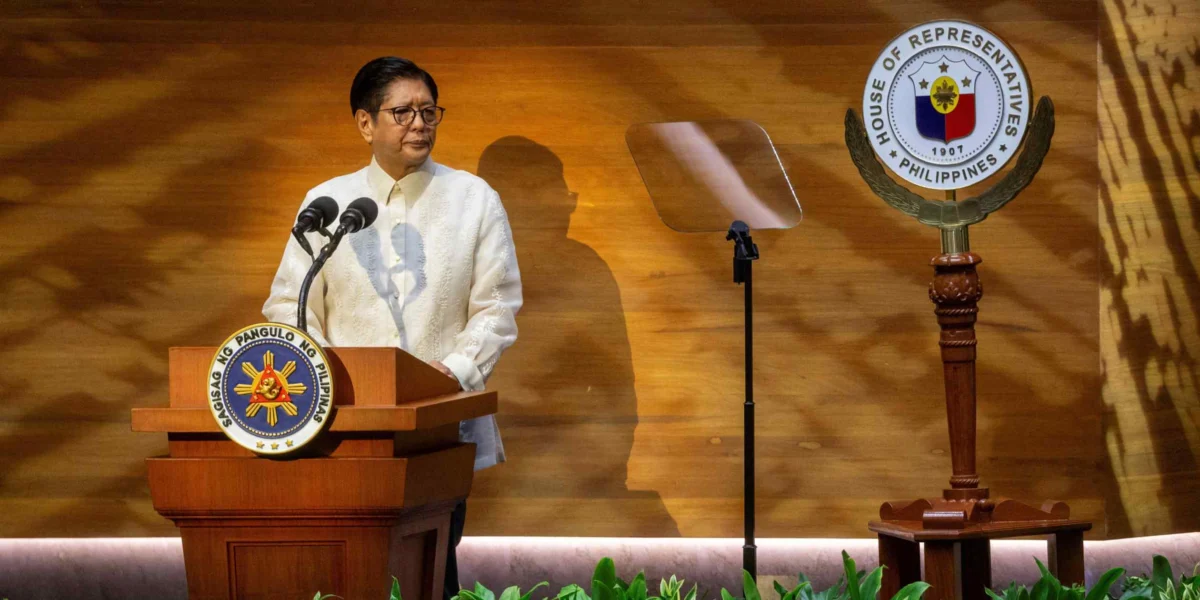
MANILA – Philippine President Ferdinand Marcos Jr., in his fifth State of the Nation Address (SONA) delivered on Monday, July 27, 2026, unveiled a series of significant economic proposals aimed at bolstering a nation grappling with the persistent global energy crisis. At the forefront of these initiatives are plans to elevate the income tax threshold and dismantle specific financial impediments for small and medium-sized enterprises (SMEs), moves designed to inject much-needed stimulus into an economy that has proven particularly vulnerable to international market volatility.
The President’s address, delivered from the hallowed halls of the House of Representatives in Quezon City, Metro Manila, painted a picture of a nation resilient in the face of unprecedented global challenges. While acknowledging the strains imposed by the ongoing energy crisis, which has sent ripple effects across supply chains and consumer prices worldwide, Marcos Jr. articulated a forward-looking vision centered on fiscal prudence and targeted support for the pillars of the Philippine economy.
Economic Landscape Under Pressure: The Global Energy Crisis and Its Philippine Impact
The global energy crisis, a complex interplay of geopolitical tensions, supply disruptions, and a burgeoning demand for resources, has cast a long shadow over economies worldwide. For the Philippines, an archipelago heavily reliant on imported fossil fuels for its energy needs, the impact has been particularly acute. Inflationary pressures, driven by soaring oil and gas prices, have eroded purchasing power, while increased operational costs have squeezed profit margins for businesses of all sizes.
Data from the Bangko Sentral ng Pilipinas (BSP) has consistently highlighted the energy crisis as a primary driver of inflation. In the preceding months, the Consumer Price Index (CPI) had shown a persistent upward trend, with transportation and utility costs leading the surge. For instance, figures from the Philippine Statistics Authority (PSA) indicated that the transportation index, a key component of CPI, had risen by over 15% year-on-year in the second quarter of 2026, directly attributable to higher fuel prices. This sustained inflationary environment has placed immense pressure on households, particularly those with lower incomes, and has become a significant concern for policymakers.
The International Monetary Fund (IMF) had, in its recent regional outlook, revised down growth forecasts for several Asian economies, with the Philippines being cited as one of the more susceptible nations due to its import dependence and the nascent stage of its renewable energy transition. The ADB’s assessment, which pointed to the energy shock’s particular impact on the Philippines, underscores the urgency of the measures proposed by President Marcos Jr.
Realigning Fiscal Policy: Elevating the Income Tax Threshold
A cornerstone of President Marcos Jr.’s economic agenda presented during the SONA is the proposed upward revision of the income tax threshold. This measure, if enacted into law, would directly benefit a significant portion of the Filipino workforce by reducing their tax liabilities. The rationale behind this proposal is twofold: to provide immediate relief to households facing mounting cost of living pressures and to stimulate domestic consumption, a critical driver of economic growth.
Currently, the tax brackets for individual income in the Philippines are structured to tax income earned above a certain annual threshold. By raising this threshold, a larger portion of an individual’s earnings would become tax-exempt. This effectively increases disposable income, allowing families to allocate more funds towards essential goods and services, discretionary spending, or savings.
Illustrative Impact (Hypothetical Data):
Consider a scenario where the current annual income tax threshold is PHP 350,000. If the President’s proposed increase raises this to PHP 450,000, an individual earning PHP 400,000 annually would see their taxable income reduced from PHP 50,000 to PHP 0. For an individual earning PHP 500,000, their taxable income would drop from PHP 150,000 to PHP 50,000. The cumulative effect of such adjustments across millions of taxpayers could lead to a substantial injection of liquidity into the economy.
The Department of Finance (DOF) has historically championed tax reforms aimed at simplifying the tax system and making it more equitable. While specific figures on the projected revenue impact of the increased threshold were not detailed in the President’s speech, preliminary analyses from economic think tanks suggest that while there would be an initial reduction in government tax revenue, this could be offset by increased consumption-driven tax receipts (such as Value Added Tax or VAT) and a broader boost to economic activity. The government would likely aim to balance this with measures to ensure fiscal sustainability.
Empowering Small Businesses: Easing Financial Burdens
Recognizing the pivotal role of SMEs as engines of job creation and economic diversification, President Marcos Jr. also pledged to streamline financial regulations and alleviate specific burdens that have historically hampered their growth. The details of these measures are expected to be fleshed out by relevant government agencies, but the overarching objective is clear: to foster a more conducive environment for entrepreneurship and small-scale enterprise development.
Potential areas for relief could include:
- Simplified Registration and Compliance: Reducing the bureaucratic hurdles associated with business registration, licensing, and permit acquisition. This could involve digitizing processes and consolidating requirements across different government agencies.
- Access to Affordable Credit: Enhancing programs that provide SMEs with access to low-interest loans and financing, enabling them to invest in expansion, upgrade equipment, and manage working capital more effectively. This might involve strengthening the role of institutions like the Small Business Corporation (SBCorp) and exploring partnerships with commercial banks.
- Tax Incentives for Growth and Employment: Introducing targeted tax holidays or reduced tax rates for SMEs that demonstrate significant growth in revenue, employment generation, or investment in research and development.
- Streamlined Reporting Requirements: Simplifying accounting and financial reporting obligations, particularly for micro and small enterprises, to reduce administrative overhead and the need for costly professional services.
The Philippine economy boasts a vibrant SME sector, which accounts for over 99% of registered businesses and contributes significantly to employment. However, many of these enterprises operate on thin margins and are acutely sensitive to economic downturns. The proposed measures aim to provide them with the resilience and support needed to not only survive but thrive, thereby strengthening the national economic fabric.
Background and Chronology of the SONA
The State of the Nation Address is a constitutionally mandated annual event where the President reports on the state of the country to a joint session of Congress. President Marcos Jr.’s address on July 27, 2026, marked his fifth such delivery, providing a platform to articulate his administration’s achievements, address current challenges, and outline future policy directions.
- Pre-SONA Context: Leading up to the address, economic indicators had painted a mixed picture. While GDP growth had shown resilience in certain sectors, the persistent inflation and the lingering effects of the global energy crisis remained key concerns for both policymakers and the public. Discussions around potential fiscal interventions had been ongoing within economic circles.
- The Address Itself: Delivered at 10:00 AM Philippine Standard Time (PHT) on Monday, July 27, 2026, the President’s speech was broadcast live nationwide. The address typically lasts for several hours, covering a wide range of issues from economic policy to social services, foreign relations, and national security.
- Post-SONA Deliberations: Following the SONA, the proposed measures are subject to legislative review and debate in both the House of Representatives and the Senate. For tax-related proposals, the House Committee on Ways and Means and the Senate Committee on Finance are typically the primary bodies responsible for examining the legislation.
Potential Implications and Broader Economic Analysis
The proposed tax relief and SME support measures, if implemented effectively, hold the potential to significantly impact the Philippine economy in several ways:
- Stimulated Domestic Demand: The increase in disposable income for individuals is expected to translate into higher consumer spending, which is a major contributor to the Philippines’ GDP. This could help to offset the slowdown in external demand that some export-oriented sectors might be experiencing due to the global economic climate.
- Enhanced SME Competitiveness: By reducing financial burdens and improving access to capital, SMEs can become more competitive. This could lead to increased investment, job creation, and a more robust and diversified economic base. A stronger SME sector can also foster greater innovation and entrepreneurship.
- Inflationary Management: While the direct impact on inflation is complex, increased domestic production spurred by SME support and greater consumer spending power could, in the medium term, help to stabilize prices for domestically produced goods and services. However, the government will need to closely monitor imported inflation driven by global energy prices.
- Fiscal Balancing Act: The government will face the challenge of balancing the revenue forgone from tax relief with the need to maintain fiscal discipline and fund essential public services. This will likely involve a careful assessment of spending priorities and potentially exploring alternative revenue streams or efficiency improvements in government operations. The DOF will play a critical role in managing this fiscal impact.
- Investment Climate: The government’s proactive stance in addressing economic challenges and supporting key economic actors can contribute to a more positive investment climate, attracting both domestic and foreign direct investment. Investors often look for stable economic policies and a supportive environment for businesses.
Official and Stakeholder Reactions (Inferred)
While direct quotes were not available at the time of this report, it is reasonable to infer likely reactions from various stakeholders:
- Department of Finance (DOF): The DOF would likely express cautious optimism, emphasizing the need for careful fiscal planning and analysis to ensure the sustainability of the proposed measures. They would be tasked with preparing detailed revenue impact assessments and proposing mechanisms for implementation.
- Department of Trade and Industry (DTI): The DTI, which champions the interests of businesses, would likely welcome the proposed support for SMEs, highlighting its potential to foster entrepreneurship and job creation. They would probably advocate for swift and efficient implementation of the streamlining measures.
- Business Organizations (e.g., Philippine Chamber of Commerce and Industry – PCCI, Employers Confederation of the Philippines – ECOP): These organizations would likely commend the President’s focus on economic stimulus and SME support. They would also likely engage in dialogue with the government to ensure that the proposed measures are practical and effectively address the concerns of their members.
- Labor Groups: Labor organizations might welcome the potential for increased disposable income and job creation. They might also advocate for measures to ensure that the benefits of economic growth are equitably distributed and that labor rights are protected.
- Economists and Analysts: Independent economic analysts would likely provide a more nuanced assessment, evaluating the potential benefits against the risks, such as inflationary pressures or fiscal deficits. They would scrutinize the details of the proposals and their potential long-term impact.
In conclusion, President Ferdinand Marcos Jr.’s latest State of the Nation Address signals a strategic pivot towards bolstering the Philippine economy through targeted fiscal relief and business support. As the nation navigates the complexities of the global energy crisis, these proposed measures aim to provide immediate respite to households and empower the small businesses that form the backbone of the Philippine economy. The successful implementation of these initiatives will be crucial in steering the Philippines towards sustained and inclusive economic recovery and growth in the challenging years ahead. The legislative process will now be closely watched to see how these ambitious proposals take shape and translate into tangible policy changes.
