

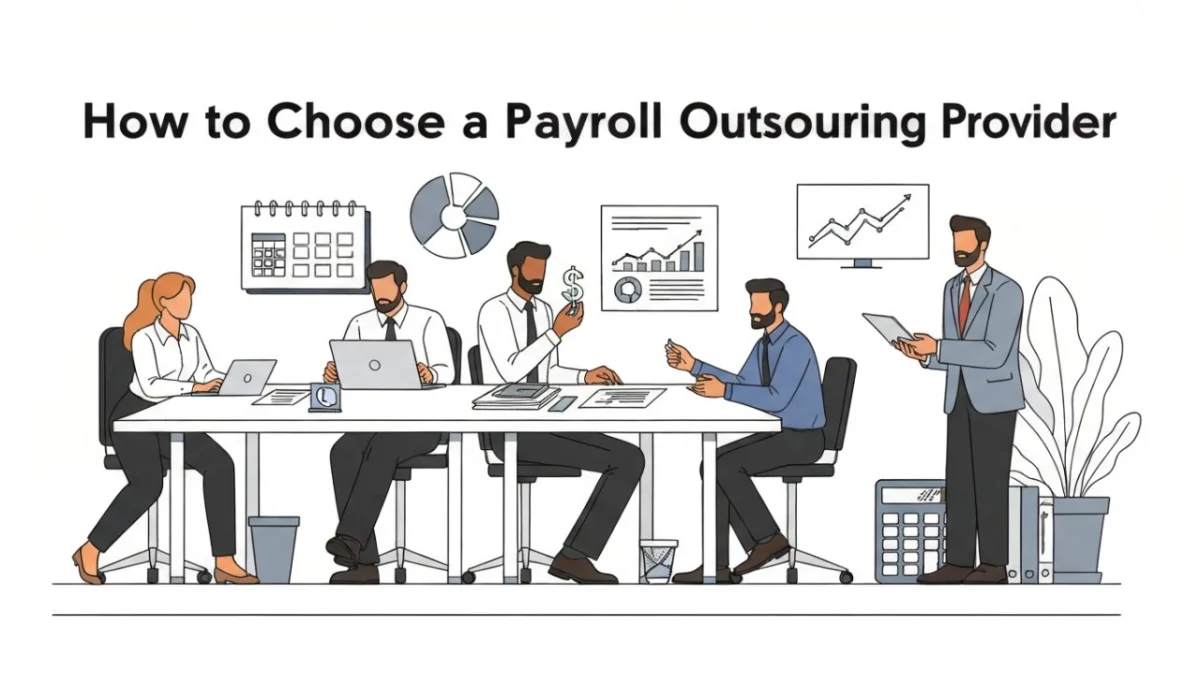
Payroll outsourcing has emerged as a cornerstone of modern corporate administration, representing a strategic shift where organizations transition the management of compensation, tax withholdings, and regulatory filings to specialized third-party providers. In an era defined by increasingly complex labor laws and the rise of the global remote workforce, this practice has moved beyond a simple cost-cutting measure to become a vital component of risk management and operational scalability. By delegating these sensitive functions to external experts, businesses aim to enhance accuracy, ensure strict adherence to shifting tax codes, and redirect internal Human Resources (HR) and finance teams toward high-value strategic initiatives that drive growth.
The Evolution of Payroll Management: A Historical Context
The trajectory of payroll management reflects the broader technological and regulatory shifts of the last century. In the early 20th century, payroll was a laborious, manual process involving handwritten ledgers and physical cash envelopes. The mid-century mark saw the birth of the modern outsourcing industry; notably, Automatic Data Processing (ADP) was founded in 1949, signaling the first major move toward commercialized payroll processing.

As mainframe computing entered the corporate sphere in the 1960s and 1970s, the speed of calculation increased, but the process remained centralized and rigid. The 1980s and 1990s introduced desktop software, allowing smaller firms to manage payroll in-house with digital assistance. However, the true revolution occurred with the advent of cloud computing in the early 2000s. This shift enabled the "Software as a Service" (SaaS) model, where payroll providers could offer real-time updates, employee self-service portals, and seamless integration with other business systems. Today, the industry is moving toward the integration of Artificial Intelligence (AI) and machine learning to predict tax liabilities and automate compliance across multiple international jurisdictions.
The Functionality of Modern Payroll Outsourcing
Modern payroll outsourcing operates through a sophisticated synchronization of data between the client business and the service provider. The process typically begins with the integration of time-tracking and employee data into the provider’s proprietary platform. On a recurring basis, the provider executes several critical functions:
- Gross-to-Net Calculations: Providers calculate gross wages based on hours worked or salary rates, then deduct necessary withholdings including federal, state, and local taxes, as well as insurance premiums and retirement contributions.
- Funds Disbursement: Most providers manage the distribution of funds via direct deposit, physical checks, or payroll cards, ensuring employees are paid on time regardless of their geographic location.
- Tax Filing and Compliance: A primary value proposition of outsourcing is the assumption of tax filing responsibilities. The provider calculates, withholds, and remits payroll taxes to the appropriate government agencies, while also generating year-end documents such as W-2s and 1099s.
- Reporting and Analytics: Businesses receive detailed ledgers and summaries that provide transparency into labor costs, helping CFOs and HR directors make informed budgetary decisions.
Organizations may opt for "comprehensive outsourcing," where every facet of the payroll lifecycle is managed externally, or "managed services," where the business retains control over data entry while the provider handles the technical processing and filing.

Supporting Data: The Economic Case for Outsourcing
Market research highlights a significant upward trend in the adoption of outsourced payroll services. According to industry reports, the global payroll outsourcing market was valued at approximately $10.3 billion in 2023 and is projected to grow at a compound annual growth rate (CAGR) of over 5% through 2030. This growth is largely driven by the increasing burden of regulatory compliance.
Data from the Internal Revenue Service (IRS) underscores the risks of in-house mismanagement. Historically, the IRS has reported that approximately 33% of small businesses receive penalties for payroll tax errors, with total annual penalties reaching into the billions of dollars. For a mid-sized company, the cost of an internal payroll department—including salaries for specialized staff, software licenses, and training—often exceeds the flat fees charged by outsourcing firms. Analysis suggests that outsourcing can reduce the administrative cost of payroll by 20% to 40%, depending on the complexity of the organization’s workforce.
Strategic Benefits and Risk Mitigation
Beyond direct cost savings, payroll outsourcing offers several qualitative advantages that impact an organization’s stability and employee morale.

Enhanced Data Security
Payroll data is among the most sensitive information a company possesses, containing Social Security numbers, bank account details, and home addresses. Professional payroll providers invest heavily in state-of-the-art security infrastructure, including SOC 2 Type II compliance, advanced encryption, and multi-factor authentication. Most small-to-medium enterprises (SMEs) cannot match this level of cybersecurity on their own.
Compliance Expertise
Tax laws are not static; they are subject to frequent changes at the federal, state, and municipal levels. In the United States alone, there are over 10,000 different taxing jurisdictions. Outsourcing providers employ teams of legal and tax experts whose sole focus is to monitor these changes and update the software logic accordingly, shielding the client from the risk of non-compliance.
Employee Satisfaction
Consistent and accurate payment is fundamental to the employer-employee relationship. Outsourcing reduces the "human error" factor associated with manual data entry. Furthermore, the provision of mobile-friendly self-service portals allows employees to access their pay stubs and tax forms independently, fostering a culture of transparency and modern professionalism.

Critical Challenges and Operational Hurdles
Despite the advantages, the transition to an outsourced model is not without its challenges. Decision-makers must weigh these factors carefully before finalizing a partnership.
Data Privacy and Third-Party Risk
While providers offer high security, the act of transferring data to an external entity inherently creates a new point of vulnerability. If a provider suffers a breach, the client business may still face reputational damage and legal scrutiny. Companies must conduct rigorous due diligence on a provider’s data handling protocols and disaster recovery plans.
Loss of Immediate Control
In-house payroll allows for last-minute adjustments and immediate troubleshooting. With an outsourced model, there is a "black box" element where the business must rely on the provider’s processing windows. If a mistake is discovered on payday, resolving it may take longer through an external ticketing system than it would by walking down the hall to the finance department.

Integration Complexity
For a payroll system to be effective, it must communicate with existing Human Resource Information Systems (HRIS), Time and Attendance software, and General Ledger (GL) accounting platforms. If these systems are not compatible, the business may find itself manually exporting and importing CSV files, which negates much of the automation benefit.
Comparing Payroll Software vs. Fully Managed Outsourcing
A common point of confusion for business owners is the distinction between "payroll software" and "payroll outsourcing."
Payroll software (e.g., QuickBooks Payroll or basic tiers of Gusto) is a tool used by internal staff to automate calculations. The responsibility for data entry, filing deadlines, and accuracy remains with the business. This is often preferred by very small startups with simple needs and limited budgets.

In contrast, payroll outsourcing (or "Managed Services") involves a partnership where the provider takes on the liability and administrative execution of the tasks. This is typically the choice for growing companies or those with employees in multiple states or countries, where the complexity of the tax landscape exceeds the internal team’s capacity.
Industry Perspectives and Implementation Strategies
Financial analysts and HR executives generally agree that the move toward outsourcing is a sign of organizational maturity. "In the modern economy, payroll is a utility, not a competitive advantage," notes one industry perspective. "By outsourcing the utility, management can focus on the ‘people’ side of HR—culture, retention, and talent development—which actually impacts the bottom line."
When choosing a provider, industry experts recommend a four-stage framework:

- Requirement Mapping: Identify specific needs, such as international payment capabilities, benefits administration, or specific industry compliance (e.g., prevailing wage for construction).
- Provider Vetting: Evaluate the provider’s track record. How long have they been in business? Do they have a dedicated support model, or is it a generic call center?
- Cost Analysis: Look beyond the "per employee" fee. Inquire about implementation fees, year-end filing costs, and charges for adding or removing employees.
- Stakeholder Alignment: Ensure that the finance, IT, and HR departments are aligned on the transition to avoid friction during the onboarding phase.
Broader Impact and Future Implications
The shift toward payroll outsourcing is reflective of a broader "unbundling" of the corporation, where non-core functions are distributed to specialized nodes in a global network. As remote work becomes a permanent fixture of the professional landscape, the ability to pay a worker in London, a contractor in Bangalore, and a sales rep in New York through a single interface is becoming a necessity rather than a luxury.
Looking ahead, the integration of blockchain technology and real-time payment systems may further transform the industry, potentially allowing for "daily pay" models where workers are compensated instantly for hours worked rather than waiting for a bi-weekly cycle. For now, payroll outsourcing remains a vital tool for businesses seeking to navigate the intersection of technological advancement and regulatory rigor. By choosing the right partner, organizations can secure their financial compliance while liberating their internal teams to pursue the strategic goals that define their future success.
