

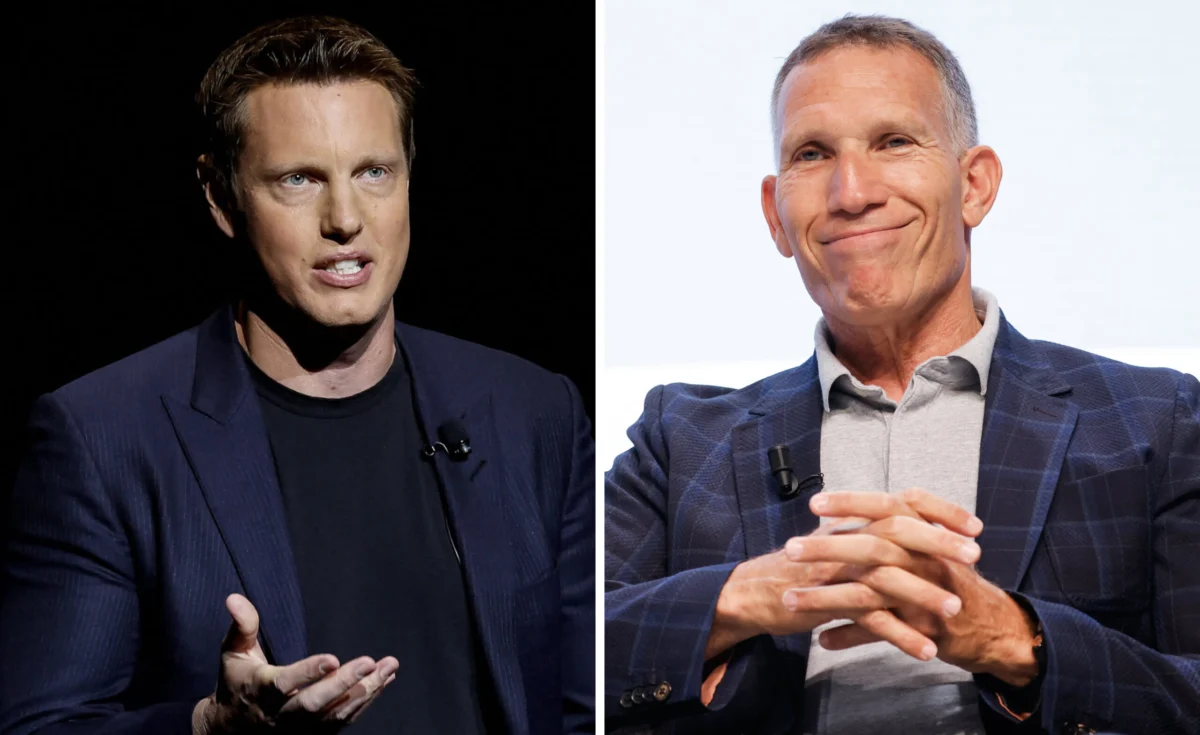
In a landmark announcement that reshapes the global media landscape, David Ellison, CEO of Paramount Skydance, confirmed on Wednesday the appointment of outgoing Mattel Chief Executive Officer Ynon Kreiz as his co-CEO for the eagerly anticipated combination of Paramount and Warner Bros. Discovery. This strategic leadership pairing signals a definitive move towards the formation of a "next-generation global media company," with the merger officially slated to close on October 6. The confluence of these events marks the culmination of a protracted acquisition saga and sets the stage for one of the largest media consolidations in recent history, valued at an estimated $110 billion.
A New Leadership Paradigm for a Media Giant
The dual leadership structure, outlined in a press release from Paramount, delineates distinct yet complementary roles for Ellison and Kreiz. David Ellison, known for his visionary leadership at Skydance Media, will steer the company’s long-term strategy, creative vision, and overall direction. His purview will encompass crucial talent relationships, forging strategic partnerships across the industry, overseeing technological advancements, and dictating capital allocation. This role leverages Ellison’s strengths in content creation and strategic foresight, honed through Skydance’s impressive portfolio of film and television productions, including major franchises like Mission: Impossible and Top Gun.
Ynon Kreiz, by contrast, will assume comprehensive responsibility for the day-to-day management and the intricate integration of the combined businesses. His operational acumen and experience in navigating complex corporate transformations will be critical in melding two vast media entities into a cohesive and efficient operation. Kreiz will become co-CEO effective upon the closing of the merger and will also secure a seat on the company’s influential board of directors. This division of labor aims to harness Ellison’s creative and strategic prowess while leveraging Kreiz’s proven track record in operational excellence and financial stewardship, particularly in revitalizing publicly traded companies.
Ellison articulated the strategic rationale behind Kreiz’s appointment, stating, "Bringing together Paramount and Warner Bros. Discovery to create a next-generation global media company is a transformational moment for our industry. Leading it takes a rare combination of strategic vision, operational depth and experience running a public company at the highest levels of media. Ynon brings all three." This statement underscores the multifaceted demands of leading such a colossal enterprise in a rapidly evolving media ecosystem.
The Architect of a Toy Empire’s Revival
Ynon Kreiz’s transition to the helm of the new media conglomerate follows an eight-year tenure as CEO of Mattel, a period widely lauded for its remarkable corporate turnaround. Before Kreiz took the top job, Mattel, a venerable toy manufacturer, faced significant headwinds, grappling with declining sales, increased competition, and a struggling stock performance. Kreiz, who assumed leadership in April 2018, embarked on an ambitious restructuring program, focusing on strengthening core brands, optimizing the supply chain, and significantly expanding the company’s entertainment division.
Under his stewardship, Mattel underwent a profound transformation, shifting its strategy from solely manufacturing toys to becoming a major player in intellectual property monetization. Kreiz prioritized leveraging Mattel’s vast catalog of iconic brands like Barbie, Hot Wheels, Fisher-Price, and American Girl into diverse entertainment formats. This strategy culminated in the unprecedented global success of the "Barbie" movie in 2023. The film, a cultural phenomenon and critical darling, shattered box office records, becoming the highest-grossing domestic film release of 2023 and earning over $1.4 billion worldwide. Its success not only revitalized the Barbie brand but also validated Kreiz’s vision for turning intellectual property into multi-platform revenue streams, a skill directly transferable to the content-rich environment of Paramount and Warner Bros. Discovery.
Beyond "Barbie," Kreiz also oversaw the launch of Mattel Films, developing a robust pipeline of over 14 live-action movies based on the company’s intellectual property, including upcoming projects for Hot Wheels and American Girl. His strategic pivot successfully diversified Mattel’s revenue streams, significantly improved its financial health, and saw its stock rebound, earning him a reputation as a shrewd operator capable of executing complex transformations in challenging industries. Mattel’s announcement earlier on Wednesday regarding Kreiz’s departure also named Roger Lynch as his successor, signaling a smooth leadership transition for the toy giant.
The Genesis of a Mega-Merger: A Contentious Journey
The path to the creation of this new media leviathan has been anything but straightforward, marked by fierce competition, regulatory scrutiny, and complex negotiations. David Ellison’s initial interest in acquiring Warner Bros. Discovery first surfaced in September 2025, signaling his ambition to significantly expand Skydance’s footprint and create a formidable player in the increasingly consolidated media sector.
This initial overture quickly escalated into a high-stakes bidding war. By December 2025, streaming titan Netflix, recognizing the immense value of Warner Bros. Discovery’s expansive content library and global subscriber base, entered the fray with a competing bid. The prospect of Netflix acquiring Warner Bros. Discovery sent ripples through the industry, threatening to further consolidate streaming power. However, Skydance, backed by Ellison’s deep pockets and strategic vision, ultimately prevailed, securing an agreement for the merger.
The merger’s journey then entered its most challenging phase: navigating antitrust concerns. In July 2026, a group of state attorneys general filed an antitrust lawsuit, seeking to block the $110 billion transaction. Their primary concern revolved around potential market concentration, arguing that combining two of the largest media companies could lead to reduced competition, stifle innovation, and ultimately harm consumers through higher prices or fewer content choices. The lawsuit highlighted the growing regulatory scrutiny on mega-mergers in an era of rapid industry consolidation.
However, less than two weeks prior to Wednesday’s announcement, Paramount reached a settlement in the antitrust lawsuit. While the specific terms of the settlement were not immediately detailed, it paved the way for the merger’s progression. A federal judge on Wednesday officially entered an order allowing the merger to close, removing the final significant legal hurdle. This resolution cleared the path for the definitive closing date of October 6, setting the stage for the formal integration of the two media giants.
Strategic Rationale: Forging a Streaming Powerhouse
The impetus behind this monumental merger lies in the intense competitive pressures and evolving dynamics of the modern media industry. Both Paramount (parent company of Paramount Pictures, CBS, Showtime, Pluto TV, and Paramount+) and Warner Bros. Discovery (encompassing Warner Bros. Entertainment, CNN, HBO, Discovery Channel, TNT, and the Max streaming service) are formidable entities individually. However, in an era dominated by global streaming wars and declining linear television viewership, scale and a diversified content portfolio have become paramount for survival and growth.
The combined entity will boast an unparalleled library of intellectual property, spanning iconic film franchises, award-winning television series, extensive news operations, and a robust portfolio of sports rights. This content arsenal is crucial for competing with entrenched giants like Disney (with Disney+ and Hulu), Netflix, Amazon Prime Video, and Apple TV+. The merger aims to create a streaming powerhouse capable of challenging these competitors by offering a vast and diverse content offering under a unified, or at least strategically aligned, streaming platform.
From a financial perspective, the merger is expected to generate significant synergies through cost efficiencies. These could include streamlining overlapping operations, consolidating technology infrastructure, rationalizing content acquisition, and reducing administrative overhead. The $110 billion valuation reflects not only the combined assets but also the anticipated long-term value creation from these synergies and the enhanced market position. For companies facing increasing debt burdens and the high costs associated with producing premium content and maintaining global streaming platforms, such mergers offer a path to greater financial stability and profitability. The combined entity will also possess a formidable global distribution network, allowing it to reach audiences across various platforms and geographies more effectively.
Navigating the Integration: Challenges and Opportunities Ahead
While the strategic rationale for the Paramount Skydance and Warner Bros. Discovery merger is compelling, the path to successful integration will be fraught with challenges. Merging two organizations of this scale, each with its own distinct corporate culture, operational procedures, and employee base, is a notoriously complex undertaking. Potential issues include:
- Cultural Integration: Harmonizing the cultures of creative studios, traditional broadcasters, and digital streaming operations will require delicate leadership and clear communication to avoid internal friction and talent attrition.
- Operational Synergies: Identifying and realizing the promised cost synergies without disrupting core operations or alienating key talent will be a critical task for Ynon Kreiz. This includes deciding on the future of existing streaming platforms (Paramount+ and Max), content licensing strategies, and organizational structures.
- Content Strategy: Defining a unified content strategy that maximizes the value of the combined intellectual property while avoiding cannibalization will be essential. This includes balancing investment in new original content with leveraging existing franchises across film, television, and streaming.
- Market Perception and Regulatory Scrutiny: Despite the settlement, the combined entity will remain under public and regulatory scrutiny, particularly regarding its market power and potential impact on consumer choice and content diversity.
- Employee Morale: Large-scale mergers often lead to redundancies and uncertainty, which can impact employee morale and productivity. Effective change management and transparent communication will be vital.
Conversely, the opportunities are equally substantial. The combined entity will possess an unparalleled content library, offering immense potential for cross-promotion and franchise expansion. The ability to bundle diverse content offerings – from premium scripted dramas and blockbuster films to live sports and factual entertainment – could create a highly attractive value proposition for consumers. Furthermore, the global reach of both companies will provide a robust platform for international expansion, capitalizing on growing demand for diverse content worldwide. Ellison’s focus on creative vision and talent relationships, combined with Kreiz’s operational prowess, positions the new company to tackle these challenges and capitalize on these opportunities effectively.
The Broader Media Landscape: A Trend Towards Consolidation
This merger is not an isolated event but rather a significant marker in a broader trend of consolidation sweeping across the global media and entertainment industry. Faced with escalating content costs, intense competition from tech giants, and the fragmentation of traditional audiences, media companies are increasingly seeking scale and synergy to remain competitive.
Recent years have seen a flurry of major deals, including Disney’s acquisition of 21st Century Fox assets, AT&T’s ill-fated acquisition of Time Warner (which it subsequently spun off into Warner Bros. Discovery), and Amazon’s purchase of MGM. Each move reflects a strategic imperative to amass intellectual property, expand streaming capabilities, and secure a dominant position in a rapidly evolving market. The Paramount Skydance and Warner Bros. Discovery merger represents the latest, and arguably one of the most impactful, chapters in this ongoing saga of industry transformation.
As the industry continues to evolve, characterized by the shift from linear to streaming, the increasing importance of global reach, and the relentless demand for premium content, further consolidation remains a distinct possibility. The new combined entity, with its dual leadership, vast content library, and renewed strategic focus, will undoubtedly become a formidable force, shaping the future of how content is created, distributed, and consumed on a global scale. The eyes of the industry will now be firmly fixed on October 6, awaiting the official birth of this new media titan and the commencement of its ambitious journey.
