

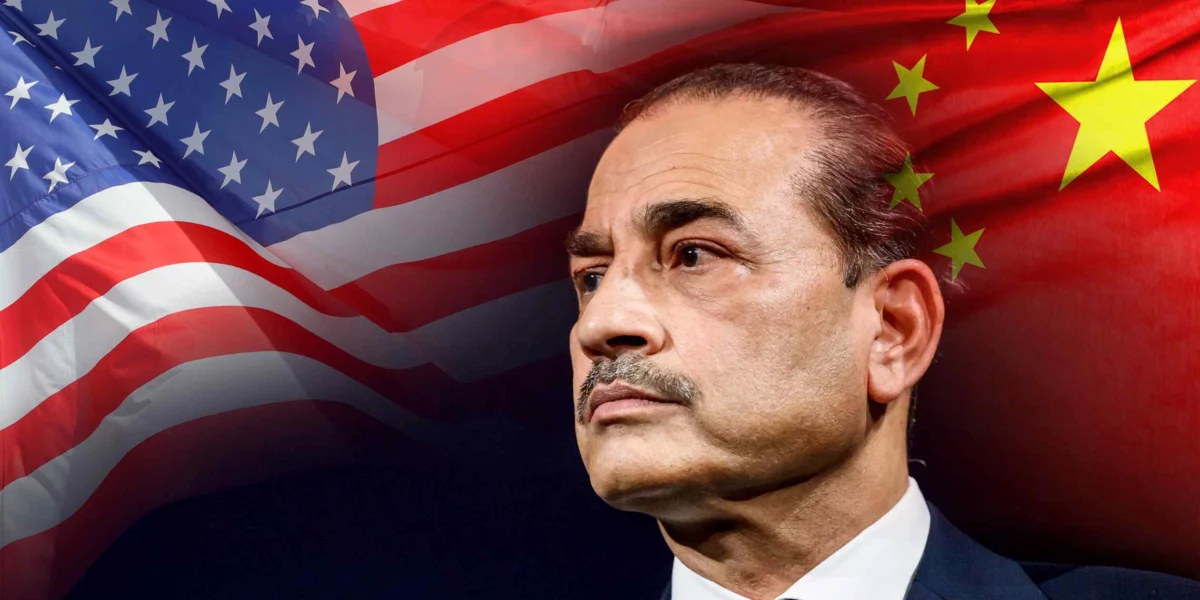
Pakistan has formally applied for a substantial U.S. foreign currency backstop facility, potentially valued at up to $10 billion. This strategic financial request, revealed by Nikkei Asia, underscores Islamabad’s proactive approach to bolstering its foreign exchange reserves and fortifying its resilience against potential economic shocks. The move comes at a critical juncture, as Pakistan navigates complex regional dynamics, including its recent role in mediating between the United States and Iran, a diplomatic effort reportedly spearheaded by the nation’s powerful military chief, Field Marshal Asim Munir.
The U.S. foreign currency backstop facility is a crucial financial instrument designed to provide a nation with access to U.S. dollars during times of economic stress or liquidity crises. Such facilities act as a vital safety net, allowing governments to manage their external debt obligations, stabilize their currency, and prevent capital flight. For a country like Pakistan, which has historically grappled with balance of payments challenges and currency volatility, securing such a backstop represents a significant strategic achievement, offering a critical buffer against unforeseen economic downturns.
Context of the U.S. Currency Backstop Facility
U.S. foreign currency backstop facilities are typically provided through agreements with the U.S. Treasury Department or the Federal Reserve. These arrangements often involve lines of credit that can be drawn upon under specific conditions, ensuring that a partner nation has access to dollars when its own reserves are depleted or facing severe pressure. The terms and conditions of these facilities are usually confidential, but they generally aim to support economic stability and foster international financial cooperation.
The U.S. has historically utilized such facilities as a tool of its foreign policy, offering them to allies and strategically important nations to promote economic resilience and stability. The size of the requested facility, $10 billion, signifies the scale of Pakistan’s perceived economic vulnerability and its ambition to secure a robust financial shield. This amount is substantial and, if approved, would significantly enhance Pakistan’s foreign exchange reserves, which have often hovered at critical levels, sometimes covering only a few weeks of essential imports.
Geopolitical Undertones: Pakistan’s Diplomatic Role
The timing of Pakistan’s request for the U.S. currency backstop is particularly noteworthy, given the country’s recent involvement in high-stakes diplomatic mediation between the United States and Iran. Reports suggest that Pakistan’s military chief, Field Marshal Asim Munir, played a pivotal role in facilitating these complex negotiations. This mediation effort, if successful, would not only bolster Pakistan’s standing as a regional diplomatic player but also potentially influence its relationships with both Washington and Tehran.
Pakistan’s ability to act as an intermediary in such sensitive geopolitical dialogues highlights its enduring strategic importance in South Asia and the broader Middle East. The country’s military leadership, in particular, has historically wielded significant influence in foreign policy decision-making, and Field Marshal Munir’s reported leadership in the U.S.-Iran talks underscores this reality. Such diplomatic engagements, while potentially enhancing Pakistan’s international profile, also carry inherent risks and complexities that require careful management.
The nexus between Pakistan’s diplomatic overtures and its financial requests to the U.S. is a subject of keen observation. It is plausible that a successful mediation effort could be viewed by Washington as a signal of Pakistan’s commitment to regional stability and its capacity to act as a constructive partner, thereby potentially bolstering its case for financial assistance. Conversely, some analysts suggest that Pakistan might be seeking to leverage its diplomatic successes to secure crucial financial support, thereby reinforcing its economic stability, which is often seen as a prerequisite for effective foreign policy engagement.
Economic Imperatives and Reserve Management
Pakistan’s economy has faced persistent challenges, including a large current account deficit, high inflation, and a substantial external debt burden. The country has had to rely on multiple bailout packages from international financial institutions, most notably the International Monetary Fund (IMF), to manage its economic crises. Securing a U.S. currency backstop would represent an additional layer of financial security, complementing existing arrangements and providing greater flexibility in managing its foreign exchange reserves.
Foreign exchange reserves are critical for any nation’s economic health. They are used to pay for imports, service external debt, and stabilize the national currency. When reserves are low, a country becomes vulnerable to external shocks, such as a sudden drop in export earnings or a sharp increase in the price of essential imports like oil. This can lead to currency depreciation, higher inflation, and a broader economic downturn.
For Pakistan, maintaining adequate foreign exchange reserves has been a perennial challenge. In recent years, reserves have often fallen to precarious levels, prompting concerns about the country’s ability to meet its international financial obligations. The State Bank of Pakistan (SBP) has been actively engaged in various strategies to shore up reserves, including attracting remittances, encouraging foreign investment, and negotiating with international partners for financial support.
Timeline and Potential Chronology of the Request
While the exact timeline of Pakistan’s application for the U.S. currency backstop facility is not publicly detailed, the news emerging now suggests that the request has been formally submitted and is under consideration. This process likely involved extensive discussions between Pakistani financial authorities and their U.S. counterparts.
Key potential stages in this process could include:
- Initial Assessment and Internal Discussion: Pakistani economic policymakers, recognizing the need for enhanced financial resilience, would have conducted an internal assessment of their foreign reserve position and potential vulnerabilities. This would have involved consultations between the Ministry of Finance, the State Bank of Pakistan, and potentially the Prime Minister’s office.
- Diplomatic Sounding and Engagement: Following internal consensus, Pakistan would have initiated diplomatic channels to gauge U.S. interest and discuss the possibility of a backstop facility. This phase likely involved high-level communications, possibly through diplomatic missions and direct engagement with U.S. Treasury officials.
- Formal Application and Negotiation: Once the U.S. indicated a willingness to consider the request, Pakistan would have submitted a formal application. This would be followed by a period of negotiation over the terms, conditions, size, and duration of the facility.
- U.S. Internal Review and Approval: The U.S. government, upon receiving a formal application, would undertake its own internal review process. This would involve assessments by relevant agencies, including the Treasury Department and potentially national security bodies, to evaluate the strategic and economic implications of extending such a facility.
- Announcement and Implementation: If approved, the U.S. would announce the provision of the backstop facility, and the necessary legal and financial agreements would be finalized for its implementation.
The reported mediation between the U.S. and Iran, potentially led by Field Marshal Munir, likely occurred in parallel or in close proximity to these financial discussions. The success or perceived success of these diplomatic efforts could have served as a backdrop, influencing the U.S.’s receptiveness to Pakistan’s financial request.
Supporting Data and Economic Indicators
To understand the context of this request, it is helpful to consider some relevant economic indicators for Pakistan:
- Foreign Exchange Reserves: As of early 2024, Pakistan’s foreign exchange reserves have fluctuated, often remaining at levels that cover only a few weeks of imports. For instance, at various points in the past year, reserves have hovered around $5-8 billion, which is considered critically low by international standards. A $10 billion backstop would more than double the current reserves if fully utilized, providing a significant cushion.
- External Debt: Pakistan has a substantial external debt obligation, requiring significant foreign currency inflows to service. The country’s debt-to-GDP ratio has been a persistent concern, highlighting its reliance on external financing.
- Current Account Deficit: Pakistan has historically run a significant current account deficit, meaning it imports more goods and services than it exports. This deficit puts constant pressure on foreign exchange reserves.
- Inflation: High inflation has been a persistent challenge for Pakistan, eroding purchasing power and contributing to economic instability. Currency depreciation exacerbates inflationary pressures by making imports more expensive.
These indicators collectively paint a picture of an economy that is continuously working to manage its external vulnerabilities and maintain stability. The U.S. currency backstop is designed to address precisely these types of challenges.
Official Responses and Inferences
As the news of the application has emerged, official responses from both Pakistani and U.S. authorities have been limited or non-existent, which is typical for sensitive financial and diplomatic negotiations. However, certain inferences can be drawn based on the nature of such requests:
- Pakistani Government Perspective: From Pakistan’s perspective, securing this backstop would be a major diplomatic and economic victory. It would signal strong backing from a key international partner and provide a crucial safety net, allowing the government to focus on longer-term economic reforms without the constant specter of an immediate balance of payments crisis. The government would likely frame this as a testament to its economic management and its growing role in regional diplomacy.
- U.S. Government Perspective: The U.S. government’s decision to grant such a facility would be based on a strategic calculus. Factors likely include Pakistan’s geopolitical importance, its role in regional security, its commitment to economic reforms, and the potential impact of its stability on broader U.S. interests. The success of Pakistan’s mediation efforts between the U.S. and Iran would undoubtedly be a significant positive factor in this evaluation. The U.S. would also consider the potential for reciprocal benefits, such as enhanced cooperation on counter-terrorism or regional security initiatives.
It is also possible that the U.S. would attach certain conditions to the facility, such as continued commitment to economic reforms, transparency in financial dealings, or cooperation on specific foreign policy objectives.
Broader Impact and Implications
The potential approval of a $10 billion U.S. currency backstop facility for Pakistan would have several significant implications:
- Enhanced Economic Stability: The most immediate impact would be a substantial strengthening of Pakistan’s foreign exchange reserves, providing a much-needed buffer against external shocks and improving the country’s creditworthiness. This could lead to greater investor confidence and potentially lower borrowing costs.
- Currency Stabilization: With a stronger reserve position, the State Bank of Pakistan would have more capacity to intervene in the foreign exchange market to stabilize the Pakistani Rupee, thereby mitigating currency depreciation and its inflationary consequences.
- Improved Negotiating Position: A secure financial backstop would likely improve Pakistan’s negotiating position with international creditors and financial institutions, including the IMF, as it would demonstrate a reduced immediate need for emergency funding.
- Geopolitical Signaling: The U.S. extending such a significant financial facility would send a clear geopolitical signal about its continued engagement with and support for Pakistan, especially in the context of regional power dynamics. It could also be interpreted as a reward for Pakistan’s diplomatic role.
- Domestic Political Impact: For the Pakistani government, securing this facility would be a significant political achievement, likely bolstering its public image and providing a narrative of economic progress and international backing.
However, it is crucial to note that a currency backstop is a temporary measure and not a substitute for fundamental economic reforms. Pakistan must continue to address its structural issues, such as improving its export base, enhancing tax collection, and fostering a more conducive environment for investment, to achieve sustainable long-term economic growth and stability.
In conclusion, Pakistan’s application for a $10 billion U.S. foreign currency backstop facility represents a strategic move to bolster its economic resilience amidst complex regional and global challenges. The request, seemingly intertwined with Pakistan’s recent diplomatic endeavors, underscores the interconnectedness of finance, foreign policy, and national security. The outcome of this application will be closely watched, as it holds the potential to significantly shape Pakistan’s economic trajectory and its standing on the international stage.
