

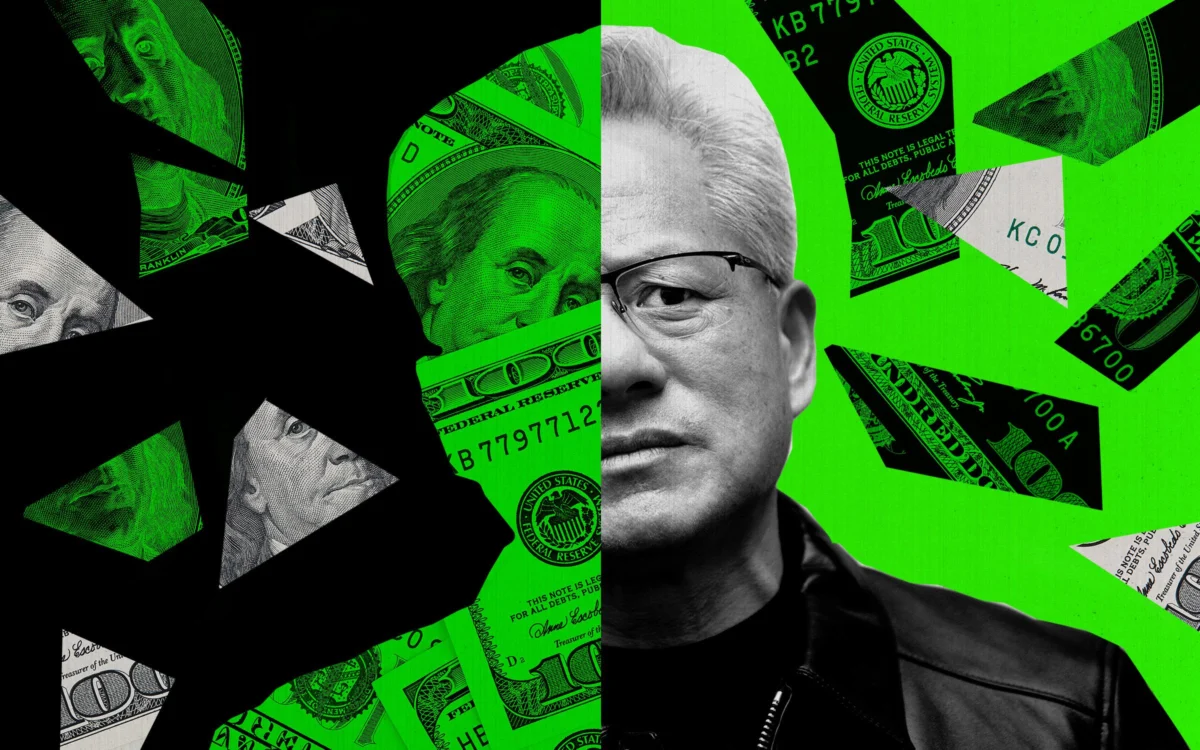
Nvidia, a company that has become almost inextricably linked with its visionary CEO, Jensen Huang, experienced a seismic shockwave on Thursday morning as the tech titan announced his immediate resignation. The news, delivered with stark brevity, sent tremors through the global financial markets, with the company’s stock plummeting by an estimated $546 billion in market value within the first hour of trading. While a degree of recovery has been observed, the recent weeks have been marred by a series of damaging revelations, including a reported second affair involving Huang and an Nvidia employee, collectively erasing over $1 trillion from the chipmaker’s valuation.
The precipitous fall from grace for Huang, a figure who has long been lauded for his strategic acumen and transformative leadership, began to unfold in late October. The New York Times published a report detailing a "close relationship" between the CEO and Alice Huang, a former executive at the Singapore-based chip buyer Megaspeed. Crucially, the report alleged that Alice Huang was an "alleged asset of China’s Ministry of State Security." It is important to note that Jensen Huang and Alice Huang are not known to be related. At the time of this initial report, Nvidia’s market capitalization stood at approximately $5.2 trillion, underscoring the immense scale of the company and the profound impact of these allegations.
The situation escalated rapidly. On November 8th, Nvidia confirmed it had launched an internal investigation into its CEO following his public acknowledgment of an affair. By the following morning, the financial fallout was stark: an estimated $1 trillion had been wiped from the company’s market value since the scandal first broke. This rapid and dramatic decline highlights the market’s sensitivity to leadership instability and potential ethical breaches, especially within a company at the forefront of a critical technological revolution.
The implications of Huang’s departure extend far beyond the immediate financial market reaction. For years, Jensen Huang has been the driving force behind Nvidia’s ascent to become a dominant player in the semiconductor industry, particularly in the realm of Graphics Processing Units (GPUs). His vision is widely credited with not only powering the gaming industry but also with providing the foundational hardware for the current artificial intelligence (AI) boom. As Ryan Fedasiuk, a senior fellow at the think tank Foundation for American Innovation, stated last week, "Huang is irreplaceable. He built Nvidia into the juggernaut it is today, and he was the visionary behind the GPU, which has sustained the intelligence revolution." This sentiment underscores the deep concern within the industry about the future trajectory of Nvidia and, by extension, the broader AI landscape.
A Chronology of Crisis: The Unfolding Scandal
The events leading to Jensen Huang’s resignation can be traced through a series of escalating revelations and corporate responses:
- Late October: The New York Times publishes its initial report detailing Jensen Huang’s alleged relationship with Alice Huang and raising concerns about potential national security implications due to her alleged ties to China’s Ministry of State Security. This report marks the beginning of the public scrutiny.
- November 8th: Nvidia officially announces that it has initiated an internal investigation into its CEO, Jensen Huang, after he publicly admits to having an affair. This admission confirms at least one aspect of the earlier reporting and signals a serious internal review.
- November 9th: Following Huang’s public acknowledgment of the affair, the market reacts with significant alarm. Nvidia’s stock experiences a substantial decline, with estimates suggesting over $1 trillion in market value being erased in the immediate aftermath.
- Thursday Morning (Specific Date Unspecified in Original Text, Assumed to be November 11th based on context): Nvidia makes the official announcement of Jensen Huang’s resignation from his position as CEO. This formalizes the leadership transition, albeit under highly turbulent circumstances.
- Less Than an Hour After Announcement: As the stock markets open, Nvidia’s valuation sees a further significant drop of approximately $546 billion, indicating continued investor apprehension.
- Later Update (November 12th): A further update to the news report indicates that a third alleged affair involving Jensen Huang has been reported, compounding the existing scandal and suggesting a pattern of behavior that has further eroded investor confidence.
This timeline illustrates a rapid deterioration of both the company’s public image and its market standing, driven by a confluence of personal conduct issues and geopolitical concerns.
The Economic Backbone: Nvidia’s Critical Role in AI and Beyond
Nvidia’s chips are not merely components; they are the engines powering the most significant technological advancements of our era. The company’s GPUs are indispensable for training the sophisticated AI models that are transforming industries ranging from healthcare and finance to transportation and scientific research. Without Nvidia’s hardware, the development and deployment of cutting-edge AI would be severely hampered.
Beyond its core business, Nvidia has strategically invested billions in other technology companies, further embedding itself within the global tech ecosystem. A regulatory filing from August revealed Nvidia’s significant holdings, including nearly $30 billion in Intel stock and approximately $21 billion in SpaceX stock. These investments underscore Nvidia’s broad influence and the ripple effects its financial stability has on other major corporations. The departure of its long-standing CEO raises questions about the future of these investments and Nvidia’s strategic direction under new leadership.
Market Reactions and Competitive Landscape
The turmoil at Nvidia has created a palpable shift in the semiconductor market, with competitors poised to potentially benefit from the disruption. In the five days preceding the initial report, shares of Advanced Micro Devices (AMD) have surged by 28 percent, while Broadcom has seen an increase of nearly 16 percent. This indicates that investors are actively seeking alternative opportunities within the sector, viewing Nvidia’s current predicament as a potential opening for its rivals.
The concept of "buying the dip," a strategy employed by some day traders to capitalize on falling stock prices, has been a recurring theme in discussions surrounding Nvidia’s stock. However, the depth and breadth of the current crisis suggest that this may be more than a temporary blip. The consensus among many analysts and market observers appears to be that Nvidia faces a prolonged period of adjustment and uncertainty.
Broader Implications: Geopolitics, Innovation, and Corporate Governance
The scandal surrounding Jensen Huang is not solely a matter of corporate ethics; it is deeply intertwined with geopolitical considerations. The allegations of connections to China’s Ministry of State Security have amplified concerns about the security of critical technological infrastructure and the potential for foreign influence in the development of advanced AI. In an era of increasing technological competition and national security anxieties, such allegations carry significant weight and could lead to heightened regulatory scrutiny and international diplomatic tensions.
Furthermore, the departure of a CEO so intrinsically linked to a company’s innovation raises fundamental questions about succession planning and the ability of an organization to maintain its innovative edge without its founding visionary. While Nvidia has undoubtedly built a robust team and a strong corporate culture, the absence of Jensen Huang’s singular leadership will be a significant test. The company’s ability to navigate this transition will be closely watched by investors, competitors, and governments worldwide.
The events at Nvidia serve as a stark reminder of the complex interplay between leadership, ethics, technological advancement, and global economics. The coming months will be critical in determining whether Nvidia can weather this storm, regain market confidence, and continue its pivotal role in shaping the future of artificial intelligence and technology. The legacy of Jensen Huang is undeniable, but the future of Nvidia now rests on its capacity to adapt and thrive in a post-Huang era, facing unprecedented challenges and scrutiny. The market’s reaction, though severe, is a reflection of the immense value and strategic importance that Nvidia holds in the global technological landscape. The ongoing investigations and the eventual appointment of new leadership will be crucial in defining the company’s path forward and its continued influence on the trajectory of innovation.
