

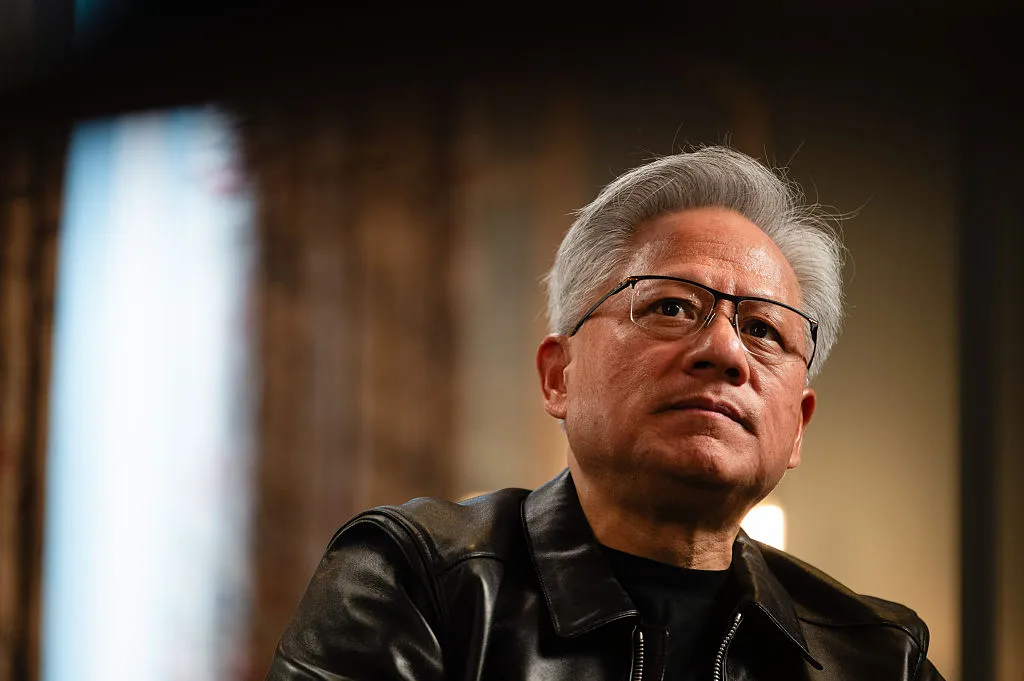
Jensen Huang, the influential CEO of semiconductor giant Nvidia, engaged Heller Inc., a prominent crisis communications firm renowned for navigating high-stakes personal scandals, at least a full year prior to his public admission of an extramarital affair with a woman now suspected of espionage on behalf of the Chinese government. This revelation, first reported by Wired, casts a stark light on the proactive measures taken by Huang as scrutiny intensified around his personal life and Nvidia’s complex dealings in a fraught geopolitical landscape. The affair involves Alice Huang, CEO of Megaspeed, a Singapore-based data center company with significant ties to China, which had previously acquired nearly $2 billion worth of Nvidia chips.
The timing of Heller Inc.’s engagement, preceding the public acknowledgment of the affair and occurring shortly after a critical New York Times report in October 2025, suggests a calculated effort to manage a burgeoning crisis with far-reaching implications. That Times report had detailed Megaspeed’s substantial acquisition of Nvidia chips and notably depicted Alice Huang alongside Jensen Huang at a gathering of Nvidia customers in Taipei, subtly hinting at a connection that would later unravel into a major corporate and national security concern.
Chronology of Unfolding Events and Strategic Maneuvering
The narrative surrounding Jensen Huang’s personal conduct and its intersection with corporate strategy and national security concerns has unfolded over a significant period. The initial engagement of Heller Inc. marks a pivotal point, indicating an awareness of potential vulnerabilities long before they became public.
-
Pre-October 2025: Crisis Firm Engaged. While the exact date remains undisclosed, reports indicate Jensen Huang retained Heller Inc. more than a year before his November 2026 public admission. This pre-emptive action suggests a recognition of impending challenges related to his personal life and its potential impact on his professional standing and Nvidia’s reputation. Heller Inc., founded by Risa Heller, boasts a formidable reputation for guiding high-profile individuals through complex personal and professional crises, particularly those involving allegations of sexual misconduct or impropriety. Her past clientele includes figures like former congressman Anthony Weiner, celebrity chef Mario Batali, and former New Yorker writer Jeffrey Toobin, underscoring the firm’s specialization in managing sensitive reputational damage.
-
October 2025: The New York Times Investigation. A watershed moment arrived with the New York Times’ investigative piece. This report delved into the intricacies of Nvidia’s sales to Megaspeed, a then-obscure Singaporean entity. The central question posed by the article was whether Nvidia’s operations, particularly through intermediaries like Megaspeed, were inadvertently or deliberately facilitating Chinese companies in bypassing increasingly stringent U.S. chip export restrictions. The article highlighted Megaspeed’s substantial procurement of advanced Nvidia semiconductors, valued at nearly $2 billion, a figure that immediately raised eyebrows in intelligence and trade circles. Crucially, the Times report featured Alice Huang, Megaspeed’s CEO, pictured alongside Jensen Huang at an industry event in Taipei, inadvertently bringing their connection into the public sphere for the first time, albeit without detailing the nature of their relationship. Following this report, Nvidia’s internal communications team was reportedly instructed to include Heller Inc. on all press inquiries concerning Jensen Huang, signaling an escalation in the management of his public image and corporate messaging.
-
Sunday, November 8, 2026: Public Admission and Board Action. The crisis escalated dramatically when Nvidia released a statement from Jensen Huang, wherein he publicly acknowledged an affair with a "former Megaspeed executive." While he refrained from naming Alice Huang directly, the context left little ambiguity. This unprecedented admission from a CEO of Huang’s stature, particularly given the swirling allegations of espionage, sent shockwaves through the tech industry and financial markets. Concurrently, Nvidia’s Board of Directors issued its own separate, grave announcement, revealing the initiation of an independent investigation into reports that Huang "has been the target of a foreign intelligence effort." This dual announcement confirmed the severity of the situation, shifting it from a personal indiscretion to a matter of national security and corporate integrity.
-
Monday, November 9, 2026: Wired’s Report on Heller Inc. Wired’s subsequent report, detailing Jensen Huang’s year-long engagement with Heller Inc., provided crucial context to the preceding events. It illuminated the strategic foresight, or perhaps foreboding, that characterized Huang’s actions in anticipating and preparing for a public relations storm of this magnitude.
The Geopolitical Chessboard: US-China Tech Rivalry and Chip Export Controls
To fully grasp the gravity of the situation, it is imperative to contextualize it within the broader framework of the intensifying technological rivalry between the United States and China. Semiconductors, often dubbed the "new oil," are at the heart of this contest. They are indispensable components for everything from advanced artificial intelligence (AI) and high-performance computing to military applications and critical infrastructure. The United States, through initiatives like the CHIPS and Science Act and a series of progressively stringent export controls implemented by the Commerce Department, has been aggressively seeking to curb China’s access to cutting-edge semiconductor technology. The objective is twofold: to maintain America’s technological lead and to prevent China from leveraging advanced chips for military modernization or pervasive surveillance.
Nvidia, as the world’s leading designer of graphics processing units (GPUs) — the foundational technology for modern AI — sits squarely at the epicenter of this geopolitical struggle. Its advanced chips are crucial for training large language models and developing next-generation AI systems, technologies with significant dual-use potential, meaning they can serve both civilian and military purposes. Any perceived leakage of Nvidia’s technology or intellectual property to China, or any circumvention of export controls, directly undermines U.S. national security objectives.

Megaspeed’s acquisition of $2 billion worth of Nvidia chips, as highlighted by The New York Times, was therefore not merely a commercial transaction but a transaction laden with geopolitical implications. The company’s "ties to China" – a phrase that often implies a complex web of ownership, operational influence, or state-directed interests – made its large-scale chip procurement a red flag for intelligence agencies. The revelation that the CEO of such a company was involved in a clandestine affair with Jensen Huang, the head of a critical U.S. technology firm, immediately elevates the matter to a national security crisis.
Implications for Corporate Governance and National Security
The allegations surrounding Jensen Huang and Alice Huang, coupled with the Board’s decision to launch an independent investigation into a "foreign intelligence effort," have profound implications across several domains.
Corporate Governance:
Nvidia, a company valued at over a trillion dollars, operates under immense public and regulatory scrutiny. The board’s swift action to initiate an independent investigation is a critical step in upholding its fiduciary duties to shareholders and maintaining public trust. Key questions will undoubtedly revolve around:
- Information Flow: When did the board become aware of the affair and the espionage allegations?
- Risk Management: Were there adequate internal controls and due diligence processes to identify and mitigate risks associated with high-profile executive relationships and transactions with entities linked to geopolitical rivals?
- CEO Accountability: What are the consequences for a CEO whose personal conduct potentially jeopardizes corporate assets, intellectual property, and national security interests? The independent investigation will likely scrutinize Huang’s judgment and whether his actions created vulnerabilities that could be exploited.
- Shareholder Confidence: The revelations could trigger significant volatility in Nvidia’s stock price, as investors weigh the potential legal, regulatory, and reputational damage. Maintaining investor confidence will be paramount for the board.
National Security:
From a national security perspective, the situation presents a grave concern:
- Compromise of Sensitive Information: Jensen Huang, as CEO, possesses an unparalleled understanding of Nvidia’s strategic roadmap, R&D initiatives, future product designs, and confidential business dealings. If Alice Huang was indeed acting as a foreign intelligence asset, the potential for sensitive information to have been compromised is immense. This could include insights into Nvidia’s chip architecture, AI algorithms, supply chain vulnerabilities, or even knowledge of U.S. government contracts or strategic partnerships.
- Evasion of Export Controls: The Megaspeed connection raises questions about whether the affair could have been leveraged to facilitate the transfer of restricted technologies to China, either directly or indirectly. Even if Nvidia’s official sales adhered to regulations, any informal sharing of technical knowledge or strategic guidance could still undermine U.S. policy.
- Precedent and Deterrence: The outcome of this investigation will set a precedent for how U.S. corporations and their executives manage personal conduct when intertwined with national security interests. It will send a strong message about the vigilance required to counter state-sponsored industrial espionage. U.S. intelligence agencies, including the FBI and potentially the National Security Agency, are likely to be deeply involved or closely monitoring the situation, given the critical nature of the technology and the potential foreign intelligence nexus.
Legal and Regulatory Ramifications:
Beyond corporate governance, the scandal could trigger multiple legal and regulatory inquiries. The Department of Justice (DOJ) and the Federal Bureau of Investigation (FBI) could launch their own investigations into potential violations of espionage laws, export control regulations, or other federal statutes. The Commerce Department, responsible for enforcing chip export restrictions, would also likely scrutinize Nvidia’s past transactions with Megaspeed. Penalties could range from substantial fines to restrictions on future sales, and potentially even criminal charges for individuals involved, depending on the findings.
The Role of Crisis Communications
Jensen Huang’s decision to hire Heller Inc. well in advance underscores the critical role of crisis communications in modern corporate leadership. The firm’s expertise lies not just in reactive damage control but often in proactive "scenario planning" and "vulnerability assessment." Their engagement suggests an awareness of the potential for the affair to become public and the need for a carefully orchestrated communication strategy. Risa Heller’s firm would have been tasked with crafting statements, advising on media engagement, and potentially preparing for the legal and public relations fallout. However, even the most skilled crisis management cannot fully mitigate the impact of revelations involving national security and suspected espionage.
Broader Impact and Outlook
The Nvidia scandal is more than a personal saga; it is a microcosm of the complex challenges faced by global technology companies operating in an era of heightened geopolitical tensions. It highlights the vulnerability of even the most powerful executives to foreign intelligence efforts and the constant threat of corporate espionage.
For Nvidia, the immediate future will be dominated by the independent investigation. The findings will dictate the trajectory of Jensen Huang’s leadership, the company’s reputation, and potentially its operational capabilities in key markets. Should the investigation confirm significant security breaches or regulatory violations, the repercussions could be severe, impacting Nvidia’s stock performance, its relationships with government agencies, and its standing as a trusted technology leader.
This incident also serves as a stark reminder for other corporations and their leadership about the imperative of robust security protocols, comprehensive employee training on foreign intelligence threats, and stringent personal conduct guidelines, especially for those at the helm of strategically important industries. The blurred lines between personal relationships, corporate interests, and national security demands an unprecedented level of vigilance. The Nvidia saga will undoubtedly be studied as a critical case in the evolving landscape of corporate espionage and geopolitical competition.
