

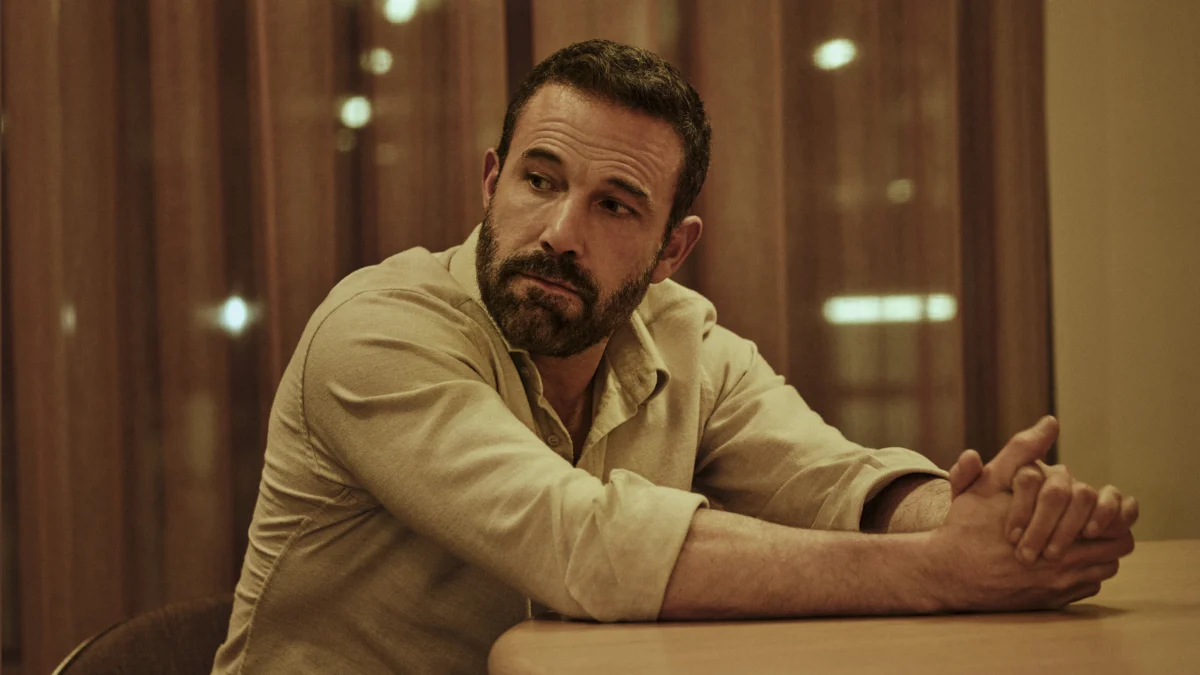
In a landmark move that underscores Hollywood’s accelerating embrace of artificial intelligence, Netflix has officially disclosed the financial terms of its acquisition of InterPositive, a pioneering startup co-founded by acclaimed actor and director Ben Affleck. A recent regulatory filing with the U.S. Securities and Exchange Commission (SEC) revealed that the streaming giant paid a substantial $587 million in cash for InterPositive, solidifying a deal that had been subject to intense industry speculation since its initial announcement. This acquisition represents a significant strategic investment by Netflix, aimed at integrating cutting-edge AI capabilities directly into its content production and post-production workflows.
The Genesis and Vision Behind InterPositive
InterPositive emerged from a confluence of creative vision and technological ambition, with Ben Affleck at its helm as a co-founder. Affleck, known for his deep engagement with the craft of filmmaking both in front of and behind the camera, articulated a clear mission for InterPositive: to "protect the power of human creativity." This statement, made public during the initial acquisition announcement in March, provided a philosophical framework for the startup’s technological advancements. Rather than seeking to replace human artists, InterPositive’s core offering centered on developing AI tools designed to augment and enhance the filmmaking process, particularly in the often-arduous and resource-intensive realm of post-production.
The specific utility of InterPositive’s AI lies in its capacity to address and rectify "real-world production challenges." These challenges are ubiquitous in filmmaking and can range from minor continuity errors to significant logistical hurdles that impact visual quality and budget. Affleck specifically cited issues such as "missing shots, background replacements or incorrect lighting." In practical terms, this could mean AI algorithms capable of seamlessly filling in gaps in footage, generating realistic background environments to replace green screens, or correcting lighting inconsistencies across different takes to ensure a cohesive visual narrative. Such capabilities promise to dramatically streamline workflows, reduce the need for costly reshoots, and potentially empower filmmakers to achieve higher production values more efficiently.
A Chronology of a High-Stakes Acquisition
The journey of the InterPositive acquisition by Netflix unfolded over several key stages, each revealing more about the strategic importance and financial magnitude of the deal.
-
March 5, 2026: Initial Announcement: Netflix first publicly announced its intent to acquire InterPositive. At this stage, the company confirmed that the entire InterPositive team would transition to Netflix, with Ben Affleck taking on a significant role as a senior advisor. However, the financial terms of the deal were not disclosed, leaving industry observers to speculate on the valuation of such a specialized AI firm. Affleck’s statement about preserving human creativity accompanied this initial reveal, setting a tone for how the technology was intended to be perceived.
-
March 11, 2026: Market Speculation Emerges: Shortly after the initial announcement, a report published by Bloomberg, citing sources familiar with the negotiations, suggested that the deal could be "worth up to $600 million." This early estimate provided the first indication of the substantial investment Netflix was making and immediately positioned the acquisition as one of the most significant in the media tech space for the year. The range of the estimate highlighted the complexity of valuing nascent AI technologies and the strategic premium Netflix was willing to pay.
-
October 29, 2026: Regulatory Filing Confirms Details: The definitive financial terms were officially revealed through a new regulatory filing with the SEC. This filing confirmed a precise cash payment of $587 million for InterPositive. The transparency mandated by regulatory bodies provided concrete data, settling previous speculation and underscoring the magnitude of Netflix’s commitment to integrating advanced AI into its operational backbone. The use of cash for such a large sum also suggests Netflix’s strong liquidity and its confidence in the immediate and long-term value InterPositive brings.
Netflix’s Broader AI Strategy and Supporting Data
The acquisition of InterPositive is not an isolated event but rather a significant piece of Netflix’s overarching and aggressive strategy to integrate generative AI across its vast content ecosystem. The company has been increasingly vocal about its investment in AI, not just for recommendation algorithms, but for content creation itself.
In its most recent earnings report, Netflix provided a striking statistic: "around 300 of its titles have already used generative AI" within the current year. This data point offers crucial context for the InterPositive acquisition, demonstrating that Netflix is not merely experimenting with AI but is actively deploying it on a wide scale. The applications of generative AI across these 300 titles could vary widely, potentially including:
- Script Analysis and Development: AI assisting writers in outlining narratives, developing characters, or even generating dialogue prompts.
- Pre-visualization: AI creating quick visual mock-ups or storyboards to accelerate pre-production.
- Visual Effects (VFX): Enhancing existing VFX pipelines, generating complex textures, or even creating realistic digital environments.
- Audio Post-production: AI assisting in sound design, voice synthesis, or cleaning up audio tracks.
- Localization: AI-powered dubbing and subtitling, which Netflix has already heavily invested in to reach its global audience.
The integration of InterPositive’s specific capabilities—focused on post-production challenges—will likely augment these existing AI initiatives, providing a specialized toolset to tackle visual imperfections and production hurdles more effectively. This systematic approach to AI adoption positions Netflix as a frontrunner in leveraging technology to gain a competitive edge in the fiercely contested streaming market.
Implications for Filmmaking and the Creative Industry
The acquisition of InterPositive by Netflix carries profound implications for the future of filmmaking, impacting everything from production workflows to the roles of creative professionals.
-
Streamlined Post-Production: The most immediate impact will be on the efficiency of post-production. InterPositive’s AI tools could drastically reduce the time and cost associated with visual effects, color grading, and shot correction. This means quicker turnaround times for projects, potentially allowing Netflix to release more content or allocate saved resources to other aspects of production. For filmmakers, it could mean more time to focus on creative storytelling rather than technical fixes.
-
Empowering Creative Visions: Ben Affleck’s emphasis on "protecting human creativity" suggests an augmentation rather than replacement model. InterPositive’s AI might empower directors and cinematographers to achieve their desired visual aesthetic even when faced with on-set limitations. For instance, if a crucial shot is marred by unexpected lighting or a distracting background element, AI could provide a non-destructive fix, preserving the original creative intent without requiring a costly reshoot. This could expand the creative possibilities for filmmakers working within budget constraints.
-
Evolution of Industry Roles: The widespread adoption of AI tools like InterPositive will inevitably lead to an evolution in the roles of post-production professionals. While some fear job displacement, many industry analysts suggest a shift towards AI-assisted workflows. VFX artists, editors, and colorists may find themselves operating alongside AI, leveraging its capabilities to handle repetitive or technically complex tasks, freeing them to focus on more nuanced artistic decisions and higher-level creative input. Training in AI proficiency could become a new essential skill set for these roles.
-
Democratization of High-Quality Production: As AI tools become more sophisticated and integrated into platforms, they could potentially democratize access to high-quality production values. Smaller studios or independent filmmakers, who might lack the budgets for extensive reshoots or complex VFX teams, could leverage AI to elevate their content’s visual fidelity, narrowing the gap between independent and studio productions.
-
Ethical Considerations and Artistic Authenticity: The increasing use of generative AI also brings forth important ethical considerations. Discussions around "deepfakes," intellectual property, and the potential for AI to blur the lines of artistic authenticity will continue to be prominent. Affleck’s stated mission to "protect human creativity" is particularly relevant here, underscoring the need for careful development and deployment of AI that serves, rather than supplants, human artistry. The industry will need to establish best practices and guidelines to navigate these complex issues.
Netflix’s Strategic Edge in the Streaming Wars
The acquisition of InterPositive is a strategic gambit by Netflix to reinforce its competitive position in the global streaming market. In an era of intense competition from Disney+, Max, Amazon Prime Video, and others, content differentiation and production efficiency are paramount.
-
Cost Efficiency and Scale: By streamlining post-production and potentially reducing reshoot costs, InterPositive’s technology can contribute to Netflix’s overall cost efficiency. This is crucial for a company that invests billions annually in original content. Greater efficiency allows Netflix to produce more content or allocate resources to larger, more ambitious projects.
-
Faster Content Pipeline: The ability to resolve production challenges quickly means content can move from production to release faster. In a subscription-based model, a consistent flow of fresh, high-quality content is vital for subscriber acquisition and retention.
-
Innovation and Brand Image: By visibly investing in cutting-edge AI, Netflix solidifies its image as a technology-forward entertainment company. This can attract top talent in both creative and technical fields, further strengthening its position. Ben Affleck’s direct involvement as a senior advisor also lends significant credibility and star power to this technological venture.
-
Talent Attraction: The promise of working with advanced tools that enhance creative output, coupled with the opportunity to collaborate with industry figures like Ben Affleck, could make Netflix an even more attractive destination for filmmakers and technical talent.
Industry Reactions and Future Outlook
While official statements from competing studios regarding the InterPositive acquisition are typically scarce, industry observers and analysts have largely viewed Netflix’s move as a shrewd strategic play. Many see it as an indicator of a broader trend where major media companies will increasingly acquire or develop proprietary AI technologies to secure competitive advantages.
Analysts suggest that other studios are likely exploring similar AI-driven solutions to enhance their own production pipelines. The landscape of media technology is rapidly evolving, and AI is becoming a non-negotiable component for maintaining relevance and efficiency. The valuation of InterPositive, nearly $600 million, also highlights the growing market value of specialized AI startups in creative industries, signaling a robust M&A environment in this sector.
Looking ahead, the integration of InterPositive’s technology is expected to become seamless within Netflix’s vast production ecosystem. Ben Affleck’s role as a senior advisor will be crucial in guiding this integration, ensuring that the AI tools truly serve the creative process and are adopted effectively by filmmakers. This acquisition is not merely about a technological upgrade; it represents a philosophical commitment by Netflix to explore how AI can redefine the boundaries of visual storytelling, potentially ushering in a new era of efficiency, creativity, and unprecedented visual quality in global entertainment. The long-term success will hinge on how effectively Netflix can operationalize these advanced tools while maintaining the artistic integrity and human touch that defines compelling cinematic experiences.
