

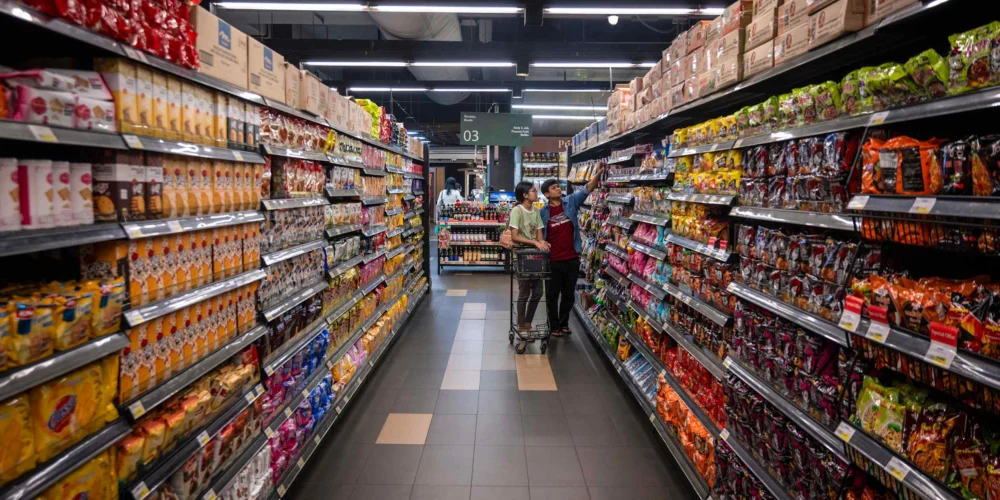
Inside a supermarket at a prominent shopping mall in Yangon, Myanmar’s commercial capital, the shelves appear meticulously stocked. However, a closer look reveals a calculated display strategy: identical products are spread out across swaths of real estate to create a veneer of abundance. This carefully curated presentation belies a growing reality for consumers in Myanmar: a significant and escalating shortage of imported goods, a direct consequence of the military regime’s increasingly stringent control over import permits. The economic landscape of Myanmar is undergoing a profound transformation, driven by political instability and the strategic tightening of trade channels, impacting everything from daily consumer choices to the broader trajectory of the nation’s economy.
The visual illusion of plentiful stock is a stark contrast to the underlying challenges faced by retailers and consumers alike. For months, the issuance of import licenses has been systematically slowed and, in many cases, outright denied by the ruling military junta, which seized power in a February 2021 coup. This policy shift, initially framed by the regime as a measure to bolster domestic production and conserve foreign exchange reserves, has had a ripple effect across various sectors of the economy. Supermarkets, once vibrant hubs for a range of international brands, are now increasingly reliant on locally sourced products. While this might seem a logical step towards self-sufficiency, the reality on the ground is far more complex, marked by limited domestic manufacturing capacity, supply chain disruptions, and a decline in purchasing power for the average citizen.
A Tightening Grip: The Chronology of Import Restrictions
The roots of the current import crisis can be traced back to the aftermath of the 2021 military coup. Following the overthrow of the democratically elected government, Myanmar plunged into political turmoil, accompanied by widespread civil disobedience, armed resistance, and a severe economic downturn. The military regime, facing international condemnation and sanctions, has sought to consolidate its control and stabilize the economy through various means, including the manipulation of trade policies.
In the initial phase, the regime implemented currency controls and devalued the Myanmar Kyat, making imports significantly more expensive. This was followed by a gradual tightening of the import licensing process. By late 2023 and early 2024, the restrictions began to bite more forcefully. Reports from business associations and individual traders indicated a sharp decline in the approval rate for import permits, particularly for non-essential goods. This period saw a noticeable shift in the types of products available in stores, with fewer imported food items, consumer electronics, and household goods.
The official justification provided by the Ministry of Commerce has consistently emphasized the need to promote local industries and reduce the outflow of foreign currency. However, critics argue that these measures are primarily aimed at exerting greater control over the economy, benefiting regime-aligned businesses, and potentially generating illicit revenue streams. The opacity of the licensing process further fuels these concerns, with allegations of favoritism and corruption becoming widespread.
By the latter half of 2025 and into early 2026, the situation had reached a critical point. Supermarket shelves, once brimming with familiar international brands, began to show significant gaps. Retailers, caught between dwindling supplies and the regime’s policies, have been forced to adapt. This has led to the strategic merchandising observed in Yangon’s prominent malls, where limited stock is artfully displayed to maintain an illusion of normalcy for consumers.
The Economic Fallout: Data and Observations
The impact of these import restrictions is not merely anecdotal; it is reflected in various economic indicators, albeit with data availability being a significant challenge in Myanmar’s current political climate.
- Declining Import Volumes: While precise, up-to-date official trade data is scarce, anecdotal evidence from importers and customs brokers suggests a dramatic reduction in the volume of goods entering the country. Sectors heavily reliant on imported components, such as manufacturing and assembly, are reportedly struggling with supply chain disruptions.
- Rising Prices: With fewer imported goods available and the Kyat facing depreciation pressure, prices for both imported and even some locally produced items have surged. Consumer price indices, where available, indicate a sustained period of inflation, disproportionately affecting lower and middle-income households. For instance, staples that were once readily available and affordable are now becoming luxury items.
- Foreign Exchange Shortages: The regime’s stated goal of conserving foreign exchange is a critical factor. Myanmar’s foreign currency reserves have been under pressure due to a combination of reduced export earnings, the suspension of international financial transactions, and the capital flight that followed the coup. The restriction on imports is a direct attempt to manage this dwindling resource.
- Impact on Local Industries: While the regime aims to boost domestic production, the reality is that many local industries are heavily dependent on imported raw materials and machinery. The lack of access to these inputs, coupled with the economic contraction, is hindering the growth of these sectors. Some local manufacturers have been forced to reduce production or cease operations altogether.
- Shift in Consumer Behavior: Consumers are increasingly being forced to adapt their purchasing habits. There is a noticeable shift towards cheaper, locally produced alternatives, even if their quality or variety is inferior. This has created opportunities for domestic producers, but the overall impact on consumer welfare is negative due to reduced choice and higher prices for essential goods.
Reactions from Stakeholders: A Spectrum of Concerns
The import restrictions have elicited a range of reactions from various stakeholders, though public dissent is heavily suppressed.
- Retailers and Importers: Many businesses involved in importing and retail are facing severe financial strain. They report difficulties in securing import licenses, increased operational costs due to currency fluctuations and unofficial payments, and dwindling inventory. Some have been forced to downsize their operations or pivot to entirely different business models. "We used to import a wide range of dairy products and snacks from abroad," said a supermarket manager in downtown Yangon, who requested anonymity for fear of reprisal. "Now, we are lucky if we can get a fraction of our usual order. We are filling the shelves with local biscuits and candies, but our customers miss the variety."
- Consumers: The impact on consumers is felt daily. They are faced with fewer choices, higher prices, and a decline in the quality of goods available. Frustration is palpable, but the space for open expression of discontent is limited. Many are resorting to informal networks to source desired goods, often at inflated prices.
- Business Associations: Chambers of commerce and industry associations, where they still function, have reportedly attempted to engage with the regime to advocate for a more predictable and open trade policy. However, their influence appears to be limited, and their concerns often go unaddressed. The lack of transparency in the import licensing process remains a major point of contention.
- International Observers and Analysts: International organizations and economic analysts have voiced concerns about the long-term consequences of these protectionist policies. They warn that such measures, implemented in an unstable political environment without addressing underlying structural issues, are likely to stifle economic growth, reduce foreign investment, and exacerbate poverty.
Broader Implications: A Nation at a Crossroads
The current trade restrictions are not an isolated policy; they are indicative of a broader strategy by the military regime to exert tighter control over Myanmar’s economy and resources. The implications are far-reaching:
- Economic Isolation: The regime’s policies are further isolating Myanmar from the global economy. Reduced trade volumes and a deteriorating business environment discourage foreign investment, which is crucial for long-term development.
- Stunted Economic Growth: By restricting access to essential imported inputs and limiting competition, the regime is likely to stifle innovation and economic diversification. The focus on protectionism, without fostering genuine domestic competitiveness, could lead to inefficient industries and a lower overall standard of living.
- Increased Inequality: The rising cost of living and the scarcity of goods disproportionately affect the poor and vulnerable. While some regime-aligned businesses might benefit from preferential treatment, the majority of the population is likely to experience a decline in their purchasing power and quality of life.
- Erosion of Consumer Choice and Quality: The long-term reliance on potentially less advanced or quality-controlled domestic production could lead to a permanent erosion of consumer choice and a decline in product standards.
- Fueling the Informal Economy and Corruption: The opaque nature of the import licensing system creates fertile ground for corruption and the expansion of the informal economy, which operates outside the purview of regulations and taxation, further undermining governance.
The carefully arranged shelves in Yangon’s supermarkets are a visual metaphor for the broader economic landscape of Myanmar: a facade of normalcy attempting to mask deep-seated challenges. The military regime’s deliberate restriction of import permits, while ostensibly aimed at boosting domestic production and conserving foreign exchange, is instead exacerbating economic hardship, limiting consumer choice, and potentially setting back the nation’s development for years to come. The path forward for Myanmar’s economy hinges on a fundamental shift in policy, one that prioritizes transparency, fosters genuine competition, and integrates the nation into the global economic community rather than isolating it further. Until such a shift occurs, the illusion of abundance on supermarket shelves will continue to serve as a poignant reminder of the scarcity faced by the people of Myanmar.
