

Meta’s Superintelligence Lab officially announced the release of two new state-of-the-art large language models (LLMs) on Monday: Muse Wonder and Muse Wonder Full. This launch represents a significant strategic pivot for the tech giant, marking its explicit entry into the highly competitive "frontier model" arena, where companies strive to develop the most advanced and capable artificial intelligence systems. The new models are positioned as a substantial leap forward from Meta’s previous AI endeavors, signaling an intensified commitment to leading the charge in AI innovation and challenging established leaders in the field.
A New Chapter in Meta’s AI Strategy
The introduction of Muse Wonder and Muse Wonder Full signifies a crucial turning point for Meta’s AI division, which has undergone substantial restructuring and strategic reorientation over the past year. While Meta has previously contributed significantly to the open-source AI community with models like LLaMA and has developed lightweight, low-latency solutions such as Muse Spark, these new models are designed to compete directly with the industry’s most powerful and sophisticated proprietary AI systems. Muse Spark, released earlier, was optimized for speed and efficiency in less demanding applications, whereas the Wonder series prioritizes raw capability and performance on complex cognitive tasks.
According to Meta’s internal assessments, detailed in their accompanying model card, Muse Wonder and Muse Wonder Full exhibit capabilities comparable to some of the most highly regarded frontier models currently available, including Fable 5.1 and GPT-6 Astra. This places Meta squarely in contention with major players like Google’s DeepMind (presumed developer of Fable) and OpenAI (developer of the GPT series), as well as Anthropic (developer of the Opus series). The benchmark scores achieved by the Wonder models across various evaluations, particularly their improved performance on complex tasks such as coding, underscore Meta’s ambition to not only participate but to lead in the development of next-generation AI.
In a blog post accompanying the launch, Meta underscored the significance of these new models, stating, "Together, they mark the next step on our scaling ladder and a major leap toward personal superintelligence." This ambitious declaration highlights Meta’s long-term vision, which increasingly centers on integrating advanced AI into personalized user experiences across its vast ecosystem of platforms.
Deep Dive into Capabilities and Architecture
The Muse Wonder models distinguish themselves from their predecessor, Muse Spark, primarily through their scale and enhanced capabilities. While specific architectural details like parameter counts were not fully disclosed, the industry generally understands that "larger" models typically imply a greater number of parameters, more extensive training datasets, and consequently, a deeper capacity for understanding context, generating nuanced responses, and performing intricate reasoning tasks. Muse Spark was designed with efficiency in mind, catering to applications where rapid response times and minimal computational overhead were paramount. The Wonder series, however, appears to be engineered for depth and versatility, capable of tackling more demanding analytical and creative challenges.
The models’ improved performance on coding tasks is particularly noteworthy. Coding benchmarks, such as HumanEval or CodeXGLUE, often require an AI to understand problem specifications, generate logical and syntactically correct code, and even debug or optimize existing code. Excelling in these areas indicates a strong grasp of logical structures, problem-solving abilities, and the capacity to generate precise, functional output – traits essential for truly intelligent agents. This proficiency suggests that Muse Wonder could become a powerful tool for developers, automating parts of the software development lifecycle, assisting with complex algorithms, or even translating natural language requests into functional code.
Competitive Pricing and Strategic Availability
Access to Muse Wonder will be facilitated through the Meta Model API, with a pricing structure set at $4 per million input tokens and $20 per million output tokens. This pricing strategy positions Muse Wonder competitively within the high-end LLM market, aligning it roughly with the cost profiles of models like GPT-6 Sol and Opus 5.5. Such pricing reflects the substantial computational resources required for inference with these advanced models and signals Meta’s confidence in their value proposition to enterprise clients and developers.
A notable distinction in the release strategy concerns Muse Wonder Full. This even more powerful variant will be exclusively available to Muse Code subscribers and will not be accessible via the public API. This controlled distribution suggests that Muse Wonder Full might be reserved for premium users, specific strategic partners, or internal Meta applications that demand the absolute peak of AI performance. It could also serve as an incentive for developers and power users to subscribe to Meta’s developer ecosystem, fostering a loyal community around its most advanced tools. Both Muse Wonder and Muse Wonder Full are also slated to power the underlying intelligence of the Muse agent, Meta’s proprietary AI assistant, indicating a deep integration into Meta’s consumer-facing products.
The Era of "Active Memory" and Personal Superintelligence
A cornerstone of Meta’s vision for these new models, and indeed for its broader AI strategy, is the concept of "active memory." Meta has placed particular emphasis on the Wonder models’ ability to retain and synthesize information provided by the user over extended periods. This goes beyond typical short-term conversational context windows, aiming for a persistent, evolving understanding of a user’s preferences, history, and ongoing tasks.
To validate this crucial capability, Meta highlighted its performance on the MemoryBench benchmark. MemoryBench is designed to rigorously test continual learning and memory construction frameworks in AI models, challenging them to remember details, contexts, and user interactions over days, weeks, and even months. Unlike traditional benchmarks that often evaluate performance on isolated tasks, MemoryBench assesses an AI’s ability to build and maintain a coherent, long-term understanding, mimicking the way human memory functions in ongoing relationships and projects. According to Meta’s testing, Muse Wonder now scores higher on MemoryBench than competing models from Fable, Opus, or Astra, suggesting a significant breakthrough in this critical area.
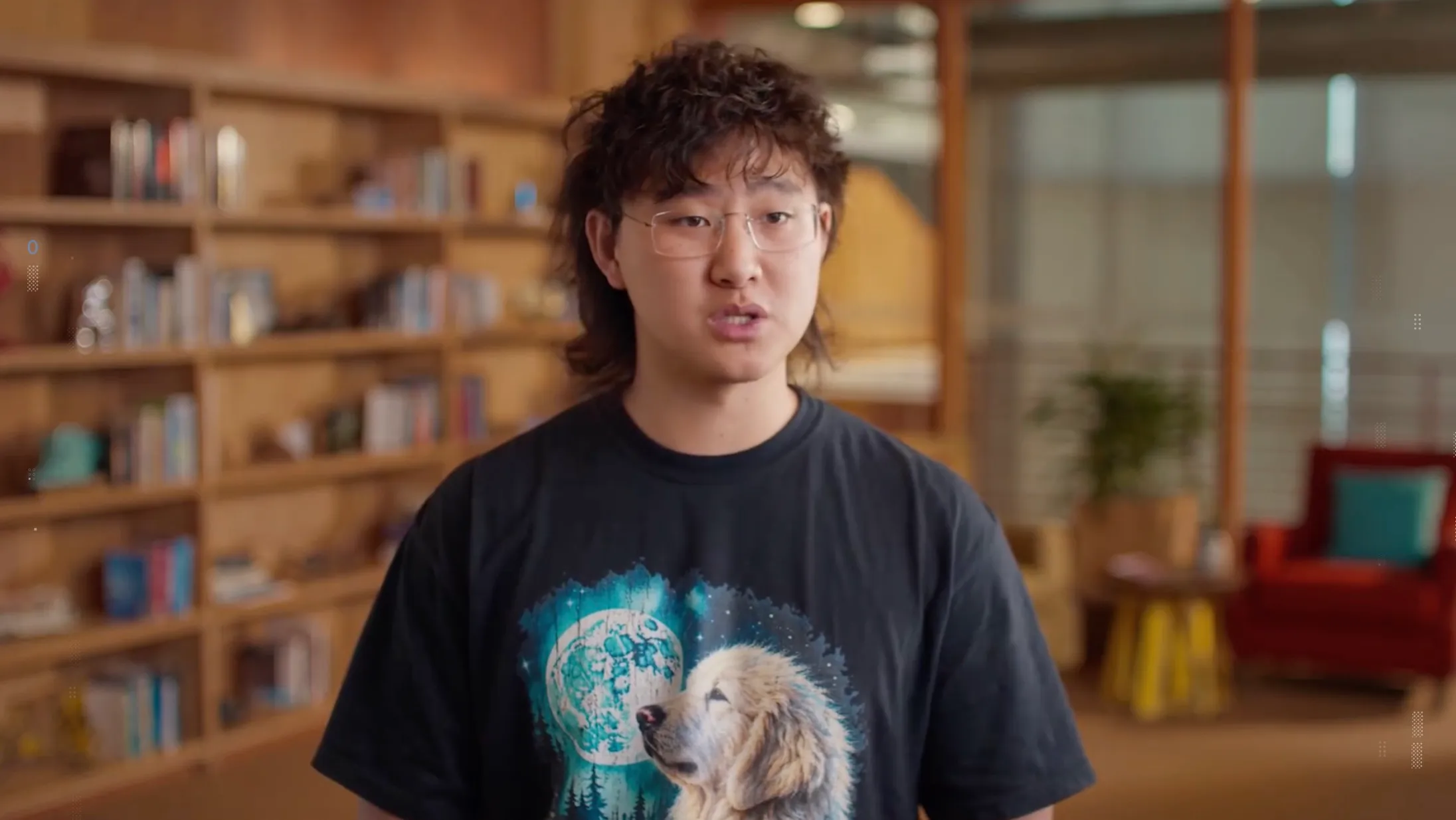
Research scientist Kavya Kopparapu, in a video accompanying the launch, underscored the importance of this feature: "We put a tremendous amount of effort into making sure your model can remember what’s important to you over days, weeks, months, and beyond." This emphasis aligns perfectly with Meta’s broader interest in developing sophisticated personal assistants that can not only answer queries but also proactively assist users by understanding their evolving needs and preferences across multiple interactions and over long durations. This "personal superintelligence" vision posits an AI that acts as a highly personalized, ever-present cognitive partner, capable of managing complex tasks, learning from experience, and adapting to individual user styles.
Strategic Realignment Under Alexandr Wang
The release of Muse Wonder and Muse Wonder Full marks the first "frontier model" release since Alexandr Wang, the founder of Scale AI, was brought in to restructure Meta’s sprawling AI efforts in August of last year. Wang’s appointment signaled a clear intent from Meta CEO Mark Zuckerberg to streamline and accelerate the company’s AI development, particularly in the realm of foundational models. Before Wang’s arrival, Meta’s AI initiatives, while extensive and impactful, were often perceived as somewhat fragmented, with a strong focus on open-source contributions and academic research.
Wang’s mandate was to consolidate these efforts, sharpen their strategic focus, and orient them towards creating market-leading products. Since his restructuring, Meta has released the lightweight Muse Spark model and the broader Muse agent, demonstrating a concerted effort to bring its AI research into practical applications. However, prior to this week’s announcement, Meta had largely avoided the kind of high-profile, state-of-the-art model releases that have become synonymous with OpenAI and Anthropic, leading some observers to question Meta’s competitive positioning in the proprietary frontier model race. The launch of the Wonder series definitively answers those questions, positioning Meta as a serious contender at the very top echelon of AI development.
The Power of Prometheus: Meta’s Infrastructure Advantage
The training of these immensely powerful models was conducted at Meta’s cutting-edge Prometheus data center, located in central Ohio. This facility, which came online earlier this year, has been lauded as potentially the "world’s highest capacity data center." The sheer scale of Prometheus underscores the colossal infrastructure required to develop and deploy frontier AI models. Training an LLM with billions or even trillions of parameters demands an astronomical amount of computational power, energy, and data storage.
Prometheus represents Meta’s strategic investment in proprietary infrastructure, providing the company with an unparalleled environment for large-scale AI research and development. Having dedicated, purpose-built data centers allows Meta to control every aspect of the training process, from hardware optimization to energy efficiency, which is critical for iterating on and refining models of this complexity. The existence of such a facility provides Meta with a significant competitive advantage, ensuring it has the computational muscle necessary to keep pace with, and potentially surpass, its rivals in the global AI arms race. The Ohio location also represents a growing trend of major tech companies investing in large-scale data infrastructure outside traditional tech hubs, bringing economic development and high-tech jobs to new regions.
Broader Implications and the Future of AI
The release of Muse Wonder and Muse Wonder Full is poised to have significant implications across several dimensions.
Intensified AI Competition: This move unequivocally places Meta as a direct and formidable competitor to OpenAI, Google, and Anthropic in the race for general artificial intelligence. It signals that the "AI arms race" is far from settled, with major tech giants committing immense resources to developing increasingly capable models. This heightened competition is likely to accelerate innovation across the industry, potentially leading to faster advancements in AI capabilities and applications.
Democratization and Accessibility: While Muse Wonder Full is restricted, the API access for Muse Wonder means that its advanced capabilities will be available to a broader ecosystem of developers and businesses. This could spur a new wave of AI-powered applications, from enhanced customer service bots to more sophisticated content creation tools and personalized educational platforms. The competitive pricing also makes cutting-edge AI more accessible, potentially lowering the barrier to entry for smaller companies and startups looking to integrate advanced AI into their offerings.
The Vision of Personal AI Agents: Meta’s strong emphasis on "active memory" and "personal superintelligence" highlights a clear strategic direction: the development of highly capable, personalized AI agents that can seamlessly integrate into daily life. Such agents could transform how users interact with technology, moving beyond simple command-and-response systems to proactive, context-aware assistants that anticipate needs, manage information, and facilitate complex tasks across various digital platforms. This vision aligns with Mark Zuckerberg’s long-term ambitions for the metaverse, where AI agents could serve as intelligent companions and facilitators within immersive digital environments.
Ethical and Safety Considerations: As AI models grow in capability and autonomy, particularly with features like active memory, the ethical and safety implications become increasingly important. Questions around data privacy, potential biases embedded in training data, the risk of "hallucinations" (generating false information), and the need for robust safety protocols will undoubtedly come to the forefront. Meta, like other frontier AI developers, will face scrutiny regarding its efforts to ensure these powerful models are deployed responsibly and ethically. The development of advanced memory systems also raises new challenges for ensuring user control over their personal data and the model’s retained knowledge.
Conclusion
Meta’s launch of Muse Wonder and Muse Wonder Full marks a pivotal moment in its AI journey and for the broader artificial intelligence landscape. By introducing models that compete directly at the frontier of AI capability, Meta has demonstrated its renewed commitment to leading in this transformative technology. With a strategic focus on "active memory" and the ambitious goal of "personal superintelligence," backed by massive infrastructure investments like the Prometheus data center, Meta is not just participating in the AI race—it’s signaling an intent to redefine its boundaries. The coming years will reveal how these powerful new models will reshape Meta’s product ecosystem and influence the trajectory of AI development worldwide.
