

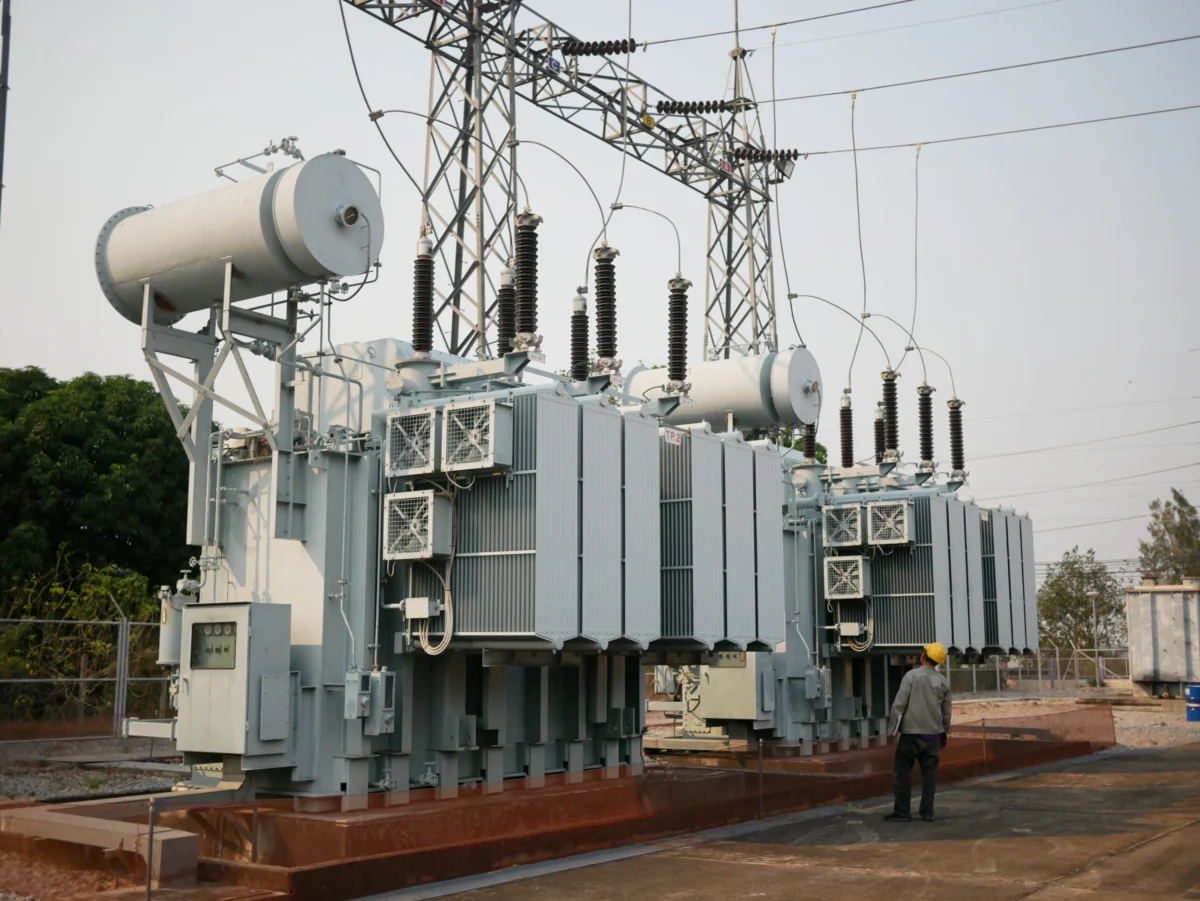
The United States power grid is currently navigating its most significant transformation since the post-World War II electrification era. As the nation pivots toward a decarbonized economy, integrates energy-intensive artificial intelligence data centers, and adapts to the widespread adoption of electric vehicles (EVs), the physical infrastructure required to manage this load is under unprecedented strain. To address a burgeoning crisis of supply chain bottlenecks and historically long lead times, several of the world’s leading original equipment manufacturers (OEMs) have announced a series of massive domestic investments. These commitments, totaling billions of dollars, are designed to expand the manufacturing of transformers, circuit breakers, high-voltage cables, and electrical enclosures—the literal nuts and bolts of the modern energy transition.
The urgency of these investments cannot be overstated. Industry research from organizations like the National Electrical Manufacturers Association (NEMA) projects that U.S. electricity demand will grow by more than 50% through 2050. However, the ability to meet this demand is currently hampered by a "transformer famine." Lead times for large power transformers, which once averaged 12 to 18 months, have ballooned to three or four years in some regions. Without these critical components, new renewable energy projects cannot connect to the grid, and existing infrastructure cannot be hardened against extreme weather events.
The Strategic Shift Toward Domestic Manufacturing
The recent flurry of investment announcements reflects a broader strategic shift within the energy sector. For decades, the industry relied on global supply chains that prioritized cost-efficiency. However, the disruptions caused by the COVID-19 pandemic, coupled with geopolitical instability and the incentives provided by the Inflation Reduction Act (IRA) and the Infrastructure Investment and Jobs Act (IIJA), have prompted a "near-shoring" and "on-shoring" trend. By building closer to the point of demand, OEMs aim to reduce logistical risks, shorten delivery windows, and provide utilities with the certainty required for long-term capital planning.
Eaton’s Massive Expansion in the Mid-South
Power management giant Eaton is at the forefront of this manufacturing resurgence. The company recently announced a $242 million investment to significantly expand its U.S. manufacturing footprint, centered on a new facility in North Little Rock, Arkansas. This 1 million-square-foot plant is specifically designed to double Eaton’s production capacity for customized electrical enclosures from its Fibrebond business.

Electrical enclosures are vital for protecting sensitive grid components from environmental hazards. As data centers and industrial facilities become more complex, the demand for modular, prefabricated enclosures has skyrocketed. Eaton’s new facility is expected to create over 1,200 jobs, ranging from high-tech electrical engineering roles to specialized operations positions.
Mike Yelton, president of Eaton’s American electric sector, noted that the investment is a direct response to customer needs for speed and scale. By utilizing modular designs, utilities and data center operators can deploy power infrastructure faster than traditional "stick-built" methods. This facility builds upon Eaton’s existing presence in Minden, Louisiana, creating a regional hub for electrical infrastructure production.
Siemens Targets Data Centers and Industrial Markets
Siemens, a global leader in electrical engineering, has also doubled down on its American operations with a combined investment of over $200 million. The company is focusing its efforts on Georgia and Texas, two states experiencing rapid industrial and population growth.
In Pendergrass, Georgia, Siemens is investing $185 million in a 550,000-square-foot facility dedicated to low-voltage electrical infrastructure products. This site will specifically serve the data center market, which has become a primary driver of grid demand due to the global AI boom. In Grand Prairie, Texas, a $19 million investment will enhance a flagship switchgear factory. This smaller but high-impact site will focus on factory acceptance testing and warehousing, addressing a common bottleneck where finished products sit idle awaiting final certification before deployment.
These investments are expected to create 1,500 jobs, further cementing Siemens’ role as a cornerstone of the U.S. energy supply chain. The company’s focus on switchgear and low-voltage systems is particularly relevant as semiconductor manufacturing and healthcare facilities—both of which require highly stable and redundant power supplies—continue to expand domestically.

Southwire’s Modernization and the 2050 Vision
Southwire, one of North America’s largest wire and cable producers, has announced a $256 million investment in its Starkville, Mississippi, operations. This move is part of a much larger, company-wide modernization strategy involving more than $2 billion in capital expenditures.
The Starkville expansion will add 380,000 square feet to the existing site, integrating advanced manufacturing machinery to produce the high-voltage cables necessary for long-distance transmission. As the U.S. seeks to bring wind and solar power from remote rural areas to urban load centers, the demand for sophisticated cabling has reached record highs.
Construction on the Starkville expansion is slated to begin in late 2026, with full operational capacity expected by 2028. Rohan Kelkar, Southwire’s EVP of power and industrial, emphasized that this capacity is essential to support the "rapid expansion of data centers" and the overarching goal of national electrification.
Trench Group and the 765kV Backbone
A significant milestone in the domestic supply chain was reached with the opening of HSP US’s first manufacturing facility in Charlotte, North Carolina. HSP US, a Trench Group company, invested $60 million to produce high-voltage transformer bushings ranging from 25kV to 765kV.
Bushings are critical components that allow conductors to pass safely through the grounded tank of a transformer. The Charlotte facility is particularly notable for its ability to produce 765kV bushings. As the U.S. builds out its 765kV transmission backbone—the "superhighways" of the power grid—having a domestic source for these components is a major strategic advantage.

Trench Group’s decision to move into the U.S. market followed a staggering 400% increase in North American orders since 2024. The facility was completed in just 18 months, demonstrating the industry’s ability to move quickly when market signals are strong. Bahadir Basdere, CEO of Trench Group, highlighted that the U.S. is now one of the most important markets globally for high-voltage transmission expansion.
Specialized Growth: G&W Electric and Niagara Power Transformer
While the largest OEMs are building massive new plants, specialized manufacturers are also expanding to fill niche but vital roles. G&W Electric recently announced a new 291,305-square-foot facility in Romeoville, Illinois. This site will focus on the production of Viper and Viper-HV automatic circuit reclosers—devices that automatically "reset" the grid after a temporary fault, such as a tree branch touching a line. This technology is essential for improving grid resilience and reducing the duration of power outages.
In New York, Niagara Power Transformer is undergoing a $71 million expansion of its Cheektowaga operations. This century-old company plans to increase its production of customized power transformers by 50%, aiming to produce up to 140 units annually by 2028. This expansion is critical for smaller utilities and industrial sites that require bespoke transformer solutions rather than mass-produced units.
Analysis: Implications for Grid Reliability and the Economy
The collective impact of these investments extends far beyond the factory floor. From a grid reliability perspective, increasing domestic manufacturing capacity reduces the "single point of failure" risk associated with relying on a handful of international suppliers. In an era where extreme weather events are becoming more frequent, the ability to source replacement parts within the country is a matter of national security.
Economically, these projects represent a revitalization of the American industrial heartland. The creation of thousands of high-skilled manufacturing jobs in Arkansas, Mississippi, Georgia, and the Carolinas provides a significant boost to local tax bases and supports a broader ecosystem of subcontractors and service providers.

However, challenges remain. The industry continues to grapple with a shortage of skilled labor, including specialized welders, electrical engineers, and factory technicians. Furthermore, while manufacturing capacity is increasing, the regulatory and permitting process for new transmission lines remains a significant hurdle. Even if every transformer needed for the next decade were built today, the grid cannot expand without the legal and environmental approvals required to string new wires across state lines.
Chronology of Recent Grid Manufacturing Milestones
- 2023-2024: Lead times for large power transformers peak at over 150 weeks, prompting federal inquiries into supply chain stability.
- Early 2024: Trench Group breaks ground on its Charlotte facility; Siemens announces its Georgia and Texas expansion plans.
- Mid-2024: Eaton confirms the $242 million North Little Rock investment as part of its modular infrastructure strategy.
- Late 2024: G&W Electric completes the transition of circuit recloser production to its new Romeoville site.
- 2025 (Projected): First deliveries of domestically produced 765kV bushings from Trench Group’s Charlotte plant.
- 2026: Southwire begins construction on its Starkville expansion; Eaton’s North Little Rock facility reaches full operational status.
- 2028: Niagara Power Transformer and Southwire expansions are expected to reach full capacity, marking a significant increase in total U.S. grid equipment output.
Conclusion: Meeting the 2050 Challenge
The aggressive expansion of U.S. electrical manufacturing marks a turning point in the nation’s energy history. For years, the grid was viewed as a static asset to be maintained; today, it is recognized as a dynamic platform that must be rapidly scaled to support a new industrial revolution.
The investments by Eaton, Siemens, Southwire, Trench Group, and others provide the physical foundation for this growth. By resolving the equipment shortages that have plagued the industry for the past several years, these companies are ensuring that the U.S. power system can keep pace with the demands of the 21st century. As the 2050 deadline for various decarbonization goals approaches, the success of the energy transition will depend on whether this new manufacturing capacity can be sustained and integrated into a modernized, resilient, and reliable national grid.
