

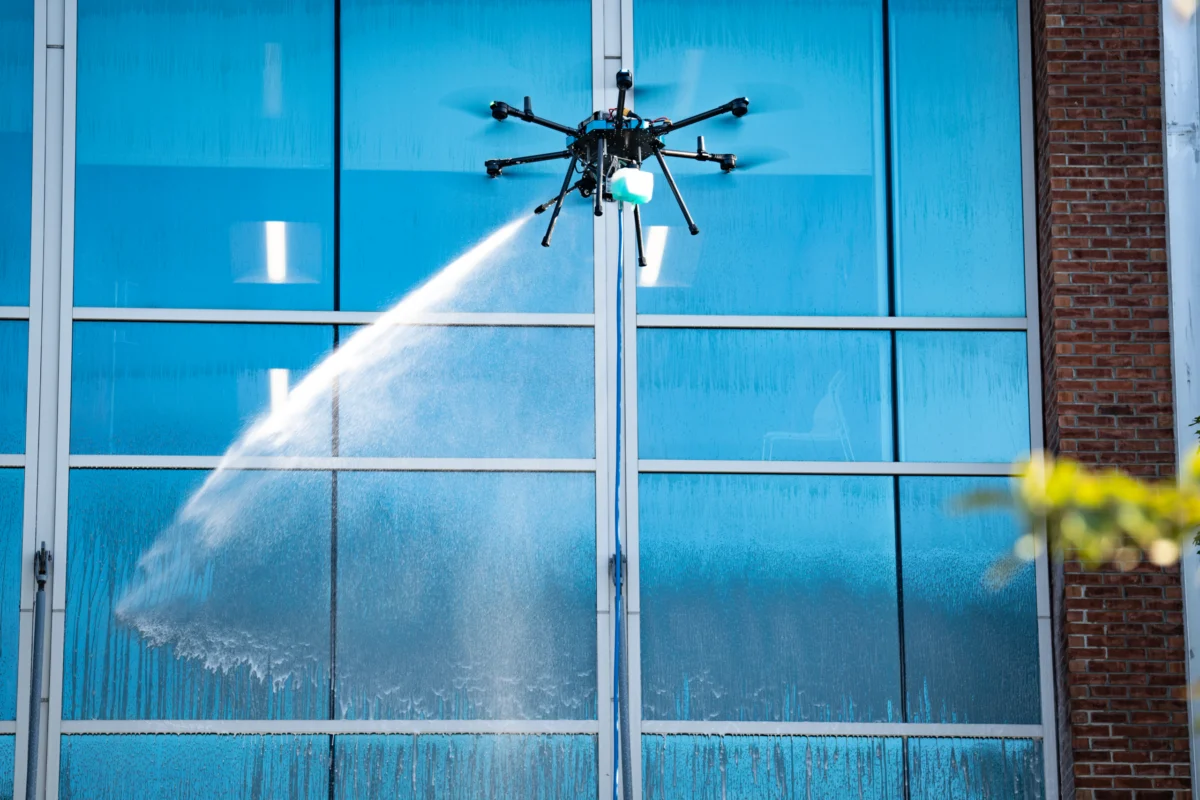
Charlotte, North Carolina-based Lucid Bots, a pioneering force in the application of robotics to industrial maintenance, has successfully closed a $20 million Series B funding round. This latest investment, co-led by Cubit Capital and Idea Fund Partners, brings the company’s total funding to an impressive $34 million. The capital injection is earmarked for significant expansion, primarily focusing on scaling manufacturing capacity and bolstering its workforce to meet surging demand for its specialized cleaning and maintenance drones and robots. This financial milestone underscores a growing investor confidence in robotics companies that prioritize tangible, real-world utility over speculative, futuristic concepts.
The Funding Milestone and Investor Confidence
The $20 million Series B round marks a pivotal moment for Lucid Bots, affirming its business model and the efficacy of its robotic solutions. This substantial investment follows a prior $9 million raise, demonstrating a clear trajectory of growth and market validation. Andrew Ashur, founder and CEO of Lucid Bots, articulated the immediate impact of the funding, highlighting the company’s urgent need to expand operations. "We have more requests for demos than we have hours in the day," Ashur stated, indicating the overwhelming market pull for their products. This demand has even led to a humorous, yet telling, issue: the company has reportedly run out of parking spots at its manufacturing facility, a testament to its rapid expansion and the influx of new hires. The focus on increasing headcount and production capacity directly addresses this bottleneck, ensuring Lucid Bots can capitalize on its market momentum.
Investors, including Cubit Capital and Idea Fund Partners, are backing a strategy that deliberately diverges from much of the current robotics narrative. While many venture capitalists are pouring funds into companies developing humanoid robots or showcasing dazzling, albeit often unproven, feats of robotic agility like dancing and complex acrobatics, Lucid Bots is focused on the immediate, practical, and often overlooked needs of industrial maintenance. This investment reflects a strategic shift towards robotics solutions that offer clear, measurable returns on investment (ROI) through enhanced safety, efficiency, and cost savings in challenging environments.
A Contrarian Vision: Performance Over Pomp
Ashur frequently quips that Lucid Bots operates as the "antithesis" of the prevailing robotics industry trend. This sentiment is rooted in the company’s commitment to delivering demonstrable performance on job sites rather than engaging in what Ashur calls "hype and headlines." In an era where advanced robotics often conjures images of intelligent humanoids or highly dexterous machines, Lucid Bots grounds its innovation in the prosaic yet critical tasks of industrial upkeep. Their Sherpa drones and Lavo robots are not designed for entertainment or abstract problem-solving; they are engineered for the rigorous, repetitive, and often dangerous work of cleaning high-rise windows, waterproofing structures, and performing other maintenance tasks.
"The sad truth is most are still selling a lot of hype and headlines, and we sell performance on the job site that shows up in our customers’ profits and losses," Ashur explained to TechCrunch. This philosophy permeates the company’s culture and product development. Lucid Bots isn’t just a lab-based operation; it’s a company with "dirt under our fingernails," deeply embedded in understanding and solving real-world challenges faced by its customers. This hands-on approach, combined with a focus on immediate economic benefit, positions Lucid Bots as a pragmatic leader in the evolving landscape of commercial robotics.
Addressing Critical Industry Gaps: Safety, Efficiency, and Labor
The genesis of Lucid Bots traces back to a pivotal observation by Andrew Ashur during his junior year at Davidson College. Witnessing window washers on a windy day, their swing stage precariously buffeted against a building, sparked an immediate concern for worker safety and a realization of technology’s potential to mitigate such risks. This moment of clarity evolved into a mission to automate some of the world’s most dangerous and arduous jobs.
Ashur identifies three compounding issues plaguing the maintenance of built infrastructure, which he notes is "literally the largest asset class in the world":
- Aging Infrastructure: A significant portion of global infrastructure is nearing or has surpassed its intended lifespan, requiring intensive maintenance and repair.
- Increasing Complexity and Scale: Modern buildings and structures are becoming taller, more complex, and harder to access, making traditional maintenance methods increasingly challenging and costly.
- Labor Shortage: There is a growing scarcity of skilled labor willing and able to perform these often hazardous and physically demanding jobs. According to the Bureau of Labor Statistics, occupations related to building cleaning and maintenance continue to face recruitment challenges, particularly for tasks involving heights or specialized equipment.
These interconnected challenges create a compelling need for automated solutions. Manual window cleaning, for example, is notoriously dangerous. The Occupational Safety and Health Administration (OSHA) frequently reports on accidents and fatalities related to falls from heights in construction and maintenance sectors. Robotics offers a viable pathway to remove human workers from these perilous situations, drastically improving safety records and reducing liability for companies. Moreover, robots can operate continuously, often faster, and with greater consistency than human counterparts, leading to significant efficiency gains and cost reductions over time.
From Concept to Commercialization: Lucid Bots’ Journey
Lucid Bots was officially launched in 2018. However, its initial phase was not immediately focused on product development. Instead, Ashur and his team embarked on a pragmatic learning expedition, operating as a contract cleaning company. This immersive strategy allowed them to gain firsthand experience with the intricacies, challenges, and specific needs of the industrial cleaning industry. Ashur humorously recalls enduring "a few cleaning chemical burns" during this period, underscoring the depth of their commitment to understanding the operational realities. After two years of direct engagement, by 2020, they had accumulated invaluable insights, enabling them to precisely define the requirements for a successful robotic cleaning drone.
The path to commercial success was not without its hurdles. Ashur recounts the initial difficulty in securing investor backing, particularly as a founder with a liberal arts background (economics and Spanish) and no prior robotics experience. This speaks to the inherent skepticism often faced by innovators challenging conventional industry norms. Furthermore, the early adoption of their technology was gradual. It took Lucid Bots half a decade to ship its first 100 robots, a testament to the time and effort required to develop, refine, and prove a novel industrial solution.
However, once market validation began to solidify, the momentum accelerated dramatically. The company’s sales trajectory has seen a significant upswing recently, transitioning from 100 units sold over five years to now approaching 1,000 units. This exponential growth illustrates the tipping point reached as the technology matured, its benefits became undeniable, and customer testimonials began to drive further adoption. This rapid scaling from early struggle to widespread acceptance mirrors the typical adoption curve for disruptive industrial technologies, where initial skepticism gives way to enthusiastic embrace once proven efficacy and ROI are established.
Technological Prowess: The Sherpa and Lavo Systems
At the heart of Lucid Bots’ offerings are its proprietary robotic systems: the Sherpa drones and the Lavo robot. These are not merely off-the-shelf components assembled; Lucid Bots operates as a full-stack robotics company, meaning it designs and manufactures its robots entirely in the U.S. This vertical integration allows for tighter quality control, rapid iteration, and customization capabilities, ensuring their products are specifically tailored to the demanding environments they operate in.
The Sherpa drones are aerial platforms equipped with specialized cleaning apparatus, designed to navigate the exteriors of buildings, applying cleaning solutions and rinsing surfaces with precision. The Lavo robot likely complements this by handling ground-level or interior tasks, although the article primarily focuses on the drones for high-rise work. A key aspect of their technological advancement is the continuous improvement loop. Data collected by the robots during their operations — such as surface conditions, cleaning efficacy, and operational parameters — is fed back into the underlying software. This data-driven approach enables ongoing refinement of both the hardware and software, enhancing performance, efficiency, and reliability over time. This iterative development model ensures Lucid Bots’ products remain at the forefront of industrial maintenance robotics.
Expanding Horizons: Beyond Window Cleaning
While initially gaining prominence for automated window cleaning, Lucid Bots is strategically expanding the utility of its robotic platforms into adjacent, high-demand industrial categories. The inherent versatility of their robotic "brain and frame" allows for adaptation to a broader spectrum of tasks. Ashur highlighted a recent success where a Sherpa drone, using the same core technology, was deployed to waterproof a massive university stadium that was showing signs of aging.
This expansion is not merely speculative; it is driven by direct customer pull and market demand. Ashur noted a significant volume of inbound leads—approximately 50 per month—related to painting and coating applications, even before the company actively marketed these new capabilities. This organic demand validates Lucid Bots’ strategy of building robust, adaptable platforms rather than single-purpose machines. The company is actively developing tools that will enable its bots to be used for a range of applications, including painting, waterproofing, and sealing. This diversification leverages their existing technological investment and opens up vast new market opportunities within the broader infrastructure maintenance sector, further solidifying their position as a versatile industrial robotics provider.
Market Dynamics and the Future of Service Robotics
Lucid Bots’ success comes amidst a burgeoning global market for service robotics. Analysts at Mordor Intelligence project the service robotics market to grow significantly, driven by increasing automation in logistics, healthcare, and professional cleaning. Within this context, industrial maintenance robotics represents a crucial sub-segment, addressing critical needs for safety, efficiency, and sustainability. The global industrial cleaning market alone is valued in the tens of billions of dollars, presenting a massive addressable market for companies like Lucid Bots.
The company’s "anti-hype" stance resonates with a growing number of investors and industry observers who advocate for a more grounded approach to robotics development. While advanced research into humanoids and general-purpose AI continues, the immediate economic impact and widespread adoption often stem from specialized robots solving specific, well-defined problems. This pragmatic approach is proving to be a more sustainable model for growth and profitability in the robotics sector, contrasting with the often over-hyped promises of general-purpose AI and humanoid robots that are still many years away from widespread commercial viability. Lucid Bots’ journey from a founder with no robotics background to a $34 million-funded company serves as a compelling case study for this practical, problem-solving orientation.
Implications for the Workforce and Infrastructure
The deployment of robotics in industrial maintenance carries significant implications for both the existing workforce and the longevity of infrastructure. For workers, it means a potential shift away from dangerous, repetitive tasks towards roles involving robot operation, maintenance, and oversight. This transition necessitates reskilling and upskilling initiatives, but ultimately promises a safer working environment and potentially more intellectually stimulating jobs. Rather than displacement, the long-term trend may involve a redefinition of human-robot collaboration, where humans supervise and optimize robotic operations.
For infrastructure, the implications are profound. Automated maintenance can lead to more consistent and frequent upkeep, potentially extending the lifespan of buildings and structures, reducing the need for costly major repairs, and improving overall aesthetic appeal. In an era where urban density and architectural complexity are increasing, robotics offers a scalable solution to maintain these assets effectively. By bridging the gap between aging infrastructure, complex new constructions, and a shrinking labor pool, Lucid Bots and similar companies are poised to play a crucial role in ensuring the sustainability and functionality of the world’s built environment.
In conclusion, Lucid Bots’ recent $20 million Series B funding is more than just a financial injection; it’s a powerful endorsement of a practical, performance-driven approach to robotics. By eschewing the flashier aspects of the industry in favor of solving real-world, often dangerous, problems in industrial maintenance, Andrew Ashur and his team have carved out a significant niche. Their journey from a liberal arts founder’s observation to a rapidly scaling robotics company, driven by proven utility and customer demand, offers a compelling narrative for the future of specialized service robotics. As they expand their capacity and broaden their applications, Lucid Bots is set to redefine how infrastructure is maintained, making it safer, more efficient, and more sustainable for years to come.
