

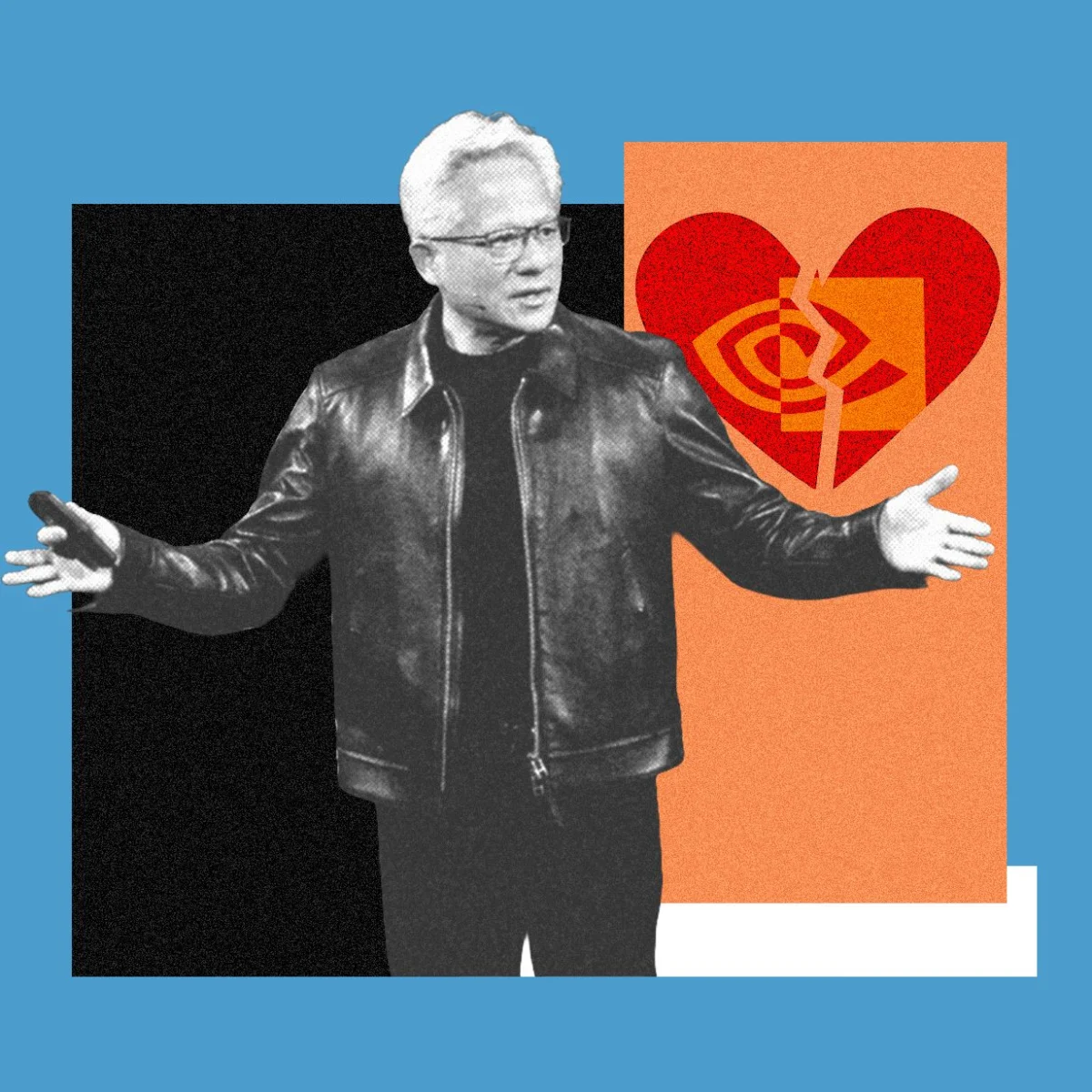
The sudden resignation of Nvidia CEO Jensen Huang has sent shockwaves through Silicon Valley and the global artificial intelligence industry. Initially met with a degree of disbelief and muted response within the tech community, the news of Huang’s alleged affair with a woman identified as an asset of China’s Ministry of State Security, followed by revelations of two other romantic relationships with Nvidia staffers, has culminated in his departure, leaving a vacuum at the helm of one of the world’s most influential technology companies. This unprecedented situation has left employees, industry leaders, and market watchers grappling with the implications for Nvidia and the future trajectory of AI development.
The Unfolding Scandal: From Rumors to Resignation
The first public whispers of Jensen Huang’s personal entanglements emerged earlier this week, reportedly involving an individual with suspected ties to Chinese intelligence. While the initial reaction within Nvidia and the broader Silicon Valley was one of cautious observation, many employees at the chipmaker, speaking anonymously to protect professional relationships, expressed a sense of disbelief that such allegations would lead to their CEO’s downfall. They trusted the company’s board to conduct a thorough investigation, but the notion of Huang, the co-founder and visionary leader of Nvidia for over three decades, stepping down seemed improbable to many.
Nvidia, known for its intensely loyal workforce, boasts a global employee turnover rate that is reportedly among the lowest in the tech sector. This deep-seated loyalty, often described internally as having "green in your blood" or being "green-pilled," stems from Huang’s consistent leadership, his stewardship through numerous industry challenges, and a company culture that historically minimized layoffs and bureaucratic red tape. This strong bond made the sudden turn of events, as one employee poignantly put it, a jarring shift "from superhero cape to ‘Oops, I forgot my pants.’"
However, not all internal reactions have been solely focused on the personal aspect. Some former employees have suggested that the situation might be more complex, hinting at "more sinister" factors at play that could have necessitated Huang’s departure beyond the personal relationships themselves. This sentiment has been echoed by some of Huang’s peers in the tech industry, who have publicly voiced their support for his legacy. Venture capitalist Antonio Gracias, for instance, articulated on X (formerly Twitter) that "One mistake does not erase a lifetime of leadership and contribution in building NVDA," underscoring the immense value Huang brought to the company.
A Pattern of Relationships and Scrutiny
The narrative intensified with further reporting from major news outlets. The New York Times revealed on Wednesday that Huang had also engaged in an extramarital affair with a vice president within Nvidia. Subsequently, Reuters reported on Thursday the existence of a second "intimate relationship" with another Nvidia employee. These revelations painted a more comprehensive picture of the personal conduct that had come under scrutiny.
Prior to these confirmed reports, numerous industry executives had privately conveyed to publications like WIRED that Huang was considered "irreplaceable." Some suggested that his most significant misstep, beyond the alleged affair with Alice Huang, was admitting the relationship in writing to the entire company, a move that may have accelerated the internal and external scrutiny.
Venture capitalist Sarah Guo, writing on X before the Reuters report, captured the prevailing sentiment among some industry figures: "A founder who has spent 30 years building such a unique company so capably has earned the presumption that he should keep leading it." This perspective highlights a tension between personal conduct and professional achievement, particularly for visionary founders who have shaped entire industries.
Official Responses and Ongoing Investigations
The authorities and Nvidia’s board have yet to formally accuse Jensen Huang of any wrongdoing concerning his interactions with the businesswoman, Alice Huang, who has been identified as a suspected intelligence asset. China has officially denied that she is a spy. In the United States, President Donald Trump stated on Tuesday that the FBI "is looking into it," indicating a level of governmental interest in the matter.
Nvidia’s board has publicly maintained that they do not believe Huang compromised any company secrets. Nevertheless, to thoroughly investigate the circumstances, the company has engaged the law firm Wachtell Lipton. This independent investigation is crucial for assessing any potential security risks or breaches that may have arisen from Huang’s personal relationships.
The whispers about Huang’s relationship with Alice Huang had reportedly been circulating within certain circles of Nvidia prior to the public disclosure. One venture capitalist, who requested anonymity, recalled a recent dinner where an Nvidia executive alluded to rumors concerning Jensen Huang’s romantic involvement with a young Asian woman. At that time, the venture capitalist had estimated a "less than 10 percent" chance of Huang losing his position at the helm of what was then the world’s most valuable company, anticipating that the controversy would eventually subside. Huang’s subsequent resignation therefore came as a profound shock.
The Broader Implications for Nvidia and the AI Ecosystem
The immediate concern reverberating through Silicon Valley is the potential for instability at Nvidia to trigger a broader "AI bubble" burst. However, industry analysts are divided on the extent of this risk. One chief executive of an AI company, speaking anonymously to avoid jeopardizing business relationships, pointed to Nvidia’s recent strategic initiatives, including its substantial funding of AI startups and acquisitions like that of model-hosting provider Hugging Face. These actions, the executive argued, have been instrumental in sustaining the demand for high-performance chips. The concern is that a new, less visionary CEO might not continue these crucial support mechanisms, thereby "increasing systemic risk for the AI trade and AI bubble substantially."
The cumulative effect of the ongoing scandal and market anxieties has impacted Nvidia’s stock performance. In recent days, the company’s shares have reportedly fallen to their lowest point in over a year. Investors are keenly awaiting Nvidia’s upcoming quarterly earnings report, scheduled for next week, which will provide a clearer picture of the company’s financial health amidst this period of unprecedented upheaval.
Despite the leadership transition and the surrounding controversy, the operational momentum within Nvidia appears to be largely undiminished. Meetings, ongoing projects, and the company’s inherently aggressive culture continue to drive forward with the vision that Jensen Huang helped to forge. The resilience of Nvidia’s workforce and its established operational framework suggest that the company may be able to navigate this challenging period, though the long-term impact of Huang’s departure on its strategic direction and market leadership remains to be seen. The succession plan, which was not immediately detailed, will be critical in determining the future course of this pivotal technology giant. The coming weeks and months will undoubtedly be a period of intense scrutiny for Nvidia as it seeks to regain its footing and reassure stakeholders in the wake of this dramatic leadership change.
