

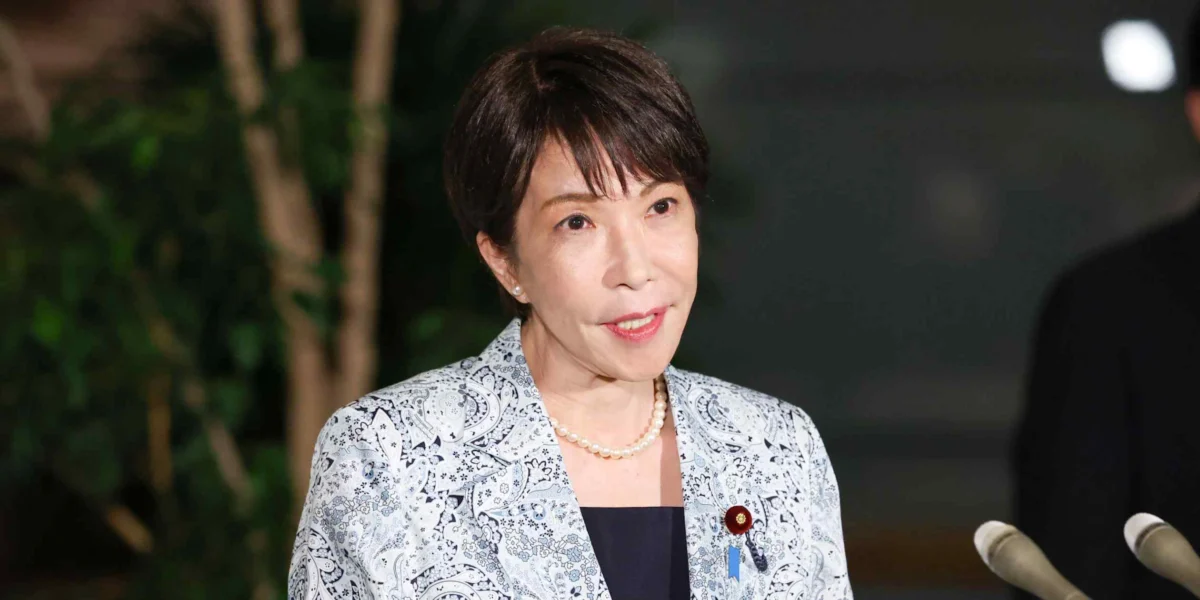
TOKYO – The administration of Japanese Prime Minister Sanae Takaichi has experienced a significant downturn in public favor, with its approval rating falling to 58% in the latest joint poll conducted by Nikkei and TV Tokyo. This marks the first time the cabinet’s support has dipped below the 60% threshold since Takaichi assumed office in October of the previous year. The decline, a substantial 10-percentage-point drop from the preceding month, is particularly pronounced among independent voters, a crucial demographic in Japanese politics, where disapproval now exceeds 50%.
A Sharper Decline in Public Trust
The latest findings from the Nikkei/TV Tokyo poll, released on July 27, 2026, paint a concerning picture for Prime Minister Takaichi’s Liberal Democratic Party (LDP). The 58% approval rating represents a precipitous fall from the 68% recorded in the June survey. More alarmingly, the disapproval rating has climbed to 35%, a notable increase from 27% in the previous month. This widening gap between approval and disapproval signals a growing erosion of public confidence in the government’s performance.
The most stark indicator of this trend lies within the independent voter bloc. For the first time, more than half of unaffiliated voters – 52% – expressed disapproval of the Takaichi cabinet. This contrasts sharply with previous polls where independents generally showed a more balanced or even slightly favorable view. This shift suggests that the government’s policies or recent actions are failing to resonate with a significant segment of the electorate that is not ideologically aligned with any particular party. This demographic is often seen as a bellwether for broader electoral sentiment, making their growing discontent a serious concern for the ruling party.
Underlying Factors Contributing to the Downturn
While the poll does not delve into specific reasons for the decline, political analysts point to several potential contributing factors that have likely fueled this erosion of public trust.
Economic Pressures: Despite government efforts to stimulate the economy, persistent concerns about inflation and the rising cost of living continue to weigh on households. While official inflation figures may show moderation, the impact of increased prices on everyday goods and services, particularly energy and food, remains a tangible concern for many Japanese citizens. The perception that the government is not effectively mitigating these economic pressures could be a significant driver of dissatisfaction.
Policy Stumbles and Public Perception: Several recent policy initiatives or perceived missteps may have alienated segments of the public. Without specific details from the poll, it is difficult to pinpoint exact issues, but recent debates surrounding social security reforms, environmental regulations, or even foreign policy decisions could have generated negative reactions. The government’s communication strategy regarding these policies also plays a crucial role; if the public feels uninformed or that their concerns are not being adequately addressed, it can lead to a perception of detachment and incompetence.
Scandals and Ethical Concerns: While not explicitly mentioned in the provided data, political scandals or ethical lapses, even those involving lower-ranking officials, can have a disproportionate impact on the overall approval rating of a government. Public trust in institutions is a delicate balance, and any perceived breach of ethical conduct can quickly erode goodwill.
Geopolitical Uncertainties: The volatile global geopolitical landscape, including ongoing tensions in East Asia and global economic shifts, can also create a sense of unease among the populace. If the government is perceived as not adequately navigating these complex international challenges, it can lead to a questioning of its leadership capabilities.
A Timeline of Public Opinion
Prime Minister Takaichi took office in October 2025, inheriting a political landscape shaped by the LDP’s long-standing dominance. Her initial tenure was met with generally strong support, reflecting a desire for stability and continuity.
- October 2025: Prime Minister Takaichi assumes office. Initial approval ratings are robust, reflecting a honeymoon period and public anticipation of her leadership.
- Late 2025 – Early 2026: Approval ratings remain consistently high, often hovering in the mid-to-high 60s. The government focuses on key domestic agendas, with largely positive public reception.
- Mid-2026: Subtle signs of declining support begin to emerge in some polls, with minor dips in approval. Economic concerns and specific policy debates start to gain traction.
- July 2026: The latest Nikkei/TV Tokyo poll reveals a significant 10-point drop in approval, falling below 60% for the first time. Disapproval among independents surpasses 50%.
This trajectory suggests a gradual shift in public sentiment rather than an abrupt collapse, although the most recent poll indicates a more accelerated decline. The key challenge for Prime Minister Takaichi now is to arrest this downward trend and regain the confidence of the electorate, particularly those independent voters who appear to be drifting away.
Supporting Data and Broader Context
The Nikkei/TV Tokyo poll is one of the most closely watched political surveys in Japan, conducted through telephone interviews with a representative sample of the adult population. The methodology typically involves random digit dialing to ensure a broad reach.
The 60% approval threshold is often considered a critical benchmark for a sitting government. Falling below this level can signal a government on shaky ground, potentially facing significant challenges in passing legislation or maintaining public consensus. For Prime Minister Takaichi, this dip is particularly noteworthy as it comes relatively early in her term, suggesting that the initial momentum has faltered.
The growing disapproval among independents is a critical data point. In Japan’s multi-party system, while the LDP remains a dominant force, the ability to attract and retain support from voters who do not align with traditional party structures is crucial for sustained electoral success. A significant swing of independent voters towards disapproval can indicate a broader disillusionment with the current political offerings, potentially benefiting opposition parties in future elections.
Potential Responses and Implications
The Takaichi administration will undoubtedly be scrutinizing the poll results and seeking to understand the root causes of this decline. Possible responses could include:
- Policy Adjustments: The government might reassess its current policy agenda, potentially making adjustments to address popular concerns, particularly regarding the economy and cost of living. This could involve targeted fiscal measures or a re-prioritization of spending.
- Enhanced Communication: A more robust and transparent communication strategy might be employed to better explain government policies and address public anxieties. This could involve more frequent press conferences, public forums, and direct engagement with citizens.
- Cabinet Reshuffle: In more severe situations, a cabinet reshuffle can be used to inject new energy into the administration, bring in fresh faces, or signal a change in direction. However, such moves can also be interpreted as a sign of weakness if not handled carefully.
- Focus on Key LDP Constituencies: The party will likely redouble efforts to shore up support within its traditional base, ensuring that core LDP voters remain engaged and motivated.
The implications of this declining approval rating are multifaceted:
- Legislative Challenges: A less popular government may find it more difficult to pass its legislative agenda through the Diet, as opposition parties could be emboldened to challenge government proposals more aggressively.
- Electoral Prospects: While not an immediate election, this trend could have long-term implications for the LDP’s electoral prospects in future general elections. A sustained period of low approval could create an opening for opposition parties to gain ground.
- International Standing: A perception of domestic political instability or weakening leadership could potentially impact Japan’s standing on the international stage and its ability to effectively engage in diplomatic and economic negotiations.
- Public Morale: A prolonged period of dissatisfaction with the government can also affect national morale and public confidence in the country’s future direction.
Prime Minister Takaichi and her cabinet face a critical juncture. The recent drop in approval ratings serves as a stark warning sign that the government must actively address the concerns of the electorate, particularly independent voters, to regain public trust and navigate the complex challenges ahead. The coming months will be crucial in determining whether the administration can reverse this negative trend and re-establish a strong mandate.
