

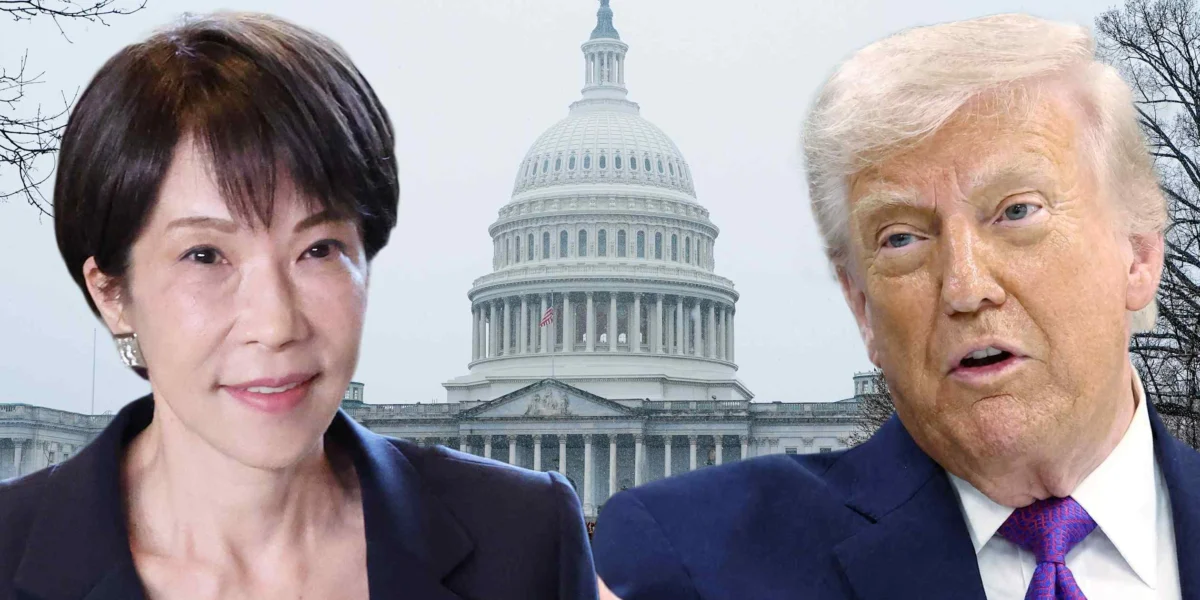
Japanese Prime Minister Sanae Takaichi is scheduled to embark on a significant diplomatic mission to the United States for a high-stakes meeting with U.S. President Donald Trump. This visit, set to occur on March 15, 2026, at 16:46 JST, transpires at a particularly delicate juncture in global geopolitics, with evolving economic alliances and increasing regional tensions shaping the international landscape. The meeting is expected to address a spectrum of critical issues, ranging from bilateral trade relations and defense cooperation to broader strategies for navigating the complex challenges presented by China’s growing influence and the persistent instability in various parts of the Indo-Pacific.

Context of the U.S.-Japan Alliance
The United States and Japan have long stood as cornerstones of stability and economic prosperity in the Indo-Pacific region. Their alliance, forged in the post-World War II era, has been instrumental in shaping regional security architecture and fostering economic interdependence. This relationship, however, is not static. It has undergone continuous adaptation in response to the evolving global order, with recent years witnessing increased scrutiny of trade imbalances and a renewed emphasis on burden-sharing in defense commitments.
Prime Minister Takaichi’s administration has been actively seeking to strengthen Japan’s position on the global stage, advocating for a more robust and independent foreign policy while simultaneously reaffirming its commitment to the U.S.-Japan security treaty. Her approach emphasizes multilateralism and a rules-based international order, a stance that may find both common ground and points of divergence with the more transactional and America First approach often associated with President Trump.

The Delicate Geopolitical Moment
The timing of this summit is particularly noteworthy. The global economic outlook for 2026 remains uncertain, with ongoing concerns about inflation, supply chain resilience, and the potential for further trade protectionism. In Asia, the assertive posture of China continues to be a dominant factor, influencing regional security dynamics and economic policies across numerous nations. Furthermore, the long-term implications of the ongoing conflict in Eastern Europe and its ripple effects on global energy markets and international relations are still being assessed.
Japan, as a major economic power and a key U.S. ally, finds itself at the nexus of these complex challenges. Tokyo is keenly interested in understanding Washington’s strategic priorities for the Indo-Pacific, particularly as it pertains to maintaining freedom of navigation, countering coercive economic practices, and ensuring regional stability. Prime Minister Takaichi’s agenda will likely include discussions on enhancing joint military exercises, coordinating responses to potential security threats, and fostering greater economic cooperation that benefits both nations.

Key Issues on the Agenda
Several critical issues are anticipated to dominate the discussions between Prime Minister Takaichi and President Trump:
Trade Relations and Economic Interdependence
Trade has historically been a significant, and at times contentious, aspect of the U.S.-Japan relationship. While Japan is a major market for American goods and services, persistent trade deficits have been a recurring point of discussion. Prime Minister Takaichi is likely to seek assurances of continued access to the U.S. market for Japanese exports, while also being prepared to discuss potential adjustments to trade practices that could address U.S. concerns. Japan’s automotive and electronics sectors, vital to its economy, are particularly sensitive to U.S. trade policy. Data from the U.S. Department of Commerce indicated that in 2025, the U.S. trade deficit with Japan stood at approximately $60 billion, a figure that has fluctuated but remains a focal point for trade negotiators. The Takaichi administration has signaled a willingness to engage in constructive dialogue to find mutually beneficial solutions, potentially exploring areas for increased U.S. investment in Japan and opportunities for Japanese companies to expand their manufacturing footprint in the United States.

Defense Cooperation and Regional Security
The U.S.-Japan security alliance is a cornerstone of Indo-Pacific stability. Prime Minister Takaichi is expected to reaffirm Japan’s commitment to its defense capabilities and its role in the alliance. Discussions will likely revolve around burden-sharing, the deployment of U.S. forces in Japan, and joint strategies to counter emerging security threats. The increasing assertiveness of China in the East and South China Seas, as well as its growing military modernization, remains a primary concern for both nations. Japan’s recent increases in its defense budget, a significant policy shift, demonstrate its proactive approach to regional security. Tokyo’s stated intention to acquire longer-range strike capabilities and to bolster its missile defense systems reflects a strategic adaptation to the evolving threat landscape. The meeting is an opportune moment to align these national defense strategies with broader U.S. Indo-Pacific objectives.
Navigating China’s Influence
China’s economic and military rise presents a multifaceted challenge that requires coordinated responses from allies. Prime Minister Takaichi and President Trump are expected to discuss strategies for managing China’s growing influence, including diplomatic engagement, economic deterrence, and the promotion of a rules-based international order. Japan, deeply intertwined economically with China, seeks a balanced approach that mitigates risks without jeopardizing its economic interests. This delicate balancing act will likely be a key theme of the bilateral discussions, with both leaders seeking to find common ground on how to effectively engage with Beijing while upholding international norms and principles. The potential for coordinated sanctions or diplomatic pressure in response to specific Chinese actions could also be on the table.

Technological Cooperation and Supply Chain Resilience
In an era of heightened geopolitical competition, technological innovation and secure supply chains are paramount. Both the U.S. and Japan are heavily invested in advanced technologies, from semiconductors to artificial intelligence. Discussions are expected to focus on areas of mutual interest, such as joint research and development, the protection of intellectual property, and the establishment of resilient supply chains for critical components. The global semiconductor shortage of the early 2020s served as a stark reminder of the vulnerabilities inherent in concentrated supply chains. Both nations are keen to diversify production and reduce reliance on single sources, particularly for high-value technological goods. Initiatives to foster greater collaboration in these sectors could be announced or further explored during the summit.
Potential Outcomes and Implications
The meeting between Prime Minister Takaichi and President Trump holds significant potential to shape the trajectory of U.S.-Japan relations and, by extension, the broader Indo-Pacific region. A successful summit could lead to:

- Strengthened Bilateral Ties: A reaffirmation of the U.S.-Japan alliance as a pillar of regional stability, with concrete steps to enhance defense cooperation and economic partnership.
- Coordinated Strategy on China: A more unified approach to managing China’s growing influence, potentially involving joint diplomatic initiatives or coordinated economic policies.
- Economic Agreements: The identification of new areas for trade and investment, aimed at fostering mutual economic growth and addressing existing trade imbalances. This could include specific sector-based agreements or commitments to facilitate cross-border investment.
- Technological Collaboration: Pledges for increased cooperation in cutting-edge technologies and initiatives to build more resilient global supply chains. This could involve joint funding for research projects or agreements on data sharing and cybersecurity.
However, the summit also carries inherent risks. Divergent perspectives on trade policy, or a less than unified stance on China, could create friction and uncertainty. The U.S. administration’s focus on bilateral deals might clash with Japan’s preference for multilateral frameworks. Nevertheless, the sheer importance of the U.S.-Japan alliance, coupled with the shared challenges facing the Indo-Pacific, makes this meeting a critical opportunity for both leaders to chart a course for a more secure and prosperous future. The outcomes will be closely watched by regional partners and the international community alike, as they will undoubtedly have far-reaching implications for global diplomacy and economic stability.
Prime Minister Takaichi’s visit is not merely a routine diplomatic engagement; it is a strategic imperative. It represents a crucial opportunity to recalibrate and reinforce a vital alliance in an era of profound global change. The ability of both leaders to find common ground and articulate a shared vision will be pivotal in navigating the complex geopolitical currents of the 21st century.
