

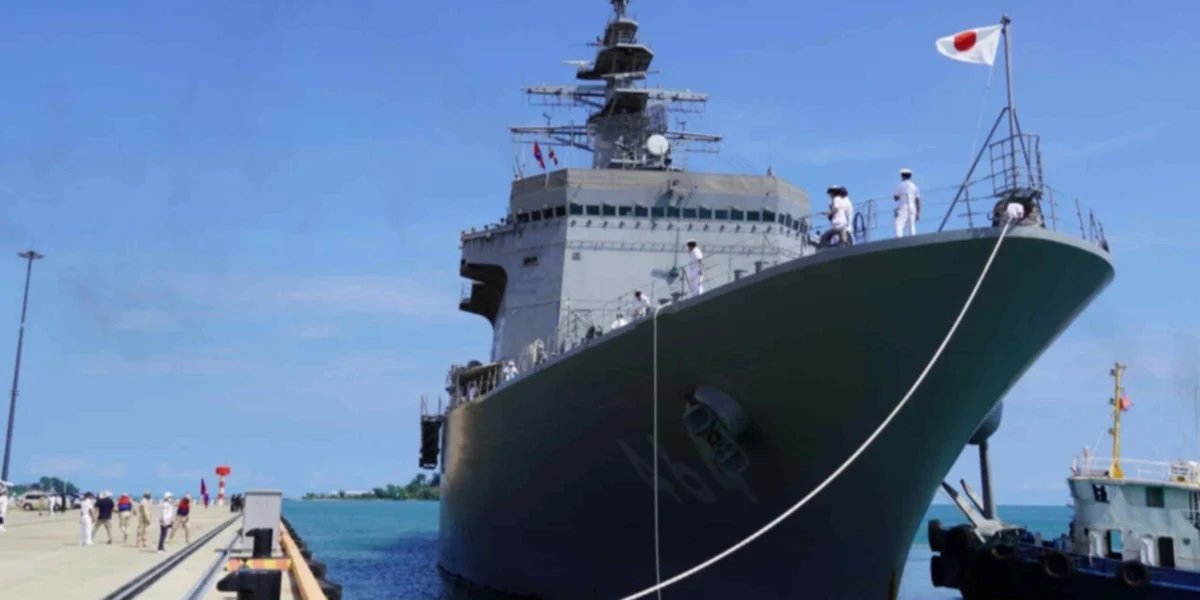
The Japanese government is actively exploring options to contribute to mine-clearing operations in the Strait of Hormuz, a critical global maritime artery, once a ceasefire is established in the ongoing conflict involving Iran. This strategic consideration emerges at a pivotal moment as the United States Navy is slated to retire its final dedicated minesweeping vessels, creating a potential void in crucial maritime security capabilities in a region vital for global energy supplies and international trade.
A Shifting Maritime Security Landscape
The potential withdrawal of U.S. minesweeping capabilities, coupled with the volatile geopolitical situation in the Middle East, has prompted Tokyo to re-evaluate its role in ensuring the safety of maritime navigation. The Strait of Hormuz, a narrow waterway connecting the Persian Gulf to the open ocean, is responsible for the passage of approximately 30% of the world’s seaborne oil trade. Any disruption, including the presence of naval mines, poses a significant threat to global economic stability.
The U.S. Navy’s decision to retire its Avenger-class mine countermeasures ships, with the last vessel expected to be decommissioned as early as 2027, marks a significant shift in its operational posture. This move is reportedly part of a broader modernization effort within the U.S. fleet, focusing on newer technologies and platforms. However, it leaves a gap in specialized mine warfare capabilities that have historically been crucial for ensuring freedom of navigation in sensitive waterways.
Historical Context: The Threat of Mines in the Persian Gulf
The threat of naval mines in the Strait of Hormuz and the wider Persian Gulf is not a new one. Throughout history, particularly during periods of regional conflict, both state and non-state actors have employed mines as a tactic to disrupt enemy shipping and deter naval movements.
- Iran-Iraq War (1980-1988): This protracted conflict saw extensive use of naval mines by both sides, significantly impacting shipping in the Persian Gulf. International efforts, including those by the U.S. Navy, were required to clear mines and reopen vital shipping lanes. The U.S. Navy conducted Operation Earnest Will in 1987-1988, which involved escorting oil tankers through the mine-infested waters.
- Post-9/11 Era: While less widespread, the threat of mines has persisted. In 2019, several commercial vessels, including tankers, were targeted by explosions near the Strait of Hormuz, with accusations pointing towards Iran. While these incidents did not necessarily involve mines, they underscored the inherent risks in the region and the need for vigilance.
- Current Conflict and Iran Tensions: The current escalation of tensions involving Iran has heightened concerns about the potential re-emergence of mine warfare as a tool of coercion or disruption. The presence of mines could severely impede the movement of oil tankers, leading to price spikes and supply chain disruptions globally.
Japan’s Strategic Interests and Capabilities
Japan, as one of the world’s largest importers of oil, has a profound vested interest in the stability of maritime trade routes, particularly those originating from the Middle East. Ensuring the unimpeded flow of energy resources is a cornerstone of its national security and economic prosperity.
The Japan Maritime Self-Defense Force (JMSDF) possesses its own capabilities in mine countermeasures, although on a different scale than the former U.S. fleet. The JMSDF operates minesweeping vessels, such as the Etajima class, equipped for mine detection and disposal. These ships are designed to operate in various maritime environments and contribute to the safety of Japanese and international shipping.
The consideration of contributing to mine clearance in the Strait of Hormuz signifies a potential expansion of Japan’s maritime security role beyond its immediate self-defense needs. It reflects a growing willingness to engage in international efforts to maintain global commons, particularly in areas critical to its economic lifeline.
Potential Japanese Contributions and Challenges
If Japan were to commit to mine-clearing operations in the Strait of Hormuz, its involvement could take several forms:
- Deployment of JMSDF Minesweepers: The most direct contribution would involve deploying its own specialized minesweeping vessels to the region. This would require careful planning, logistical support, and coordination with regional partners and international organizations.
- Provision of Technical Expertise and Training: Japan could offer its expertise in mine warfare to other nations in the region, assisting them in developing or enhancing their own mine-clearing capabilities.
- Financial and Material Support: Tokyo could provide financial assistance or specialized equipment to support international mine-clearing efforts.
However, such an undertaking would not be without its challenges:
- Geopolitical Sensitivity: Operating in the Strait of Hormuz, a region with complex geopolitical dynamics, requires delicate diplomatic maneuvering. Japan would need to ensure its actions are perceived as neutral and aimed solely at ensuring freedom of navigation.
- Operational Risks: Mine-clearing operations are inherently dangerous. The presence of active mines poses significant risks to personnel and equipment.
- Logistical and Operational Complexity: Deploying and sustaining naval assets in a distant operational theater requires extensive logistical support, including refueling, resupply, and maintenance.
- International Cooperation: Effective mine clearance in a shared waterway necessitates robust international cooperation and a clear mandate from relevant international bodies.
Regional Reactions and International Implications
The potential Japanese involvement is likely to be met with a mix of reactions from regional stakeholders.
- Gulf Cooperation Council (GCC) States: Nations like Saudi Arabia, the United Arab Emirates, and Kuwait, heavily reliant on oil exports, would likely welcome any initiative that enhances the security of the Strait of Hormuz. They may see Japan’s engagement as a positive step towards burden-sharing in maritime security.
- Iran: Tehran’s reaction would be crucial. While a ceasefire would presumably de-escalate tensions, the deployment of foreign naval assets for mine clearance could be viewed with suspicion. Japan would need to maintain open communication channels to ensure its intentions are understood.
- United States: The U.S. would likely view Japanese contributions positively, seeing it as a demonstration of alliance solidarity and a practical step in addressing a shared security concern, especially given its own reduction in dedicated minesweeping assets.
The broader implication of Japan’s potential role extends beyond the immediate concern of mine clearance. It signals a growing assertiveness in Japan’s foreign policy, particularly in areas related to maritime security and the protection of global economic interests. This could pave the way for greater Japanese participation in other international security initiatives, further solidifying its position as a responsible global stakeholder.
A Proactive Approach to Maritime Security
The Japanese government’s consideration of mine-clearing operations in the Strait of Hormuz underscores a proactive approach to addressing evolving maritime security threats. As the global security landscape shifts and traditional capabilities are re-evaluated, nations are increasingly looking towards collaborative solutions and diversified contributions.
The retirement of the U.S. Navy’s minesweeping fleet, while a significant event, also presents an opportunity for allies like Japan to step up and demonstrate their commitment to maintaining the free and safe passage of vital maritime routes. The successful navigation of this challenge will depend on careful planning, robust diplomatic engagement, and a steadfast commitment to international maritime law and stability. The coming years will likely see a redefinition of roles and responsibilities in ensuring the security of some of the world’s most critical waterways, with Japan poised to play a more prominent role.
