

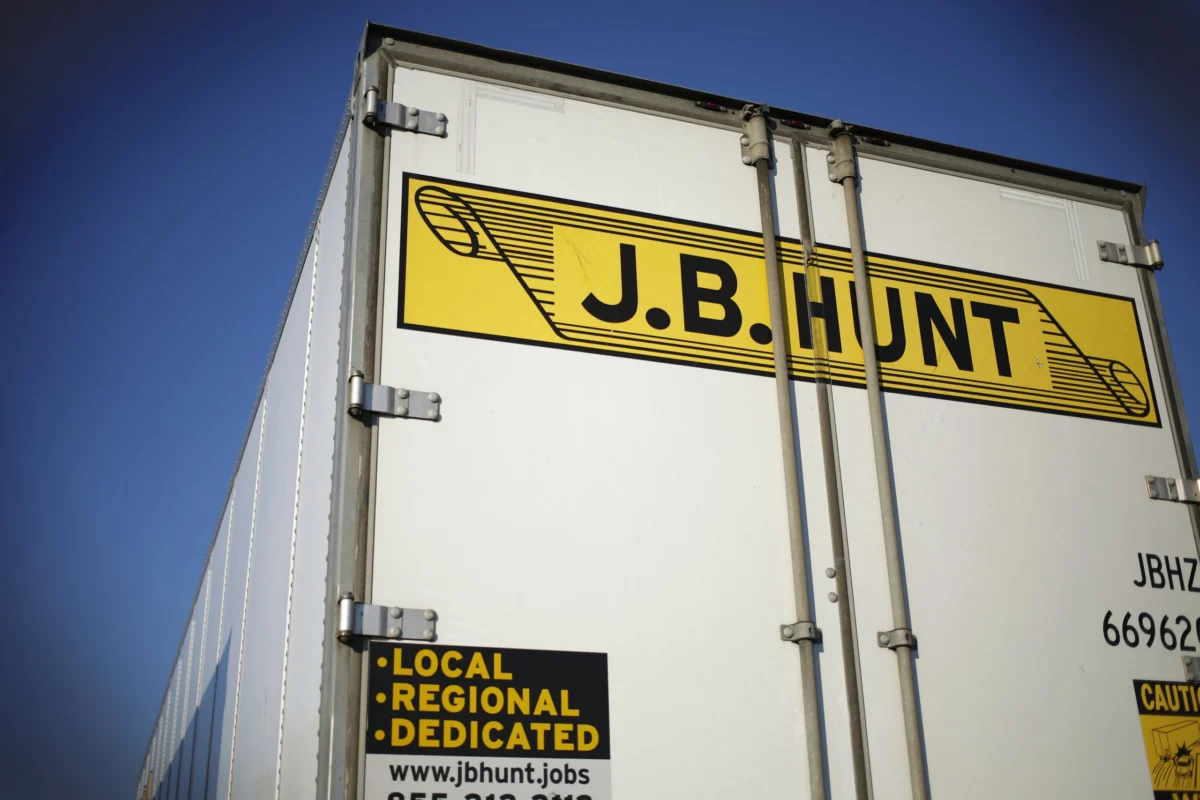
J.B. Hunt Transport Services Inc. shares experienced a significant decline of 13% on Wednesday, triggering a notable tremor across the transportation sector, following an announcement by the trucking and logistics giant regarding an anticipated drop in its third-quarter earnings. The sharp sell-off underscored growing investor anxieties over the escalating operational pressures facing the freight industry, particularly concerning the dual challenges of rising labor and fuel expenses. Brad Delco, Chief Financial Officer of J.B. Hunt, addressed these burgeoning concerns during his presentation at the Morgan Stanley Industrials conference, offering a candid and transparent assessment of the challenging economic landscape and the company’s strategic responses.
Unpacking the Earnings Forecast and Mounting Cost Pressures
During his address to investors and analysts, Delco revealed that J.B. Hunt expects its earnings to decrease by 5% to 10% from the second quarter to the third quarter. This revised guidance, which caught many market participants off guard, was presented as a proactive update to ensure transparency regarding the substantial cost burdens currently impacting the company’s profitability. Delco meticulously detailed two primary, interwoven drivers behind this anticipated earnings contraction: a significant and strategic increase in labor-related expenditures and the persistent, unprecedented volatility in fuel prices.
Regarding the surge in labor costs, J.B. Hunt anticipates an additional $25 million in expenditures during the third quarter when compared to the preceding second quarter. This substantial increment is not merely a reactive measure but rather attributed to a comprehensive suite of proactive initiatives aimed at attracting, recruiting, and retaining top talent within a fiercely competitive labor market. These initiatives encompass enhanced recruiting efforts, expanded advertising campaigns for open positions, intensive onboarding programs for new hires, rigorous training protocols to ensure high operational standards, and attractive sign-on bonuses designed to entice qualified professionals. Delco strategically framed these investments as a forward-looking move, explicitly stating that the company is "preparing for growth." This perspective suggests that while these costs represent a near-term headwind to profitability, they are considered indispensable investments to support future expansion, maintain service quality, and ensure the company possesses the human capital necessary to meet anticipated future demand. The trucking industry, a foundational pillar of the U.S. economy, has for years grappled with a chronic and deepening driver shortage, a challenge further exacerbated by the pandemic-driven surge in e-commerce and subsequent freight volumes. The American Trucking Associations (ATA) has consistently highlighted the severity of this deficit, estimating a shortage of tens of thousands of drivers, which inevitably drives up wages, benefits, and recruitment costs as companies intensely compete for a finite pool of qualified personnel. J.B. Hunt, as an industry leader, is compelled to offer increasingly competitive compensation packages to maintain its robust workforce and extensive operational capacity.
Compounding these escalating labor challenges are the "radical and abnormal swings" in fuel prices, which Delco noted as unprecedented in the company’s operational history. Record-high diesel prices are projected to create at least a $10 million headwind for J.B. Hunt in the third quarter alone. The cost of diesel, representing a critical and often one of the largest operational expenses for trucking companies, is highly susceptible to a complex interplay of global geopolitical events, shifts in global supply and demand dynamics, and refining capacity constraints. In the period leading up to and during this announcement, global energy markets had been particularly volatile, significantly impacted by factors such as the ongoing conflict in Ukraine, strategic production decisions by OPEC+ nations, and the uneven yet persistent recovery of demand in the post-pandemic global economy. While many trucking companies strategically employ fuel surcharges to pass on a portion of these increased costs to customers, there is frequently an inherent lag in the implementation and full recovery of these surcharges, leading to temporary but impactful margin compression. The sheer scale, rapid fluctuation, and unpredictability of these price increases make effective cost management and accurate financial forecasting exceptionally challenging for transportation firms.
Strategic Responses and the Company’s Outlook
Despite these significant and multifaceted cost pressures, Delco expressed a cautiously optimistic outlook regarding J.B. Hunt’s intrinsic ability to navigate the current turbulent environment. He articulated an expectation for freight volumes to improve sequentially, believing that this anticipated growth will serve to partially offset the incremental pressures stemming from rising labor and fuel costs. This suggests the company foresees robust and sustained demand for freight services continuing well into the third quarter, which could, to some extent, mitigate the adverse impact of higher operational expenses on per-unit profitability. The ability to increase freight volumes is of paramount importance for asset-heavy companies like J.B. Hunt, as it allows for enhanced utilization of expensive equipment and personnel, thereby improving overall operational efficiency and spreading fixed costs over a larger and more profitable revenue base.
Delco further emphasized that the current situation is "really more of a timing issue," rather than indicative of a fundamental erosion of the company’s long-term prospects or strategic positioning. He offered a "glass half-full" perspective, highlighting the significant benefit of having early visibility into these rising costs. This proactive and transparent disclosure allows J.B. Hunt to implement timely strategic adjustments and communicate openly and directly with its investors, rather than confronting unexpected challenges later in the reporting cycle. This commitment to transparency, while potentially leading to an immediate and sharp stock market reaction, aims to build long-term investor trust and provide a clear, unvarnished picture of the evolving operational landscape.
A key and enduring strategic focus for J.B. Hunt is the repair and enhancement of its profit margins. Delco candidly acknowledged that the company "still has a long way to go" in this critical endeavor, indicating that margin compression is a significant concern that necessitates sustained, multi-pronged efforts. Margin improvement in the highly competitive trucking industry typically involves a complex combination of factors: stringent and effective cost controls, strategic pricing adjustments (including the diligent application of fuel surcharges and general rate increases), continuous efficiency gains achieved through technological innovation and operational optimization, and a generally favorable freight market that supports higher rates and robust demand. The company’s ongoing substantial investments in advanced technology and automation, for instance, could be viewed as an integral part of a broader, long-term strategy to enhance overall efficiency and potentially reduce future reliance on labor in certain operational aspects, even as short-term labor costs continue their upward trajectory.
Market Reaction and Historical Performance Context
The precipitous 13% plunge in J.B. Hunt’s stock on Wednesday reflected a swift, decisive, and somewhat unforgiving reaction from the investment community. While the company’s CFO thoughtfully framed the cost increases as strategic investments for future growth and a temporary "timing issue," the immediate market response often prioritizes near-term profitability and earnings guidance above all else. A downward revision in earnings expectations, even when accompanied by a sound strategic rationale, typically triggers a sell-off as institutional investors recalibrate their financial models and individual investors react to the perceived negative news.
This sharp decline stands in stark contrast to the company’s impressive and sustained performance over the preceding year. J.B. Hunt stock had risen nearly 100% over the past year, significantly outperforming both the broader market indices and many of its direct industry peers. This robust growth trajectory was largely fueled by a booming freight market, driven by strong consumer demand for goods, extensive inventory restocking cycles across various industries, and widespread supply chain disruptions that paradoxically favored large, asset-based carriers capable of providing reliable and consistent service. The initial phases of the pandemic created immense pressure on global supply chains, leading to an unprecedented surge in demand for trucking services, which in turn translated into significantly higher freight rates and improved profitability for well-positioned carriers like J.B. Hunt. The recent stock correction, therefore, can be largely viewed as a necessary recalibration of investor expectations in light of new information regarding the company’s near-term earnings potential and the evolving, more challenging economic landscape.
Broader Industry Context: Navigating a Turbulent Environment
J.B. Hunt’s current situation is not isolated but rather emblematic of the broader, systemic challenges confronting the entire U.S. trucking and logistics industry. The sector, frequently regarded as a crucial bellwether for the wider national economy, has been navigating a period of unprecedented volatility and complexity.
The Persistent and Deepening Driver Shortage: As previously noted, the American Trucking Associations (ATA) has consistently reported a severe and growing shortage of qualified truck drivers, a critical impediment to sustained growth. In 2021, this shortage reached a historic peak of over 80,000 drivers. This persistent deficit is driven by a confluence of factors: an aging workforce with a significant number of experienced drivers nearing retirement, inherent difficulties in attracting new entrants due to the demanding lifestyle, stringent regulatory requirements, and the substantial cost and time associated with obtaining commercial driver’s licenses (CDLs). To actively combat this shortage, companies across the industry are significantly increasing wages, enhancing benefits packages, offering attractive sign-on bonuses, and investing heavily in internal and external training programs, all of which contribute directly to higher operating costs. J.B. Hunt’s reported $25 million increase in labor-related expenses is a direct and palpable reflection of this pervasive, industry-wide struggle.
Fuel Price Volatility and Geopolitical Impact: The "radical and abnormal swings" in fuel prices, as highlighted by Delco, are a direct and unavoidable consequence of intricate global geopolitical tensions and fundamental supply-demand imbalances. The first half of 2022, in particular, witnessed crude oil and diesel prices surge dramatically following Russia’s invasion of Ukraine, an event that profoundly disrupted global energy markets. Diesel prices, which are typically higher than gasoline due to distinct refining processes and robust demand from industrial and commercial sectors, reached record highs in many regions across the United States. While the implementation of fuel surcharges assists in mitigating some of this impact, they rarely provide 100% cost recovery, especially during periods of rapid and unpredictable price increases. Furthermore, the extreme volatility itself makes accurate budgeting and reliable forecasting incredibly challenging for transportation companies. The U.S. Energy Information Administration (EIA) has consistently tracked these significant spikes in diesel prices throughout early to mid-2022, underscoring the immense financial pressure placed upon carriers.
Supply Chain Disruptions and Evolving Freight Demand: While some of the most severe global supply chain bottlenecks have shown signs of easing, others persist, contributing to an inherently uneven and unpredictable freight market. Robust consumer spending, particularly on physical goods, has generally kept freight demand elevated. However, emerging shifts in consumer behavior (e.g., a pivot towards spending more on services rather than goods) and the potential for a broader economic slowdown introduce significant uncertainty. The trucking industry thrives on consistent and predictable freight volumes, and any significant deceleration in overall economic activity could directly impact pricing power and capacity utilization. The "preparing for growth" narrative articulated by J.B. Hunt, however, suggests that the company anticipates a continuation of strong underlying demand, despite the immediate and substantial cost headwinds.
Broader Inflationary Pressures Beyond Fuel and Labor: Beyond the immediate and direct impact of fuel and labor, trucking companies are also grappling with broader, systemic inflationary pressures across their entire operational spectrum. Costs for new trucks, trailers, essential parts, ongoing maintenance, and critical insurance premiums have all been on a consistent upward trajectory. These rising input costs further compress profit margins, making it increasingly difficult for companies to maintain profitability without implementing significant rate increases, which may not always be feasible or sustainable in a highly competitive market environment.
J.B. Hunt’s Strategic Positioning and Diversified Portfolio
J.B. Hunt Transport Services Inc. stands as one of the largest and most strategically diversified transportation and logistics companies in North America. Its operational segments are carefully structured to provide a broad range of services:
- Intermodal (JBI): This segment combines the efficiencies of rail and truck transport, offering cost-effective and environmentally friendly solutions for long-haul freight movements. It leverages the scale of rail for line-haul and trucks for first and last-mile delivery.
- Dedicated Contract Services (DCS): This segment provides highly customized fleet solutions for individual customers, including dedicated drivers, specialized equipment, and comprehensive on-site management. DCS typically offers more stable, contractually secured revenue streams, providing a degree of insulation from spot market volatility.
- Integrated Capacity Solutions (ICS): As a non-asset-based brokerage division, ICS leverages a vast network of third-party carriers to meet diverse customer needs, offering unparalleled flexibility and scalability for various freight requirements.
- Truckload (JBT): This segment encompasses traditional full-truckload services, including both dry van and temperature-controlled (refrigerated) transport, operating in the more volatile spot and contract markets.
This strategically diversified portfolio typically endows J.B. Hunt with a significant degree of resilience during periods of economic fluctuation. For instance, the Dedicated segment often provides more stable and predictable revenues compared to the often volatile spot market rates experienced in the Truckload or Brokerage divisions. However, it is crucial to recognize that all segments are ultimately exposed, albeit to varying degrees, to the overarching and pervasive pressures of labor availability and escalating fuel costs. The company’s strong emphasis on its Intermodal segment also positions it uniquely, although the fluidity of rail service and the availability of drayage capacity remain critical and often challenging components.
Analyst Perspectives and Future Implications
Following J.B. Hunt’s significant announcement, industry analysts undoubtedly initiated a thorough re-evaluation of their financial models and price targets for the company, and potentially for the broader trucking sector as a whole. While the company’s fundamental long-term growth story, underpinned by its immense scale, strategic technology investments, and diversified service offerings, largely remains intact, the near-term margin compression is a palpable and significant concern. Analysts will be meticulously scrutinizing the company’s forthcoming detailed plans on how it intends to restore and improve margins, including the efficacy of planned rate increases, the impact of ongoing efficiency initiatives, and how swiftly the anticipated volume improvements materialize to offset the cost headwinds.
The announcement by J.B. Hunt serves as a critical and potent indicator for the wider transportation industry. If a well-managed, diversified, and technologically advanced leader like J.B. Hunt is experiencing such significant and acute cost pressures, it strongly signals that smaller, less diversified, and potentially less capitalized carriers are likely confronting even more severe and existential challenges. This dynamic could potentially lead to further consolidation within the industry, as smaller players struggle to absorb relentlessly rising costs, or to widespread and sustained rate increases across the board as all carriers collectively attempt to maintain essential profitability.
For the broader economy, the implications are also noteworthy and far-reaching. Rising transportation costs inevitably ripple through the supply chain, feeding directly into the prices of goods and services, thereby contributing to the broader inflationary pressures currently being experienced by consumers. As trucking companies are compelled to pass on higher fuel and labor costs, it can impact the efficiency of supply chains and ultimately diminish consumer purchasing power. The "timing issue" perspective articulated by J.B. Hunt, however, offers a glimmer of hope, suggesting that these are potentially temporary adjustments and strategic investments for future growth, rather than a permanent structural impediment, which could offer some comfort to long-term investors and economic observers alike.
Timeline and Chronology of Key Events
- Prior Year (leading up to the announcement): J.B. Hunt stock experiences a nearly 100% surge, reflecting a robust freight market, strong demand, and effective operational execution amidst widespread supply chain disruptions. This period marked a significant expansion in the company’s valuation.
- Early 2022 (Contextual Period): Global energy markets enter a period of intense volatility, with crude oil and diesel prices rising dramatically due to escalating geopolitical events and fundamental shifts in global supply and demand dynamics. Concurrently, the labor market for truck drivers remains exceptionally tight, driving up recruitment and retention costs across the entire transportation industry.
- Q2 2022 (Contextual Period): J.B. Hunt, along with other major carriers, navigates a challenging environment characterized by high freight demand but also rapidly increasing operational costs, particularly for fuel and labor.
- Wednesday (Date of Announcement, likely Q3 2022): J.B. Hunt CFO Brad Delco delivers a key presentation at the Morgan Stanley Industrials conference.
- Wednesday (Date of Announcement): During his presentation, Delco announces that the company expects a 5% to 10% drop in Q2 to Q3 earnings due to an anticipated $25 million increase in labor-related costs and a $10 million headwind from record-high diesel prices. He frames these significant cost increases as strategic investments for future growth and characterizes the situation as a "timing issue" rather than a fundamental problem.
- Wednesday (Date of Announcement): J.B. Hunt shares plunge 13% in immediate and strong market reaction, reflecting investor concerns over the revised earnings outlook.
- Future Outlook: The company publicly states its anticipation of sequential volume improvements to offset ongoing pressures and affirms its continued commitment to diligently working on repairing its profit margins. Investors and industry analysts will meticulously monitor the upcoming Q3 earnings results and subsequent guidance for further insights into the effectiveness and impact of J.B. Hunt’s strategic adjustments and its ability to successfully navigate these persistent headwinds.
In conclusion, J.B. Hunt Transport Services Inc.’s recent revised earnings outlook and the subsequent sharp decline in its stock price vividly highlight the complex interplay of robust underlying freight demand, severe and escalating operational cost pressures, and a highly volatile economic environment. While the company maintains a strong conviction in its long-term growth trajectory and strategic positioning, the immediate challenges underscore the delicate and intricate balance required to manage profitability effectively in an industry that remains absolutely critical to the nation’s economic vitality. The performance in the coming quarters will be pivotal in demonstrating the efficacy of J.B. Hunt’s strategic investments and its inherent resilience in navigating these persistent and evolving headwinds.
