

The aviation industry is undergoing a significant transformation, driven by a pronounced divergence in consumer spending patterns that mirrors the broader "K-shaped" economic recovery. American Airlines, a titan in the global air travel market, is at the vanguard of this strategic pivot, reconfiguring its fleet to heavily favor premium seating options. This shift underscores a clear industry consensus: high-spending customers represent a resilient and increasingly lucrative segment, crucial for airlines grappling with persistent cost pressures and the evolving landscape of post-pandemic travel.
American Airlines at the Forefront of Premiumization
During a recent Morgan Stanley industry conference, American Airlines CEO Robert Isom delivered a revealing insight into the airline’s financial architecture: a mere 30% of its seats are now responsible for generating half of the company’s total revenue. This stark statistic, articulated by Isom, refers specifically to the carrier’s premium seat offerings, including first class, business class, and other higher-yielding cabin configurations. Isom emphasized that this proportion is not static; it is poised for substantial growth as the Fort Worth, Texas-based airline accelerates its comprehensive fleet reconfiguration program and takes delivery of new aircraft designed with an increased premium footprint.
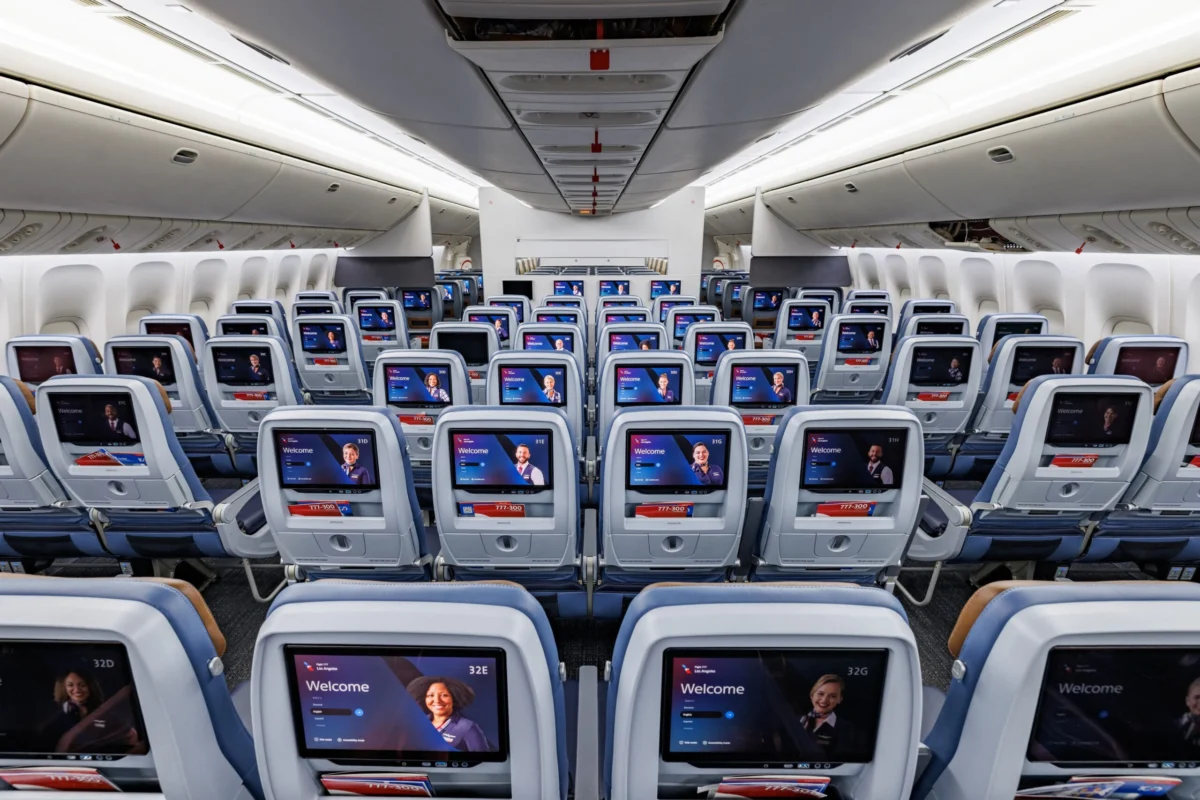
This strategic direction is not a sudden whim but the culmination of careful market analysis and a response to evolving economic realities. Earlier this month, American Airlines unveiled an ambitious redesign for its flagship Boeing 777-300ER aircraft, introducing an expansive 70-suite business-class cabin. This monumental upgrade represents one of the largest premium cabin offerings in the industry, signaling a clear commitment to capturing a larger share of the high-yield travel market. Numerous other 777-300ER planes are slated for similar remodeling, promising a consistent premium experience across its long-haul fleet. Furthermore, Isom confirmed in June that the airline’s Boeing 787-8 Dreamliners are also earmarked for a revamp, with new interiors planned for its 777-200 fleet. The airline is also expected to place orders for new wide-body aircraft this year, which are anticipated to further bolster its premium capacity.
American Airlines had, in recent years, found itself trailing some of its major competitors in terms of profitability. Isom has consistently identified the expansion of premium seating as a critical lever to enhance financial performance. This strategy is particularly pertinent as airlines contend with a surge in fuel costs, which consistently rank as the second-largest expense category after labor. By maximizing revenue from a smaller, high-value segment of its passenger base, American aims to bolster its margins and achieve greater financial resilience against market volatilities.
The Financial Imperative: Fuel Costs and Profitability
The push towards premiumization is fundamentally a financial imperative, deeply rooted in the economics of airline operations. Airlines operate on notoriously thin profit margins, often susceptible to external shocks. Fuel costs, in particular, represent a volatile and significant variable. Historically, fuel can account for anywhere from 20% to 35% of an airline’s operating expenses, and recent global events have seen these costs escalate dramatically. For instance, crude oil prices, which directly impact jet fuel, have experienced substantial fluctuations, peaking at over $120 per barrel in recent periods before moderating. Even with some recent stabilization, fuel prices remain elevated compared to pre-pandemic levels, putting immense pressure on airline balance sheets.
Labor costs, the largest expense, have also been on an upward trajectory due to tight labor markets, increased demand for skilled personnel, and new collective bargaining agreements. These twin pressures necessitate innovative revenue generation strategies. Premium cabins, with their significantly higher price points per square foot of cabin space, offer a powerful antidote. A first-class or business-class seat can command fares many multiples higher than an economy seat on the same flight, often translating into disproportionately higher profit contributions. This allows airlines to cover their fixed and variable costs more effectively, even if a substantial portion of the aircraft is filled with lower-paying economy passengers.
The revenue generated from premium cabins is not merely about higher fares; it also encompasses ancillary services tailored to high-value travelers. These might include expedited security, lounge access, priority boarding, enhanced meal services, and higher baggage allowances, all of which contribute to the overall premium experience and, critically, to the airline’s bottom line. The ability to command these higher prices and offer these supplementary services provides a vital buffer against the inherent cost volatility of the airline industry.
A Wider Industry Trend: Competitors Follow Suit
The strategy adopted by American Airlines is by no means an isolated phenomenon; it reflects a broader, industry-wide trend. Major competitors such as Delta Air Lines and United Airlines have similarly invested heavily in enhancing their premium offerings over the past decade. Delta, for instance, has successfully cultivated its "Delta One" suites and "Premium Select" cabins, consistently highlighting their contribution to its robust financial performance. United has also expanded its "Polaris" business class product, emphasizing lie-flat seats and elevated service. These carriers recognized early that while the overall volume of air travel is high, the most profitable growth comes from the segment willing to pay for comfort, exclusivity, and enhanced service.
This premium push extends beyond the traditional full-service carriers. Even smaller and budget-oriented airlines are adapting their models to capture a slice of this lucrative market. Carriers like Allegiant Air and JetBlue Airways, traditionally known for their value propositions, have introduced "upgraded" seat options. While these may not offer the same luxurious amenities as a true international first or business class, they provide extra legroom, preferred seating locations, and other perks that appeal to a segment of travelers willing to pay a modest premium for a more comfortable experience. This indicates a pervasive recognition across the spectrum of airline business models that customer segmentation and targeted premium offerings are essential for sustained profitability in the current economic climate.

Internationally, airlines like Emirates, Qatar Airways, Singapore Airlines, and Lufthansa have long set the benchmark for premium travel, showcasing opulent first-class suites and sophisticated business-class products. Lufthansa, for example, recently unveiled its "Allegris" concept, promising an unprecedented level of customization and luxury across all classes, including a "Suite Plus" with a double bed in first class. These global players continuously innovate, setting high expectations for what premium air travel can offer, thereby influencing the strategies of their North American counterparts. The competition for the high-yield passenger is global, driving a continuous cycle of innovation and investment in premium products.
Implications for Aircraft Manufacturers and Fleet Modernization
The airline industry’s intensified focus on premium seating has significant implications for aircraft manufacturers like Boeing and Airbus. The demand for highly customized, luxurious, and technologically advanced cabin interiors is driving design and production decisions. Airlines are increasingly specifying configurations that maximize premium seat count and passenger comfort in these sections, which can influence everything from galley placement to lavatory design and emergency exit layouts.
This shift creates both opportunities and challenges for manufacturers. On one hand, it drives demand for larger, more capable wide-body aircraft such as the Boeing 777X, 787 Dreamliner, and the Airbus A350, which offer the necessary space and range for extensive premium cabins on long-haul routes. The complexity of installing these bespoke interiors, however, can add to aircraft delivery timelines and production costs. Supply chain issues, particularly for specialized components, materials, and skilled labor required for high-end cabin fit-outs, have become more pronounced. These factors contribute to the overall lead time for new aircraft and can impact an airline’s ability to quickly implement its premiumization strategies.
Moreover, the emphasis on reconfiguring existing fleets, as American Airlines is doing with its 777-300ERs, 787-8s, and 777-200s, creates a vibrant aftermarket for aircraft interiors and maintenance, repair, and overhaul (MRO) services. This segment of the industry benefits from the sustained investment in cabin upgrades, fostering innovation in materials, entertainment systems, and connectivity solutions that cater to the discerning premium traveler. The anticipated orders for new wide-body aircraft by American Airlines and others signal a long-term commitment to fleet modernization with a strong premium bias, ensuring a steady stream of business for aircraft manufacturers and their extensive network of suppliers.
The Evolving Passenger Experience: A Segmented Future
The industry’s pivot towards premiumization inevitably shapes the overall passenger experience, creating a more segmented future for air travel. For those willing and able to pay for first or business class, the experience is becoming increasingly luxurious, private, and amenity-rich. Lie-flat beds, gourmet dining, extensive entertainment libraries, and personalized service are becoming standard expectations. The trend towards individual suites, complete with closing doors, offers a level of privacy previously unimaginable in commercial aviation.
However, for the majority of travelers in economy class, the implications are more complex. While airlines might argue that premium revenue subsidizes lower economy fares, the reality often involves a trade-off. To accommodate more premium seats, airlines might reduce pitch or width in economy sections, leading to a perception of "the squeeze." Ancillary fees for services once included, such as checked baggage, seat selection, and even meals on some routes, have become commonplace, further segmenting the experience based on willingness to pay. This creates a multi-tiered travel experience where the gap between the most luxurious and the most basic offerings continues to widen.
This segmentation is a direct reflection of the K-shaped economy at 35,000 feet. The upper arm of the "K" represents a cohort of travelers—often high-income individuals, corporate travelers, and affluent leisure seekers—whose financial capacity remains robust, enabling them to continue spending on premium experiences. The lower arm, conversely, represents a larger segment of the population facing tighter economic constraints, for whom air travel decisions are increasingly driven by price sensitivity and value. Airlines are responding by optimizing their product offerings to cater to both extremes, albeit with a disproportionate focus on the higher-yielding segment for profitability.
Broader Economic Impact and Future Outlook
The aviation industry’s strategic shift toward premiumization is more than just an internal corporate strategy; it has broader economic implications. A robust premium travel market signals confidence among businesses in their ability to invest in corporate travel and reflects the continued spending power of affluent consumers. This segment’s resilience acts as an economic indicator, suggesting stability in certain high-income sectors even amidst broader economic uncertainties.
Looking ahead, this trend is likely to intensify. As global economies continue to navigate periods of inflation and potential slowdowns, airlines will likely double down on strategies that guarantee higher revenue per passenger. This means continued investment in cabin upgrades, exploration of new premium service models, and potentially further segmentation of economy class into various "premium economy" or "extra legroom" tiers to capture incremental revenue.
The competition for the premium traveler will remain fierce, driving ongoing innovation in cabin design, in-flight entertainment, and ground services. Airlines that can successfully differentiate their premium offerings and consistently deliver a superior experience will be best positioned to thrive. For passengers, the future of air travel promises an even greater divergence: unparalleled luxury for the few, and increasingly streamlined, often basic, options for the many, underscoring the enduring impact of the K-shaped economy on how we fly.
