

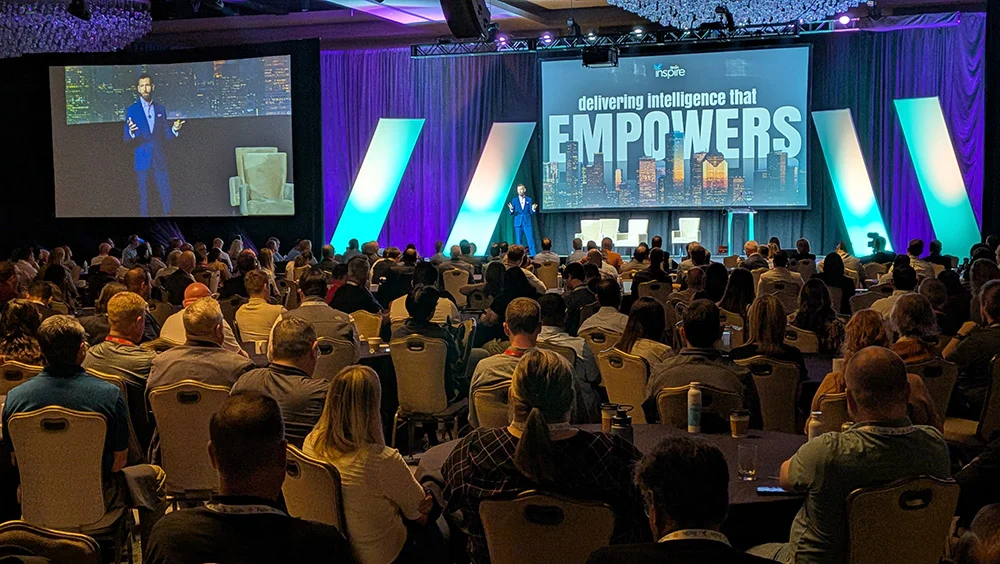
The landscape of the global energy sector underwent a significant period of collaborative scrutiny and strategic realignment from October 16 to 21, 2026, as Houston, Texas, played host to the annual Itron Inspire conference. With CenterPoint Energy serving as the host utility, the event gathered thousands of industry stakeholders, technology innovators, and policy experts to address a critical evolution in power management: the transition from theoretical grid modernization to the practical application of edge intelligence. This year’s summit marked a departure from the traditional "zero-sum" mindset that has long governed utility operations—the idea that improvements in reliability must necessarily come at the cost of affordability or sustainability. Instead, the 2026 proceedings focused on how integrated software, advanced hardware, and artificial intelligence can simultaneously elevate multiple performance metrics.
The 2026 conference arrived at a pivotal moment for the utility industry. As global demand for electricity continues to rise, driven largely by the electrification of transportation and the expansion of data centers, the traditional centralized grid model faces unprecedented strain. In previous iterations of the event, discussions often centered on the definition of "edge intelligence" or the initial deployment of Advanced Metering Infrastructure (AMI). However, the Houston summit demonstrated a decisive shift toward AMI 2.0, characterized by high-speed cellular Quality of Service (QoS), sophisticated traffic orchestration, and the decentralization of decision-making processes.
A Chronological Shift in Grid Awareness and Response
The opening of the event featured a keynote address by Itron CEO Tom Deitrich, who framed the current technological challenge through the lens of a specific operational failure. Deitrich recounted the story of a pole-mounted transformer, originally installed in 1994, which reached its end-of-life during a period of peak demand. While the utility’s response was efficient—dispatching a crew and restoring power within 45 minutes—Deitrich pointed out that the grid’s sensors had detected voltage sags for three weeks leading up to the failure.
The core problem, according to Deitrich, was not a lack of data, but a lack of "active listening." The data existed in a silo, unmonitored by systems capable of translating sensory input into preventative action. This narrative served as the catalyst for the conference’s primary theme: narrowing the gap between knowing and doing. In the context of 2026, "knowing" refers to the petabytes of data generated by edge devices, while "doing" refers to automated, real-time adjustments that can prevent outages before they occur.
To bridge this gap, the conference sessions highlighted the necessity of moving toward an operational model where data is not merely stored for billing or historical analysis but is integrated into a frontline defense system. This requires a transition from reactive maintenance to predictive and prescriptive analytics, utilizing the low-latency communication capabilities of modern AMI 2.0 networks.

Breaking the Zero-Sum Paradigm of Utility Management
A recurring point of analysis throughout the week was the "Energy Trilemma"—the struggle to balance reliability, affordability, and sustainability. Historically, utility executives have viewed these as competing interests. For instance, increasing capacity to ensure reliability often required massive capital expenditures on physical infrastructure, which in turn drove up consumer rates.
Deitrich and other industry leaders argued in Houston that intelligence-driven strategies allow utilities to "move all the dials at the same time." By leveraging edge computing, utilities can optimize existing assets, thereby delaying or eliminating the need for expensive new builds. This software-defined approach to capacity management supports sustainability goals by integrating more renewable energy at the edge while maintaining the affordability that regulators and consumers demand.
This shift is supported by recent industry data indicating that utilities utilizing advanced edge analytics can reduce peak demand by up to 15% through localized load balancing. This reduction directly impacts the need for "peaker" plants, which are often the most expensive and carbon-intensive sources of generation.
Modular Foundations for Diverse Regional Challenges
The exhibition floor, known as the Knowledge Center, showcased a variety of solutions that emphasized modularity over bespoke engineering. John Marcolini, Senior Vice President of Networked Solutions at Itron, addressed the misconception that every utility requires a unique, ground-up technological stack. While the challenges faced by a coastal utility in Texas differ from those of a provider in the Canadian provinces, the underlying core technology—the communication modules, sensors, and data processing units—remains consistent.
Marcolini highlighted the 100-amp service limitation as a prime example of regional variation on a common theme. In parts of the Western United States, the rapid adoption of Level 2 Electric Vehicle (EV) chargers is pushing residential 100-amp panels to their breaking point. Without intelligent mitigation, utilities would be forced to spend billions of dollars upgrading neighborhood transformers and service lines. In Canada, similar 100-amp limitations exist, though the primary driver is often general infrastructure aging rather than EV surges.
The solution presented in Houston involves a flexible communication platform that integrates public LTE, private LTE, and traditional mesh technology. This "unified" approach allows utilities to deploy the same hardware base while customizing the software applications to handle their specific regional hurdles, such as managing EV charging loads to stay within the 100-amp threshold.

The Cultural and Operational Convergence of IT and OT
One of the more complex challenges discussed was the integration of Information Technology (IT) and Operational Technology (OT). For over a decade, the industry has discussed the "convergence" of these two departments, but Itron Inspire 2026 revealed that the barrier is often cultural and structural rather than purely technical.
Ty Roberts, Vice President of Product Marketing at Itron, noted that grid operations (OT) are increasingly reliant on the process maturity and cybersecurity governance typically found in IT departments. Conversely, IT departments must learn to handle the real-time, mission-critical demands of the distribution grid. The consensus among delegates was that meter data can no longer be viewed solely as a billing asset (IT); it must be a shared asset used for distribution engineering, outage response, and load forecasting (OT).
This convergence is essential for securing the modern grid. As more devices connect to the network, the "attack surface" for potential cyber threats expands. By aligning IT security protocols with OT operational needs, utilities can create a more resilient posture against both physical and digital disruptions.
Practical AI and the Single Source of Truth
The role of Artificial Intelligence (AI) was a dominant topic, but the discourse in 2026 moved past the "hype cycle" to focus on specific, measurable workflows. Emily Fisher, Director of Sales and Marketing for North America at NET2GRID, emphasized that AI’s value lies in its ability to create a "single source of truth."
By breaking down data silos, AI can pair granular analytics with edge intelligence to support real-time decisions behind the meter. For example, AI algorithms can now distinguish between the "signature" of an EV charger, a heat pump, and a failing refrigerator. This level of insight allows utilities to offer more personalized energy-saving advice to consumers while simultaneously providing the utility with a clearer picture of grid demand.
Weather Risk and Infrastructure Hardening
The necessity of these technological advancements was underscored by presentations on environmental volatility. Sunny Wescott, a leading Federal Emergency Response Meteorologist, provided a sobering look at the "new era" of utility weather risk. Wescott argued that historical weather patterns are no longer a reliable guide for future risk assessment.

In response to these shifting patterns, CenterPoint Energy detailed its "Greater Houston Resiliency Initiative." This massive undertaking serves as a real-world case study for the themes discussed at the conference. The initiative includes:
- The deployment of 75,000 high-strength utility poles designed to withstand extreme wind speeds.
- The installation of 750 automated switching devices to isolate faults and minimize the number of customers affected by outages.
- The undergrounding of 850 miles of power lines in high-risk areas.
Ed De Varona, Senior Vice President of CenterPoint Energy’s electric business, explained that these physical investments are coupled with edge computing to provide real-time feedback. This combination allows the utility to identify the exact location of damage immediately after a storm, significantly accelerating restoration times and reducing the overall economic impact of extreme weather events.
Long-term Implications for the Global Energy Sector
The insights gathered from Itron Inspire 2026 suggest a fundamental shift in the utility business model. The transition toward a "software-defined grid" implies that future investments will be increasingly focused on intelligence and connectivity rather than just copper and steel.
For regulators, this shift presents a challenge in how to value utility investments. Traditional "rate-of-return" models, which reward utilities for capital-intensive physical projects, may need to evolve to incentivize "operating-expenditure" intensive solutions like AI and cloud-based analytics.
For consumers, the successful implementation of these technologies promises a more stable grid and more control over energy costs. As utilities become more adept at managing the grid edge, they can offer dynamic pricing and incentive programs that reward customers for shifting their usage away from peak periods.
In conclusion, Itron Inspire 2026 served as a definitive marker for an industry in transition. The move toward edge intelligence, the practical application of AI, and the breakdown of internal silos represent a comprehensive strategy to meet the demands of the 21st century. By proving that reliability, resilience, and affordability are not mutually exclusive, the leaders gathered in Houston have established a blueprint for the modern utility journey—one defined by the "and" of simultaneous benefits rather than the "or" of competing trade-offs. As these strategies scale from pilot programs to full-field deployments, the energy sector moves closer to a future where the grid does not just react to change, but anticipates it.
