

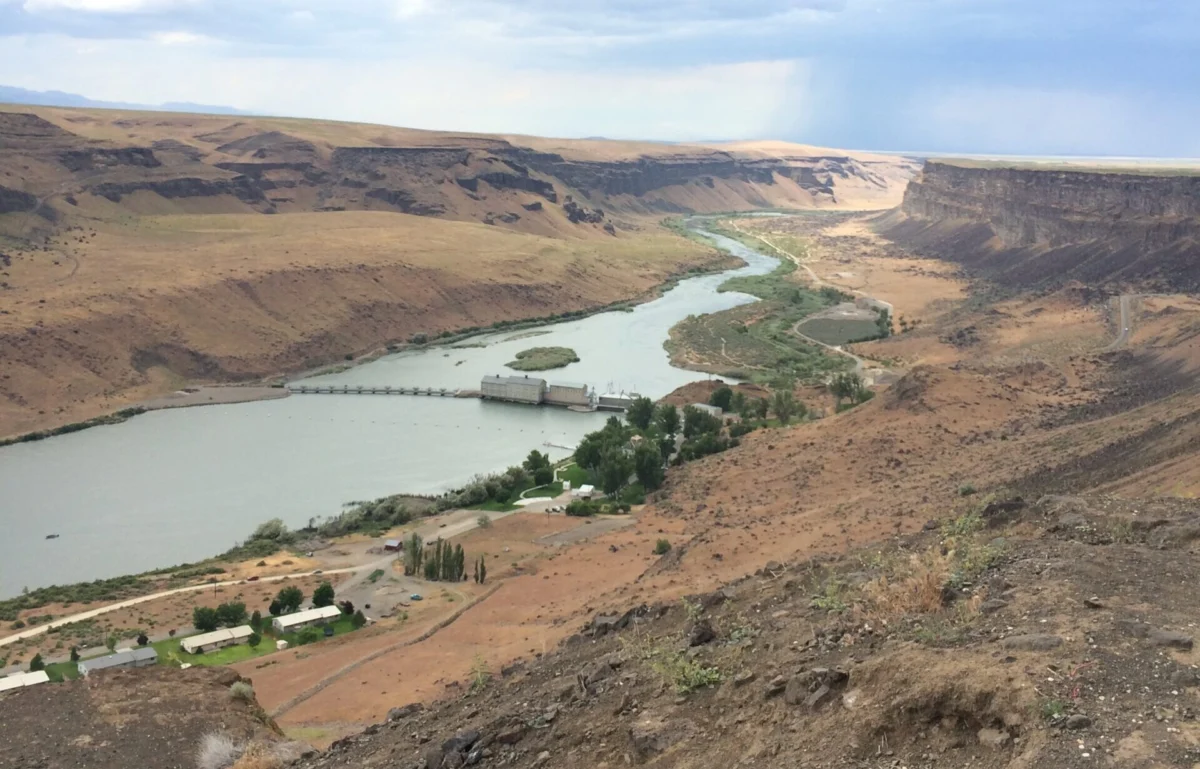
The Idaho Department of Water Resources (IDWR) has confirmed that thousands of agricultural producers and water users across the Snake River Basin will not face a mandatory shut-off of their water supplies this irrigation season, despite record-low flows and an intensifying regional drought. The announcement follows a high-level intervention by Governor Brad Little and a cooperative gesture from Idaho Power, the state’s largest utility provider, which holds senior water rights essential for hydropower generation at the Swan Falls Dam. The decision provides a critical reprieve for more than 4,000 "trust water" users whose livelihoods were jeopardized by the threat of curtailment as the Snake River’s volume approached historic minimums.
While the agreement offers immediate relief for the 2026 growing season, state officials have been careful to categorize the move as a temporary "bridge" rather than a permanent solution to Idaho’s increasingly complex water management challenges. The tension between maintaining minimum stream flows for hydroelectric power and satisfying the irrigation demands of one of the nation’s most productive agricultural regions remains a central point of concern for policymakers, hydrologists, and the farming community.
Historical Context: The 1984 Swan Falls Settlement Agreement
To understand the current crisis, one must look back to the landmark Swan Falls Settlement of 1984. For decades prior to the agreement, a legal and political battle simmered between Idaho Power and the State of Idaho regarding the company’s water rights at the Swan Falls Dam, located approximately 20 miles south of Kuna. Idaho Power held senior rights that potentially allowed them to demand high flows for power generation, which would have effectively blocked further agricultural development upstream.
The 1984 settlement was a compromise designed to balance these competing interests. Under the agreement, Idaho Power subordinated a portion of its water rights to the state, allowing for continued agricultural expansion. In exchange, the state committed to maintaining a minimum stream flow at the Murphy Gage, located just downstream from the dam. The minimum flow was set at 3,900 cubic feet per second (cfs) during the irrigation season (April 1 to October 31) and 5,600 cfs during the non-irrigation season.
This agreement also created "trust water rights." These are water rights issued by the state after the 1984 settlement that are essentially "held in trust." These users are allowed to divert water so long as the minimum flows at the Murphy Gage are met. However, if the flow drops below the 3,900 cfs threshold, the IDWR is legally mandated to curtail these junior trust users to ensure the minimum flow is restored for Idaho Power’s hydroelectric operations.
The 2026 Drought and the Threat of Curtailment
The 2026 irrigation season has been characterized by a "perfect storm" of adverse hydrological conditions. A significantly below-average winter snowpack in the mountains of eastern and central Idaho, coupled with an unusually hot and dry spring, led to rapid depletion of the Snake River’s natural flow. By early June, hydrologists at the IDWR noted that the flows at the Murphy Gage were trending dangerously close to the 3,900 cfs minimum—a level that had not been breached since the signing of the 1984 agreement.
In mid-June, the IDWR took the unprecedented step of issuing formal notices to more than 4,000 trust water right holders, warning them that if the trend continued, a curtailment order would be imminent. Such an order would have required farmers to cease pumping water from the river or the connected Eastern Snake Plain Aquifer (ESPA), a move that could have resulted in hundreds of millions of dollars in crop losses. The affected area includes some of Idaho’s most vital agricultural land, producing potatoes, sugar beets, alfalfa, and grains, as well as supporting the state’s massive dairy industry.
A Cooperative Resolution: The Governor’s Intervention
Recognizing the potential for economic catastrophe, Governor Brad Little entered into negotiations with Idaho Power leadership. The utility company, which relies on the river flow to power its turbines and meet the energy demands of its customers, faced a choice: insist on its legal right to the minimum flow or cooperate with the state to avoid a regional economic shock.
In a letter addressed to the Governor, Idaho Power officials indicated that they would not seek the curtailment of trust water users for the remainder of the 2026 season, even if flows dipped below the Murphy Gage requirement. They cited the extreme nature of the drought and the importance of supporting the state’s agricultural backbone as primary reasons for their flexibility.
Governor Little expressed his gratitude for the utility’s stance but remained pragmatic about the future. In a letter to IDWR Chairman Jeff Raybould, Little stated, "I support Idaho Power’s proposed approach… Under their proposal, the Snake River will not run dry of water for trust water right holders this season, but I want to be equally clear that this is a bridge, not a fix. It buys us time."

To facilitate this "bridge," the Governor directed the IDWR to utilize storage water—water held in upstream reservoirs—to help offset the depleted stream flows. This management strategy aims to stabilize the river’s volume and fulfill the spirit of the Swan Falls Agreement without resorting to the drastic measure of shutting off pumps.
Data and Hydrological Analysis
The severity of the 2026 drought is underscored by data from the Natural Resources Conservation Service (NRCS) and the IDWR. As of July 2026, the Snake River Basin’s snow water equivalent (SWE) was reported at just 62% of the median for the previous 30 years. Furthermore, reservoir levels across the Upper Snake system were at 55% capacity, significantly lower than the 78% average usually seen at the height of the irrigation season.
The Murphy Gage, which serves as the primary measuring stick for the Swan Falls Settlement, recorded flows hovering between 4,000 and 4,100 cfs for much of June. Without the use of storage water and the waiver from Idaho Power, experts estimated the flow would have dropped to approximately 3,750 cfs by mid-July, triggering automatic curtailment.
The 4,000 trust water users impacted by this decision represent a diverse cross-section of Idaho’s economy. This group includes small family farms, large-scale commercial operations, and municipal water providers in growing communities like Kuna and parts of the Treasure Valley.
Economic and Agricultural Implications
The decision to avoid curtailment is a significant victory for the Idaho agricultural sector. According to the University of Idaho’s Department of Agricultural Economics, the Snake River Basin contributes over $10 billion annually to the state’s GDP. A mid-season water shut-off would have been particularly devastating for crops like potatoes and sugar beets, which require consistent moisture during the heat of July and August to reach maturity and quality standards.
"A curtailment in July is essentially a total loss for many of our growers," said a representative from the Idaho Farm Bureau (inferred reaction). "By this point in the season, the input costs—seed, fertilizer, labor—have already been spent. Without water to finish the crop, those investments vanish, and the ripple effects hit equipment dealers, processors, and local banks."
Beyond the direct agricultural impact, the preservation of water rights helps maintain the stability of the Eastern Snake Plain Aquifer. The management of surface water and groundwater is inextricably linked in Idaho; curtailing surface water users often leads to increased pressure on groundwater, which can further lower the water table and exacerbate long-term shortages.
Future Outlook: A Permanent Solution Needed
The 2026 agreement is a temporary reprieve, but it highlights a growing vulnerability in Idaho’s water policy. The "Swan Falls Trust" was established in an era when climate patterns were more predictable and the demands of a rapidly growing population were less intense. As Idaho continues to be one of the fastest-growing states in the nation, the competition for water between municipal development, traditional agriculture, and energy production is expected to intensify.
State legislators and water managers are now looking toward more robust long-term strategies. These may include:
- Enhanced Managed Recharge: Directing excess winter and spring flows into the aquifer to bolster groundwater levels for dry years.
- Infrastructure Investment: Modernizing irrigation delivery systems to reduce seepage and evaporation.
- Cloud Seeding: Expanding the state’s existing cloud seeding programs to increase winter snowpack in the Upper Snake River drainage.
- Settlement Renegotiation: While politically difficult, some stakeholders suggest the 1984 agreement may eventually need updating to reflect modern hydrological realities.
Conclusion
The resolution of the 2026 Swan Falls water crisis demonstrates a successful instance of public-private cooperation in the face of environmental adversity. By prioritizing regional economic stability over strict legal adherence, Idaho Power and Governor Brad Little have protected thousands of water users from immediate ruin. However, the "bridge" built this summer leads to a future where difficult decisions regarding water scarcity can no longer be deferred. As the climate changes and the state grows, the balance between the "Two Rivers"—the river used for power and the river used for life—will remain the most critical challenge facing the Gem State.
