

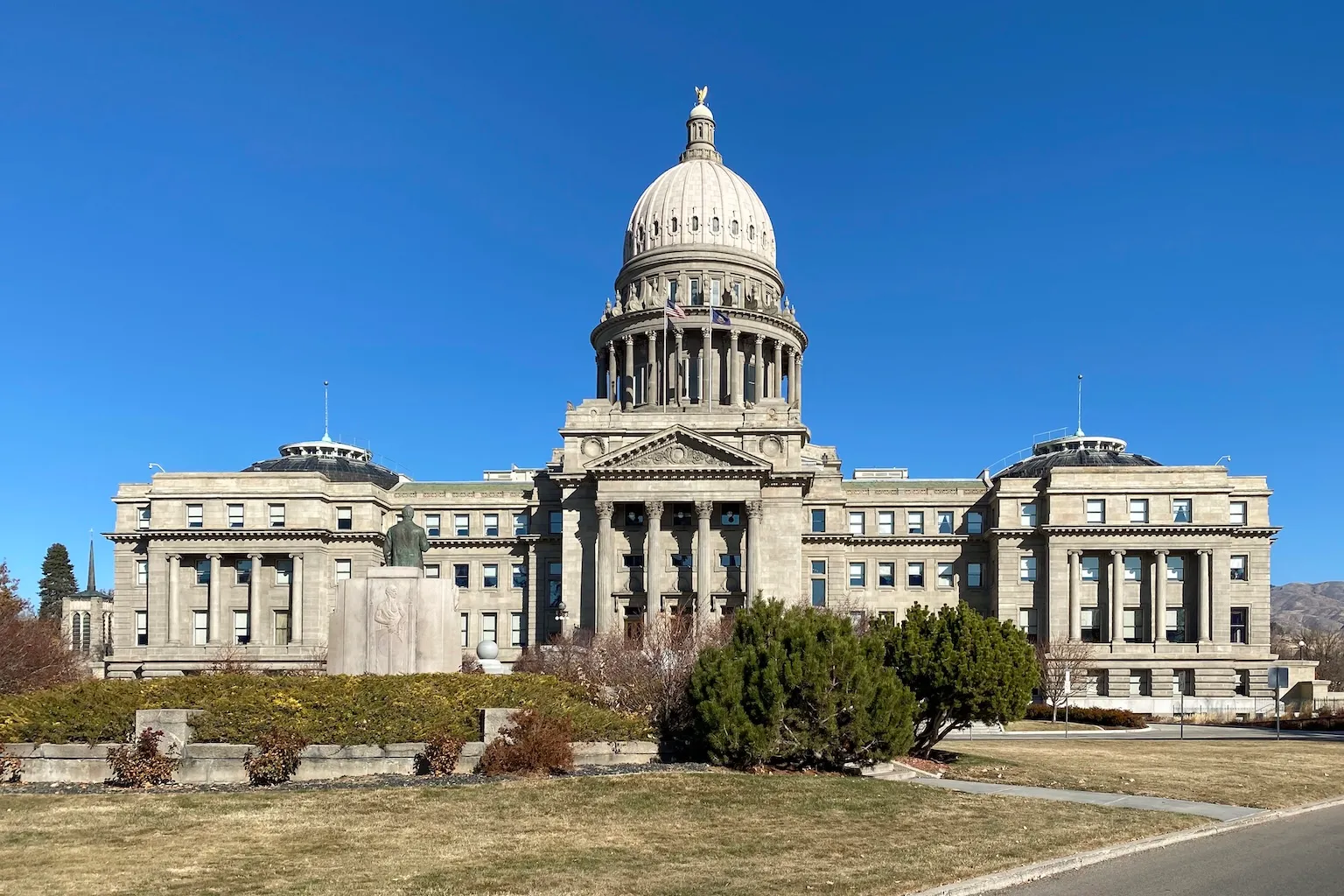
In a decisive move to address one of the most pressing economic challenges facing the Gem State, Governor Brad Little has officially signed into law a sweeping package of housing reforms designed to overhaul land-use regulations and stimulate the production of "missing middle" housing. The legislative package, which comprises five distinct bills, represents a significant shift in Idaho’s approach to urban planning, signaling a transition from local-level discretionary zoning toward state-mandated standards. By streamlining the development process for manufactured homes, accessory dwelling units (ADUs), and smaller-lot "starter homes," the state government aims to lower the barrier to entry for first-time homebuyers and renters who have been priced out of the market by a multi-year surge in demand.
The move comes as Idaho leaders seek to move beyond a "piecemeal" legislative strategy, opting instead for a comprehensive framework that balances the need for increased density with the preservation of local infrastructure standards. While the legislation empowers local governments to implement specific missing middle housing plans, it simultaneously curtails their ability to block certain types of development through restrictive zoning ordinances. This tension between state oversight and local control has become a central theme in the legislative session, highlighting the urgency felt by state officials as Idaho continues to grapple with the aftermath of a historic population boom.
The Economic Context: A Mountain West Migration Crisis
To understand the necessity of these reforms, one must look back to the onset of the COVID-19 pandemic in 2020. During this period, Idaho, and particularly the Boise metropolitan area, became a primary destination for remote workers fleeing high-cost coastal markets such as Los Angeles, San Francisco, and New York City. Attracted by the state’s lower cost of living, outdoor amenities, and burgeoning tech sector, thousands of new residents arrived with purchasing power that far exceeded the local average.
According to data from the 2025 Urban Land Institute’s (ULI) Terwilliger Center Home Attainability Index, the impact on Idaho’s real estate market was unprecedented. From 2019 to 2023, the Boise metropolitan area topped the nation in home price appreciation. The crisis was not limited to the capital; Coeur d’Alene, Idaho Falls, and Twin Falls also ranked in the top 10 most impacted cities for price growth relative to local wages. This influx created a "pricing out" effect, where essential workers—teachers, police officers, and healthcare professionals—found it increasingly difficult to secure housing within the communities they serve.
While other "boomtowns" in the Sun Belt, such as Austin, Texas, have recently seen a cooling of their markets as return-to-office mandates pull workers back to the coasts, Idaho’s market has remained remarkably resilient. Industry experts, including Hollie Conde of the Sightline Institute, note that many remote workers who moved to Idaho have integrated into the community and retained their positions. Unlike Austin, where a massive surge in new construction has led to significant rent declines, Idaho’s supply has continued to lag behind its sustained population growth, keeping prices elevated even as interest rates rose nationally.
A Chronology of Reform: From Study Committee to Statutory Law
The path to this comprehensive reform began in earnest in 2023, when the Idaho State Legislature established a special committee to investigate the relationship between land-use regulations and housing supply. The committee was tasked with identifying "bottlenecks" in the development process, such as excessive minimum lot sizes, restrictive accessory dwelling unit (ADU) ordinances, and outdated building codes that made small-scale multi-family projects financially unviable.
The committee’s findings suggested that while local municipalities had the authority to address housing shortages, many were reluctant to do so due to political pressure from existing residents who opposed increased density. Following a series of public hearings and consultations with urban planners, developers, and housing advocates, the committee returned with a series of recommendations. These recommendations formed the bedrock of the five bills signed by Governor Little this week: House Bills 800, 707, and 706, and Senate Bills 1354 and 1352.
Expanding the Definition of Housing: H800 and Manufactured Homes
One of the most significant pillars of the reform package is House Bill 800, which fundamentally changes how manufactured housing is treated under Idaho law. For decades, manufactured homes—often referred to as mobile homes—were relegated to specific parks or rural areas, frequently facing "zoning out" through minimum square footage requirements and aesthetic standards that mimicked traditional site-built homes.
Under the new law, manufactured homes, including multi-dwelling units like duplexes, must be treated similarly to site-built housing for siting purposes. The legislation effectively lowers minimum size requirements and prevents cities from using zoning to exclude single-section units. While cities are still permitted to limit manufactured duplexes to multi-family zones, they must now allow manufactured single-unit homes in any zone where traditional single-family homes are permitted. This change is expected to provide a lower-cost path to homeownership, as manufactured units can often be produced and installed at a fraction of the cost of traditional construction.
Unlocking Land Value: H707 and the Administrative Lot Split
House Bill 707 addresses a technical but critical hurdle in the housing market: the ability to finance and sell secondary units. Previously, many homeowners who built accessory dwelling units (ADUs) on their property found that they could only use them as rentals, as the land could not be easily divided. H707 creates an administrative pathway for cities and counties to approve limited lot splits for properties that already feature an existing or approved secondary unit.
This "one and done" split allows for separate ownership or financing of the two units. Crucially, the law does not increase the overall density or "dwelling entitlements" beyond what current zoning allows; it simply permits the existing density to be split into two separate parcels. Each resulting lot must still adhere to local infrastructure, setback, and building requirements, but the ability to sell a secondary unit as a "starter home" provides a new mechanism for wealth creation and market-entry.
Modernizing Building Codes: H706 and Single-Stair Egress
In a move praised by urban architects, House Bill 706 amends the Idaho Building Code Act to allow for "single-stair" apartment buildings. Under standard U.S. building codes, most multi-family buildings are required to have two separate interior stairways for fire safety, a requirement that often necessitates long hallways and larger building footprints. This makes small-lot multi-family development nearly impossible.
The new law allows local governments to approve small apartment buildings with a single interior exit stairway, provided they meet rigorous life-safety standards. These buildings are limited in height and floor area and must be equipped with full sprinkler systems, pressurized two-hour fire-rated stairs, and advanced smoke detection systems. By allowing single-stair designs, Idaho joins a growing number of jurisdictions looking to "point-access blocks," which allow for more windows, better ventilation, and more efficient use of small urban infill lots.
Protecting Property Rights: S1354 and the ADU Mandate
Senate Bill 1354 focuses on accessory dwelling units (ADUs), often called "granny flats" or "in-law suites." This legislation prevents local governments and homeowners’ associations (HOAs) from outright banning ADUs. It guarantees property owners in covered jurisdictions the right to build at least one ADU per lot.
The law also takes aim at "poison pill" regulations—rules that don’t ban ADUs explicitly but make them impossible to build through hard maximum size caps or excessive parking requirements. While cities can still enforce health and safety standards, they can no longer use arbitrary size limits to prevent the construction of these small, flexible housing options.
Protecting the Starter Home: S1352 and Small-Lot Subdivisions
Perhaps the most controversial element of the package is Senate Bill 1352, which protects "starter home subdivisions" on parcels of at least four acres. This law preempts local regulations that mandate large minimum lot sizes, which often drive up the cost of a finished home.
The law prevents cities from requiring lots larger than 1,400 square feet for these specific projects and encourages a minimum density of approximately 12 units per acre. By lowering the "land cost" per unit, developers can theoretically build homes that are attainable for middle-income earners. The law includes safeguards for infrastructure limits, ensuring that density does not outpace the capacity of local water and sewer systems.
Local Pushback and the "Home Rule" Debate
The passage of these bills has not been without significant friction. Local officials in several Idaho cities have expressed frustration over what they perceive as an erosion of "Home Rule"—the principle that local communities should have the final say in how they grow.
In Coeur d’Alene, city officials were notably vocal in their opposition. During a public meeting following the signing, local leaders characterized the state mandates as "not very clever" and "dumb," arguing that the one-size-fits-all approach ignores the unique geographical and infrastructural challenges of specific municipalities. Critics of the legislation argue that by taking away local zoning authority, the state is inviting "unchecked density" that could strain public services and alter the character of established neighborhoods.
However, proponents of the bills, including Governor Little and the legislative committee, argue that local governments had years to address the crisis on their own and failed to produce results. The state’s intervention is framed as a necessary corrective to a market failure caused by regulatory overreach at the local level.
Broader Impact and Future Implications
The long-term impact of these reforms will likely be measured by the "missing middle"—the segment of the housing market between high-density apartments and large single-family estates. By legalizing smaller lots, ADUs, and manufactured housing, Idaho is betting that a more diverse housing stock will naturally lead to more competitive pricing.
For developers, the new laws provide a level of certainty that was previously missing. The administrative pathways for lot splits and the preemption of certain zoning hurdles reduce the time and legal costs associated with bringing a project to market. For residents, the impact may be slower to materialize, as construction timelines and high interest rates continue to pose challenges.
As the 2025 fiscal year approaches, urban planners across Idaho will be tasked with integrating these state mandates into their local comprehensive plans. The success of the "Idaho Model" of housing reform will be closely watched by other Mountain West states, such as Montana and Utah, which are facing similar demographic shifts. For now, Idaho has signaled that in the battle between local tradition and economic necessity, the state is prepared to prioritize the latter to ensure that the next generation of Idahoans can afford to live in the communities where they were raised.
