

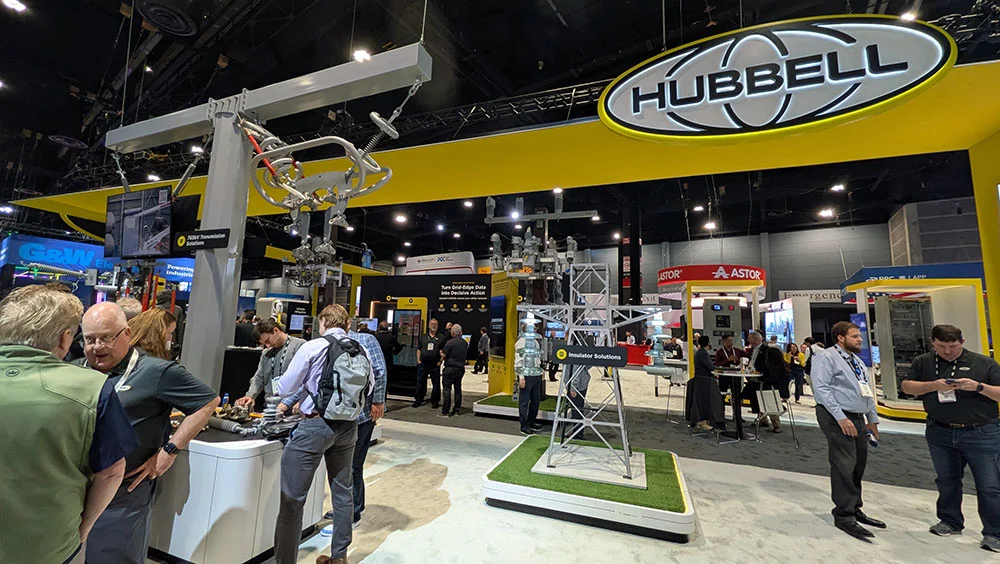
The 2026 IEEE PES T&D Conference & Exposition in Anaheim served as a pivotal stage for Hubbell Power Systems to showcase a suite of innovations designed to address the escalating complexities of the North American power grid. As utilities grapple with the dual pressures of aging infrastructure and the rapid integration of renewable energy sources, the focus has shifted from simple component replacement to the implementation of adaptable, intelligent systems. Hubbell’s participation in the event underscored a strategic pivot toward "localized demand management," a concept where utility providers utilize modular, data-driven tools to address specific regional vulnerabilities while maintaining the integrity of the broader national network.
The exhibition occurred at a time of unprecedented investment in the utility sector. According to Department of Energy (DOE) projections released earlier in the year, the United States requires an estimated $2 trillion in grid upgrades by 2035 to meet decarbonization goals and accommodate the load growth driven by data centers and electric vehicle (EV) adoption. Against this backdrop, Hubbell presented three primary technological advancements: the evolved Line Defender recloser, customizable 765 kV transmission solutions, and the Motor-Operated Air-Insulated Switchgear (AIS). These products represent a synthesis of physical hardware durability and digital connectivity, aimed at enhancing reliability, worker safety, and operational transparency.
The Evolution of Lateral Protection: The Line Defender Recloser
One of the most significant highlights of the Hubbell exhibit was the updated Line Defender, a single-phase recloser that has undergone substantial iterative development since its initial debut. The latest version introduces a plug-and-play SCADA (Supervisory Control and Data Acquisition) communications module, a feature developed in direct response to utility feedback regarding the need for better visibility into lateral distribution lines.
Historically, utilities relied on "trip-savers" or traditional fuses to manage faults on lateral lines. However, these systems often required manual intervention, leading to prolonged outages and increased operational costs. The Line Defender addresses these "pain points" through a ground-level control design. This allows field crews to reset the device using a standard hot stick from the ground, eliminating the safety risks and time delays associated with climbing poles or deploying bucket trucks.

The integration of the new cellular module allows for real-time data transmission without the need for the external cabinets or secondary cabling that typically complicates SCADA deployments. Jithin Mundackal, a representative of the Hubbell engineering team, noted during the conference that the ability to reset a single-phase recloser from the ground while simultaneously streaming performance data to a central hub is a first for the industry. This capability is particularly vital for wildfire mitigation. In drought-prone regions, the ability to remotely monitor line conditions and prevent repeated "reclosing" into a fault can significantly reduce the risk of ignition. The bolt-on architecture of the communication module also offers a "future-proof" investment path, allowing utilities to deploy the hardware now and add digital connectivity as budget cycles permit.
Scaling the High-Voltage Frontier: 765 kV Transmission Solutions
As the United States moves toward a more interconnected regional energy market, the demand for ultra-high voltage (UHV) transmission has resurfaced. The 2026 conference highlighted a renewed interest in 765 kV lines, which are capable of transporting large volumes of electricity over vast distances with significantly lower line losses than standard 345 kV or 500 kV alternatives. Major projects are already underway in Texas through Oncor and in the Upper Midwest via the Midcontinent Independent System Operator (MISO) Long-Range Transmission Planning (LRTP) initiatives.
Hubbell has positioned itself as a leader in this space by moving away from standardized, mass-produced components in favor of a partner-led, customizable approach. Jeff Butler, Principal Engineer for Transmission at Hubbell, emphasized during a technical session that the next three to five years will see a "massive surge" in infrastructure projects. Unlike lower-voltage distribution, 765 kV projects face unique environmental and mechanical stresses.
The customization offered by Hubbell involves engineering specific insulators, hardware strings, and vibration dampening systems tailored to the specific geographical challenges of a project, such as high-wind corridors in the Great Plains or corrosive environments in coastal regions. This bespoke engineering approach is designed to ensure the longevity of the assets, which are often expected to remain in service for over 50 years. By collaborating directly with utility engineers during the design phase, Hubbell aims to reduce the "total cost of ownership" by minimizing maintenance requirements for these critical high-capacity arteries.
Bridging the Digital Gap: Motor-Operated Air-Insulated Switchgear (AIS)
The third pillar of Hubbell’s 2026 showcase was the Motor-Operated AIS, a pad-mounted, medium-voltage solution intended for underground distribution networks. As urban areas increasingly move power lines underground to protect against storm-related outages, the difficulty of managing those lines increases. Traditional underground switchgear is often manual, requiring crews to physically visit a site to switch loads or isolate faults.

The AIS-MO (Motor-Operated) system bridges this gap by integrating seamlessly with SCADA systems and Schweitzer Engineering Laboratories (SEL) Remote Terminal Units (RTUs). This connectivity enables utility operators in a central control room to monitor voltage and current irregularities and execute switching operations remotely. The result is a drastic reduction in System Average Interruption Duration Index (SAIDI) scores, as restoration can begin seconds after a fault is identified rather than hours.
Safety remains a core component of the AIS-MO design. The system includes onboard diagnostics and a "No-Go" alarm, which prevents the switch from operating if power levels are too low to ensure a clean break or connection. Furthermore, remote alerts for battery health ensure that the backup power systems necessary for remote operation are always functional. This proactive maintenance model moves utilities away from "reactive" repairs, which are typically more expensive and dangerous for personnel.
Chronology of Development and Market Context
The innovations displayed in 2026 are the result of a multi-year development cycle that accelerated following the 2021 Infrastructure Investment and Jobs Act. Between 2022 and 2025, Hubbell significantly increased its R&D spending, focusing on "smart" hardware that could be retrofitted onto existing structures.
- 2023-2024: Initial field testing of the Line Defender’s ground-reset mechanism with major investor-owned utilities (IOUs) in the Western United States.
- 2025: Development of the plug-and-play SCADA module, following the industry-wide push for "Distribution Automation" (DA).
- Early 2026: Launch of the 765 kV customization initiative to support the first wave of UHV projects in the ERCOT and MISO regions.
Industry analysts at the IEEE PES T&D event noted that Hubbell’s strategy aligns with a broader trend of "grid hardening." Data from the Edison Electric Institute (EEI) suggests that US investor-owned utilities are now spending more on distribution and transmission than on power generation for the first time in history. Hubbell’s focus on the "middle mile" of the grid—the hardware that connects power plants to homes—places them at the center of this spending shift.
Broader Impact and Industry Implications
The implications of Hubbell’s latest technological offerings extend beyond simple operational efficiency. There is a growing focus on "affordability" in the energy sector. By providing tools like the Line Defender and Motor-Operated AIS, which reduce the need for manual "truck rolls," utilities can lower their O&M (Operations and Maintenance) costs. In theory, these savings can be passed on to consumers or reinvested into further grid modernization, helping to stabilize rising electricity rates.

Furthermore, the emphasis on worker safety cannot be overstated. Utility linework is consistently ranked among the most dangerous professions in North America. Technologies that allow for ground-level operation or remote switching significantly reduce the "exposure hours" for workers in high-risk environments.
As the industry looks toward the remainder of the decade, the "intelligent grid" is moving from a conceptual phase to a standard requirement. The solutions presented by Hubbell at the 2026 IEEE PES T&D Conference suggest that the future of the grid will not be defined by a single "silver bullet" technology, but by a collection of smart, modular, and highly reliable components that allow utilities to react to local demands with global precision. The transition to a modern energy landscape requires a balance of legacy stability and forward-thinking innovation, a balance that Hubbell Power Systems appears to have struck with its latest portfolio. Stay tuned for further technical deep dives as these systems are deployed across North American utility service territories in the coming months.
