

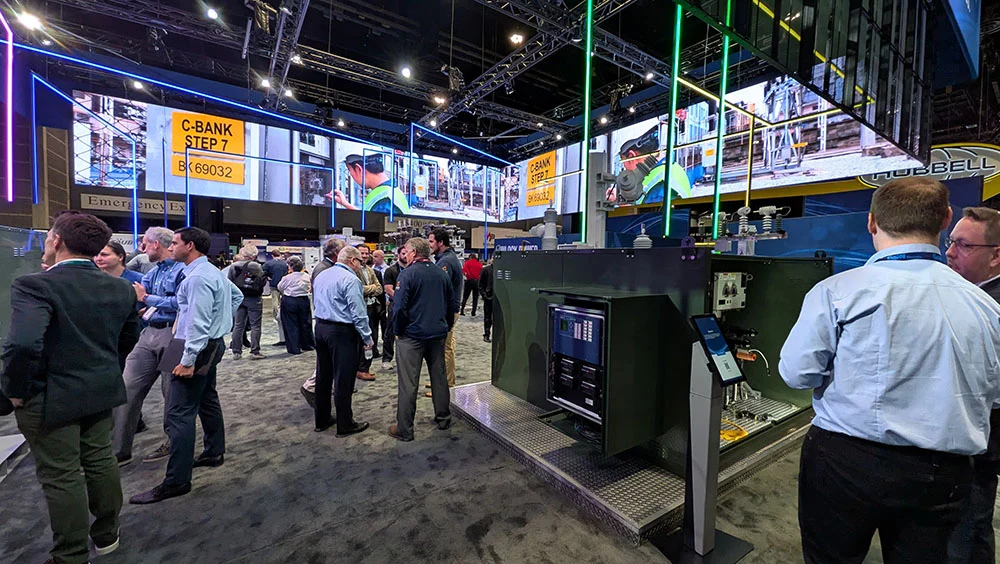
The 2026 IEEE PES T&D Conference & Exposition, held against a backdrop of intensifying climate volatility and a historic surge in domestic energy consumption, served as a critical forum for the power industry’s most pressing dilemmas. Among the primary exhibitors, G&W Electric utilized the platform to demonstrate how its latest technological suite addresses the dual pressures of maintaining long-term grid reliability while ensuring immediate economic affordability. As extreme weather events become more frequent and the rapid expansion of data centers—fueled by the global artificial intelligence boom—strains existing capacity, utility providers are increasingly seeking "longevity-first" infrastructure. The solutions showcased by G&W Electric at the Anaheim convention represent a strategic pivot toward modular, sensor-rich hardware designed to withstand the rigors of a modernizing electrical landscape.
The Convergence of Reliability and Affordability in 2026
The energy sector in 2026 finds itself at a precarious crossroads. While the transition to renewable energy sources continues to accelerate, the physical infrastructure required to transport and manage that power is under unprecedented duress. According to industry data presented during the conference, nearly 90% of the United States’ critical energy infrastructure is expected to reach or exceed its designed life expectancy within the next decade. This aging hardware is being forced to handle load structures that were never anticipated during the original design phase, particularly the massive, steady-state draws required by high-density data centers.
At the G&W Electric booth, the conversation centered on the "value proposition" of modern switchgear and protection assets. Kyle Stromberg, Global Product Line Manager at G&W Electric, emphasized that the traditional metrics of affordability are being redefined by the reality of the labor market. A significant shortage of qualified line workers and electrical engineers has made equipment that requires frequent manual intervention a liability rather than an asset. In this environment, the most affordable piece of equipment is often the one that requires the least human maintenance over a 30-year lifespan.
Addressing the Labor Crisis Through Automation
The labor shortage mentioned by Stromberg is not merely a localized issue but a systemic challenge facing the global utility industry. As a generation of experienced technicians reaches retirement age, the transfer of institutional knowledge has struggled to keep pace with the increasing complexity of the grid. Consequently, G&W Electric has prioritized the development of self-healing technologies and low-maintenance hardware.
"Conversations we have with our utility and C&I (Commercial and Industrial) partners always seem to come back to an element of ‘we don’t have enough people,’" Stromberg noted during a technical session. "If infrastructure can reliably last with little or no maintenance, that’s a massive advantage." This shift toward "fit-and-forget" technology is a direct response to the rising costs of truck rolls and emergency repairs, which have seen a marked increase in price due to inflation and specialized labor scarcity.
The Viper recloser, a centerpiece of G&W’s exhibit, exemplifies this philosophy. By utilizing solid dielectric insulation and a simplified mechanical design, the unit minimizes the risk of environmental contamination and mechanical failure. For utilities, this translates to fewer scheduled inspections and a lower total cost of ownership, even if the initial capital expenditure is higher than that of traditional oil-insulated alternatives.
Customization as a Strategy for Budgetary Constraints
Recognizing that not all utilities operate with the same financial resources, G&W Electric highlighted its commitment to modularity and customization. The "one-size-fits-all" approach to grid protection is becoming obsolete as municipal utilities, cooperatives, and large investor-owned utilities (IOUs) face vastly different regulatory and budgetary landscapes.
Stromberg explained that the Viper recloser and other protection tools are now designed with a flexible feature set. "Not every recloser is designed with the same feature set," he told industry analysts. "Some are designed intentionally with a price point that’s maybe a little bit more affordable, but lower on some of the automation bells and whistles." This tiered approach allows smaller utilities to upgrade their most vulnerable circuits without over-investing in high-accuracy sensors or predictive technologies that may not yet be supported by their existing back-end software.
Conversely, for large-scale IOUs managing high-density urban corridors or critical industrial zones, G&W offers a fully loaded suite of "intelligence nodes." These units include high-accuracy voltage and current sensors that feed real-time data into Advanced Distribution Management Systems (ADMS), allowing for granular control and rapid fault isolation.
The Digitalization of Grid Hardening
A central theme of the 2026 conference was the evolution of grid hardening from a purely physical process—such as burying lines or installing stronger poles—to a digital one. G&W Electric is leading this transition by integrating sophisticated sensing capabilities into traditional switching assets. By adding relatively inexpensive instrument transformers and digital sensors, a standard switch is transformed into a diagnostic tool capable of monitoring the health of the entire circuit.

Stromberg envisions these sensors as the "nervous system" of the grid. "Think about those senses and transformers as intelligence nodes that can look out and provide diagnostic information around what’s happening with that equipment or in the environment," he stated. "Once all this data comes together and it is used effectively, we’re going to see the grid harden at an exponential rate."
This digitalization is particularly crucial for managing the bidirectional power flows associated with Distributed Energy Resources (DERs), such as residential solar and battery storage. Without high-speed sensing and automated switching, the integration of these resources can lead to voltage instability and protection coordination issues.
From Reactive to Predictive: The Safegrid Integration
One of the most significant developments discussed at the G&W booth was the company’s recent acquisition of Safegrid, a move that signals a definitive shift from reactive to predictive maintenance. Safegrid’s hardware and software stack allows utilities to identify and locate transient faults with surgical accuracy—often before a full outage occurs.
In the traditional utility model, maintenance is performed either on a fixed schedule or after a failure has occurred. Both methods are inefficient; scheduled maintenance may replace perfectly functional parts, while reactive maintenance is inherently more expensive and disruptive. Stromberg pointed out the economic benefits of the Safegrid technology: "Predictive fault technologies mean that a dollar’s worth of preventative maintenance can avoid what could otherwise be a hundred-dollar problem."
The Safegrid system works by detecting "low-level" anomalies that precede catastrophic failures, such as insulation degradation or partial discharge. By addressing these minor issues during scheduled downtime, utilities can avoid the massive costs associated with emergency outages, including lost revenue, regulatory fines, and damage to public reputation.
The Data Center Challenge and the AI Wave
The 2026 IEEE PES T&D Conference devoted significant time to the impact of the "Data Center Wave." As tech giants continue to build massive facilities to support AI and cloud computing, the grid is facing localized load increases that were previously unthinkable. These facilities require ultra-reliable, high-quality power, and their presence often necessitates a complete redesign of local distribution networks.
G&W Electric’s response to this challenge involves the implementation of pilot programs that test new protection schemes designed for high-density loads. These programs allow utilities to experiment with alpha and beta technologies in a controlled environment, significantly shortening the development cycle for new infrastructure.
"The industry’s willingness to test alpha and beta technologies has shortened development cycles significantly, moving away from the years-long waiting periods of the past," Stromberg observed. This agility is essential for keeping pace with the technology sector, where data center projects can go from groundbreaking to operational in a fraction of the time it takes to build a traditional substation.
Chronology and Future Outlook
The innovations presented by G&W Electric at the 2026 conference are the result of a multi-year development cycle that began in the early 2020s. Following the supply chain disruptions of 2021-2023, the company pivoted toward more resilient manufacturing processes and domestic sourcing, which has allowed it to meet the current surge in demand more effectively than some of its competitors.
Looking ahead to the late 2020s, the trajectory for the industry is clear: a movement toward a fully autonomous, self-healing grid. The partnerships and pilot programs established today will serve as the foundation for this future. G&W Electric’s focus on longevity, customization, and predictive intelligence positions the company as a pivotal player in this transition.
As the 2026 IEEE PES T&D Conference concluded, the consensus among attendees was that the era of "business as usual" for utilities has ended. The combination of aging assets and skyrocketing demand requires a bold approach to infrastructure investment. By prioritizing equipment that balances the immediate need for affordability with the long-term necessity of reliability, G&W Electric is providing a roadmap for a more resilient and efficient global power grid. "Regardless of the need or approach, we have the solutions that are required to keep the electricity flowing," Stromberg concluded, summarizing the company’s mission in an increasingly complex energy landscape.
