

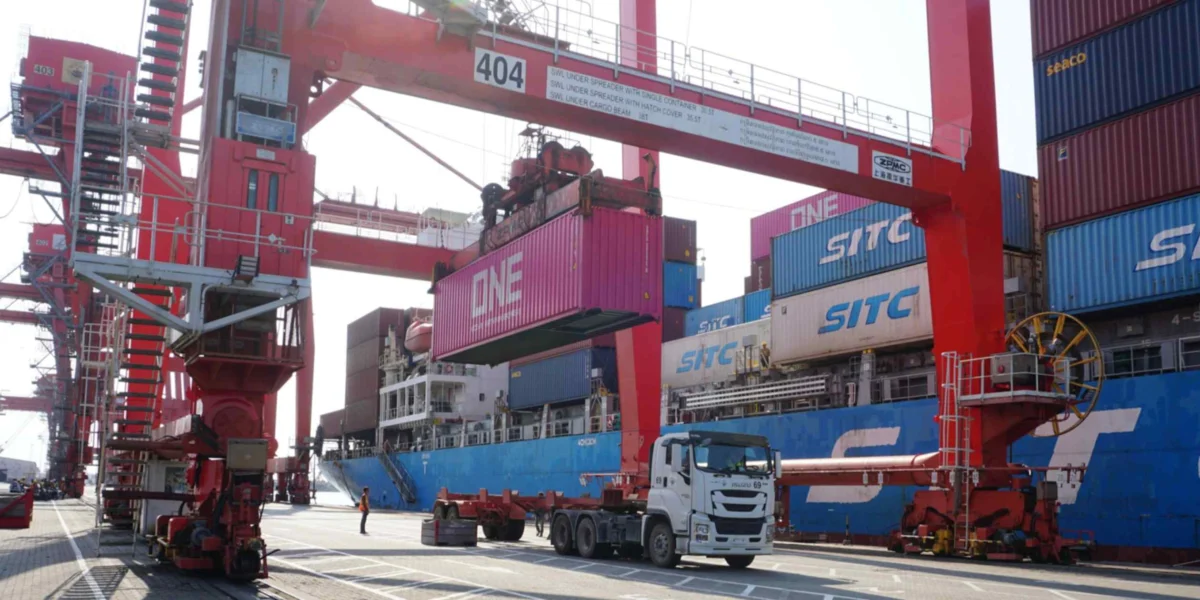
PHNOM PENH – Japanese multinational corporations relying on Cambodia’s Sihanoukville Port as a crucial maritime gateway to Southeast Asia are voicing growing apprehension over escalating cargo fees, which are impacting their operational costs and supply chain efficiency. The port, strategically located on the Gulf of Thailand, has become an indispensable conduit for Japanese businesses following the closure of overland routes into Thailand, a measure implemented to curb the spread of a contagious disease that swept across the region. While Sihanoukville Port’s enhanced role signifies its growing importance in regional logistics, the associated charges are now prompting urgent calls for relief and a re-evaluation of the fee structure by affected companies.
The situation has emerged as a direct consequence of evolving geopolitical and health-related circumstances. In early 2026, a widespread outbreak of a novel respiratory illness, originating in neighboring countries, led to a stringent closure of Cambodia’s land border with Thailand. This drastic measure, aimed at preventing further transmission, effectively severed the primary overland transportation links that many Japanese companies had historically utilized for the movement of goods between their manufacturing bases in Thailand and other parts of the region, including import and export operations. Consequently, businesses found themselves compelled to seek alternative logistical solutions, with maritime transport via Sihanoukville Port rapidly emerging as the most viable, albeit costly, option.
Sihanoukville Port, the country’s largest and most modern deep-water port, has experienced a significant surge in cargo volume since the border closure. This increased demand, while bolstering the port’s strategic significance, has also placed considerable pressure on its infrastructure and operational capacity. Reports indicate a substantial uptick in container throughput, with many Japanese firms rerouting their shipments through the Cambodian hub. This shift has been particularly pronounced for industries heavily reliant on just-in-time manufacturing processes, where the efficient and cost-effective movement of components and finished goods is paramount.
However, the increased reliance on Sihanoukville Port has come at a steep price. Japanese companies, many of which have invested heavily in manufacturing facilities in Thailand and other ASEAN nations, are reporting that the fees associated with using the port – including handling charges, storage fees, and various administrative costs – have risen sharply. These increased expenses are not merely marginal; they represent a significant addition to the overall cost of goods, potentially eroding profit margins and impacting the competitiveness of their products in regional and global markets.
Background: The Strategic Shift to Maritime Logistics
The reliance on Sihanoukville Port is not a new phenomenon, but its prominence has been amplified by recent events. For years, Cambodia’s economy has been increasingly integrated with its neighbors, particularly Thailand, through robust road and rail networks. These overland routes offered a cost-effective and relatively swift means of transporting goods, especially for time-sensitive shipments. Japanese companies, a major foreign investor in Thailand’s industrial sector, have long leveraged these channels to optimize their supply chains.
The decision by Cambodian authorities to close the land border with Thailand in the spring of 2026, in response to a rapidly escalating health crisis, marked a watershed moment. The closure, initially intended to be temporary, was prolonged due to the persistent threat of the virus. This created an immediate logistical vacuum for businesses accustomed to overland transit. The nearest viable alternative for many was Sihanoukville Port, which, despite its limitations compared to larger regional hubs, offered a direct sea link.
The port’s infrastructure has undergone significant development in recent years, supported by foreign investment, including from China and Japan. These upgrades have enhanced its capacity to handle larger vessels and a greater volume of cargo, making it a more attractive option for international trade. However, the sudden surge in demand following the overland route closure appears to have outpaced the port’s ability to absorb the increased traffic without corresponding adjustments to its fee structure, leading to the current concerns.
Timeline of Escalating Concerns
- Early 2026: The outbreak of a novel respiratory illness leads to the closure of Cambodia’s land border with Thailand. Japanese companies begin exploring alternative transport routes.
- Spring 2026: Sihanoukville Port emerges as a primary maritime alternative. Initial usage sees a moderate increase in cargo volume.
- Summer 2026: Cargo volume at Sihanoukville Port experiences a significant surge as more Japanese businesses reroute operations. Companies begin to notice and report rising operational costs associated with port usage.
- Late Summer/Early Autumn 2026: Concerns over high cargo fees become more vocal. Japanese business associations and individual companies initiate discussions with port authorities and relevant government agencies to seek a resolution.
Supporting Data and Economic Impact
While precise figures on the extent of fee increases are not publicly available, anecdotal evidence from business representatives suggests a substantial rise. Companies are reporting that the cumulative cost of using Sihanoukville Port for a single container shipment has increased by as much as 20-30% compared to pre-closure overland routes. This escalation is attributed to a combination of factors:
- Increased Port Handling Fees: Charges for loading, unloading, and container services at Sihanoukville Port have reportedly been adjusted upwards.
- Storage and Demurrage Charges: With potential bottlenecks and extended processing times due to increased volume, companies are facing higher costs for storing goods within the port premises.
- Administrative and Documentation Fees: The administrative processes at the port, often complex for international cargo, may have seen a corresponding increase in associated fees.
- Limited Competition: The lack of readily available and equally viable alternative port facilities in the immediate vicinity for this specific trade route further empowers Sihanoukville Port to set higher prices.
The economic implications of these elevated fees are multifaceted. For Japanese companies, the immediate impact is a reduction in profit margins. This can, in turn, affect their investment decisions, potentially leading to a slowdown in expansion plans or even a reassessment of their manufacturing footprint in the region. In the longer term, sustained high logistics costs can make products manufactured in the region less competitive globally, potentially impacting export revenues and market share.
Furthermore, the situation could have broader implications for Cambodia’s economic development. While the increased port activity is a positive sign of its growing importance, a perception of excessively high or unpredictable fees could deter future foreign investment. A balanced approach that fosters trade while ensuring fair pricing is crucial for sustainable economic growth.
Reactions and Calls for Relief
Japanese business chambers and industry associations in Cambodia and Thailand have been actively engaged in dialogue with Sihanoukville Port authorities and the Cambodian government. These discussions are focused on understanding the rationale behind the fee increases and advocating for a more sustainable pricing model.
A representative from the Japanese Chamber of Commerce in Cambodia, speaking on condition of anonymity due to the sensitivity of the negotiations, stated, "We understand that increased demand can lead to adjustments in operational costs. However, the current fee structure is placing a significant burden on our member companies. We are seeking a transparent and equitable pricing mechanism that reflects the actual costs and allows for predictable budgeting."
Similarly, Japanese business leaders in Thailand have echoed these sentiments, emphasizing the need for a stable and cost-effective supply chain to maintain competitiveness. They are reportedly exploring options such as bulk shipping agreements or long-term contracts to potentially secure more favorable rates.
The Cambodian Ministry of Public Works and Transport, responsible for overseeing port operations, has acknowledged the concerns raised by Japanese businesses. While no official statement detailing specific policy changes has been released, sources indicate that the ministry is engaged in discussions to review the current fee structure and explore potential adjustments. The government is likely keen to balance the need to generate revenue from port operations with its broader objective of attracting and retaining foreign investment.
Broader Impact and Future Implications
The current situation at Sihanoukville Port underscores the vulnerabilities inherent in global supply chains, particularly in the face of unexpected disruptions. The reliance on a single port for a critical trade route highlights the need for diversification and resilience in logistical planning.
For Sihanoukville Port itself, this period presents both an opportunity and a challenge. The increased volume has proven its capacity to handle significant international trade, solidifying its position as a key regional logistics hub. However, its response to the current pricing concerns will be critical in shaping its long-term reputation among international businesses.
Moving forward, several factors will influence the resolution of this issue:
- The duration of the overland border closure: If the border remains closed for an extended period, the pressure on Sihanoukville Port and the need for fee adjustments will intensify.
- Infrastructure upgrades at the port: Continued investment in expanding the port’s capacity and improving its efficiency could help mitigate some of the cost pressures associated with increased volume.
- Government policy and regulatory framework: The Cambodian government’s approach to port regulation and fee setting will play a crucial role in determining the outcome.
- Emergence of alternative logistics solutions: As businesses adapt, they may explore other, potentially more costly but feasible, alternative routes or modes of transport, which could reduce reliance on Sihanoukville Port.
In conclusion, the high cargo fees at Cambodia’s Sihanoukville Port represent a complex challenge with significant implications for Japanese multinational corporations operating in Southeast Asia. The situation necessitates a collaborative approach involving port authorities, government agencies, and the affected businesses to ensure that the port continues to serve as a vital and cost-effective gateway for regional trade, thereby supporting economic stability and growth in the long term. The resolution of these concerns will likely set a precedent for how Cambodia manages its growing role in regional logistics and its attractiveness as an investment destination.
