

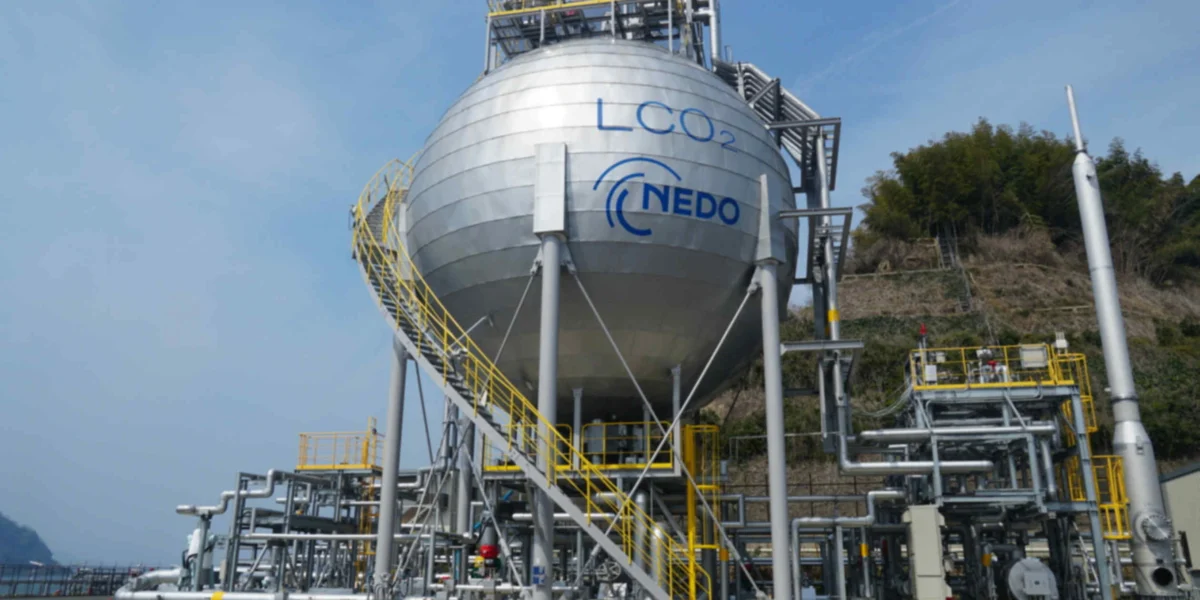
Kansai Electric Power and Kawasaki Heavy Industries are at the forefront of a significant initiative to establish and refine carbon dioxide (CO2) capture and storage (CCS) technology, with the ambitious goal of reducing emissions from coal-fired power plants by as much as 90 percent. The two Japanese industrial giants are collaborating on a project to transport captured CO2 from a coal-fired power plant to a remote storage site as early as the current fiscal year. This pioneering effort marks a critical step in Japan’s broader strategy to decarbonize its energy sector and meet its climate change commitments.
The collaboration centers on the development of a robust and scalable system for capturing CO2 directly from industrial emissions, liquefying it, and then transporting it to secure geological formations for long-term storage. The immediate focus of the project involves Kansai Electric Power’s Maizuru thermal power plant, a facility that has been a significant source of CO2 emissions. By successfully implementing and proving the efficacy of this CCS technology, the companies aim to demonstrate a viable pathway for existing fossil fuel infrastructure to significantly reduce its environmental footprint.
A Crucial Step in Decarbonization Efforts
The push for advanced CCS technology is driven by Japan’s commitment to achieving carbon neutrality by 2050. As a nation heavily reliant on imported fossil fuels for its energy needs, particularly coal and liquefied natural gas (LNG), Japan faces a complex challenge in transitioning to a low-carbon economy. While renewable energy sources like solar and wind power are expanding, their intermittent nature necessitates a continued role for dispatchable power sources. Coal-fired power plants, despite their high emissions, have historically provided a stable and cost-effective baseload power supply. Therefore, developing effective CCS solutions is seen as a pragmatic approach to continue utilizing these assets while drastically cutting their greenhouse gas output.
The International Energy Agency (IEA) has consistently highlighted the critical role of CCS in achieving global climate goals. According to IEA reports, without widespread deployment of CCS, the cost of reaching net-zero emissions could be more than double. Japan’s investment in this technology aligns with these global perspectives, positioning the nation as a potential leader in CCS development and deployment.
Project Timeline and Key Milestones
The project between Kansai Electric Power and Kawasaki Heavy Industries is not a nascent endeavor but rather builds upon years of research, development, and pilot testing. While the article specifies that the transport of CO2 to a remote location is targeted for "as early as this fiscal year," this implies that the foundational elements of CO2 capture and liquefaction are already in advanced stages.
The timeline can be broadly understood as follows:
- Research and Development Phase: Extensive research into various CO2 capture technologies, including post-combustion, pre-combustion, and oxy-fuel combustion methods, has been ongoing for many years within Japanese utilities and heavy industry firms. Kawasaki Heavy Industries, with its expertise in industrial machinery and engineering, has been a key player in developing the necessary equipment, such as CO2 liquefaction tanks and transportation systems.
- Pilot Projects and Testing: Smaller-scale pilot projects would have been instrumental in testing the capture efficiency, energy consumption, and reliability of the proposed systems. These would have involved simulating the operational conditions of a coal-fired power plant and assessing the performance of capture units.
- Infrastructure Development: The current phase likely involves the construction and integration of the necessary infrastructure at the Maizuru thermal power plant. This includes the CO2 capture units themselves, as well as the liquefaction facilities and the initial stages of the transportation network.
- Operational Testing and Demonstration (Current Fiscal Year): The critical step of transporting liquefied CO2 to a remote storage site signifies the move from laboratory and pilot testing to a more integrated, real-world demonstration. This phase is crucial for validating the entire CCS chain, from capture to safe and secure geological storage.
- Scalability and Commercialization: Following successful demonstration, the focus will shift towards scaling up the technology for widespread deployment across multiple power plants and potentially other industrial facilities. This will involve addressing economic viability, regulatory frameworks, and long-term monitoring protocols.
Technological Underpinnings of the Initiative
The core of this initiative lies in several key technological advancements:
- CO2 Capture Technologies: While the specific method employed at the Maizuru plant is not detailed, common approaches include:
- Post-combustion capture: This involves separating CO2 from the flue gas after fuel has been burned. Amine-based solvents are frequently used in this process, which absorb CO2 at lower temperatures and release it when heated.
- Oxy-fuel combustion: This method involves burning fuel in an atmosphere enriched with oxygen rather than air. This results in a flue gas that is primarily CO2 and water vapor, making CO2 separation much simpler and more efficient.
- CO2 Liquefaction: Once captured, CO2 is typically compressed and cooled to become a liquid. This significantly reduces its volume, making it more economical and practical to transport. The image provided shows a CO2 liquefaction tank, highlighting this crucial step.
- CO2 Transportation: For large-scale CCS, the liquefied CO2 is usually transported via pipelines. However, for initial demonstration projects or in locations where pipeline infrastructure is not yet established, other methods such as specialized tankers or ships might be utilized. The "remote location" mentioned in the article could imply a geological storage site accessible via these methods.
- CO2 Storage (Sequestration): The ultimate goal is to inject the captured CO2 into deep underground geological formations, such as depleted oil and gas reservoirs, saline aquifers, or unmineable coal seams. These formations are chosen for their ability to trap CO2 for millennia, preventing its release into the atmosphere. Rigorous site selection and monitoring are essential to ensure the long-term integrity of the storage.
Supporting Data and Context
Japan’s energy landscape provides a stark backdrop for this technological push. As of 2022, coal still accounted for approximately 30 percent of Japan’s total electricity generation, making it the largest single source. While the government has expressed a commitment to reducing this reliance, the transition is complex and gradual. Nuclear power, which was significantly reduced after the Fukushima disaster in 2011, is gradually being restarted, but public acceptance and safety concerns remain. Renewables, while growing, still face challenges in fully replacing the baseload capacity provided by fossil fuels.
The emissions from coal-fired power plants are substantial. A typical 1,000 MW coal-fired power plant can emit around 6 million to 8 million tons of CO2 per year. Achieving a 90% reduction in emissions from such a plant would mean mitigating approximately 5.4 million to 7.2 million tons of CO2 annually. This scale of reduction is precisely what is needed to make a significant impact on national greenhouse gas inventories.
The Maizuru thermal power plant itself is a key operational asset for Kansai Electric Power. Its operational capacity and CO2 emission profile would dictate the scale of the CCS technology being deployed. Information about the specific capacity of the Maizuru plant and its historical emissions would further contextualize the significance of this CCS initiative.
Official Responses and Industry Perspectives
While the article focuses on the actions of Kansai Electric Power and Kawasaki Heavy Industries, broader reactions from governmental bodies and other industry players are anticipated. The Ministry of Economy, Trade and Industry (METI) in Japan has been a strong proponent of CCS technology, viewing it as a vital component of the nation’s decarbonization strategy. METI has provided funding and policy support for CCS research and development projects.
Reactions from environmental organizations are likely to be mixed. While many acknowledge the necessity of reducing emissions from existing infrastructure, some may express concerns about the long-term safety and environmental impact of CO2 storage, as well as the potential for CCS to prolong the life of fossil fuel assets. These organizations will likely emphasize the importance of robust regulatory oversight and stringent monitoring protocols.
From an industrial perspective, other Japanese power companies, such as J-Power and Tokyo Electric Power Company (TEPCO), are also actively involved in CCS research and development, often in collaboration with technology providers and research institutions. This cooperative approach among major players suggests a shared understanding of the challenge and a concerted effort to find viable solutions.
Broader Impact and Implications
The successful development and deployment of this CCS technology by Kansai Electric Power and Kawasaki Heavy Industries could have profound implications for Japan and potentially for other countries facing similar energy transition challenges:
- Decarbonization of Existing Infrastructure: It offers a tangible pathway to reduce emissions from existing coal-fired power plants, which are crucial for energy security and economic stability in many nations. This can bridge the gap between current energy needs and a fully renewable future.
- Technological Leadership: Japan could solidify its position as a global leader in CCS technology, fostering innovation and creating export opportunities for its expertise and equipment.
- Economic Opportunities: The development of a robust CCS industry can create new jobs and economic activities, from engineering and manufacturing to geological surveying and long-term monitoring.
- Meeting Climate Targets: Achieving significant reductions in CO2 emissions from power generation is essential for Japan to meet its nationally determined contributions (NDCs) under the Paris Agreement and its long-term goal of carbon neutrality.
- Challenges and Considerations: Despite the promising outlook, several challenges remain. The economic feasibility of CCS is a significant hurdle, as the capture, transport, and storage processes are energy-intensive and costly. Furthermore, the long-term security and environmental integrity of geological storage sites require continuous monitoring and regulatory oversight. Public acceptance of CO2 storage projects is also a critical factor.
The initiative by Kansai Electric Power and Kawasaki Heavy Industries represents a significant stride in the global effort to combat climate change. By pushing the boundaries of CO2 capture and storage technology, they are not only aiming to decarbonize their own operations but also to provide a blueprint for a more sustainable energy future, demonstrating that even hard-to-abate emissions can be significantly mitigated. The coming fiscal year will be a crucial period for observing the practical outcomes of this ambitious undertaking.
