

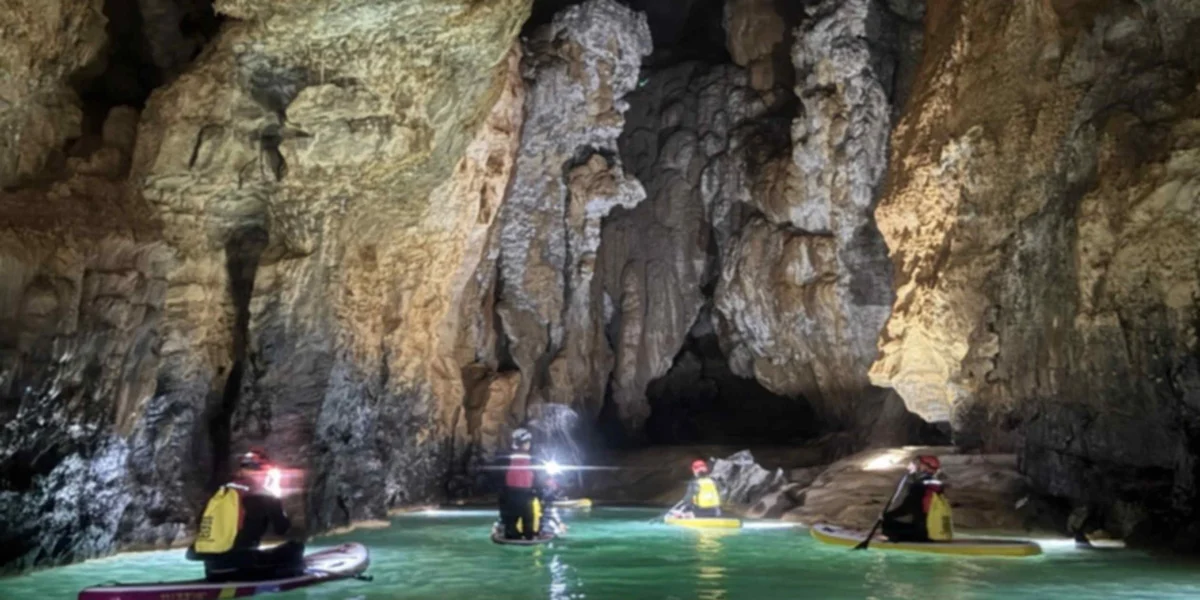
China’s southwestern Guizhou province is strategically leveraging its vast network of natural caves, transforming these geological marvels into unique tourist destinations. Local entrepreneurs and authorities are actively developing adventurous subterranean tours and establishing tranquil cave cafes, aiming to attract a diverse demographic of social-media-savvy young people and families seeking novel experiences. This burgeoning trend highlights a broader provincial strategy to diversify its tourism offerings and capitalize on its rich natural assets, moving beyond traditional attractions.

A Deeper Dive into Guizhou’s Appeal
The Shilong Cave in Guizhou province exemplifies this emerging trend. Even during the peak heat of summer, the cavern maintains a consistently cool temperature, offering a welcome respite for visitors. This inherent environmental advantage is being amplified by innovative tourism initiatives. Beyond mere sightseeing, tour operators are curating immersive experiences that appeal to a generation increasingly drawn to unique, shareable moments. The introduction of cafes within these cavernous spaces further enhances their appeal, providing a comfortable and distinctive setting for relaxation and socializing, which in turn fuels viral content creation on platforms like WeChat and Douyin.
The appeal of underground spaces is not a new phenomenon globally, but Guizhou’s approach is characterized by its integration of natural beauty with modern hospitality and digital marketing. Historically, caves have served various purposes, from shelter and religious sites to military strongholds. In contemporary tourism, they often feature as geological wonders, but Guizhou is pushing the envelope by creating a lifestyle experience. This strategic pivot is crucial for a province that has historically relied on agriculture and heavy industry, and is now actively seeking to boost its service sector and create higher-value employment opportunities.

The Genesis of Subterranean Tourism
The development of cave tourism in Guizhou has been a gradual process, gaining significant momentum in the last decade. Initial efforts focused on basic cave exploration, often limited to guided walks through well-established sections. However, a shift in visitor expectations, particularly among younger demographics, prompted a reevaluation of these offerings. The rise of adventure tourism and the desire for "Instagrammable" locations spurred investment in more sophisticated infrastructure and unique concepts.
The Shilong Cave project, for instance, represents a significant investment in transforming a natural wonder into a marketable tourist product. The decision to install a cafe within the cave was a calculated move to enhance the visitor experience and create a point of interest that extends beyond the geological formations. This integration aims to cater to longer stays and encourage repeat visits, as well as word-of-mouth marketing.

Timeline of Development (Illustrative)
- Early 2000s: Basic cave exploration tours offered in select Guizhou locations, primarily focused on geological interest.
- Mid-2010s: Growing interest in adventure tourism and unique travel experiences. Local entrepreneurs begin experimenting with more engaging cave tours.
- Late 2010s: Emergence of "experience economy" concepts. Initial trials of cafes and enhanced visitor amenities within caves.
- Early 2020s: Increased investment in infrastructure, safety, and marketing for cave tourism. Focus on attracting younger demographics and families. Shilong Cave’s café concept gains traction.
- 2025-2026: Widespread adoption of cave cafes and themed subterranean tours across Guizhou. Recognition as a significant contributor to the province’s tourism revenue.
Supporting Data and Economic Impact
While specific, up-to-the-minute financial data for Guizhou’s cave tourism sector is often proprietary, broader trends in Chinese domestic tourism offer a compelling backdrop. According to the China Tourism Academy, domestic tourist numbers in China have been on a steady upward trajectory, with a significant portion of spending coming from younger generations (Gen Z and Millennials) who prioritize unique experiences and shareable content.

In 2023, China’s domestic tourism market saw a robust recovery, with over 4.89 billion domestic trips recorded, generating RMB 4.77 trillion (approximately $660 billion) in revenue. Guizhou, with its diverse natural landscapes including karst formations, has been a beneficiary of this surge. While attributing precise figures to cave tourism alone is challenging, the provincial tourism bureau has reported a consistent increase in visitor numbers to areas with developed cave attractions.
The establishment of cave cafes and enhanced tour packages directly contributes to local economies by creating jobs in hospitality, guiding, infrastructure development, and marketing. Furthermore, it stimulates demand for local crafts, food, and services, fostering a multiplier effect. The cool, stable temperatures within these caves also offer potential for year-round tourism, mitigating seasonal fluctuations that often affect other tourist destinations.

Official Responses and Provincial Strategy
Provincial governments in China often play a pivotal role in tourism development, providing regulatory frameworks, infrastructure support, and promotional backing. The Guizhou Provincial Department of Culture and Tourism has actively supported initiatives that diversify tourism offerings and leverage the province’s unique natural resources. Their strategy often involves encouraging private sector investment through incentives and facilitating public-private partnerships.
A spokesperson for the Guizhou Provincial Department of Culture and Tourism, speaking on condition of anonymity due to internal policy, commented, "Guizhou is blessed with extraordinary natural beauty, and our aim is to showcase this in innovative ways. Subterranean tourism represents a significant opportunity to appeal to a broad spectrum of visitors, offering unique experiences that are both memorable and sustainable. We are committed to supporting businesses that develop these attractions responsibly, ensuring the preservation of our natural heritage while fostering economic growth."

The development of these attractions is also aligned with national strategies to promote rural revitalization and develop niche tourism markets. By transforming natural assets into tourist hotspots, Guizhou is aiming to create employment opportunities in less developed regions and reduce reliance on traditional industries.
Broader Impact and Implications
The rise of underground tourism in Guizhou has several broader implications:

- Diversification of Tourism: It moves Guizhou beyond its traditional offerings, potentially attracting a wider range of tourists and increasing the province’s overall appeal.
- Economic Empowerment: It creates new revenue streams and employment opportunities, particularly in rural areas where many cave systems are located.
- Environmental Considerations: The development of these sites necessitates careful planning and execution to minimize environmental impact. Sustainable practices, waste management, and the preservation of cave ecosystems are crucial for long-term viability. The controlled environment of caves can be sensitive to human activity, and responsible tourism is paramount.
- Marketing and Branding: The novelty of cave cafes and subterranean tours provides excellent material for social media marketing, which can be a powerful tool for attracting younger demographics. This can help to rebrand Guizhou as a modern, innovative, and exciting travel destination.
- Adaptability of Tourism Models: The success of such niche offerings demonstrates the adaptability of the tourism industry to changing consumer preferences and the potential for leveraging natural geological features in creative ways.
The trend of transforming natural caves into engaging tourist experiences, complete with amenities like cafes, signifies a sophisticated evolution in how destinations are being curated. Guizhou’s proactive approach in capitalizing on its subterranean wonders suggests a forward-thinking strategy that could serve as a model for other regions seeking to unlock the economic potential of their unique natural landscapes. The challenge now lies in balancing development with conservation, ensuring that these remarkable underground worlds can be enjoyed by generations to come.
