

TURIN, Italy — Edgewing, the multinational consortium spearheading the development of a revolutionary next-generation fighter jet for Japan, the United Kingdom, and Italy, has announced a significant strategic expansion with plans to establish a major design and development center in Japan. This ambitious initiative, slated to commence operations early next year, is projected to create approximately 1,000 high-skilled jobs, underscoring the program’s commitment to fostering international collaboration and technological advancement. The announcement was made by Edgewing CEO Marco Zoff, signaling a pivotal moment in the Global Combat Air Programme (GCAP).
Strategic Hub in Japan: A Cornerstone of GCAP’s Future
The decision to establish a dedicated design and development center in Japan represents a critical step in solidifying the collaborative framework of the GCAP. This new facility will serve as a central hub for critical design, engineering, and integration activities, drawing upon the diverse expertise of engineers and specialists from all three participating nations. By co-locating key personnel and functions, Edgewing aims to streamline the development process, accelerate innovation, and ensure seamless integration of technologies from different national contributions. This move also signifies Japan’s central role in the program, reflecting its significant technological capabilities and strategic importance to the alliance.
The establishment of this center is not merely about physical infrastructure; it is a testament to the program’s commitment to shared development and knowledge transfer. Japan’s burgeoning aerospace and defense sector, with its strong emphasis on advanced electronics, materials science, and precision engineering, will be instrumental in shaping the future fighter jet. The facility will likely house teams dedicated to specific system developments, such as advanced avionics, sensor fusion, propulsion integration, and potentially aspects of the aircraft’s unique stealth characteristics. The creation of 1,000 jobs will undoubtedly stimulate local economies and contribute to the growth of Japan’s high-tech workforce.
The Genesis and Evolution of the Global Combat Air Programme
The Global Combat Air Programme, initiated in December 2022, represents a landmark undertaking in international defense cooperation. Its genesis can be traced back to the shared recognition by Japan, the UK, and Italy of the evolving geopolitical landscape and the imperative to develop a sophisticated, adaptable, and technologically superior combat aircraft to meet future aerial warfare challenges. The program aims to replace aging fighter fleets, including Japan’s F-2, the UK’s Typhoon, and Italy’s Eurofighter Typhoon, with a common platform that offers enhanced capabilities and interoperability across allied forces.
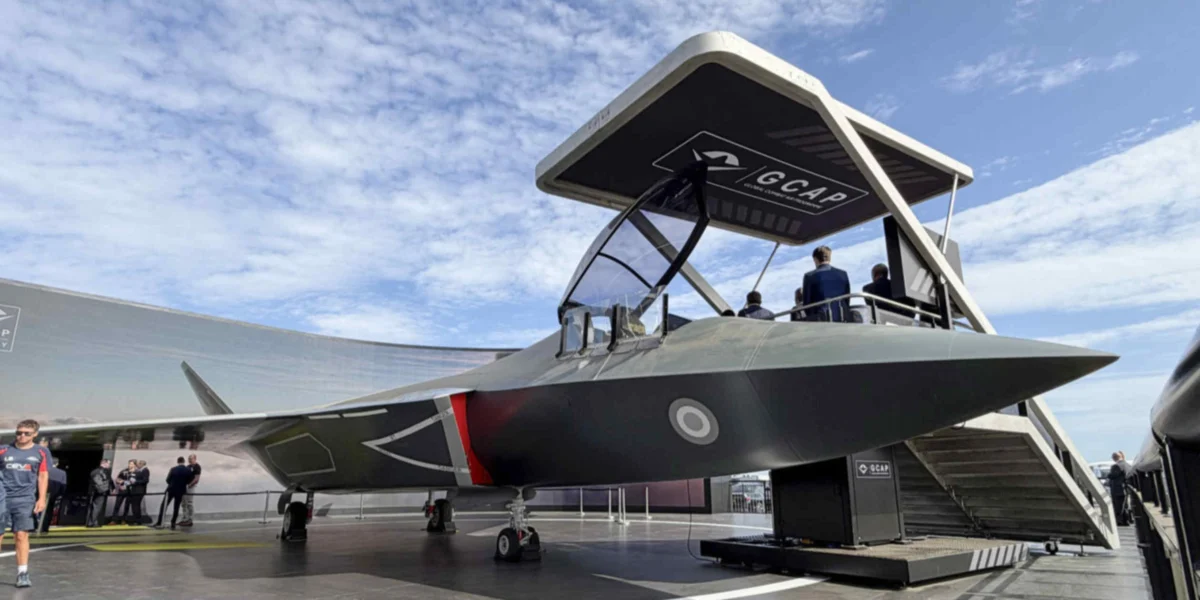
Initially, the UK and Italy had been collaborating on the Tempest program, while Japan was pursuing its F-X program. The convergence of these efforts into the GCAP marked a significant diplomatic and strategic achievement. This unification brought together complementary strengths: the UK’s experience in advanced combat jet design and systems integration, Italy’s expertise in avionics and electronic warfare, and Japan’s prowess in cutting-edge sensor technology, materials, and manufacturing. The Farnborough International Airshow, where mockups of the next-generation fighter jet have been exhibited, has served as a crucial platform for showcasing the program’s progress and fostering international interest. The image accompanying this report, a mockup displayed at Farnborough, offers a glimpse into the conceptual design of this formidable aircraft.
Timeline of Key Developments
- December 2022: The Global Combat Air Programme (GCAP) is officially launched with the signing of a memorandum of understanding between Japan, the UK, and Italy. This agreement establishes the framework for joint development of a next-generation fighter jet.
- Early 2023: Initial working groups and technical teams are formed to define the core requirements and technological pathways for the new aircraft. Discussions focus on key areas such as stealth, sensor capabilities, networking, and advanced weapons integration.
- Mid-2023 onwards: The joint venture, Edgewing, is established to manage the program’s development and integration. National industrial partners begin to collaborate on specific sub-systems and technologies.
- Late 2023/Early 2024: Conceptual design studies intensify, leading to the development of various mockups and digital models. These are often presented at major aerospace and defense exhibitions.
- Announced for Early Next Year (2027 based on publication date): Edgewing announces plans to open a dedicated design and development center in Japan, a significant expansion of its operational footprint. This center is expected to employ approximately 1,000 personnel.
Supporting Data and Technological Ambitions
The development of a next-generation fighter jet is an undertaking of immense technological complexity and financial investment. While specific figures for the GCAP are still under development and subject to change, similar advanced fighter programs offer indicative scales. For instance, the F-35 Lightning II program, involving the U.S., UK, and several international partners, has incurred hundreds of billions of dollars in development and procurement costs. The GCAP, with its ambition for a truly revolutionary platform, is expected to represent a comparable or even greater investment over its lifecycle.
The technological ambitions for the GCAP fighter are extensive and designed to provide a decisive advantage in future combat scenarios. These include:
- Advanced Stealth Capabilities: Incorporating next-generation low-observable technologies to minimize radar cross-section across a wide spectrum of frequencies. This will involve novel materials, shaping, and potentially active camouflage systems.
- Sensor Fusion and Networking: Developing a highly integrated sensor suite that combines data from various sources – including radar, infrared, electronic warfare systems, and potentially unmanned aerial vehicles (UAVs) – into a single, comprehensive battlespace picture. This will enable unprecedented situational awareness for the pilot and networked operations with other platforms.
- Artificial Intelligence and Autonomy: Leveraging AI to enhance decision-making processes, automate complex tasks, and enable advanced mission planning and execution. The aircraft is expected to operate in conjunction with swarms of drones and other uncrewed systems.
- Next-Generation Propulsion: Exploring advanced engine technologies that offer improved performance, fuel efficiency, and potentially novel propulsion concepts.
- Cyber Warfare and Electronic Attack Capabilities: Integrating sophisticated systems for cyber defense, electronic jamming, and sophisticated electronic attack to disrupt enemy communications and sensor networks.
- Advanced Weapons Integration: Designing for the carriage and deployment of a wide array of next-generation precision-guided munitions and directed-energy weapons.
The projected employment of 1,000 individuals at the Japanese design and development center speaks to the scale of the engineering and scientific effort required. This workforce will comprise highly specialized engineers in fields such as aerodynamics, structural engineering, avionics, software development, materials science, and systems integration.
Official Responses and National Commitments
The announcement of the Japanese design center has been met with positive reinforcement from the participating nations, highlighting the strength of their tripartite partnership. While specific quotes from all parties may not be immediately available, the strategic alignment and ongoing collaboration imply strong governmental backing.
A spokesperson for the UK Ministry of Defence, when asked about the GCAP expansion, might reiterate the UK’s commitment to leading in advanced air power and its dedication to working closely with its international partners. They would likely emphasize the strategic importance of the GCAP in maintaining a technological edge and ensuring collective security.
Similarly, the Italian Ministry of Defence would likely express enthusiasm for the expansion, viewing it as a testament to Italy’s significant contributions to the program and its role in shaping future European and global air defense capabilities. They would likely underscore the economic benefits and technological advancements that such a collaborative project brings to their national industry.
From Japan’s perspective, the Ministry of Defense would likely frame the establishment of the design center as a crucial step in fulfilling its responsibilities within the GCAP and enhancing its own national defense capabilities. They would highlight the opportunity for its defense industry to engage with cutting-edge technologies and contribute to a globally significant defense project. The increasing role of Japan in the GCAP is a departure from its historical approach to defense procurement, signaling a greater willingness to engage in international collaborative development of advanced military hardware.
Broader Impact and Geopolitical Implications
The Global Combat Air Programme, and specifically the expansion of its development capabilities into Japan, carries significant geopolitical implications. In an era of escalating global tensions and the rapid evolution of military technologies, the successful development and deployment of such a sophisticated fighter jet could reshape the strategic balance in key regions.
Technological Leadership: The GCAP aims to secure a leading position for its participating nations in the advanced fighter jet market for decades to come. This not only ensures military superiority but also fosters economic growth through exports and technological spin-offs.
Enhanced Interoperability: A common fighter platform will dramatically improve the interoperability of air forces from Japan, the UK, and Italy, allowing for more seamless joint operations and greater collective defense capabilities. This extends to potential future allies who may wish to procure or integrate with the GCAP aircraft.
Deterrence and Stability: The deployment of a next-generation fighter capable of projecting power and advanced capabilities can serve as a significant deterrent against potential adversaries, contributing to regional and global stability.
Shifting Alliances: The program signifies a deepening of defense ties between Japan, the UK, and Italy, potentially influencing broader geopolitical alignments. It demonstrates a commitment to a multilateral approach to security challenges, contrasting with unilateral defense strategies.
Countering Emerging Threats: The GCAP fighter is being designed to counter threats posed by advanced adversarial air power, including sophisticated fighter jets, advanced missile systems, and electronic warfare capabilities. Its development is a direct response to these evolving challenges.
The establishment of the design and development center in Japan by Edgewing is more than just an operational expansion; it is a strategic investment in the future of aerial warfare and a powerful symbol of international cooperation in the defense sector. As the program progresses, the world will be watching closely to see how this ambitious endeavor unfolds and what new paradigms it will introduce to the realm of combat aviation.
