

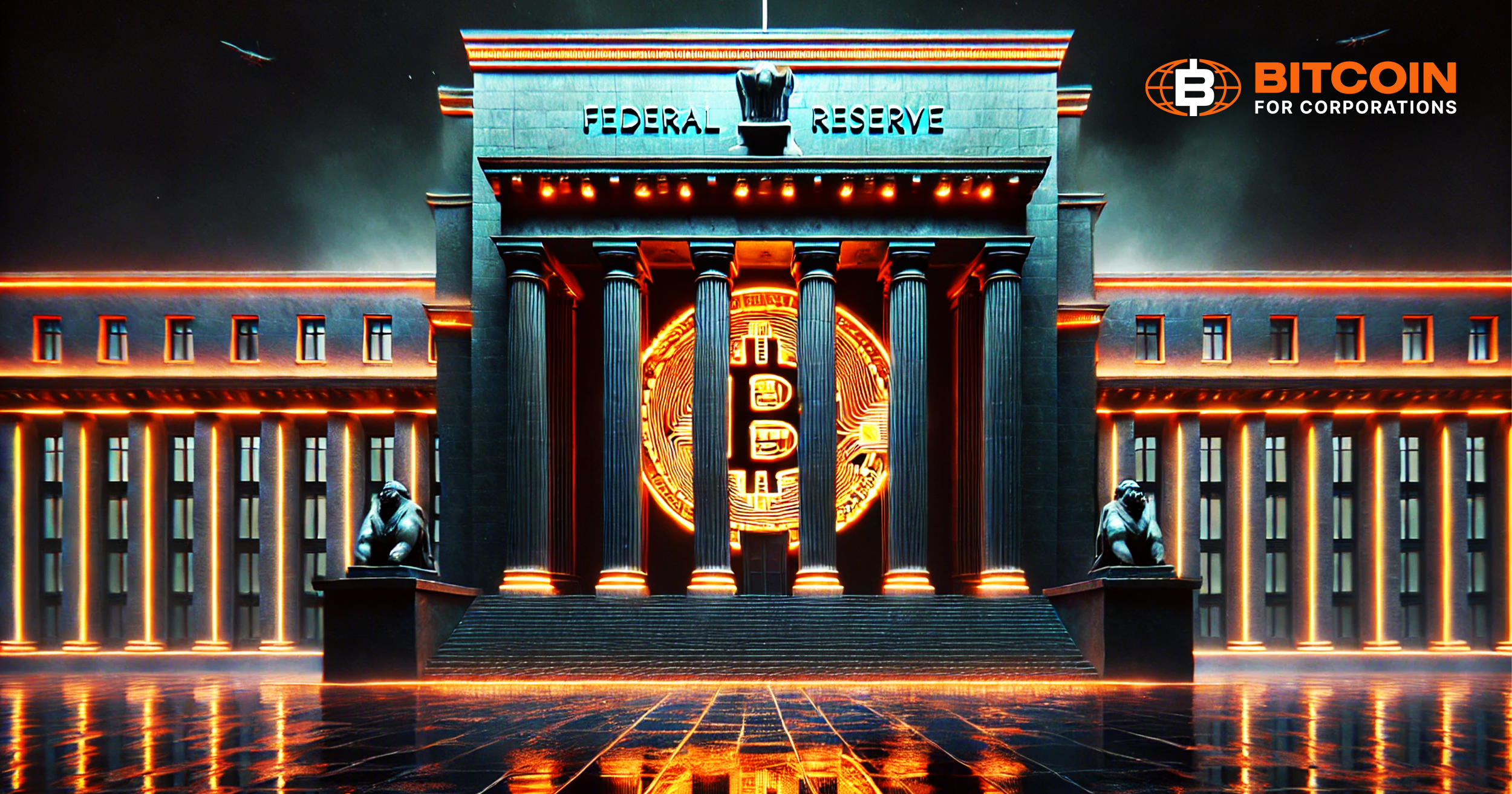
The Federal Reserve Board today announced a significant suite of proposals designed to modernize the U.S. capital framework. These proposals, if adopted, could fundamentally alter the cost and accessibility of institutional Bitcoin services, potentially ushering in a new era for corporate treasuries and the broader digital asset ecosystem. While the 14-page Board memorandum delves into the technical intricacies of the "Basel III Endgame" and "GSIB surcharges," a deeper analysis reveals that the most impactful development for corporate treasuries lies within the proposed recalibration of operational risk assessments.
For years, institutional investors and corporate treasuries seeking to engage with Bitcoin through traditional financial intermediaries have faced substantial hurdles. These have largely stemmed from the "advanced approaches" employed in capital requirements, where banks’ internal, model-based assessments often resulted in punitive capital charges for digital asset activities. This effectively categorized certain digital assets as "toxic" on a bank’s balance sheet, making their inclusion economically unfeasible. Under previous interpretations of the Basel SCO60 standard, specific digital assets were subject to a staggering 1,250% risk weight. This meant that for every dollar of Bitcoin held, a bank was required to hold a dollar in capital. This "dollar-for-dollar" mandate rendered bank intermediation for such assets uneconomic, acting as a de facto prohibition rather than a nuanced risk management strategy.
The Federal Reserve’s current proposal aims to dismantle this barrier by recommending the elimination of these advanced approaches for Category I and II firms. In their place, the Fed is proposing a singular, "expanded risk-based approach." This new framework is intended to provide a more consistent and risk-sensitive methodology for assessing capital requirements across all asset classes, including digital assets. This shift signifies a move away from the punitive weighting system that has historically stifled innovation and adoption.
Dismantling the "Toxic Asset" Capital Barrier
The core of this proposed overhaul lies in its approach to risk weighting. The previous 1,250% risk weight, when combined with the standard 8% minimum capital ratio, translated into a 100% capital requirement. This stringent stipulation effectively barred financial institutions from offering services related to certain digital assets due to the prohibitive capital burden. The Fed’s proposal to eliminate these advanced approaches for the largest banking institutions is a direct response to this issue. By replacing them with a unified, risk-based system, the Federal Reserve is signaling a commitment to a more equitable and adaptable regulatory environment for a wider array of financial products and services. This recalibration is crucial for fostering an environment where digital assets can be integrated into traditional financial systems without being inherently penalized.
A Significant Boost for Custody Services
A critical element of the proposed framework is its focus on operational risk. The Fed’s staff explicitly stated that the revised approach is designed to "appropriately reflect business activities," with a particular emphasis on recalibrating requirements for custody services. The memorandum notes that elements of the previous framework imposed "excessive requirements for traditional banking activities." This suggests a recognition by the Federal Reserve that certain existing capital rules were not adequately aligned with the actual risk profiles of established banking operations.
If Bitcoin custody services are brought under this broader, more appropriately calibrated definition of a service, it could dramatically lower the capital overhead for Tier 1 banks. This would, in turn, make it more economically viable for these institutions to offer custody solutions to corporate clients. The current proposal indicates a clear intention to move away from punitive capital weights as a means of exercising normative judgment on specific asset classes. Instead, the focus is shifting towards aligning capital requirements with the historical and operational risks associated with particular services. This recalibration for custody services is a monumental win for institutional adoption, as it directly addresses a key cost driver that has previously inflated fees for corporate clients.
Quantifying the Impact: A Liquidity Injection and G-SIB Considerations
The potential impact of these proposals on bank balance sheets is substantial. According to projections within the Board memorandum, the cumulative effect of these changes, including revisions to stress testing methodologies, is anticipated to decrease the aggregate Common Equity Tier 1 (CET1) capital requirements for Category I and II firms by an estimated 4.8 percent. This reduction in required capital provides the nation’s largest banks with increased financial flexibility, often referred to as "breathing room." This enhanced capacity could enable them to expand their service offerings into new areas, including digital assets, without compromising their regulatory standing.
For corporate treasurers, this capital relief translates into several potential benefits. Firstly, it could lead to more competitive pricing for institutional Bitcoin services, as banks face lower capital costs associated with offering these products. Secondly, it may foster greater competition among financial institutions, as the reduced capital burden makes it more attractive for a broader range of banks to enter the digital asset services market. Thirdly, it could accelerate the development and deployment of more sophisticated, bank-provided Bitcoin custody and trading solutions, catering to the growing demand from institutional investors. The reduction in capital requirements, combined with the recalibration of operational risk for custody, paints a picture of a more accessible and cost-effective environment for corporate Bitcoin engagement.
Streamlining the Regulatory Landscape: A Single Standard for Clarity
A key objective of the Federal Reserve’s proposal is to "substantially simplify the framework." By mandating a single set of risk-based capital calculations, the Fed aims to reduce the "regulatory lottery" that has historically plagued the financial industry. Under the previous, more complex system, different banks could face vastly different capital costs for offering the same custody service, depending on how their internal models interpreted overlapping or conflicting regulatory rules. This lack of standardization created uncertainty and inefficiency for both financial institutions and their clients.

For corporations, this proposed simplification promises a more transparent and predictable banking product for Bitcoin custody. It aims to integrate digital asset services more seamlessly within the existing Basel framework for market risk and operational risk, rather than treating them as an anomaly requiring a separate, punitive regime. This harmonization is crucial for building trust and encouraging broader adoption, as it aligns digital asset services with the established regulatory paradigms that corporate treasuries are familiar with.
Reversing the Trend of "Non-Bank" Migration
The Federal Reserve staff explicitly acknowledged in the memorandum that excessive capital requirements in previous years may have inadvertently driven certain banking activities towards unregulated "non-bank" entities. The proposed revisions are explicitly designed to "support on-balance sheet lending and services" by regulated banks, potentially reversing this trend of migration. By encouraging regulated institutions to offer these services, the Fed appears to be promoting a more centralized and supervised ecosystem for financial activities.
Bringing activities such as high-volume Bitcoin custody back into the regulated banking sector provides the "safe and sound" institutional infrastructure that many corporations have been seeking. This strategic shift suggests an acknowledgement by the Federal Reserve that transparent and liquid assets, including Bitcoin, benefit from being housed within the oversight of the federal banking system. This approach aims to enhance financial stability and consumer protection by ensuring that critical financial services operate under established regulatory scrutiny.
Broader Context and Timeline
The Federal Reserve’s announcement is part of a broader global effort to update banking regulations in light of evolving financial markets and technological advancements. The "Basel III Endgame" refers to the final set of reforms to the Basel III international regulatory framework for banks, which were developed in response to the 2008 global financial crisis. These reforms aim to increase the resilience of the banking sector by strengthening capital requirements and improving risk management practices.
The proposals released today are subject to a 90-day public comment period. During this time, financial institutions, industry groups, and other stakeholders will have the opportunity to provide feedback on the proposed changes. The Federal Reserve will carefully consider all comments received before making a final decision on the adoption of these new rules. This comment period is a critical step in the regulatory process, ensuring that the final framework is well-informed and addresses the concerns of all relevant parties.
The historical context for these proposals is rooted in the evolving understanding of digital assets and their place in the financial system. Initially, many regulatory bodies, including the Federal Reserve, approached digital assets with caution, often treating them as highly speculative or even illicit. This led to the imposition of stringent capital requirements that effectively discouraged institutional involvement. However, as the market for digital assets has matured and their potential use cases have become clearer, regulators have begun to reassess their approaches. The current proposals from the Federal Reserve reflect this evolving perspective, indicating a growing recognition of Bitcoin’s potential as a store of value and a medium of exchange within a regulated financial framework.
Potential reactions from various parties can be inferred based on the nature of the proposals. The banking industry, particularly larger institutions that are subject to Category I and II classifications, is likely to view these changes favorably. The reduction in capital requirements and the simplification of rules would make it more attractive and feasible to engage in digital asset services. Cryptocurrency exchanges and digital asset service providers might also welcome the move, as it could lead to increased institutional demand and a more integrated market. Conversely, some proponents of a more decentralized financial system might express concerns about bringing digital assets further into the traditional banking fold, arguing that it could lead to increased centralization and potential for regulatory overreach. However, the Fed’s emphasis on risk-sensitive approaches and operational alignment suggests an attempt to balance innovation with financial stability.
Conclusion: Paving the Way for Institutional Integration
In conclusion, the Federal Reserve’s proposed capital framework represents a significant step toward enhancing the efficiency of capital allocation and reducing regulatory burdens across the U.S. banking system. By modernizing risk weights for custody services and streamlining the overall capital framework, the Federal Reserve is proposing the removal of several structural barriers that have long separated Wall Street from the digital asset ecosystem. While the final impact will undoubtedly be shaped by the outcomes of the 90-day public comment period and subsequent regulatory adjustments, the path toward institutional-grade, bank-provided Bitcoin services appears considerably clearer and more promising than it was prior to this announcement. This development signals a potential paradigm shift in how the U.S. financial system engages with digital assets, paving the way for broader institutional adoption and integration.
Disclaimer: This content was prepared on behalf of Bitcoin For Corporations for informational purposes only. It reflects the author’s own analysis and opinion and should not be relied upon as investment advice. Nothing in this article constitutes an offer, invitation, or solicitation to purchase, sell, or subscribe for any security or financial product.
