

A federal judge has delivered a significant ruling, declaring that a Tulsa, Oklahoma sheriff’s deputy violated a woman’s Fourth Amendment rights by using Flock Safety technology to search for her license plate without a warrant. The decision, handed down by Judge Sara Hill, while not creating a binding precedent across all federal courts, marks one of the first instances where a federal judge has explicitly ruled a Flock Safety search unconstitutional, sending ripples through law enforcement agencies and civil liberties circles nationwide.
The case in question centered on a deputy’s search of the Flock database for a woman’s license plate, an action Judge Hill determined was executed without “no apparent reason” beyond the vehicle possessing a California license plate. This initial warrantless search subsequently led the deputy to use the woman’s travel history gleaned from Flock Safety as part of the justification for searching her car, where authorities allegedly discovered 91 pounds of methamphetamine. However, Judge Hill emphatically stated that all evidence obtained after the unconstitutional Flock search “must be suppressed as the fruit of a poisonous tree,” a legal doctrine that prevents illegally obtained evidence from being used in court.
The Genesis of the Constitutional Challenge
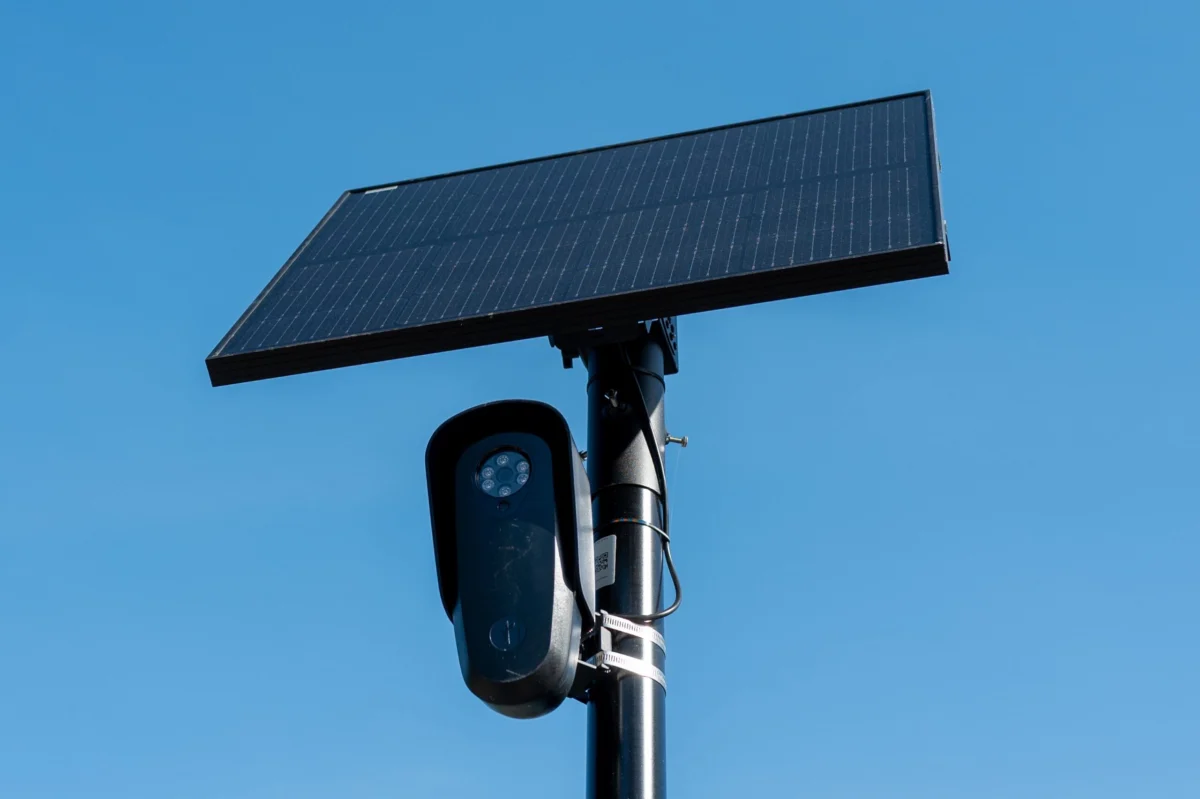
The legal challenge arose from a traffic stop that escalated into a significant Fourth Amendment dispute. The initial interaction reportedly lacked the requisite probable cause or reasonable suspicion to justify the deputy’s access to the Flock Safety database. Flock Safety cameras, which are automated license plate readers (ALPRs), capture images of vehicles, extract license plate information, and log the time and location. This data is then stored in a searchable database, often accessible by law enforcement agencies that contract with Flock Safety. The deputy’s decision to search the database based merely on an out-of-state license plate was deemed insufficient by Judge Hill to bypass the constitutional requirement for a warrant.
Judge Hill’s ruling delved deeper than the specifics of the individual case, casting a critical eye on the broader implications of warrantless searches of the Flock database. She articulated that tracking individuals’ locations – even in public spaces – becomes “constitutionally problematic when law enforcement can indiscriminately and passively catalog your whereabouts over an extended period of time and then use that information for any purpose whenever convenient.” This statement underscores a growing concern among privacy advocates regarding the aggregation of seemingly innocuous public data.
Understanding the Fourth Amendment and Digital Surveillance
The Fourth Amendment to the United States Constitution is a cornerstone of American civil liberties, safeguarding individuals from unreasonable searches and seizures. It generally requires law enforcement to obtain a warrant, supported by probable cause, before conducting a search. However, the application of this amendment to rapidly evolving digital surveillance technologies like ALPRs has been a complex and evolving area of law.
For decades, courts have grappled with what constitutes a "reasonable expectation of privacy" in the digital age. The Supreme Court’s landmark 2018 decision in Carpenter v. United States established that individuals have a reasonable expectation of privacy in the comprehensive record of their physical movements captured by cell-site location information. In Carpenter, the Court ruled that accessing seven days of cell-site location data constituted a Fourth Amendment search and generally required a warrant.
Judge Hill drew a crucial distinction between Carpenter and the Flock Safety scenario. She noted that Carpenter focused on targeted surveillance of a single individual. In contrast, Flock Safety represents "a type of indiscriminate mass surveillance," as Hill wrote. "It is a tool that collects information about all vehicles that pass by any network-connected camera at all times, and it serves up the information to law enforcement on demand." This distinction highlights the difference between gathering specific intelligence on a suspect and broadly collecting data on the movements of an entire populace, a practice that raises more profound constitutional concerns about pervasive government monitoring.
The Rise of Automated License Plate Readers (ALPRs)
Automated License Plate Readers (ALPRs) have become ubiquitous tools in modern policing. Companies like Flock Safety market these systems as powerful aids in crime fighting, capable of identifying stolen vehicles, locating missing persons, and assisting in investigations of serious crimes. Flock Safety, for instance, boasts a network of thousands of cameras across numerous cities and suburbs in the United States, capturing billions of license plate reads annually. The technology is often deployed in strategic locations, such as major intersections, highway on-ramps, and neighborhood entry points, to maximize data collection.
The operational premise is straightforward: infrared cameras capture license plate images, which are then analyzed by sophisticated software to extract alphanumeric characters. This data, along with a timestamp and GPS coordinates, is uploaded to a cloud-based server. Law enforcement agencies can then query this database to track a vehicle’s movements over time, identify vehicles associated with Amber Alerts, or search for vehicles linked to criminal investigations. While proponents argue that ALPRs are invaluable for public safety, their widespread deployment and the sheer volume of data they collect have consistently fueled debates over privacy and potential for abuse.
A Chronology of Concern: From Deployment to Legal Scrutiny
The journey of ALPR technology from niche surveillance tool to widespread law enforcement staple has been marked by both rapid adoption and escalating scrutiny:
- Early 2000s: ALPR technology begins to gain traction in law enforcement, primarily for identifying stolen vehicles and vehicles associated with outstanding warrants.
- 2010s: The technology becomes more sophisticated and affordable, leading to broader deployment by police departments across the United States. Companies like Flock Safety emerge, offering subscription-based services and cloud storage for collected data.
- Mid-2010s onwards: Civil liberties organizations raise increasing concerns about data retention policies, the potential for tracking innocent citizens, and the lack of robust legal frameworks governing the use of ALPR data. Reports surface about data sharing agreements between agencies, further expanding the reach of surveillance.
- Late 2010s – Early 2020s: Several states and municipalities begin to push back against unrestricted ALPR use. Some impose restrictions on data retention, prohibit sharing with federal agencies, or require public transparency about ALPR deployment.
- 2018 (Carpenter v. United States): The Supreme Court rules that accessing cell-site location data requires a warrant, setting a precedent that digital location data is protected by the Fourth Amendment, influencing subsequent arguments about ALPRs.
- 2023 (This Ruling): Judge Hill’s federal ruling against the warrantless use of Flock Safety data specifically for a license plate search, deeming it "indiscriminate mass surveillance," provides a new legal landmark in the ongoing debate.
Broader Impact and Implications
Judge Hill’s ruling, despite not being a binding precedent on all federal courts, carries significant weight and is likely to influence legal arguments and policy decisions across the nation.
- For Law Enforcement: The decision underscores the critical importance of adhering to Fourth Amendment principles when utilizing advanced surveillance technologies. Police departments will likely face increased pressure to develop stricter protocols and training for ALPR use, emphasizing the need for warrants or demonstrable probable cause before accessing historical license plate data. This could lead to a reevaluation of existing ALPR policies and a more cautious approach to data retrieval.
- For Privacy Advocates: This ruling represents a significant victory for civil liberties groups. It validates their long-standing concerns about the "mass surveillance" potential of ALPRs and provides a powerful judicial endorsement of privacy rights in the face of pervasive digital tracking. This could embolden further legal challenges against other forms of blanket surveillance.
- For Flock Safety and Other ALPR Providers: The ruling places increased scrutiny on the business models and data access policies of companies providing ALPR technology. While Flock CEO Garretty Langley has previously "called for a ‘compromise’ between privacy and safety" and even "offered an apology to women who have been stalked by law enforcement officers using the Flock system," this judicial pronouncement demands more concrete action. The company may face pressure to implement more stringent warrant requirements for accessing historical data or to redesign their systems to better align with constitutional safeguards. Reports of Flock offering "voluntary employee buyouts" as a way to shrink its workforce amidst growing backlash suggest the company is already feeling the economic pressures of these mounting concerns.
- Legislative Action: The ruling arrives amidst a growing legislative pushback against ALPRs. As noted in the original article, numerous local and state governments, including Florida and Texas, have indicated intentions to restrict or cease using the technology. Furthermore, Senator Bernie Sanders (D-Vermont) recently introduced the "Block Flock Act," a bill aimed at prohibiting federal agencies from using automated license plate readers. This judicial decision provides additional momentum to these legislative efforts, suggesting a bipartisan appetite for reining in unchecked surveillance.
- Future Litigation: The ruling could serve as a persuasive authority for other federal and state courts considering similar challenges to ALPR use. It provides a robust framework for analyzing ALPRs through the lens of the Fourth Amendment and the Carpenter decision, potentially paving the way for more widespread legal restrictions on these technologies.
Reactions from Stakeholders
While specific official statements directly in response to this particular ruling are still emerging, reactions from various stakeholders can be inferred based on their past positions and the implications of this decision:
- Civil Liberties Organizations: Groups like the ACLU and Electronic Frontier Foundation (EFF) would likely commend Judge Hill’s ruling as a crucial step towards protecting privacy rights in the digital age. They would emphasize that the decision reaffirms the principle that even data collected in public spaces can, when aggregated over time, reveal intimate details of a person’s life and therefore deserves Fourth Amendment protection.
- Law Enforcement Agencies: While individual officers might express concerns about potential hurdles to investigations, police leadership would likely acknowledge the need to operate within constitutional boundaries. They might emphasize the importance of clear guidelines and legal training for officers to ensure compliance, balancing public safety needs with individual rights. Some might argue that requiring warrants for every ALPR search could unduly burden resources and slow down critical investigations, but the legal requirement would necessitate adaptation.
- Flock Safety: The company would likely reiterate its commitment to public safety while expressing a willingness to collaborate with policymakers and legal experts to ensure its technology is used responsibly and constitutionally. They might highlight the safeguards already in place, such as data retention limits, while considering further modifications to their data access protocols to address judicial concerns.
- Legislators: Proponents of stricter surveillance regulations, such as Senator Sanders, would likely cite this ruling as further evidence of the urgent need for legislative action to prevent "indiscriminate mass surveillance" and protect citizens’ constitutional rights.
Conclusion: A Defining Moment in Digital Privacy
Judge Sara Hill’s ruling is a defining moment in the ongoing debate over digital privacy and the reach of government surveillance in the United States. By unequivocally labeling warrantless ALPR searches as "indiscriminate mass surveillance" and applying the "fruit of the poisonous tree" doctrine, she has sent a clear message that the Fourth Amendment extends its protections to the vast digital footprints generated by modern technology. While the legal landscape surrounding ALPRs will continue to evolve, this decision serves as a powerful reminder that technological advancement, however beneficial for public safety, must always be balanced against the fundamental constitutional rights of individual citizens. The path forward will undoubtedly involve continued legal challenges, legislative efforts, and a critical reevaluation of how law enforcement agencies leverage data-intensive surveillance tools in a free society.
