

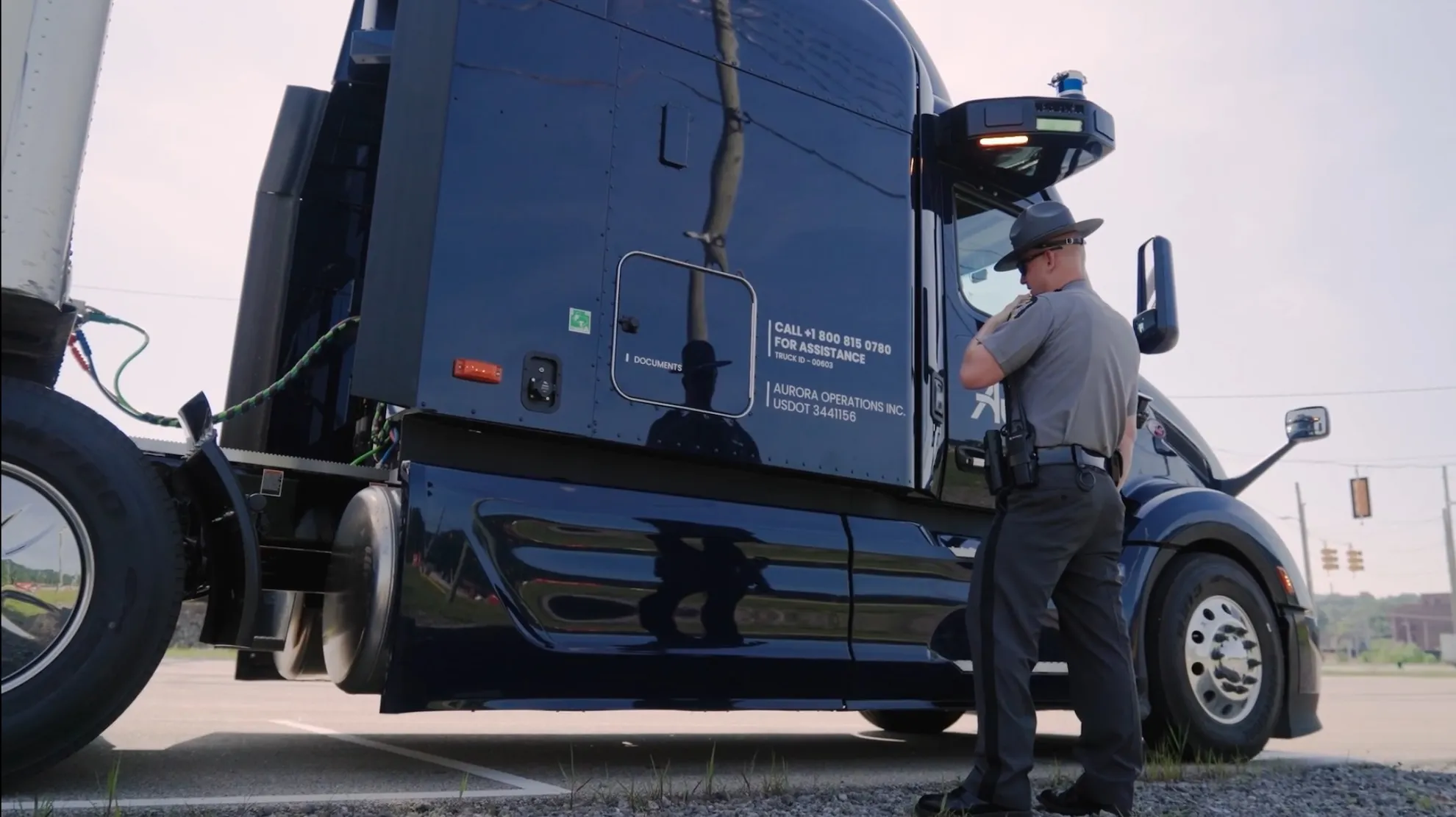
The autonomous trucking industry achieved a significant milestone this week as the Federal Motor Carrier Safety Administration (FMCSA) granted a crucial five-year exemption to leading developers Aurora Innovation and Kodiak AI, removing a long-standing regulatory barrier to commercial deployment. This development coincides with a flurry of activity across the mobility sector, including Waymo’s groundbreaking $5 billion debt financing round, strategic acquisitions by Uber, and notable shifts within key technology companies, all underscored by the increasing integration of artificial intelligence into transportation. Meanwhile, the upcoming TechCrunch Disrupt 2026 conference is poised to gather industry leaders and innovators to dissect these rapid transformations.
Autonomous Trucking Navigates Regulatory Roadblocks
The FMCSA’s decision to grant a five-year exemption for roadside warning devices represents a pivotal moment for autonomous heavy-duty trucking. Traditionally, federal regulations (specifically 49 CFR Part 392.22) mandate that a human driver, in the event of a mechanical breakdown or emergency stop, must exit the vehicle and place reflective warning triangles on the roadway within 10 minutes to alert other motorists. This requirement posed a fundamental challenge for autonomous trucks, which operate without an onboard human driver. The absence of a human operator capable of physically deploying these devices created a significant safety and regulatory gap, directly impeding the commercialization efforts of companies like Aurora and Kodiak AI.
Aurora Innovation, a frontrunner in self-driving technology, had previously challenged this regulation in federal court. In January 2025, the company initiated legal proceedings against federal safety regulators, arguing for an exemption that would allow its autonomous trucks to operate without the need for manual triangle placement. After an initial denial, Aurora escalated its fight to the District of Columbia Court of Appeals, highlighting the urgency of resolving this regulatory impasse as it neared the launch of its commercial operations. During this period, companies had been operating under temporary waivers, underscoring the pressing need for a permanent solution.
The recently granted exemption permits autonomous truck developers to replace traditional reflective warning triangles with advanced cab-mounted warning beacons. These high-visibility beacons are designed to provide immediate and unambiguous alerts to other road users, enhancing roadside safety without requiring human intervention in potentially hazardous situations. Aurora’s "first responders page" offers a glimpse into how these systems are engineered to interact safely with emergency personnel.
Industry leaders lauded the FMCSA’s decision as a forward-thinking step. Daniel Goff, Vice President of External Affairs at Kodiak AI, commented that the exemption would "usher in an autonomous era of freight movement on U.S. roads, one that can save lives and improve the efficiency of goods delivery." Similarly, Gerardo Interiano, Aurora’s Head of Government Relations and Public Affairs, emphasized that the ruling "underscores the government’s recognition of the economic and community benefits of autonomous trucking" and described the beacons as a "critical, 21st-century solution that enhances roadside safety by immediately alerting other road users without ever needing to put a person in harm’s way."

This regulatory clarity is expected to significantly accelerate the commercial deployment of autonomous trucks across U.S. freight corridors. The ruling sets a precedent that could influence future regulations for other autonomous vehicle categories and potentially lead to the adoption of cab-mounted warning beacons as a standard safety feature across the entire trucking industry, regardless of automation level, given their enhanced safety profile. The move reflects a broader trend of regulatory bodies adapting to the rapid advancements in autonomous technology, balancing safety imperatives with innovation.
Strategic Capital Deployment and Market Expansion
The mobility sector witnessed substantial financial activity this week, highlighted by Waymo’s groundbreaking $5 billion debt financing round. This marks the first time Alphabet’s autonomous vehicle subsidiary has leveraged debt financing, a strategic shift from its previous reliance on capital from its parent company and high-profile venture capital firms. The consortium of lead lenders included financial heavyweights such as PIMCO, Blackstone, and Sixth Street, alongside Capital Group, Loomis Sayles, T. Rowe Price, Apollo, Blue Owl, Diameter Capital Partners, Franklin Templeton, Fidelity Management & Research Company, HPS Investment Partners, and Oaktree.
This substantial capital infusion is earmarked to fuel Waymo’s aggressive commercial expansion. The company plans to accelerate its operations within existing cities where its robotaxi services are already active, while simultaneously pushing into new markets across the United States, Europe, and Japan. This move into debt financing suggests a maturation of Waymo’s business model and a confidence in its long-term revenue generation capabilities, typical of companies scaling capital-intensive operations beyond early-stage venture funding. The robotaxi market, while still nascent, represents a multi-billion dollar opportunity, and Waymo’s ability to attract such significant debt capital signals investor confidence in its technological leadership and commercialization roadmap.
In another significant market development, Uber announced its agreement to acquire ezCater, a prominent catering company, in an all-cash transaction valued at $2.3 billion. This acquisition represents a strategic move for Uber, further diversifying its Uber Eats platform beyond individual meal delivery into the lucrative corporate and event catering market. The integration of ezCater’s extensive network and operational expertise is expected to significantly bolster Uber’s B2B food service offerings, tapping into a segment with different logistical requirements and higher average order values. This reflects a broader trend among gig economy giants to expand their service portfolios and capture larger shares of the overall logistics and delivery market.
Innovation Driving Investment Across Mobility and Manufacturing
Beyond these major headlines, a series of funding rounds highlighted continued investor interest in transformative technologies:
-
Parallel Systems, a startup founded by SpaceX alumni, secured $100 million in a Series C funding round. Led by AVP, with participation from Hillspire, Agility Global, Cobalt Capital, Anthos Capital, Congruent Ventures, Riot Ventures, and Collaborative Fund, this investment will advance the company’s development of autonomous rail vehicles. Parallel Systems aims to revolutionize freight transport with self-propelled electric rail cars capable of moving several tons of cargo up to 500 miles without an operator. This innovative approach seeks to improve efficiency, reduce emissions, and alleviate congestion in an industry traditionally reliant on long, fixed trains and human operators, positioning itself at the intersection of logistics, autonomy, and sustainable transport.

-
Flai, a startup specializing in AI software for automotive dealerships, raised $27 million in a Series A funding round. Led by automation-focused firm Base10 Partners, the round also saw participation from strategic investors including dealers (Friedkin Group and Findlay Automotive), Toyota’s venture arm, Y Combinator, and First Round Capital. Flai’s AI-driven platform is reportedly booking 50,000 appointments per month, demonstrating its effectiveness in streamlining operations, enhancing customer engagement, and improving efficiency within the often-traditional dealership model. This investment underscores the growing appetite for AI solutions that optimize business processes in established industries.
-
Bloom, a company with ambitions to become the "Alibaba of American manufacturing," successfully raised $3.6 million in a seed round. The funding was led by SNAK Venture Partners and included Flyover Capital, deep tech firm Mana Ventures, Detroit Venture Partners, Invest Detroit Ventures, and the Michigan Outdoor Innovation Fund. Bloom’s mission is to create a digital marketplace that connects American manufacturers with buyers, aiming to simplify supply chains, enhance transparency, and foster growth in domestic production. This aligns with broader national efforts to reshore manufacturing and strengthen local supply chains, making the manufacturing process more accessible and efficient for businesses of all sizes.
These investments collectively illustrate a robust and diversified capital flow into technologies poised to reshape transportation, logistics, and industrial production, reflecting a strong belief in the long-term potential of automation, artificial intelligence, and new business models.
Industry Shifts, Challenges, and Regulatory Scrutiny
The dynamic landscape of the mobility and tech sectors also saw significant internal and external pressures this week:
-
Redwood Materials, the battery-recycling company founded by Tesla co-founder JB Straubel, experienced further executive departures following a restructuring initiated earlier in the year. Sources familiar with the company’s operations indicate that the Vice Presidents of Engineering, Operations, Treasury, and External Affairs have all recently left the startup. These exits come on the heels of an April 2026 restructuring that involved laying off approximately 135 employees, or 10% of its workforce, as the company shifted its strategic focus more intensely towards energy storage solutions. While Redwood Materials maintains its commitment to battery recycling, the leadership changes suggest potential challenges or strategic recalibrations in executing its refined vision within the competitive and rapidly evolving clean energy sector.
-
Surveillance camera maker Flock Safety announced an 18% reduction in its workforce, equating to approximately 270 employees. The company has faced escalating privacy backlash regarding its widespread use of license plate readers and people-tracking technology. Civil liberties advocates and privacy organizations have raised significant concerns about the potential for mass surveillance and data misuse. This workforce reduction indicates the mounting pressure and potential financial impact of public and regulatory scrutiny on companies operating in sensitive data collection and surveillance domains. Garrett Langley, Flock’s founder and CEO, is slated to speak at TechCrunch Disrupt 2026, where these issues are likely to be addressed.

-
Lucid Motors, the luxury electric vehicle manufacturer, reported a significant decline in production for the third quarter of this year, building only 2,954 EVs. This represents a 54% drop compared to the same period last year. The company stated that it is purposely limiting production to "better meet demand for its EVs." While this could imply a strategic adjustment to avoid overproduction or manage inventory, it also raises questions about market demand for high-end electric vehicles amidst broader economic uncertainties and increased competition. The luxury EV market is highly sensitive to economic shifts and consumer preferences, and Lucid’s production adjustments will be closely watched by investors and competitors.
-
Kodiak AI, in addition to its regulatory win, announced a new 435-mile autonomous freight route between Dallas and Laredo, Texas, in partnership with carrier Charger USA. This corridor is critical for cross-border trade with Mexico and demonstrates the practical application of autonomous trucking for hauling refrigerated and dry freight for consumer packaged goods, food, and beverage customers. The route highlights the ongoing expansion of operational domains for autonomous trucks, focusing on efficiency and safety in long-haul logistics.
-
Tesla made a notable change in Europe, renaming its advanced driver assistance system from "Full Self-Driving (Supervised)" to "Tesla Assisted Driving." This alteration follows pushback from Germany’s transportation ministry and other European regulators, who have long expressed concerns about the "Full Self-Driving" moniker potentially misleading consumers about the system’s actual capabilities and the level of human supervision still required. The rebranding signifies a concession to European regulatory bodies and underscores the global variations in how autonomous driving technologies are perceived and regulated, impacting marketing and consumer expectations.
-
In a move to expand its global robotaxi footprint, Uber and Chinese autonomous vehicle maker Pony.ai announced plans to launch a robotaxi service in London. This expanded partnership aims to bring driverless cars to a major European capital, navigating London’s complex urban environment and regulatory framework. The collaboration reflects the increasing internationalization of autonomous vehicle deployments and the strategic alliances forming between global tech giants and specialized AV developers to accelerate market entry and adoption.
TechCrunch Disrupt 2026: Shaping the Future
Against this backdrop of rapid innovation and industry evolution, TechCrunch Disrupt 2026, the annual tech conference in San Francisco, is set to be a focal point for discussion and insight. The conference, scheduled to kick off on October 13, will prominently feature the intersection of AI and mobility.
The opening keynote address will be delivered by Rivian CEO RJ Scaringe, who will share insights into the future of electric vehicles, robotics, and autonomy. Attendees can anticipate a fireside interview with Agility Robotics CTO Jonathan Hurst, exploring advancements in humanoid robotics. A distinguished panel will feature Also CEO Chris Yu, General Catalyst’s Yuri Sagalov, and Baillie Gifford investment manager Shan Shan, offering diverse perspectives on investment and innovation trends.

Further deep dives into the practicalities of AI and robotics will include an interview with Shield AI CTO Nathan Michael, Waabi founder and CEO Raquel Urtasun, and Mikell Taylor, Director of Robotics Strategy at GM, focusing on the critical challenges of building AI systems where failure is not an option. Foxglove CEO Adrian MacNeil and Bedrock Robotics CTO Kevin Peterson will discuss the journey of taking physical AI from prototype to commercial product.
The speaker lineup boasts a remarkable roster of visionaries and leaders from across the technology spectrum, including Max Hodak, co-founder of Neuralink and founder of Science Corp.; Ricursive Intelligence co-founders Dr. Anna Goldie and Dr. Azalia Mirhoseini; Hello Robot co-founder and CEO Aaron Edsinger, who will demonstrate their Stretch 4 robot; and a special appearance by Mark Wahlberg. The conference will also host engineers and executives from leading AI and tech companies such as Anthropic, Gamma, Hugging Face, OpenAI, Nvidia, and Replit, alongside influential investors from Google Ventures, Greylock, Eclipse, Index Ventures, NEA, and Upfront Ventures, among others. The comprehensive agenda promises to cover the most pressing topics and emerging trends defining the next era of technology.
In conclusion, the mobility and AI sectors are experiencing a period of intense growth, regulatory adaptation, and strategic consolidation. From significant regulatory breakthroughs for autonomous trucking to massive financing rounds and strategic acquisitions, the industry is clearly accelerating towards a future where intelligent systems and innovative transportation solutions play an increasingly central role in daily life and global commerce. The challenges, such as privacy concerns and market demand fluctuations, remain, but the overall trajectory points towards sustained transformation.
