

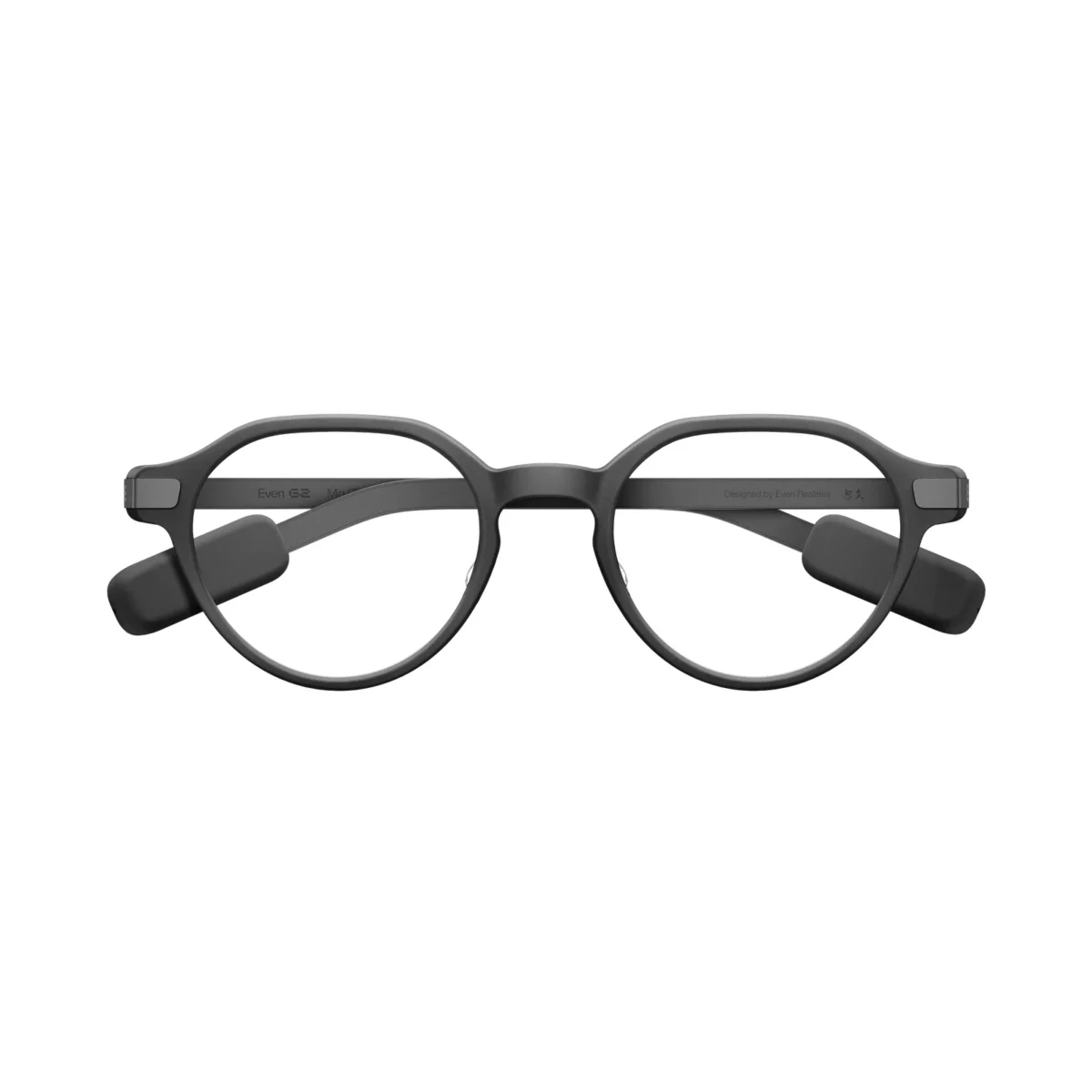
The tech industry has long heralded smart glasses as the next frontier in consumer hardware, an intuitive interface poised to redefine daily interaction with digital information. Despite this pervasive optimism from numerous tech executives over the past few years, the reality for most smart glasses today remains tethered to the smartphone, limiting their standalone utility. Even Realities’ G2 smart glasses, a premium-looking pair with a distinctive neon-style heads-up display, exemplify this current paradigm, offering robust hardware while grappling with the critical reliance on phone connectivity, which has historically presented challenges in terms of reliability and user frustration.
The Vision for Wearable Technology and Even Realities’ Niche
The concept of integrating computing power directly into eyewear has fascinated innovators for decades, promising a seamless blend of the digital and physical worlds. From the early, ambitious, and ultimately flawed Google Glass experiment to Meta’s more recent camera-centric Ray-Ban Stories, the journey toward ubiquitous smart glasses has been marked by diverse approaches and varying degrees of success. Major players like Apple, Google, and Meta continue to invest heavily, signaling a long-term commitment to this product category. However, a significant hurdle remains: achieving true independence from the smartphone while offering compelling, everyday value.
Even Realities carves out a distinct niche in this evolving landscape. Unlike competitors such as Meta, which often integrate cameras and speakers to facilitate social sharing and immersive experiences, Even Realities adopts a deliberately minimalist approach. Their G2 devices feature a monochrome heads-up display that renders text and information in a vibrant green, reminiscent of a classic neon board. Crucially, the absence of cameras and speakers is a conscious design choice, intended to pivot the focus squarely onto productivity rather than recording. This privacy-first philosophy aims to alleviate concerns among those in the wearer’s vicinity about being inadvertently filmed or recorded, a major social acceptance barrier for earlier smart glasses models. This strategic decision positions the G2 as a tool for personal augmentation and professional efficiency, rather than a social media device.
Evolution and Enhanced Hardware of the G2
The G2 represents the second iteration of smart glasses from Even Realities, building upon the foundation laid by its predecessor, the G1, released a few years prior. This new generation brings a suite of significant hardware upgrades, underscoring the company’s commitment to iterative improvement. The G2 boasts a brighter 1,200-nit display, a substantial improvement over the G1’s 1,000 nits, ensuring legibility across a wider range of lighting conditions. Audio input is enhanced with four microphones, doubling the G1’s two, which is critical for voice commands and translation features. Furthermore, the display area is 75% larger, providing more visual real estate for information, and the refresh rate has been dramatically boosted to 60Hz from the G1’s 20Hz, promising a smoother, more fluid visual experience.
Despite these hardware advancements, the critical dependency on phone connectivity initially presented a significant impediment to the G2’s user experience. Early usage revealed frequent disconnections from the companion app, a frustrating issue that nearly led to abandonment. However, a series of subsequent app updates have substantially improved this connectivity, highlighting the crucial role of software optimization alongside hardware prowess in the adoption of smart wearables. This iterative refinement demonstrates a responsive development cycle, addressing user feedback directly to enhance product stability.
The target demographic for the G2 is clearly defined: professionals who are constantly engaged in meetings, frequently deliver presentations, and often travel internationally, encountering diverse languages. These scenarios demand quick access to information, efficient communication tools, and discreet assistance, areas where the G2 aims to provide tangible benefits.
Ergonomics and Design Philosophy
The physical design of smart glasses is paramount for user adoption, as they must be comfortable enough for prolonged wear and aesthetically appealing. The Even Realities G2 excels in this regard, offered in two frame designs and weighing a remarkably light 35 grams. The frame itself is crafted from magnesium alloy, known for its strength-to-weight ratio, while the temples (the arms extending over the ears) are made from titanium alloy, further contributing to durability and a premium feel. This meticulous material selection translates into a comfortable fit, crucial for a device intended to be worn for extended periods.
Beyond its smart capabilities, the G2 also incorporates practical features. The lenses come with built-in UV protection, offering eye safety even when the smart features are not actively in use. This duality underscores a pragmatic design philosophy: creating a device that is both technologically advanced and functionally practical as everyday eyewear.

Powering the G2 is an internal battery that the company claims can last up to two days on a single charge under typical usage patterns. The glasses are accompanied by a robust protective case that doubles as a portable charging station, capable of recharging the G2 up to seven times before requiring a recharge itself. While the two-day claim necessitates rigorous testing under varied conditions, the overall battery longevity, combined with the charging case, largely mitigates concerns about power availability during daily use. The charging case, though sizeable and not pocket-friendly, offers substantial protection and ensures the glasses fit snugly, safeguarding the delicate technology within.
Deep Dive into Features and Operation
The G2 is engineered to function as a discreet digital companion, providing on-demand access to schedules, reminders, and notes directly within the wearer’s field of vision. Interaction with the glasses is primarily managed through stem-based controls. A simple tap wakes the device, while a double-tap on the control pad reveals a customizable dashboard. This dashboard can display critical information such as upcoming meetings, real-time stock updates, and top news headlines, offering a quick glance at essential data without needing to pull out a phone.
The glasses are also capable of showing real-time phone notifications, though the reliability of these pop-ups was inconsistent in early testing. For many users, with their smartphones typically within arm’s reach, the utility of this feature might be limited, underscoring the challenge of making smart glasses an indispensable interface over existing devices.
A long-press on the temple control opens a comprehensive menu, granting access to several key functions: a notifications tray, Translate, Conversate, Teleprompt, a to-do list, and Navigate. These features collectively define the G2’s productivity-centric value proposition.
-
Translate: This function allows users to set a target language and engage in conversations with individuals speaking different languages. Real-world testing at events like the Global Connect Show (GCS) in China demonstrated its efficacy. During interactions with company representatives giving demos in Chinese, the translation provided by the G2 was sufficiently accurate for comprehension. Similar success was noted with other languages, including French and Spanish. A notable limitation, however, is that the translated output for the wearer’s speech is not conveyed to the other party unless they are also using the Even Realities app, making it a one-sided translation aid for the wearer.
-
Conversate: Initially, this feature merely provided a live transcript of conversations on the display, a function that many found redundant given the availability of meeting recording apps or external notetakers. Recognizing this, Even Realities subsequently enhanced Conversate with a "prep notes" feature. This allows users to manually input notes or relevant documents prior to a meeting, enabling the AI to reference them during the conversation. Alternatively, the AI can listen in real-time and generate "explainer bubbles" for concepts as they arise. For instance, during a briefing on energy, the glasses displayed a bubble for "Green Hydrogen," and a tap revealed its definition directly in the user’s view. This contextual, AI-driven information delivery proved genuinely useful, offering a powerful tool for understanding complex topics on the fly, though the continuous streaming of transcripts and bubbles might not be desirable for all conversations.
-
Teleprompt: While not detailed extensively, this feature is designed to aid presenters, displaying scripts or key points directly in their line of sight, enabling smoother and more confident delivery without the need to look down at notes.
-
Navigate: A potentially transformative feature, Navigate provides turn-by-turn directions directly on the heads-up display. However, its current implementation has a significant constraint: it does not integrate with popular mapping services like Google or Apple Maps. Users must input their route via the proprietary Even Realities app. While the directions were clearly displayed during testing, the app frequently suffered from address inaccuracies, making it unreliable for unfamiliar destinations. Despite these teething problems, the hands-free, visual guidance could prove highly beneficial for specific user groups, such as cyclists or motorbike riders, once the underlying accuracy issues are resolved.
The Even AI Assistant and Usability Challenges
Central to the G2’s interactive experience is its built-in assistant, Even AI. Activated by a designated wake word, the AI can respond to questions, manage to-do lists, and execute various commands. However, user experience with Even AI revealed several areas needing improvement. It frequently misunderstood requests for to-do list items, and general queries often resulted in lengthy paragraphs streaming across the screen without an option to interrupt or skip ahead.
Despite the inclusion of four microphones, Even AI struggled significantly with activation and accuracy in noisy outdoor environments. Testing in India, characterized by high ambient noise levels, highlighted this limitation. While environmental factors play a role, a modern gadget designed for productivity and communication should ideally possess more robust noise-handling capabilities to ensure consistent performance.

Another practical usability concern noted was the display’s brightness adjustment. While the 1,200-nit screen was generally legible, manual adjustment via the phone app was often required in brightly lit rooms. The absence of an automatic brightness sensor or, at the very least, a direct manual brightness control on the glasses themselves, adds an unnecessary layer of friction, requiring users to reach for their phone for a basic display setting.
The R1 Companion Ring: An Unnecessary Accessory?
Alongside the G2, Even Realities also launched a companion ring, the R1. The primary concept behind the R1 is to offer an alternative control method for the glasses through a touch-sensitive surface on the ring, thereby augmenting or replacing the on-stem controls of the glasses. While the ring itself functions reliably, its overall value proposition and price point ($249) raise questions about its necessity.
During testing, the R1 worked effectively, but its utility was limited given that the touch-sensitive temples on the G2 glasses already perform the same control functions. This redundancy makes the R1 a difficult sell as a primary interaction device.
Furthermore, Even Realities integrated a suite of health tracking features into the R1, including heart rate, calorie expenditure, step counting, sleep monitoring, and SpO2 (blood oxygen level) tracking. While these are desirable features in wearables, the R1’s positioning as a control accessory makes its health tracking secondary. Consumers seeking dedicated health tracking in a ring form factor are more likely to opt for specialized devices like Oura or Ultrahuman rings, which are built from the ground up for comprehensive health monitoring. For users already employing a fitness tracker, adding the R1 for its auxiliary health functions seems superfluous.
The $249 price tag for the R1, driven partly by these additional health features, is considerable. If the R1 were a more essential control device, perhaps integrating a microphone for more reliable AI assistant commands, and priced more competitively, its appeal might increase. As it stands, the R1 appears to be an optional accessory that most users could reasonably skip without significantly impacting their G2 experience.
Even Realities G2: Standing in a Rapidly Evolving Market
The smart glasses market is experiencing rapid innovation, with new models emerging frequently. While camera-equipped, screen-free devices like the Meta Ray-Bans have found a degree of popularity, the industry is also witnessing a race to develop glasses with full-color screens, promising more immersive augmented reality experiences. Within this diverse landscape, Even Realities’ G2, with its distinctive neon-display style, finds itself among a handful of companies, predominantly Chinese manufacturers like Rokid and Inmo, that are pursuing similar monochrome HUD approaches.
The Even Realities G2 is priced at $599, offering solid hardware encased in a light, aesthetically pleasing frame. The company’s future strategy includes enhancing the glasses’ customizability by supporting third-party applications. However, at present, compelling third-party app integrations that would significantly increase daily usage remain elusive. The G2, in its current iteration, largely functions as a "nice-to-have" gadget, appealing to early adopters and tech enthusiasts who enjoy experimenting with new hardware and exploring nascent app ecosystems.
While the underlying hardware is robust, the challenge for Even Realities, and indeed for the smart glasses sector as a whole, lies in defining clear, indispensable everyday use cases that extend beyond niche professional requirements such as constant translation or teleprompting. The company’s core hypothesis – that foregoing cameras and speakers for a productivity-focused device is the correct strategic direction – holds merit, particularly in addressing privacy concerns and carving a distinct identity.
Even Realities recently achieved a significant milestone, reaching unicorn status with a substantial $150 million funding round led by prominent investors like Meituan and Tencent. This fresh capital infusion provides the company with significant resources to accelerate its development. The crucial next step for Even Realities is to leverage this funding to build out a more comprehensive and robust first-party software ecosystem. This includes refining the AI assistant’s performance in varied environments, improving the accuracy and integration of features like navigation, and creating a suite of compelling applications that make the G2 an essential, rather than merely interesting, device that users consistently reach for every day. The future success of the Even Realities G2 will hinge not just on its impressive hardware, but on its ability to transcend current limitations and deliver truly indispensable functionality through its software offerings.
