

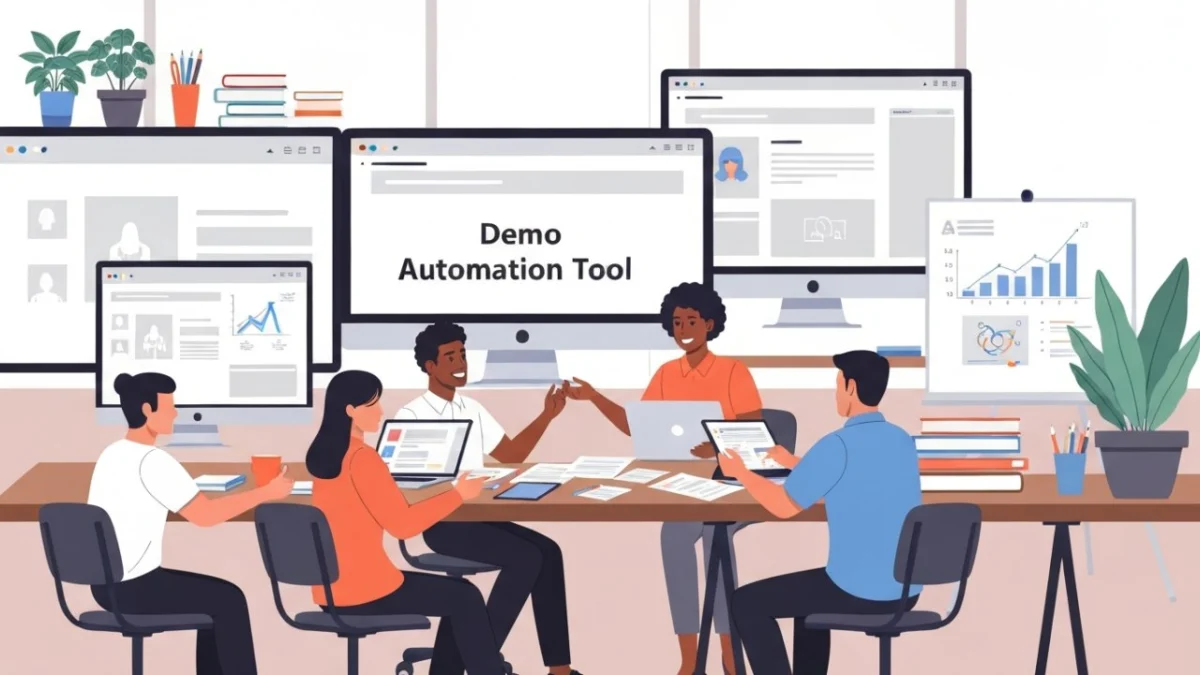
The landscape of B2B software sales is undergoing a fundamental transformation as organizations shift toward product-led growth and more efficient, automated sales cycles. Central to this evolution is the Demo Experience Platform (DEP), a category of software designed to streamline, personalize, and scale product demonstrations. While Saleo has established itself as a prominent player by offering real-time data personalization for live environments, a growing number of enterprises are seeking alternatives that offer different balances of speed, technical complexity, and cost-effectiveness. The selection of a demo automation tool is no longer merely a tactical choice for sales teams; it is a strategic decision that impacts customer acquisition costs (CAC), sales cycle length, and the overall buyer journey.
The Evolution of the Demo Experience Landscape
To understand the current market for Saleo alternatives, it is necessary to examine the chronology of demo technology. Traditionally, software demonstrations relied on "live" production environments or static slide decks. The former carried the risk of bugs, slow loading times, and irrelevant data, while the latter failed to capture the interactive nature of modern SaaS products.

Between 2018 and 2021, the first generation of demo automation tools emerged, focusing primarily on screen captures and guided tours. By 2022, the market bifurcated into two primary methodologies: "Front-end Cloners," which create a replica of the product’s user interface, and "Data Overlay" tools like Saleo, which inject fake data into a live environment. As of 2024, the industry has entered a third phase characterized by high-fidelity sandboxes and AI-driven personalization, where the focus has shifted from merely showing the product to providing a fully immersive, risk-free environment for potential buyers.
Primary Saleo Alternatives: A Comparative Analysis
When evaluating the competitive landscape, five primary alternatives emerge, each catering to specific organizational needs and technical capabilities.
1. Demostack: The High-Fidelity Sandbox
Demostack represents the premium end of the demo automation spectrum. Unlike Saleo, which personalizes a live site, Demostack allows teams to "clone" their entire application into a separate, stable environment. This creates a high-fidelity sandbox that looks and feels exactly like the real product but is completely decoupled from the production backend.

Market data suggests that for enterprise organizations with complex data structures, the sandbox approach reduces the workload on Sales Engineering (SE) teams by up to 60%. Because the environment is isolated, sales reps can manipulate data, change settings, and showcase complex workflows without the risk of breaking the live application or exposing sensitive internal data.
2. Walnut: Focused on Engagement and Personalization
Walnut has positioned itself as a leader in "human-led" demo environments. While Saleo focuses on the data layer, Walnut emphasizes the storytelling aspect of the sales process. Its platform allows for deep customization of the user journey, enabling sales teams to create unique paths for different personas within a single prospect organization.
A significant advantage of Walnut is its robust analytics suite. Industry analysts note that Walnut provides granular tracking of how prospects interact with shared demos. This data—such as which features were viewed longest and where users dropped off—allows sales teams to prioritize follow-ups based on actual buyer intent rather than guesswork.

3. Navattic and Storylane: The No-Code PLG Specialists
For organizations focused on top-of-funnel lead generation and Product-Led Growth (PLG), Navattic and Storylane offer more accessible, no-code solutions. These tools are frequently utilized by marketing teams to embed "interactive tours" directly on websites.
Chronologically, these tools gained massive traction during the 2023 shift toward "self-service" buying. According to recent B2B buying surveys, approximately 70% of software buyers prefer to interact with a product before ever speaking to a sales representative. Navattic and Storylane facilitate this by allowing prospects to explore key features at their own pace. While they may lack the deep backend integration of Saleo or Demostack, their ease of implementation—often requiring only a few hours to set up—makes them ideal for high-velocity sales models.
4. Supademo: Speed and Multi-Language Capability
Supademo has emerged as a disruptive force by focusing on the "speed-to-value" metric. The platform claims that users can create a professional-grade demo in under three minutes. This is a stark contrast to more complex enterprise solutions that may require weeks of implementation.

One of Supademo’s unique value propositions is its advanced AI voiceover and multilingual support, covering over 15 languages. This feature is particularly relevant for global sales teams operating in diverse markets where localized content is a prerequisite for conversion.
5. Reprise: The Enterprise Standard for Integrated Environments
Reprise offers a comprehensive suite that combines screen-capture tours with full-app overlays. It is often cited as the most direct competitor to Saleo in terms of enterprise-grade features. Reprise’s pricing reflects this, typically ranging from $30,000 to over $100,000 annually.
The platform’s strength lies in its ability to handle both "lite" marketing demos and "heavy" sales sandboxes within a single ecosystem. This unified approach ensures brand consistency across the entire customer lifecycle, from the first website visit to the final technical proof of concept (POC).

Supporting Data: The Economic Impact of Demo Automation
The shift toward these alternatives is driven by quantifiable economic outcomes. Data from various CRM integrations and sales performance studies highlight several key trends:
- Sales Cycle Reduction: Organizations implementing demo automation tools report an average 25% to 30% reduction in sales cycle length. By providing interactive demos early in the process, prospects reach the "aha moment" faster.
- SE Efficiency: By automating the creation of demo environments, Sales Engineers can spend more time on high-value technical strategy and less on "demo plumbing." Some firms report that their SE-to-AE (Account Executive) ratio has improved from 1:4 to 1:8 after implementation.
- Conversion Rates: Interactive website demos created with tools like Navattic have been shown to increase lead conversion rates by 15% to 40% compared to static "Request a Demo" forms.
Implementation Chronology and Best Practices
Transitioning from a manual demo process or a tool like Saleo to an alternative requires a structured approach. Industry experts recommend a four-phase implementation timeline:
- Audit Phase (Weeks 1-2): Identify the primary friction points in the current demo process. Is it data accuracy (Saleo’s strength), environment stability (Demostack’s strength), or speed of creation (Supademo’s strength)?
- Pilot Phase (Weeks 3-6): Select two alternatives for a side-by-side pilot. During this time, a small group of AEs should use the tools in live deals to measure prospect engagement and ease of use.
- Integration Phase (Weeks 7-10): Connect the chosen platform to the existing RevOps stack, including Salesforce or HubSpot, and communication tools like Slack or Microsoft Teams.
- Scale Phase (Month 3 and beyond): Roll out the tool to the wider organization and establish a "Demo Library" of reusable templates.
Industry Implications and Future Outlook
The rise of Saleo alternatives signals a broader maturation of the SaaS sales stack. As AI continues to integrate into these platforms, the next frontier will likely be "Generative Demos." In this future state, a demo automation tool could ingest a prospect’s URL and automatically generate a personalized demo environment that features the prospect’s own branding, logos, and relevant industry data without any manual intervention from the sales rep.

Furthermore, the "asynchronous demo" is becoming a standard part of the buying committee’s journey. As buying committees grow—often involving 6 to 10 stakeholders—the ability to send a high-fidelity, trackable demo that can be viewed independently by a CFO, a CTO, and an end-user is becoming a competitive necessity. Tools like Consensus, which specialize in this asynchronous distribution, are seeing increased adoption as a complement to live demo tools.
Conclusion
Choosing a demo automation solution is no longer a one-size-fits-all endeavor. While Saleo remains a powerful choice for live data personalization, the market now offers a diverse array of alternatives tailored to different strategic goals. Organizations prioritizing speed and ease of use may find Supademo or Navattic more aligned with their needs, while those requiring robust, enterprise-grade environments may lean toward Demostack or Reprise.
Ultimately, the goal of these platforms remains the same: to remove the friction between a buyer and the product. By selecting the right alternative based on technical requirements, budget, and sales methodology, organizations can significantly enhance their sales effectiveness, improve the buyer experience, and drive more predictable revenue growth in an increasingly competitive digital marketplace. As the technology continues to advance, the gap between a "demo" and the "real product" will continue to shrink, leading to a more transparent and efficient software procurement process for all parties involved.
