

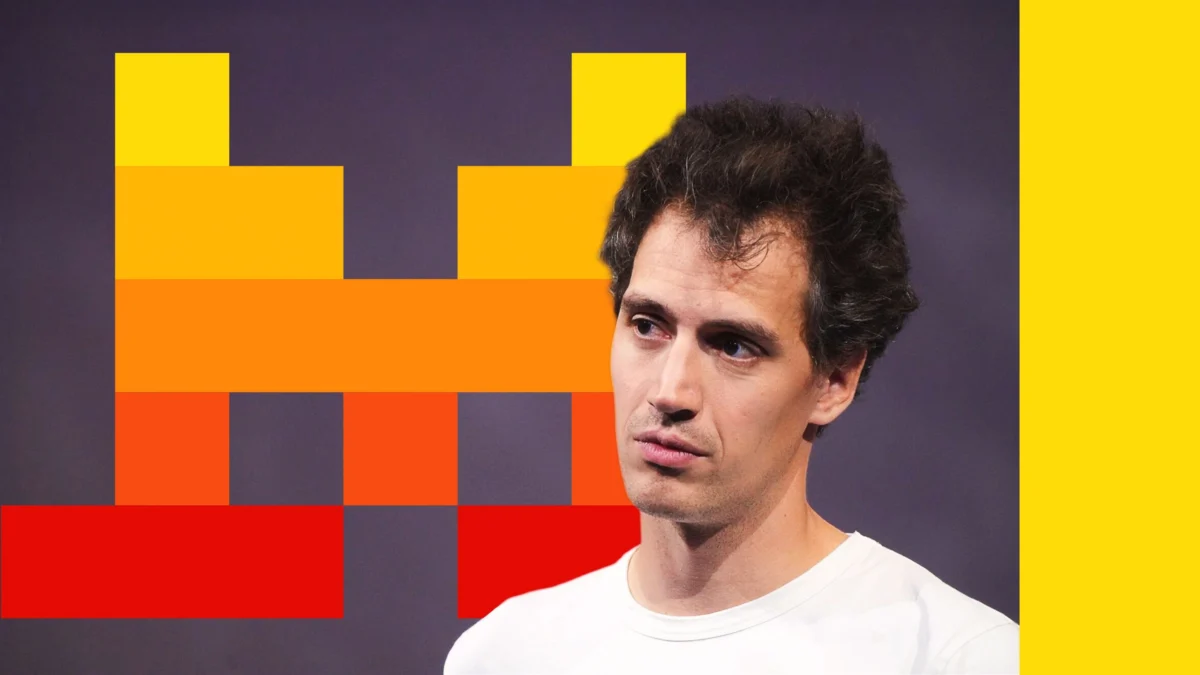
Berlin. Friedrich Merz, a prominent figure in German politics, declared at the German government’s Digital Summit, "We are in the midst of an epochal transformation." This statement underscored the profound significance of Artificial Intelligence (AI) for Germany and Europe. However, this pivotal moment is also characterized by a palpable dependency on the United States for crucial infrastructure and a perceived lag in the development of advanced AI models. Consequently, only a select few Europeans are shaping this transformative era. Among them, Arthur Mensch stands out as a pivotal figure.
Arthur Mensch, the French founder and CEO of Mistral AI, has emerged as a leading force in Europe’s pursuit of AI sovereignty. His company has developed Mistral Large 4, recognized as Europe’s most powerful AI model to date. This groundbreaking achievement is strategically aimed at bridging the technological divide with global leaders like the United States and China, and crucially, empowering European businesses to navigate and thrive in the burgeoning AI age.
The rapid ascent of Mistral AI is nothing short of remarkable. In September, the company secured a staggering €3 billion in funding, marking the largest financing round ever for a European technology company. This significant infusion of capital has propelled Mistral AI’s valuation to an impressive €21 billion. At just 34 years old, Mensch, the visionary behind this European AI powerhouse, recently shared his insights with Handelsblatt regarding the ongoing race to catch up with US competition and his vision for Europe’s AI future.
The Digital Summit: A Call for European AI Independence
The Digital Summit, a key event convened by the German federal government, serves as a vital platform for discussing and shaping Germany’s and Europe’s digital future. Held annually, the summit brings together political leaders, industry experts, researchers, and civil society representatives to address critical challenges and opportunities in the digital realm. The 2023 iteration, held in Berlin, was particularly focused on the transformative potential and the strategic imperative of Artificial Intelligence.
Friedrich Merz’s opening remarks were not merely an observation but a clarion call. His emphasis on an "epochal transformation" directly acknowledged the seismic shift AI represents, comparable in magnitude to previous industrial revolutions. This sentiment resonated throughout the summit, highlighting the urgency for Europe to not only participate in but also lead in this new technological frontier. The underlying concern, however, is Europe’s current position. While the continent possesses significant scientific talent and a strong industrial base, it faces structural challenges. The reliance on US cloud infrastructure for data storage and processing, a prerequisite for training and deploying large AI models, creates a vulnerability. Furthermore, the sheer scale of investment and the pace of innovation in AI research and development in the United States and China have created a substantial lead.
Mistral AI: A European Champion Emerges
Against this backdrop, Mistral AI has rapidly positioned itself as a beacon of European technological ambition. Founded in 2023 by Arthur Mensch, Timothée Lacroix, and Guillaume Lample, the company was established with a clear mission: to develop open and accessible AI models that empower European innovation. The company’s rapid growth and significant funding rounds underscore the market’s confidence in its potential to disrupt the established order.
Mistral Large 4, the company’s flagship model, represents a significant leap forward for European AI capabilities. Unlike many proprietary models developed by US tech giants, Mistral AI has a stated commitment to openness, releasing some of its models under permissive licenses. This approach fosters wider adoption, encourages community-driven development, and allows businesses to integrate AI more seamlessly without being locked into a single vendor’s ecosystem. The €3 billion funding round, a record for European tech, involved a consortium of prominent investors, including Andreessen Horowitz, Lightspeed Venture Partners, and French state-backed investment fund Bpifrance. This collective backing signals a strong belief in Mistral AI’s strategic importance for the continent.
The Strategic Importance of AI Sovereignty
The drive for AI sovereignty in Europe is not merely an economic aspiration; it is a strategic imperative with far-reaching implications for national security, economic competitiveness, and democratic values. The ability to develop, deploy, and control AI technologies domestically reduces reliance on foreign powers, safeguarding sensitive data and critical infrastructure. It also ensures that AI development aligns with European ethical standards and regulatory frameworks, such as the General Data Protection Regulation (GDPR) and the forthcoming AI Act.
The United States, with its established tech giants like Google, Microsoft, and OpenAI, currently dominates the global AI landscape. Similarly, China has made substantial investments in AI research and deployment, driven by both economic and national security objectives. Europe, while possessing a strong research base and a commitment to ethical AI, has historically struggled to translate this into globally competitive commercial products and services at the same scale.
The dependency on US cloud providers for computing power and the access to vast datasets required for training large language models (LLMs) presents a significant hurdle. This reliance can lead to data governance issues, potential intellectual property risks, and a limited ability to tailor AI solutions to specific European needs and regulations. Therefore, the success of companies like Mistral AI is crucial for fostering a more independent and robust European AI ecosystem.
Arthur Mensch: A Vision for European AI
In his interview with Handelsblatt, Arthur Mensch articulated a clear strategy for Mistral AI and a compelling vision for Europe’s AI future. His perspective is grounded in a pragmatic understanding of the current competitive landscape and a deep commitment to European innovation.
Bridging the Gap: Infrastructure and Talent
Mensch acknowledged the existing gap in AI infrastructure, particularly in terms of computational power and access to cutting-edge hardware, which is largely dominated by US chip manufacturers like NVIDIA. He emphasized the need for Europe to invest significantly in its own high-performance computing capabilities. This includes not only building more data centers but also fostering domestic semiconductor innovation to reduce reliance on foreign supply chains. "We need to build our own infrastructure," Mensch stated, highlighting that while Mistral AI leverages existing cloud providers, a long-term strategy requires greater self-sufficiency.
Furthermore, Mensch underscored the importance of nurturing AI talent within Europe. This involves strengthening university programs, supporting AI research, and creating an environment that encourages top AI researchers to stay and work in Europe. He believes that Europe has the intellectual capital but needs to create more attractive opportunities to retain and attract this talent. The success of Mistral AI itself is a testament to this, having attracted a formidable team of AI experts.
Openness as a Competitive Advantage
A cornerstone of Mistral AI’s strategy, and a key differentiator from many US competitors, is its commitment to open-source AI models. Mensch believes that openness fosters innovation, accelerates adoption, and allows for greater scrutiny and adaptation by the wider community. This approach democratizes access to powerful AI tools, enabling smaller businesses and researchers across Europe to experiment and build upon these foundational models.
"Openness is not a weakness, it’s a strength," Mensch argued, suggesting that by making their models accessible, they can foster a collaborative ecosystem that will ultimately outpace closed, proprietary systems. This strategy also allows for greater transparency in AI development, which is crucial for building trust and addressing ethical concerns.
The European Market and Global Ambitions
While Mistral AI is inherently a European company with a mission to empower the continent, its ambitions are global. Mensch recognizes that to truly compete on the world stage, European AI solutions must be as powerful and versatile as those developed elsewhere. Mistral Large 4 is designed to do just that, offering comparable or even superior performance to leading models from US companies in various benchmarks.
The recent funding round is instrumental in achieving these ambitions. It provides Mistral AI with the capital necessary to scale its operations, invest in further research and development, and expand its market reach. The company aims to provide a compelling alternative for businesses seeking advanced AI solutions that are developed with European values and regulatory considerations in mind.
Broader Implications for Europe
The rise of Mistral AI and Arthur Mensch’s strategic vision carry significant implications for Europe’s future in the digital age.
Economic Competitiveness: A strong European AI sector can drive economic growth, create high-skilled jobs, and enhance the competitiveness of European industries across various sectors, from manufacturing and healthcare to finance and public services. By providing businesses with access to cutting-edge AI tools, Mistral AI can help them automate processes, improve efficiency, and develop innovative new products and services.
Technological Sovereignty: The ability to develop and control AI technologies domestically is crucial for Europe’s strategic autonomy. Reduced reliance on foreign technology providers strengthens Europe’s position in international relations and safeguards its economic and political interests. Mistral AI’s success contributes directly to this goal by offering a viable European alternative.
Ethical AI Development: Europe has long been a proponent of responsible and ethical technology development. By prioritizing transparency and openness, Mistral AI aligns with these values, fostering trust and ensuring that AI is developed and deployed in a way that benefits society. The company’s engagement with European regulators, such as its contribution to discussions around the EU AI Act, further solidifies this commitment.
Innovation Ecosystem: Mistral AI’s success can catalyze further innovation within the European AI ecosystem. The company’s open-source approach encourages a ripple effect, inspiring other startups, researchers, and developers to contribute to the advancement of AI in Europe. This can lead to a more dynamic and resilient technological landscape.
The Road Ahead: Challenges and Opportunities
Despite the significant progress, the path ahead for Mistral AI and Europe’s AI ambitions is not without its challenges. The pace of AI development is relentless, and the competitive landscape remains fiercely contested. Continuous investment in research and development, along with strategic partnerships, will be essential to maintain momentum.
Furthermore, translating technological prowess into widespread market adoption requires robust go-to-market strategies, effective sales channels, and strong customer support. Europe also needs to address the digital skills gap more comprehensively to ensure that its workforce is equipped to leverage the opportunities presented by AI.
However, the emergence of Arthur Mensch and Mistral AI represents a pivotal moment for Europe. It signifies a renewed commitment to technological independence and a tangible demonstration of European capacity to innovate and compete on the global AI stage. As Friedrich Merz aptly put it, the continent is indeed in an "epochal transformation," and figures like Arthur Mensch are at the forefront, striving to ensure Europe is not merely a participant but a leader in shaping its AI-driven future. The interview with Arthur Mensch, as detailed by Handelsblatt, offers a window into the strategic thinking and determined optimism driving this crucial European endeavor. The journey to close the gap with global AI leaders is challenging, but with initiatives like Mistral AI, Europe is taking decisive steps towards a more autonomous and innovative digital future.
