

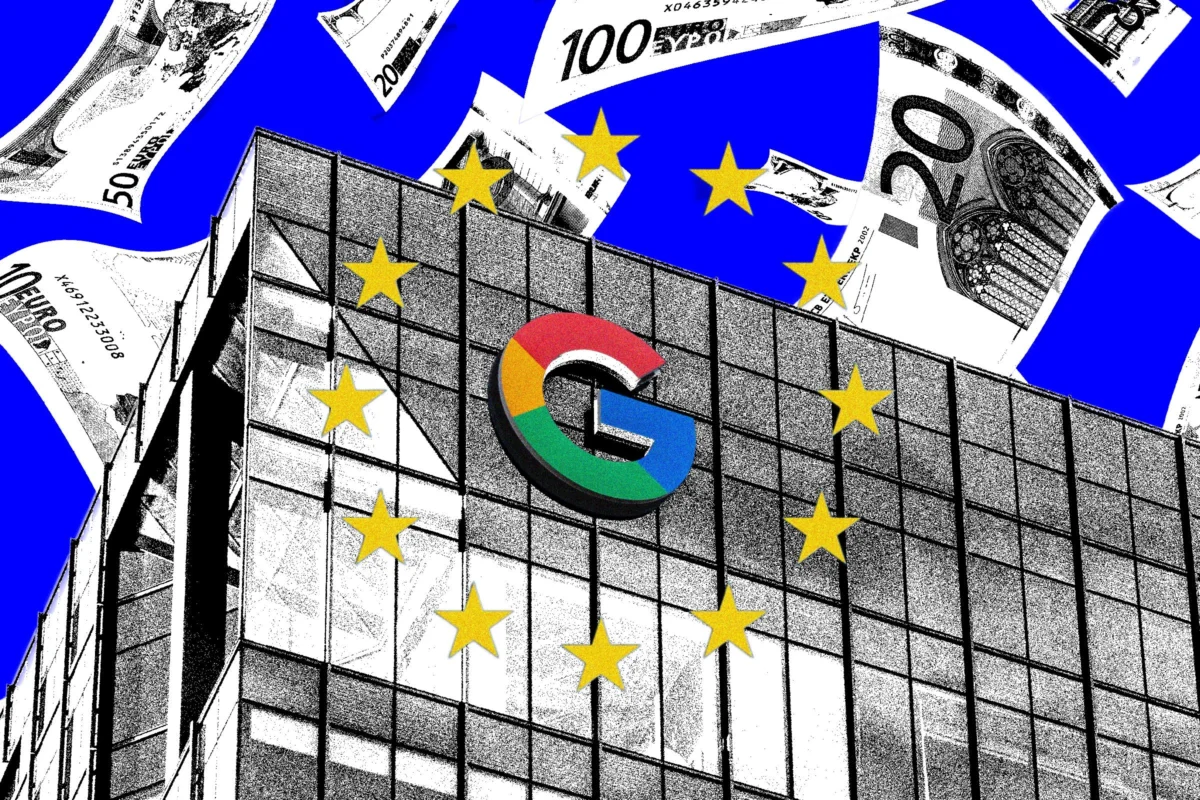
The European Commission has imposed a significant $1 billion penalty on Google, citing violations of the bloc’s stringent competition laws. The hefty fine stems from an extensive investigation that concluded Google had leveraged its dominant position in the European Union’s search engine and app store markets to unfairly promote its own suite of applications and services. This action underscores the EU’s commitment to enforcing its landmark Digital Markets Act (DMA), a piece of legislation designed to curb the power of large tech platforms and ensure a more level playing field for businesses and consumers alike.
EU’s Crackdown on Dominant Tech Players Intensifies
The European Commission’s investigation meticulously detailed how Google allegedly manipulated its search engine results and the Google Play Store to favor its proprietary offerings. This included services spanning e-commerce, travel, and transportation. The core of the Commission’s ruling is that Google’s practices created an unfair advantage, steering users towards Google’s own products, such as Google Shopping, Google Flights, and Google Hotels, often at the expense of competing services that may have offered superior value or innovation.
Central to the ruling are the specific directives issued to Google. The Commission has ordered the tech giant to cease and desist from granting preferential treatment to its own services within search rankings. This means that Google must now ensure that its own services are not systematically ranked higher than those of its competitors purely by virtue of being owned by the search engine provider.
Furthermore, the ruling mandates that Google must permit app developers to engage with users and facilitate transactions outside the confines of the Google Play Store. This is a critical development, as the Play Store currently imposes a commission on sales made through apps listed on its platform. By allowing developers to communicate and transact directly with their user base, the EU aims to break down this revenue-sharing barrier, potentially leading to more competitive pricing for consumers and greater profitability for app developers.
Key Directives from the European Commission:
- Search Ranking Reform: Google must refrain from giving preferential treatment to its own services in search results. This applies across various categories, including shopping, accommodations, transport, and flights.
- App Store Interoperability: Google must allow app developers to communicate and transact with users outside of the Google Play Store, without being subject to the platform’s commission fees for such direct transactions.
Official Statements and Company Responses
Teresa Ribera, an executive vice president at the European Commission, articulated the rationale behind the stringent measures. "The best products should succeed because they’re better, not because they’re owned by the company running the search engine," Ribera stated. She emphasized the rights of European consumers, asserting, "European consumers have a right to be told by app developers where to sign up to the best offers, even when the app store owner does not get a cut." This statement highlights the EU’s focus on consumer welfare and fair market dynamics.
In response to the penalty, Google expressed its intention to consider an appeal. Kent Walker, president of global affairs at Google, issued a strong rebuttal, characterizing the ruling as detrimental. "This isn’t fair competition; it’s product degradation driven by a small group of self-serving complainants, with European businesses and consumers taking the hit," Walker argued. This statement suggests Google’s perspective that the complainants have unduly influenced the regulatory process and that the ruling could negatively impact the very entities it aims to protect.
The tech industry, represented by trade associations, has also voiced concerns about the impact of such enforcement. Daniel Friedlaender, senior vice president at CCIA Europe, an influential trade organization, told WIRED, "Reducing the quality of what Europeans have access to is not a positive outcome." This sentiment implies that aggressive regulatory interventions, while intended to foster competition, might inadvertently lead to a reduction in the overall quality or user experience of digital services available in the EU.
A History of Scrutiny: The EU’s Longstanding Battle with Google
This $1 billion penalty is not an isolated incident but rather the latest chapter in a protracted history of antitrust scrutiny that the European Union has subjected Google to over the past decade. The bloc has consistently taken a firm stance against what it perceives as monopolistic practices by the American tech giant, resulting in a series of multi-billion-dollar fines.
A Chronology of EU Fines Against Google:
- 2017: The European Commission levied a €2.42 billion ($2.7 billion) fine against Google for abusing its dominant position as a search engine to give an illegal advantage to its own comparison shopping service.
- 2018: Google was fined €4.34 billion ($5 billion) for using its Android mobile operating system to illegally strengthen its market dominance. This included prohibiting manufacturers from selling devices pre-loaded with other versions of Android and requiring them to pre-install Google Search and the Chrome browser as a condition for licensing Google’s app store.
- 2019: A €1.49 billion ($1.7 billion) fine was imposed on Google for restricting the ability of websites to show ads from rival Google advertising services.
Adding to this long list of penalties, in early July of the current year, a European court upheld a record $4.1 billion fine initially brought against Google in 2018. This landmark ruling confirmed the legality of the fine related to agreements that mandated phone manufacturers to install Google Search and Google Chrome on their devices. The court’s decision reinforced the EU’s stance that such bundling practices were anti-competitive and constituted an abuse of dominance.
The Broader Implications of EU Competition Law Enforcement
The enforcement of EU competition law, particularly concerning dominant digital platforms, carries significant weight. Kathryn McMahon, an associate professor of law at the University of Warwick, explained the underlying principles. "Certainly, the stakes are really high for companies. How they are ranked affects their businesses a great deal," she commented. "The way EU competition law looks at it, firms in a dominant position—like Google—have a special responsibility not to distort competition." This legal principle, often referred to as the "special responsibility" of dominant firms, places an obligation on such companies to ensure their actions do not stifle innovation or disadvantage competitors.
The EU’s approach, as exemplified by the DMA, is a proactive strategy to regulate the digital economy. The act aims to designate large online platforms as "gatekeepers," imposing a set of predefined obligations and prohibitions to ensure fair competition and user choice. Google’s recent proposals to alter its Play Store administration and search result presentation have been characterized by the EC as "progress towards compliance," suggesting a potential path for Google to mitigate future penalties by demonstrating genuine adherence to the DMA’s principles.
Supporting Data and Context:
- Market Dominance: Google’s search engine holds a substantial market share in the EU, often exceeding 90%. Similarly, the Google Play Store is the primary distribution channel for Android applications, making it a critical gateway for developers.
- Economic Impact: The Digital Markets Act aims to foster a more competitive digital ecosystem, potentially leading to increased innovation, lower prices for consumers, and greater opportunities for smaller businesses to reach audiences without being unduly disadvantaged by dominant platforms.
- Transatlantic Tensions: The EU’s robust enforcement of digital regulations has sometimes led to friction with the United States, where the regulatory approach has historically been more laissez-faire. Recent political rhetoric from the US, including vows to impose tariffs on European countries that restrict American technology companies, adds a layer of complexity to these ongoing regulatory battles. President Donald Trump’s past pronouncements on imposing steep new tariffs on European countries seeking to restrict American tech firms highlight potential geopolitical ramifications of these trade and regulatory disputes. The White House did not immediately respond to a request for comment on the latest EU penalty.
A Test of Regulatory Resolve
The latest penalty against Google can be viewed within the broader context of geopolitical and economic relations between the EU and the US. Professor McMahon noted, "The latest penalty is ‘quite a strong response, in the context of the transatlantic complaints—the way that Trump can leverage fines.’" She concluded, "It shows the commission is willing to be tough." This suggests that the EU’s regulatory actions are not solely driven by internal market concerns but also operate within a complex international framework, where enforcement can be seen as a demonstration of sovereignty and a commitment to its own regulatory vision for the digital age.
The ongoing saga between the European Commission and Google serves as a significant case study in the evolving landscape of digital regulation. It highlights the challenges of balancing innovation with fair competition and underscores the EU’s determination to shape the digital economy according to its own principles, even when faced with pushback from some of the world’s largest technology companies. The coming months will be crucial in observing Google’s response to the penalty and the EU’s continued efforts to ensure a competitive and fair digital market for its citizens and businesses.
