

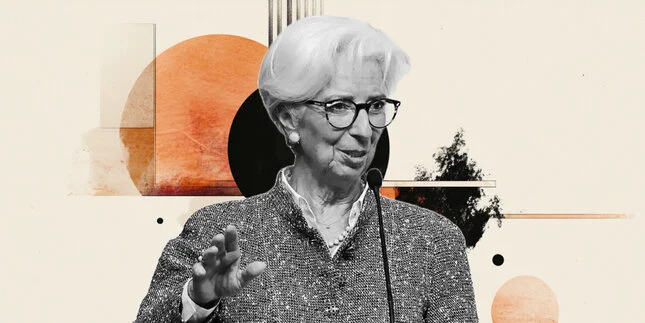
Frankfurt, Germany – A recent Reuters poll of European Central Bank (ECB) watchers has revealed a notable shift in sentiment, with a growing number of economists now anticipating at least one interest rate increase by the ECB within the current year. This evolving outlook, highlighted by analysts at Societe Generale, comes despite a persistent majority still forecasting no change in borrowing costs, underscoring the complex and often contradictory signals currently influencing monetary policy decisions across the Eurozone. The analysis delves into the nuances of President Christine Lagarde’s recent statements, which signal a readiness to act decisively should inflationary pressures from geopolitical flashpoints, particularly the Iran conflict, intensify, even as policymakers remain in an early assessment phase regarding the scale and persistence of the energy-driven shock.
Shifting Sands in Monetary Policy Expectations
The latest Reuters ECB poll, conducted recently, indicates that the proportion of economists forecasting at least one rate hike by the ECB before the end of the year has risen sharply to 21, a significant increase from just three in a similar poll conducted in March. This represents a tangible recalibration of market expectations, reflecting a heightened awareness of persistent inflationary risks and a more hawkish tone from certain ECB Governing Council members. However, the poll also reveals that out of a total of 60 economists surveyed, a substantial majority of 39, or 65%, still do not anticipate the central bank raising rates this year. This lingering skepticism, Societe Generale points out, appears somewhat elevated when contrasted with the recent repricing of the money market curve, which has, over the past three weeks, begun to factor in a higher probability of tighter monetary policy. The divergence between poll sentiment and market pricing underscores the deep uncertainty pervading economic forecasts and the challenge faced by the ECB in communicating its future policy trajectory.
The Eurozone has grappled with elevated inflation for an extended period, initially driven by post-pandemic supply chain disruptions and surging demand, and subsequently exacerbated by the energy crisis following Russia’s invasion of Ukraine. While headline inflation has shown signs of moderating from its peak in late 2022, it remains stubbornly above the ECB’s symmetrical 2% medium-term target. Core inflation, which strips out volatile energy and food prices, has proven particularly sticky, reflecting underlying price pressures and robust wage growth in some sectors. This persistent inflationary environment forms the backdrop against which the debate over future rate hikes is unfolding, making every data release and policymaker statement subject to intense scrutiny.
Lagarde’s Measured Readiness: A Balancing Act
President Christine Lagarde, in her recent public remarks, has articulated a policy stance characterized by both caution and conviction. She has unequivocally signaled the ECB’s preparedness to raise rates at any upcoming meeting should inflation pressures stemming from the Iran conflict intensify. This statement reflects the central bank’s unwavering commitment to its primary mandate of price stability and its willingness to deploy its tools aggressively if circumstances demand. However, Lagarde also stressed that, in her view, it remains "too early to act." This nuanced position highlights the ongoing assessment by policymakers of the scale, duration, and persistence of the current energy-driven price shock. The ECB’s Governing Council is keenly aware of the delicate balance required: acting too soon could stifle nascent economic recovery, while delaying too long risks embedding inflationary expectations and necessitating more aggressive action down the line.
Lagarde further clarified the ECB’s operational focus, emphasizing that the central bank cannot directly influence global energy prices, which are largely determined by geopolitical events and supply-demand dynamics. Instead, the ECB will meticulously monitor the "spillovers" from energy price volatility into core inflation, wage developments, and broader price expectations across the Eurozone economy. This focus on secondary effects is crucial because it is these second-round effects that can lead to a more entrenched inflationary spiral, where higher energy costs feed into production costs, wages rise to compensate for reduced purchasing power, and businesses adjust their pricing strategies accordingly. Monitoring these indicators—core inflation metrics, negotiated wage increases, and various surveys of inflation expectations among businesses and consumers—provides the ECB with the necessary intelligence to determine whether the current inflationary episode is transitory or has developed into a more persistent phenomenon requiring monetary tightening.
Chronology of Inflationary Pressures and Policy Response
The current debate over ECB rates is rooted in a timeline of significant economic and geopolitical events:
- Late 2021 – Early 2022: Eurozone inflation begins to accelerate due to post-COVID supply chain bottlenecks and robust demand.
- February 2022: Russia’s full-scale invasion of Ukraine triggers an unprecedented energy crisis in Europe, sending gas and oil prices soaring and pushing Eurozone headline inflation to multi-decade highs.
- March 2022: Germany announces a significant fiscal package, dubbed the "fiscal bazooka," to mitigate the energy crisis’s impact and increase defense spending, leading to a suspension of the national debt brake. This period also saw significant movements in bond spreads, particularly the 2s/10s and 5s/30s, as markets reacted to increased sovereign borrowing.
- July 2022 – September 2023: The ECB embarks on a series of aggressive interest rate hikes, bringing its deposit facility rate from negative territory to 4.00%, its highest level ever, in an effort to combat runaway inflation.
- October 2023 – Present: Geopolitical tensions escalate in the Middle East, particularly involving the Iran conflict, raising concerns about potential disruptions to global oil supplies and renewed upward pressure on energy prices.
- March (Latest Poll): Only 3 economists in the Reuters poll anticipate an ECB rate hike in 2024, reflecting a prevailing belief that the hiking cycle was over and rate cuts might be on the horizon.
- April (Latest Poll): The number of economists expecting at least one hike rises sharply to 21, indicating a shift in sentiment influenced by sticky inflation and geopolitical risks. This period also sees hawkish comments from ECB officials like Nagel.
Hawkish Voices and Market Reactions
The recent hawkish comments from Bundesbank President Joachim Nagel have added further weight to the shifting market narrative. Nagel, a prominent hawk on the ECB’s Governing Council, has consistently advocated for a resolute approach to combating inflation. His recent statements have contributed to a "bear flattening" momentum in the Eurozone bond market, particularly affecting the 2s/10s and 5s/30s yield spreads. Bear flattening occurs when short-term interest rates rise faster than long-term rates, or when short-term rates rise while long-term rates fall. This typically signals market expectations of tighter monetary policy in the near term and/or concerns about future economic growth.
Societe Generale’s analysis notes that these spreads have effectively completed a reversal to levels last seen in March 2022. This particular period was significant as it coincided with Germany’s decision to loosen its national debt brake and announce a substantial "fiscal bazooka" aimed at bolstering defense, security, and energy crisis mitigation efforts. The historical parallel drawn by analysts suggests that the market is once again pricing in a combination of increased government borrowing (which can push yields up) and a renewed focus on inflation control by the central bank. The 5-year, 5-year forward inflation swap (5y5y), a key market gauge of long-term inflation expectations, closed yesterday at 2.12%, its lowest level since March 4. While this indicates that market participants currently expect inflation to eventually return to the ECB’s target over the medium to long term, the recent hawkish rhetoric and geopolitical developments are introducing significant near-term volatility and uncertainty.
Broader Economic Implications and the Path Ahead
The potential for further ECB rate hikes carries significant implications for the Eurozone economy, businesses, and households. Higher interest rates translate directly into increased borrowing costs for mortgages, corporate loans, and government debt. This can dampen economic activity by reducing consumer spending and business investment, potentially slowing down growth or even tipping the economy into a recession if not managed carefully. Conversely, maintaining price stability is paramount for long-term economic health, preserving the purchasing power of citizens and fostering a stable environment for investment and growth.
The ECB’s challenge is multifaceted. It must navigate the immediate inflationary pressures stemming from global energy markets, which are largely beyond its direct control, while simultaneously ensuring that these external shocks do not become embedded in domestic wage-price dynamics. The ongoing debate within the Governing Council reflects these complexities, with ‘hawks’ prioritizing aggressive action to curb inflation and ‘doves’ emphasizing the risks to economic growth from excessive tightening.
Looking ahead, market participants and policymakers will be closely watching several key data points:
- Eurostat’s Harmonised Index of Consumer Prices (HICP): Both headline and core HICP figures will be crucial indicators of inflationary trends.
- Wage Growth Data: Official statistics and anecdotal evidence of wage negotiations will be vital in assessing the extent of second-round effects.
- Economic Sentiment Surveys: Indicators like the ZEW Economic Sentiment Index and the Ifo Business Climate Index will provide insights into business and consumer confidence.
- Geopolitical Developments: Any escalation or de-escalation in the Iran conflict or other global hotspots will directly impact energy prices and, consequently, inflation expectations.
The next ECB Governing Council meetings will be critical junctures. While a majority of economists in the Reuters poll still do not expect a rate hike this year, the significant increase in those who do, coupled with hawkish statements and market repricing, suggests that the probability of further monetary tightening has demonstrably risen. The ECB stands ready to act, but its ultimate decision will depend on a careful weighing of evolving economic data, geopolitical developments, and the persistent challenge of bringing inflation sustainably back to its target without unduly harming economic growth. The balancing act remains precarious, and the Eurozone’s monetary policy path for the remainder of the year is likely to be characterized by continued vigilance and responsiveness to rapidly changing circumstances.
