

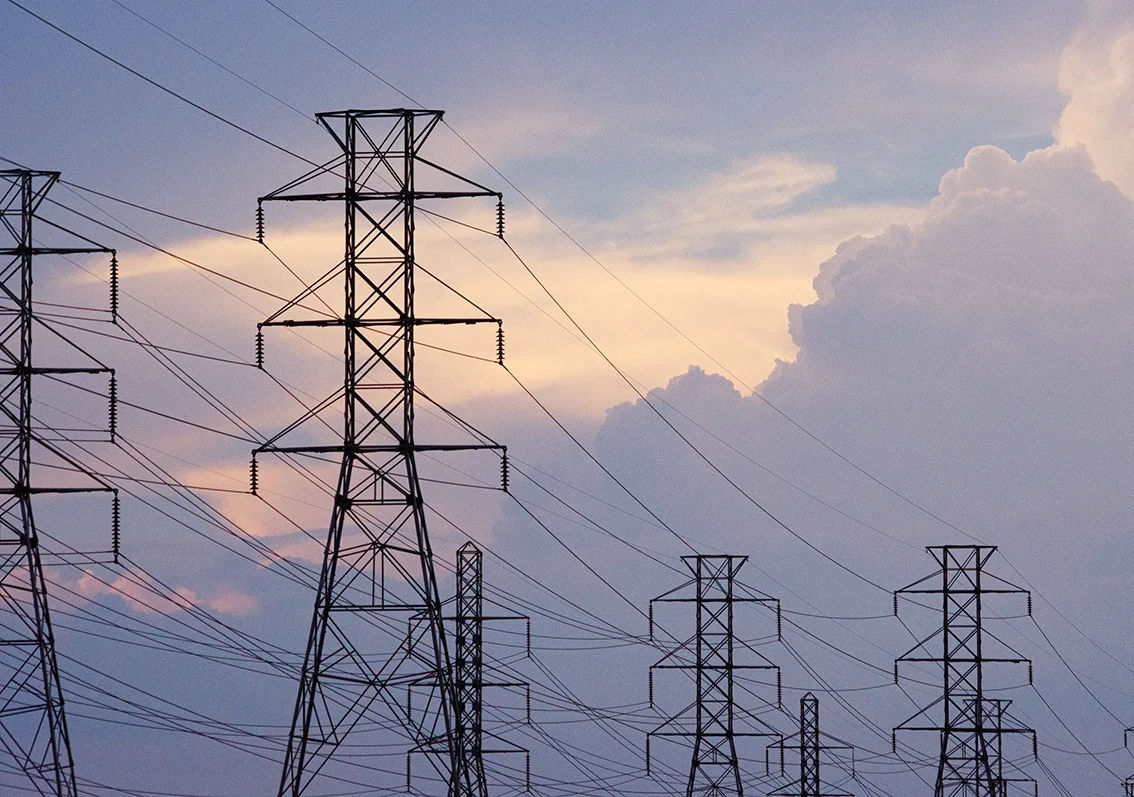
Texas is currently embarking on its most significant power grid expansion in over a decade, a massive infrastructure undertaking necessitated by the state’s rapid population growth, industrial expansion, and the increasing electrification of the Permian Basin. However, a new study suggests that the way these projects are awarded could determine whether Texas ratepayers face a manageable cost or a multi-billion-dollar burden. According to a comprehensive report released by Aurora Energy Research on behalf of Texans for Affordable Transmission, a project of Conservative Texans for Energy Innovation, implementing a competitive bidding process for upcoming high-voltage transmission projects could reduce upfront construction costs by $3 billion to $9 billion. When viewed over the total lifecycle of these projects, the potential savings for ratepayers swell to between $7 billion and $22 billion, translating to a savings of approximately $206 to $660 per Texas household.
As the Electric Reliability Council of Texas (ERCOT) prepares to implement its 2024 and 2025 Regional Transmission Plans, the stakes for the state’s energy future have never been higher. The proposed Strategic Transmission Expansion Plan (STEP) carries an estimated price tag of $36 billion. This plan includes the development of a new 765-kilovolt (kV) "backbone" designed to bolster the reliability of the grid and move power from remote generation sites to high-demand urban centers. Under current Texas law, however, the majority of these projects are governed by a "right-of-first-refusal" (ROFR) framework. This framework generally assigns new transmission construction to incumbent utilities that already own infrastructure in the area, effectively bypassing the competitive market and awarding contracts without the cost-saving pressures of a bidding war.
The Rising Cost of Transmission and the Role of Competition
The financial pressure on Texas consumers is already mounting. Transmission charges, which cover the cost of building and maintaining the wires that move electricity across the state, currently account for as much as 15% of a typical residential electricity bill within the ERCOT region. Over the past two years alone, these charges have surged by 34%. Proponents of competitive bidding argue that without a shift in policy, these costs will continue to escalate unchecked, leaving consumers to foot the bill for inefficient project management and non-binding cost estimates.
Barry Smitherman, Chairman of Texans for Affordable Transmission and a former chairman of the Public Utility Commission of Texas, emphasized the urgency of the situation. "Texas is about to spend tens of billions of dollars on new transmission, and ratepayers will carry that cost for decades," Smitherman stated. "This study shows that when developers compete and are held to binding cost commitments, projects come in on time and on budget. Texans deserve that same benefit."
The Aurora Energy Research study provides a data-driven foundation for these claims by comparing 47 completed transmission projects across six major U.S. electricity markets: the Southwest Power Pool (SPP), the Midcontinent Independent System Operator (MISO), the California Independent System Operator (CAISO), PJM Interconnection, the New York Independent System Operator (NYISO), and ERCOT’s own historical Competitive Renewable Energy Zones (CREZ) program. Of the 47 projects analyzed, 20 were procured through competitive bidding, while 27 were awarded through non-competitive, incumbent-based processes. To ensure an "apples-to-apples" comparison, the researchers selected projects that were similar in length, terrain, and voltage class.
Historical Performance: Competitive vs. Non-Competitive Projects
The findings of the study highlight a stark contrast in performance between the two procurement models. On average, competitive projects were completed ahead of their promised in-service dates in five of the six markets studied. Perhaps most telling was the reliability of the timelines: three-quarters of the competitive projects experienced no material delays. In contrast, only about one-third of non-competitive projects met their original schedules.
When competitive projects did experience delays, the researchers found that the causes were almost exclusively external and well-documented, such as complex permitting hurdles, cost-allocation disputes between states, or the global disruptions caused by the COVID-19 pandemic. Conversely, nearly 20% of the non-competitive projects that ran behind schedule reported no specific cause for delay in their public regulatory filings, suggesting a lack of transparency and accountability in the incumbent-led process.
Financial performance followed a similar trend. In the SPP and MISO regions, completed competitive projects came in approximately 25% below the grid operator’s initial cost estimates. This 25% benchmark served as the primary basis for the study’s projections regarding Texas’s potential savings. The report suggests that by introducing competition, ERCOT could replicate these efficiencies, preventing the "gold-plating" of infrastructure where utilities have little incentive to minimize costs because they are guaranteed a return on their capital investments.
The Legacy of the CREZ Program in Texas
Texas does not have to look far for a successful precedent of transmission competition. The Competitive Renewable Energy Zones (CREZ) program, initiated in the mid-2000s, was designed to build approximately 3,600 miles of high-voltage lines to transport wind power from West Texas and the Panhandle to the state’s major cities. At the time, Texas allowed new-entrant developers to compete alongside incumbent utilities for the right to build these lines.
The results of the CREZ program were telling. Projects managed by new entrants cost an average of $150,000 less per mile than those managed by incumbents. Furthermore, the final costs for new-entrant projects came in 9% below the developers’ initial estimates. In contrast, projects led by incumbent utilities ran an average of 7% over their original budgets. A standout example cited in the report is Lone Star Transmission’s 330-mile line. As the first CREZ project to be completed, it finished ahead of schedule and 7% under its developer’s cost estimate, proving that independent developers could deliver large-scale infrastructure efficiently within the Texas regulatory environment.
The Three Pillars of Successful Competition
The Aurora Energy Research report stresses that the mere presence of competition is not a panacea. Rather, the most successful outcomes—defined by lower costs and timely completion—occur when three specific variables are utilized in tandem:
- Binding Cost Caps: Developers must be held to the prices they bid. The report highlights a comparison between two projects from the same developer to illustrate this point. In the SPP region, the Crossroads-Hobbs-Roadrunner line was subject to a "hard cap" of $291 million with no exceptions allowed. The project was completed exactly at that cap. In New York, however, the Empire State Line featured a $110 million cap but included various exceptions. These exceptions allowed the costs passed on to consumers to balloon to $249 million.
- Rigorous Independent Evaluation: Grid operators or regulators must employ a transparent and objective process to evaluate bids, ensuring that the lowest-cost provider also meets all technical and reliability requirements.
- Inclusion of New Entrants: Allowing independent transmission companies to compete against traditional utilities prevents monopolies and encourages innovation in construction and financing.
Candidates for Competition in the STEP Program
The study identifies several components of ERCOT’s Strategic Transmission Expansion Plan that are ideal candidates for competitive procurement. These are primarily "greenfield" projects—new lines built on new rights-of-way—that offer broad regional benefits rather than localized upgrades to existing stations. Specific projects identified include:
- The 765-kV lines connecting the Permian Basin to North Texas.
- The 765-kV lines connecting the Permian Basin to Central Texas.
- The 765-kV "Backbone" lines connecting North Texas to Houston.
- The 765-kV "Backbone" lines connecting Central Texas to Houston.
The report’s low-end savings estimate ($3 billion upfront) assumes competition is only applied to the 765-kV lines outside of the immediate Permian Basin plan. The high-end estimate ($9 billion upfront) assumes the entire STEP program is opened to competitive bidding.
The Federal Landscape and the Push for Reform
The debate in Texas mirrors a larger national conversation regarding transmission competition. Approximately 15 years ago, the Federal Energy Regulatory Commission (FERC) issued Order 1000, which mandated that utilities competitively bid out transmission projects that have regional benefits. However, the implementation of Order 1000 has been inconsistent. Many utilities have lobbied state legislatures to pass ROFR laws that circumvent the federal mandate, claiming that competition slows down the build-out of the grid and introduces unnecessary complexity.
Caitlin Marquis, managing director at Advanced Energy United, and Paul Cicio, chair of the Electricity Transmission Competition Coalition (ETCC), have been vocal advocates for the enforcement of FERC’s competitive standards. They argue that the lack of competition is a primary driver of soaring electricity rates across the United States. While detractors of competition argue that the bidding process adds months or years to project timelines, the Aurora study and data from the think tank R Street suggest otherwise, indicating that the accountability of a competitive contract often results in faster "speed-to-market" than the bureaucratic processes of incumbent utilities.
In the Midwest, a group of utilities recently petitioned FERC to halt competitive bidding in the MISO and SPP regions, citing concerns over project delays. However, advocates for competition point out that these delays are often the result of the incumbents’ own legal challenges to the bidding process rather than the process itself.
Implications for the Future of the Texas Grid
As the Texas Legislature and the Public Utility Commission of Texas (PUCT) look toward the next decade of energy policy, the findings of the Aurora Energy Research report present a compelling case for regulatory reform. The transition to a 765-kV backbone is a generational investment, comparable to the creation of the Interstate Highway System. How Texas chooses to build this "interstate for electricity" will have long-term consequences for the state’s economic competitiveness.
If Texas continues to rely on a ROFR framework, it risks locking in higher electricity prices that could deter industrial investment and place an undue burden on low-income households. Conversely, by embracing the competitive model that proved successful during the CREZ era, the state could secure its energy future while saving billions of dollars. The choice facing Texas policymakers is whether to protect the traditional business model of incumbent utilities or to prioritize the financial interests of the millions of ratepayers who will ultimately pay for the wires.
The decision will likely involve intense legislative debate. With the 2025 Texas Legislative Session on the horizon, the Aurora report provides a significant piece of evidence for those advocating for a more market-oriented approach to grid expansion. As the state continues to lead the nation in energy production and consumption, the efficiency of its transmission system will remain a cornerstone of its "Texas Miracle" economic story.
