

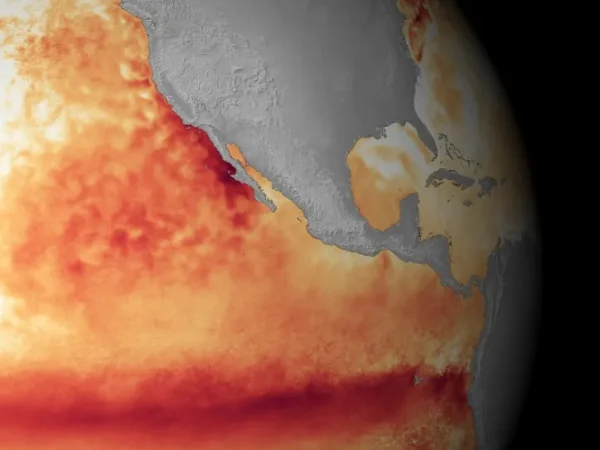
As climate scientists continue to track a strengthening El Niño signal into late 2026, the global energy sector is bracing for a complex array of meteorological shifts that could redefine operational priorities for the coming years. From the United States to Europe, meteorological services are sounding alarms about the potential intensity of this cycle. The United Kingdom’s national meteorological service has recently suggested that the 2026-2027 El Niño could emerge as the strongest in living memory, surpassing the benchmarks set by the historic events of 1997-1998 and 2015-2016. For the power sector, these forecasts represent more than just weather headlines; they are critical data points that must be integrated into long-term resilience and resource adequacy planning.
The El Niño-Southern Oscillation (ENSO) remains the planet’s primary driver of year-to-year climate variability. In its warm phase, known as El Niño, the phenomenon involves a significant warming of surface waters in the central and eastern Pacific Ocean. This shift disrupts global atmospheric circulation, altering the path of the jet stream and redistributing heat and moisture across continents. While the headlines often focus on specific disasters, the reality for energy planners is more nuanced. A strong El Niño does not provide a deterministic forecast of specific storms; rather, it shifts the statistical probability of certain weather patterns, offering a seasonal "climate signal" that utilities can use to narrow the range of likely outcomes.
The Chronology of ENSO and the 2026 Forecast
The current progression toward a "Super El Niño" follows a period of relative atmospheric volatility. Throughout the early 2020s, the globe experienced a rare "triple-dip" La Niña, which contributed to persistent droughts in the Western U.S. and intensified Atlantic hurricane seasons. The transition into the 2026 El Niño phase represents a dramatic swing in the climate pendulum. Scientists at the National Oceanic and Atmospheric Administration (NOAA) and the Electric Power Research Institute (EPRI) have been monitoring the subsurface heat anomalies in the Pacific since early 2025, noting a steady accumulation of thermal energy that suggests a high-magnitude event.
By late 2026, these oceanic conditions are expected to reach their peak, coinciding with the Northern Hemisphere’s winter. Historically, "Super El Niño" events have been characterized by sea surface temperature anomalies exceeding 2.0°C above the long-term average. When these thresholds are met, the atmospheric response is typically more pronounced, leading to significant disruptions in the energy-water-land nexus. For utilities, the timeline for preparation began months ago, as the lead time for infrastructure hardening and fuel procurement often requires a multi-season outlook.
Regional Impacts and Load Forecasting Challenges
In North America, the influence of El Niño is traditionally associated with a split jet stream. This often results in a "wet and cool" signal across the Southern United States and a "warm and dry" signal across the Northern U.S. and Canada. However, the 2026 event is unfolding against a backdrop of a significantly warmer global baseline temperature. This means that even if a region experiences a "milder" summer relative to a La Niña year, the absolute temperatures may still be high enough to drive record-breaking cooling demand.
For load forecasters, this creates a paradox. While historical El Niño patterns might suggest reduced peak summer demand in the Southeast due to increased cloud cover and precipitation, the underlying trend of global warming ensures that "mild" is a relative term. Utilities in these regions must balance the potential for lower cooling loads with the reality of aging infrastructure that may be less resilient to even moderate heat when combined with high humidity. Conversely, in the Pacific Northwest, the prospect of a warmer, drier winter poses a direct threat to the region’s heating demand patterns and, more critically, its energy supply.
Hydropower: The Double-Edged Sword of Precipitation
Hydropower remains one of the most sensitive segments of the power sector regarding ENSO variability. In regions like California and the Southern Rockies, a strong El Niño typically brings increased atmospheric river activity, leading to heavy snowpack in the mountains and significant rainfall in lower elevations. While this is often welcomed as a "drought-buster," it presents substantial operational hurdles for dam operators and grid managers.
Excessive precipitation requires a delicate balancing act between power generation and flood control. When reservoirs reach capacity, operators may be forced to spill water—bypassing turbines—to maintain safety margins, resulting in lost generation potential. Furthermore, extreme inflow events can carry high sediment loads or debris, which can damage intake structures and turbines. EPRI research highlights that hydropower facilities must be prepared to manage these high-flow conditions while remaining available to support the grid during periods of volatility.

In contrast, the Pacific Northwest often faces the opposite challenge during an El Niño. A warmer winter typically results in a higher "snow line," meaning more precipitation falls as rain rather than snow. This reduces the seasonal "battery" of snowpack that typically provides a steady melt-off for summer hydropower production. For a region that relies heavily on the Columbia River Basin for carbon-free baseload and peaking power, a low-snowpack year can lead to increased reliance on thermal generation or energy imports, often at a higher cost to consumers and the environment.
Wildfire Risk and Landscape Management
One of the most complex implications of El Niño is its delayed effect on wildfire risk. In the Western U.S., a wet El Niño winter can stimulate the rapid growth of "flashy fuels"—grasses and small shrubs. While this reduces immediate fire risk during the rainy season, it creates a dangerous situation for the following summer and autumn. If the transition to the dry season is sharp, this abundant vegetation dries out, providing a massive fuel load for wildfires.
Utilities must adjust their vegetation management and infrastructure inspection cycles to account for this growth. The 2026-2027 cycle will likely see utilities increasing their "line-to-sky" clearances and intensifying inspections in high-risk fire-threat areas. Emergency preparedness professionals are also focusing on situational awareness technologies, such as AI-driven weather stations and satellite monitoring, to track fuel moisture levels in real-time. The goal is to move from reactive maintenance to a proactive resilience strategy that anticipates the landscape’s response to the ENSO cycle.
Strategic Planning and Resource Adequacy
The shift toward a more informed climate strategy is being championed by organizations like EPRI through initiatives such as the Climate Resilience and Adaptation initiative (READi). The consensus among industry leaders is that El Niño should be treated as a planning input rather than a deterministic forecast. This involves "stress-testing" the grid against a range of scenarios that are more likely during an El Niño phase.
For example, resource adequacy studies are increasingly incorporating ENSO-informed weather years. Instead of relying solely on a 30-year historical average, planners are looking at "analog years"—previous strong El Niño periods—to model how the current generation mix would perform. This is particularly important as the grid transitions to higher penetrations of weather-dependent renewables. Solar generation can be significantly impacted by the increased cloud cover associated with El Niño in the South, while wind patterns may shift in ways that alter the capacity factors of existing wind farms.
Official Responses and the Industry Summit
As the 2026 event approaches, the industry is converging to share best practices. The upcoming Wildfire & Resilience Strategy Summit at DTECH is expected to be a focal point for these discussions. Utility leaders, technology providers, and emergency managers will gather to discuss how to strengthen the grid against the very risks El Niño amplifies: extreme weather, shifting hydrological cycles, and heightened wildfire potential.
Laura Fischer, a principal team lead for climate resilience analysis at EPRI, emphasizes that the value of climate intelligence lies in its ability to help operators ask better questions earlier. "Operators cannot predict every storm or heat wave," Fischer notes, "but they can use better climate intelligence to prepare for a more informed range of possibilities." This sentiment is echoed across the sector, as utilities move to integrate seasonal climate signals into their broader risk management frameworks, which already contend with aging infrastructure and rapid load growth.
Conclusion: Increasing Grid Resilience through Intelligence
The strengthening El Niño of 2026 serves as a critical test for the modern power grid. It highlights the necessity of moving beyond traditional planning models to embrace a more dynamic, climate-informed approach. By understanding the regional nuances of El Niño—from hydropower surpluses in the South to drought-related generation constraints in the North—utilities can better prioritize their investments and operational strategies.
Ultimately, the goal is to build a system that is not just "reliable" in average conditions, but "resilient" in the face of extremes. As the 2026-2027 El Niño unfolds, it will provide a wealth of data that will further refine our understanding of the physical impacts of climate change on the electric power system. For now, the focus remains on preparation, using the seasonal signal of El Niño to ensure that the lights stay on, regardless of how the Pacific’s waters fluctuate.
