

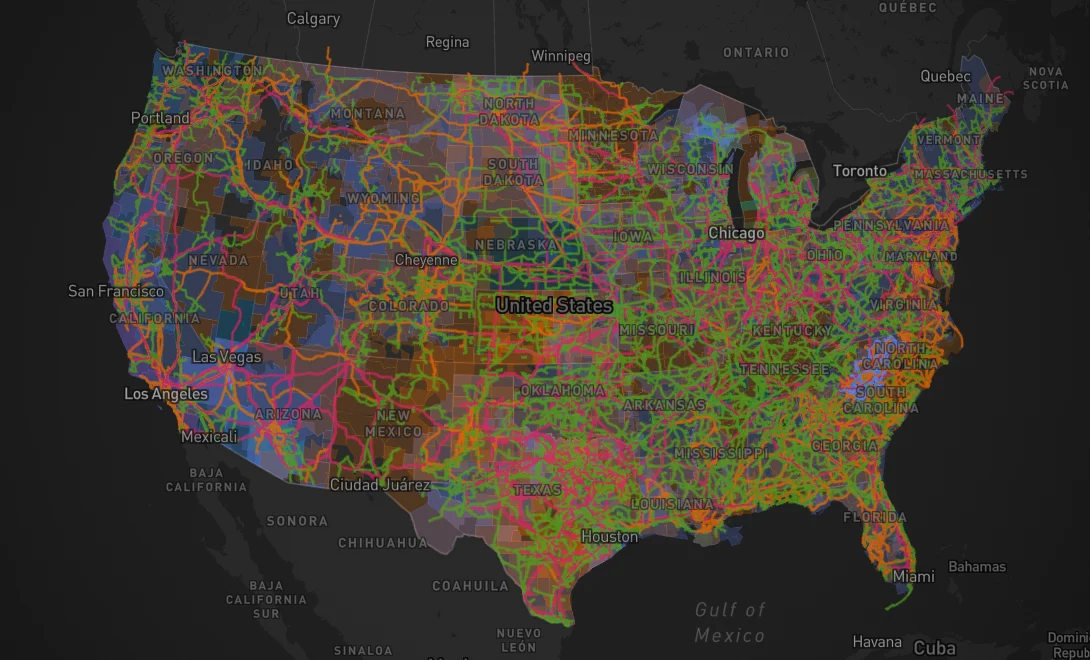
As the United States power grid undergoes its most significant transformation since the dawn of electrification, the ability to maintain an accurate, comprehensive, and real-time overview of the nation’s energy infrastructure has become a critical challenge for policymakers, engineers, and technology developers. In response to this growing complexity, Texture, a grid operating platform specializing in artificial intelligence and energy data, has announced the official launch of CommonGrid. This new open-source tool is designed to serve as a living model of the U.S. energy landscape, functioning as a decentralized, collaborative platform where the intricacies of the bulk power system can be documented, updated, and verified by the public.
CommonGrid aims to solve the problem of data fragmentation within the energy sector. Historically, information regarding utility service territories, power plant statuses, and local energy policies has been siloed across thousands of individual entities, including investor-owned utilities (IOUs), municipal cooperatives, and regional transmission organizations (RTOs). By adopting a crowdsourced moderation model similar to Wikipedia, CommonGrid provides a unified interface where every change to the grid—from the retirement of a coal plant to the implementation of a new residential solar incentive—is recorded with a transparent audit trail. Each modification is attributed to a specific contributor, backed by a cited source, and timestamped, ensuring that the model remains both current and accountable.
The Challenge of a Fragmented Energy Landscape
The U.S. electric grid is often described as the largest and most complex machine ever built by man. It comprises more than 7,300 power plants, nearly 160,000 miles of high-voltage transmission lines, and millions of miles of low-voltage distribution lines. Managing this vast network are approximately 3,000 different utilities, ranging from massive multi-state corporations to small, rural cooperatives serving only a few hundred customers.
In this decentralized environment, maintaining a "single source of truth" has proven nearly impossible for any single organization. According to Sanjiv Sanghavi, co-founder and CEO of Texture, the lack of a shared public record has led to massive redundancies and errors. Every cooperative and utility Texture has engaged with has essentially built its own version of the same map, often resulting in conflicting data regarding service boundaries and active programs. CommonGrid seeks to eliminate these discrepancies by transforming private records into a shared public asset that improves in accuracy every time a local expert or utility employee corrects a record.
The urgency for such a tool is underscored by the rapid pace of the energy transition. As the U.S. moves toward decarbonization, the grid is integrating unprecedented levels of variable renewable energy and distributed energy resources (DERs), such as rooftop solar and battery storage. These changes happen at the local level, often faster than federal agencies like the Energy Information Administration (EIA) or the Federal Energy Regulatory Commission (FERC) can document them in their periodic reports.
A Wikipedia-Style Model for Infrastructure
The architecture of CommonGrid is rooted in the philosophy of open-source collaboration. Texture has implemented a system where an elected moderation team reviews every proposed change before it is merged into the master dataset. This ensures that while the platform is open for contribution, it maintains the high level of data integrity required for industrial and research applications. The platform generates hourly snapshots of the grid, allowing users to see not just the current state of the system, but also how it has evolved over time.
Victor Quinn, co-founder and Chief Technology Officer at Texture, noted that the model was born out of the realization that no private company can keep pace with the localized changes occurring across the U.S. grid. By allowing those with direct knowledge of specific assets—such as plant operators or local policy advocates—to update the system, CommonGrid leverages "local intelligence" to fill gaps that centralized data collection methods often miss.
One specific area identified as needing significant community input is the mapping of municipal utility boundaries. While the territories for large investor-owned utilities and rural cooperatives are relatively well-documented, the exact service lines for smaller municipal utilities are often poorly defined in public datasets. Texture has called upon local experts to use the "suggest edit" feature to refine these boundaries, which are essential for developers of electric vehicle (EV) charging networks and demand-response programs.
Technical Access and Data Portability
To ensure the data is as useful as possible for the broader energy ecosystem, Texture has released CommonGrid under the Open Database License (ODbL) 1.0. This is the same licensing framework used by OpenStreetMap, allowing the data to be used for commercial purposes, redistributed, and integrated into new products, provided that improvements are shared back with the community and proper attribution is given.

For researchers, data scientists, and software developers, CommonGrid offers multiple layers of access:
- REST API: A robust Application Programming Interface allows for real-time data retrieval. The system permits 60 requests per hour without a key, or up to 5,000 requests for users with a free API key, making it accessible for both small-scale research and larger development projects.
- GitHub Integration: Weekly database snapshots are available via GitHub in SQL and GeoJSON formats. This allows users to perform complex geospatial analysis or integrate the grid model into geographic information systems (GIS).
- Interactive Explorer: A web-based interface allows non-technical users to browse the map, inspect specific power plants, and view utility-specific data points such as active rates and programs.
Historical Context: From Analog Maps to AI-Driven Models
The evolution of grid mapping has transitioned through several distinct phases. In the mid-20th century, grid management was largely a manual process, with utilities relying on physical maps and telephone communication to coordinate power flows. The 1970s and 80s saw the introduction of Supervisory Control and Data Acquisition (SCADA) systems, which brought digital monitoring to the transmission level but remained proprietary and closed to the public.
The push for transparency began in earnest following the Northeast Blackout of 2003, which highlighted the need for better inter-regional data sharing. However, even with the advent of the internet, grid data remained fractured. Federal databases provided a high-level view but often suffered from a multi-year lag in reporting. The rise of "Cleantech" in the 2010s created a new demand for granular data, as startups needed to know where they could interconnect new wind and solar farms.
CommonGrid represents the next step in this evolution: the move toward an AI-ready, crowdsourced infrastructure model. By providing a clean, machine-readable dataset of the entire U.S. power system, Texture is laying the groundwork for more advanced AI applications, such as predictive maintenance of aging infrastructure and the automated optimization of virtual power plants.
Broader Implications for the Energy Transition
The release of CommonGrid comes at a pivotal moment for U.S. energy policy. Recent federal legislation, including the Inflation Reduction Act (IRA) and the Infrastructure Investment and Jobs Act (IIJA), has funneled billions of dollars into grid modernization and renewable energy deployment. However, the success of these investments depends on a clear understanding of the existing system’s constraints and opportunities.
For renewable energy developers, CommonGrid could significantly reduce the time and cost associated with site selection and interconnection studies. Currently, developers often spend months gathering data on utility territories and local grid capacity. An open-source model that provides an "up-to-date, bird’s-eye view" could streamline these processes, accelerating the deployment of clean energy.
Furthermore, the platform has significant implications for disaster response and grid resilience. During extreme weather events, such as wildfires in the West or hurricanes on the Gulf Coast, having a publicly accessible, accurate map of the grid can assist emergency responders and aid organizations in identifying vulnerable areas and coordinating relief efforts.
Industry Reaction and Future Outlook
While the energy industry has traditionally been guarded regarding infrastructure data—often citing national security concerns—there is a growing consensus that transparency is necessary for innovation. Security experts argue that while sensitive operational data must remain protected, the "structural" data provided by CommonGrid (such as service boundaries and plant locations) is already largely discoverable through public filings, and consolidating it into a usable format does more to help grid defenders and innovators than it does to hinder them.
Texture’s initiative is expected to draw interest from academic institutions, where researchers have long struggled with the high cost of proprietary energy datasets. By providing a free, high-quality alternative, CommonGrid may foster a new wave of academic study into grid stability and the socio-economic impacts of utility rate structures.
As CommonGrid grows, the focus will likely shift toward expanding the depth of the data. Future iterations could include more detailed information on substation capacities, high-resolution weather integration for renewable forecasting, and real-time pricing data from all seven U.S. wholesale markets. For now, the launch marks a significant milestone in the democratization of energy data, moving the U.S. one step closer to a modern, transparent, and collaborative power grid.
