

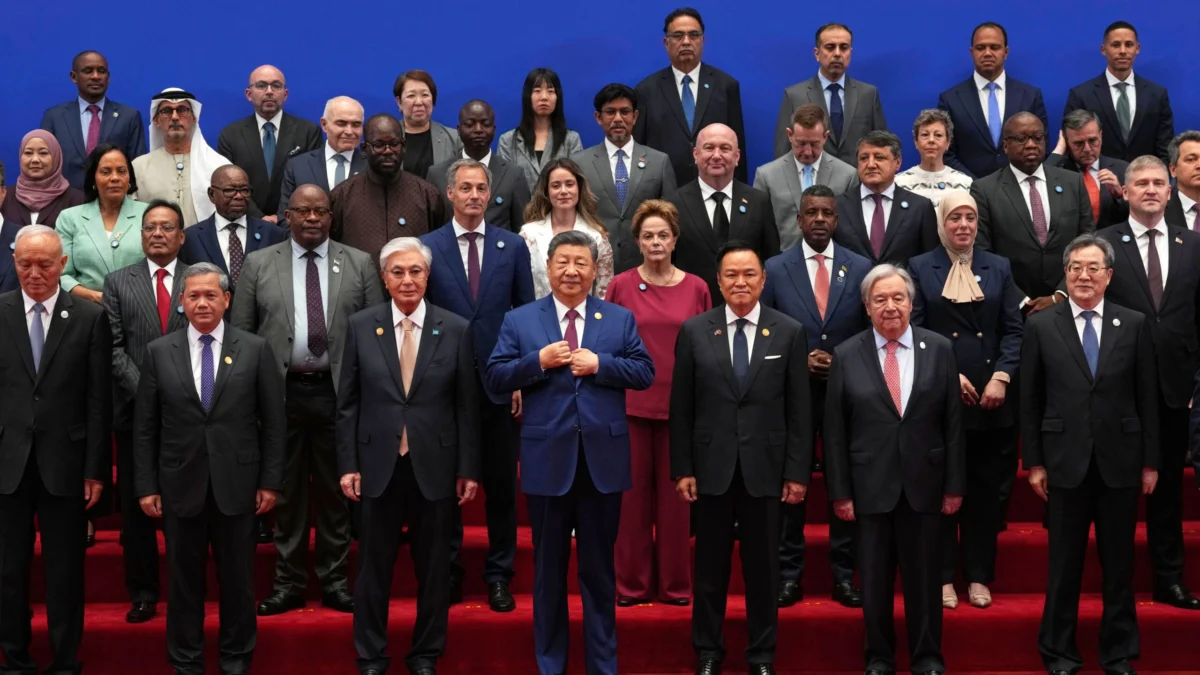
Beijing’s strategic move to co-found the World AI Cooperation Organization (WAICO) with 29 other nations, including significant players from the Global South like Brazil, Indonesia, Kazakhstan, Pakistan, and Russia, marks a pivotal moment in the intensifying international race for artificial intelligence (AI) dominance. This initiative, spearheaded by China, signals a clear intent to shape the global governance landscape of AI and assert its influence on the world stage. The establishment of WAICO underscores China’s ambition to transition from a follower to a leader in the critical field of AI, a sector poised to redefine economies and societies in the 21st century.
The formal announcement of WAICO’s founding occurred on the sidelines of the World Artificial Intelligence Conference (WAIC) in Shanghai, a premier global forum that has become a crucial platform for discussing AI advancements and policy. Chinese leadership, represented by President Xi Jinping, articulated a vision of China contributing significantly to global AI regulation. Xi hailed the founding as a “big step for China” and a “significant milestone” in the history of AI development, emphasizing the nation’s commitment to responsible innovation and international cooperation.
The Strategic Imperative: China’s AI Ambitions
China’s pursuit of AI leadership is not merely a technological endeavor; it is deeply intertwined with its broader geopolitical and economic strategy. For years, Beijing has identified AI as a core technology for future economic growth, national security, and global influence. The country has invested heavily in AI research and development, fostering a vibrant ecosystem of tech giants and startups. Reports from organizations like the Stanford Institute for Human-Centered Artificial Intelligence (HAI) have consistently highlighted China’s rapid progress in AI patent filings, research publications, and the deployment of AI technologies in various sectors, from surveillance to smart cities.
The establishment of WAICO can be viewed as a strategic counter-move to Western-led AI governance initiatives. While Western nations and international bodies have been deliberating on AI ethics and regulation, China’s proactive creation of a new international organization aims to set its own agenda and establish norms that align with its national interests. This move is particularly significant in the context of the ongoing technological competition with the United States, where AI is a central point of contention. By rallying a diverse group of nations, including many from the developing world, China seeks to build a broad coalition that can challenge the existing international order and create alternative frameworks for AI governance.
Addressing the Challenges of Rapid Advancement
President Xi’s remarks at the WAIC highlighted the dual nature of AI – its immense potential and the significant challenges it presents. He acknowledged that the "rapid technological advancements are a ‘challenge for regulation’," a sentiment echoed by AI experts globally. The issues raised by Xi – security risks associated with algorithmic decision-making, ethical dilemmas, and the imperative of ensuring equitable access to AI technologies – are indeed at the forefront of global AI discourse.
The potential for AI to be misused for surveillance, manipulation, or to exacerbate existing inequalities is a growing concern. The opaque nature of some AI algorithms, often referred to as the "black box" problem, makes it difficult to understand how decisions are made, raising questions about accountability and fairness. Furthermore, the concentration of AI development and deployment in a few wealthy nations risks widening the digital divide and creating new forms of dependency. China’s stated intention to address these issues through WAICO, while potentially self-serving, taps into genuine global anxieties about the responsible development and deployment of AI.
The Global South: A Key Constituency
China’s deliberate inclusion of nations from the Global South in WAICO is a shrewd diplomatic maneuver. These countries are often at the forefront of experiencing the impacts of technological change, both positive and negative, and are keenly interested in shaping AI governance in a way that benefits their development. By positioning itself as a champion of the "emerging nations," China aims to secure their support and influence in global AI forums. This strategy is not new for China; it has consistently advocated for a multipolar world order and presented itself as an alternative to Western-led international institutions.
For countries in the Global South, partnering with China on AI governance offers potential benefits, including access to Chinese AI technologies, investment, and a stronger voice in shaping global norms. However, it also carries risks, such as increased reliance on Chinese technology and potential entanglement in geopolitical rivalries. The long-term implications of this alignment will depend on the actual implementation of WAICO’s objectives and the extent to which it genuinely addresses the concerns of all its members.
Chronology of AI Governance Initiatives and China’s Role
While the formal establishment of WAICO is a recent development, China’s engagement with AI governance has been evolving.
- Early 2010s: China begins to significantly ramp up investment in AI research and development, driven by national strategies like "Made in China 2025," which identified AI as a key future industry.
- Mid-2010s: As AI capabilities grow, international discussions around AI ethics and safety gain traction, particularly in Western countries. China participates in these discussions but often maintains a distinct approach.
- Late 2010s: China launches its own major AI conferences, such as the World Artificial Intelligence Conference (WAIC) in Shanghai, which quickly becomes a significant global event. This period sees a noticeable increase in China’s diplomatic engagement on AI.
- 2020-2022: The COVID-19 pandemic accelerates the digital transformation and the use of AI, intensifying the global debate on AI’s societal impact and the need for governance. China continues to host international forums and engage in bilateral dialogues on AI.
- 2023-Present: China proactively pushes for the establishment of WAICO, culminating in the recent signing ceremony. This initiative signals a more assertive stance in shaping global AI policy and regulatory frameworks.
Data and Supporting Evidence
The significance of China’s move can be understood through several key data points:
- AI Investment: China has consistently been one of the top two global investors in AI, alongside the United States. Estimates vary, but combined public and private investment runs into billions of dollars annually.
- AI Talent Pool: China has been rapidly increasing its output of AI researchers and engineers. According to some reports, it already possesses the largest pool of AI talent globally or is projected to soon.
- Research Output: China leads in the number of AI-related academic papers published and patent applications filed, indicating a strong foundation in AI research and innovation.
- WAIC Attendance: The World Artificial Intelligence Conference in Shanghai typically attracts thousands of participants, including high-level government officials, industry leaders, and academics from around the globe, underscoring its importance as a platform for dialogue and deal-making.
- WAICO Membership: The 29 signatory nations represent a significant bloc, encompassing a large portion of the world’s population and a growing economic influence, particularly within the Global South. This broad base provides WAICO with considerable potential leverage in international discussions.
Analysis of Implications and Potential Reactions
The formation of WAICO is likely to have several far-reaching implications:
- Shifting Global AI Governance: The establishment of a new international organization dedicated to AI cooperation, with China at its helm, could challenge the dominance of existing Western-centric frameworks and norms. This could lead to a more fragmented global AI regulatory landscape.
- Increased Competition: WAICO is likely to intensify the global competition for AI leadership, not just in terms of technological development but also in setting the standards and ethical guidelines for AI.
- Geopolitical Realignment: The initiative may further solidify geopolitical alignments, with countries that join WAICO potentially strengthening their ties with China. Conversely, it could lead to increased scrutiny and potential counter-initiatives from countries not involved.
- Impact on Developing Nations: For participating developing nations, WAICO offers an opportunity to have a greater say in AI governance and potentially gain access to AI technologies and expertise. However, it also raises questions about their autonomy and the potential for increased dependence.
- Western Response: Western nations and international organizations are likely to respond by either strengthening their own initiatives, seeking to engage with WAICO in a constructive manner, or potentially increasing their efforts to counter China’s influence. The EU’s AI Act, for example, represents a significant effort to establish comprehensive AI regulations, and its interaction with WAICO’s agenda will be closely watched.
Official Statements and Reactions (Inferred)
While direct statements from all 29 signatory nations were not detailed in the initial report, it can be inferred that their participation signals a willingness to engage with China on AI governance. For countries like Russia and Pakistan, this aligns with their broader strategic partnerships with Beijing. For nations like Brazil and Indonesia, it suggests an interest in diversifying their technological partnerships and securing a more prominent role in global AI discussions.
Western governments and tech industry leaders are likely to be closely observing WAICO’s development. Some may express concerns about the potential for the organization to serve China’s geopolitical interests, while others might see an opportunity for dialogue and collaboration on shared challenges. The United Nations and other multilateral bodies will also be keen to understand how WAICO fits into the broader global governance architecture for AI.
Conclusion
China’s leadership in establishing the World AI Cooperation Organization is a bold assertion of its growing influence in the global AI arena. By rallying a significant coalition of nations, Beijing aims to shape the future of AI governance and secure its position as a leading power in this transformative technology. The initiative underscores the intensifying geopolitical competition surrounding AI and highlights the evolving landscape of international cooperation in the digital age. The success of WAICO will ultimately depend on its ability to foster genuine collaboration, address the complex ethical and societal challenges posed by AI, and contribute to a future where AI benefits all of humanity, not just a select few. The world will be watching closely to see how this new organization navigates the intricate path of global AI governance.
