

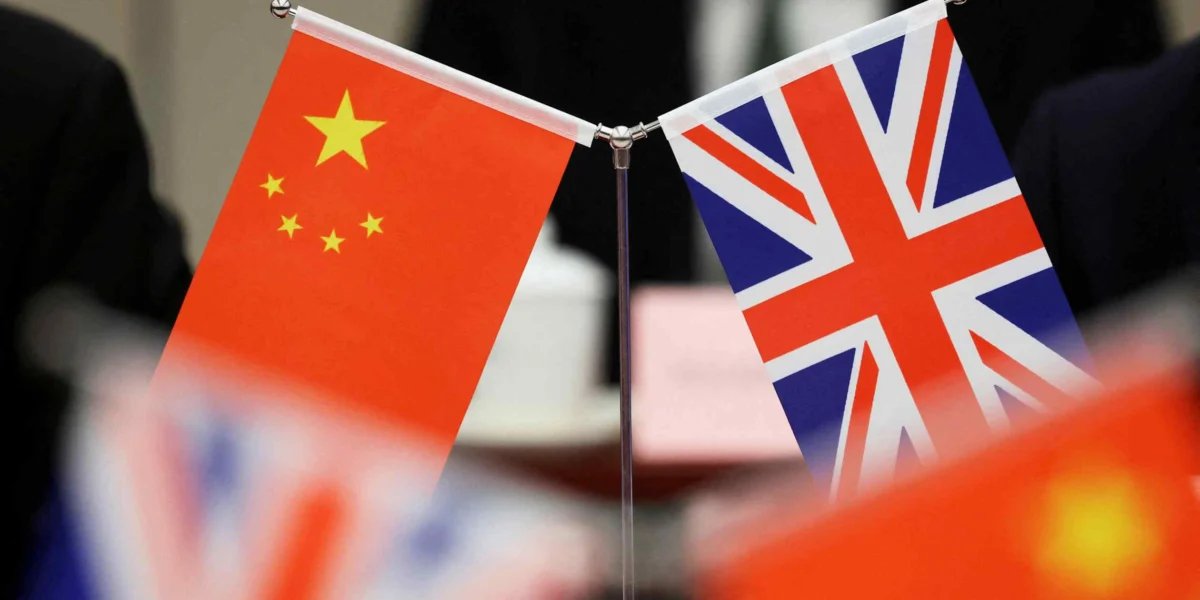
London, United Kingdom – October 7, 2026 – In a swift and forceful rebuttal, the Chinese Embassy in London has categorically denied allegations that its research collaborations are being utilized to fund espionage activities within British academic institutions. The statement comes in the wake of an espionage alert issued by the U.K.’s domestic intelligence agency, MI5, which has prompted British universities to mandate academics disclose ties to a specific Chinese research institute. This development has ignited a broader debate about academic freedom, national security, and the intricate web of international research partnerships.
H3: MI5 Alert Sparks Disclosure Mandates

The catalyst for the heightened scrutiny appears to be an internal warning from MI5, which has reportedly flagged concerns regarding the potential for Chinese state actors to exploit academic collaborations for intelligence gathering. While the specifics of the alert remain classified, its implications have reverberated through the U.K.’s higher education sector. Universities, acting on the intelligence, are now requiring faculty members to declare any affiliations or funding received from a particular Chinese research entity, the identity of which has not been publicly disclosed by MI5 or the affected institutions.
This proactive measure by universities aims to provide greater transparency and allow for a more thorough assessment of potential risks associated with international research projects. The U.K. government has been increasingly vocal about the challenges posed by foreign state interference in academic research, particularly in sensitive areas such as artificial intelligence, quantum computing, and advanced materials science. The current situation underscores the delicate balance between fostering global scientific advancement and safeguarding national security interests.
H3: A Pattern of Growing Concern

The current situation is not an isolated incident but rather a culmination of years of mounting concerns regarding China’s influence and activities in Western academic spheres. In recent years, intelligence agencies in several Western nations, including the United States and Australia, have issued similar warnings about the pervasive reach of Chinese intelligence services into academia.
A 2023 report by the Australian Strategic Policy Institute (ASPI) documented over 150 Chinese military-linked research institutions that are actively collaborating with universities in the U.S., U.K., Canada, and Australia. The report highlighted how these collaborations, often framed as benign academic exchanges, can inadvertently transfer sensitive dual-use technologies and knowledge to China, potentially bolstering its military modernization efforts.
Furthermore, a former security official, speaking to Nikkei Asia, alleged that British academia has been "deeply penetrated by the Chinese Communist Party." This assertion, while unverified by official sources, reflects a broader sentiment within security circles that academic institutions, driven by a desire for international collaboration and funding, may have been insufficiently guarded against sophisticated foreign intelligence operations.

H3: The Chinese Embassy’s Rebuttal
In its official response, the Chinese Embassy vehemently denied any wrongdoing, characterizing the allegations as baseless and politically motivated. A spokesperson stated, "China’s international research collaborations are purely for the advancement of science and the benefit of humanity. We reject any insinuation that these partnerships are being used for nefarious purposes. Such claims are unfounded and serve only to sow discord and undermine legitimate academic exchange."
The embassy emphasized China’s commitment to open scientific inquiry and its contributions to global research endeavors. It also pointed to the significant number of international researchers who benefit from collaborations with Chinese institutions, suggesting that the narrative of exploitation is a one-sided and prejudiced portrayal. The statement also alluded to potential retaliatory measures if such "unfounded accusations" continue to impede legitimate scientific cooperation.

H3: Universities Navigating a Complex Landscape
British universities find themselves in a precarious position, caught between the imperative to uphold academic freedom and the responsibility to protect national security. Many institutions have long championed international collaboration as a cornerstone of their research excellence, fostering cross-cultural understanding and driving innovation. However, the recent alerts have forced a re-evaluation of these partnerships.
The disclosure mandates, while a necessary step, are likely to create administrative burdens and potentially chill certain research avenues. Academics engaged in sensitive fields may face increased scrutiny, and the process of obtaining funding and approvals for international projects could become more complex.

Experts in academic governance and national security have offered varying perspectives on how universities should navigate this complex landscape. Some advocate for stricter due diligence processes, including enhanced vetting of international partners and a more robust framework for monitoring research outputs. Others emphasize the importance of maintaining open channels of communication and collaboration, arguing that isolating research communities can be counterproductive and hinder the development of global solutions to shared challenges.
H3: Broader Implications for International Relations
The unfolding situation has significant implications for the broader U.K.-China relationship, which has already been strained by geopolitical tensions and differing values. The accusations of espionage, even if contested, can further erode trust and complicate diplomatic engagement.

From a national security perspective, the U.K. government faces the challenge of striking an effective balance between deterring foreign interference and avoiding a complete decoupling of academic and scientific communities. An overly restrictive approach could lead to a loss of talent and innovation, while a lack of vigilance could leave the nation vulnerable.
The debate also highlights the evolving nature of international competition. Beyond traditional military and economic spheres, intellectual property, technological superiority, and access to cutting-edge research are increasingly becoming critical battlegrounds. The academic domain, with its inherent openness and emphasis on knowledge sharing, presents a unique and often exploited avenue for such competition.
H3: The Data Behind the Concerns

While specific data on successful espionage operations funded through academic collaborations is by its nature classified, statistics on the scale of Sino-foreign academic ties provide context. Prior to the heightened scrutiny, thousands of joint research projects and student exchange programs existed between U.K. and Chinese institutions. Funding for such collaborations often flowed through various channels, including government grants, institutional partnerships, and private foundations, making it challenging to trace the ultimate source and intent of all financial flows.
For instance, data from the U.K. Higher Education Statistics Agency (HESA) has previously shown a significant increase in Chinese students pursuing postgraduate degrees in the U.K., many of whom are engaged in research. Similarly, a substantial number of British academics have received research grants or participated in conferences and workshops in China. The sheer volume of these interactions creates a fertile ground for potential exploitation, even if only a fraction of these interactions are used for intelligence purposes.
H3: The Path Forward: Transparency and Vigilance

The current situation underscores the need for enhanced transparency and vigilance within the academic sector. Universities are being urged to strengthen their internal compliance frameworks, providing clear guidelines to academics on their ethical responsibilities and the potential risks associated with international partnerships.
The U.K. government is also likely to face calls for clearer policy directives and potentially increased funding for intelligence agencies to monitor and counter foreign interference in academia. The establishment of specialized units within universities, dedicated to assessing and mitigating security risks related to international research, could also be a consideration.
Ultimately, the ongoing dialogue and actions surrounding this issue will shape the future of international academic collaboration. The goal remains to foster a global research environment that is both open and secure, allowing for the free exchange of ideas while safeguarding national interests. The Chinese Embassy’s denial, while expected, does little to diminish the pressing need for British institutions to remain diligent in an increasingly complex geopolitical landscape. The coming months will likely see further developments as universities implement disclosure policies and the government assesses the broader implications of these revelations.
