

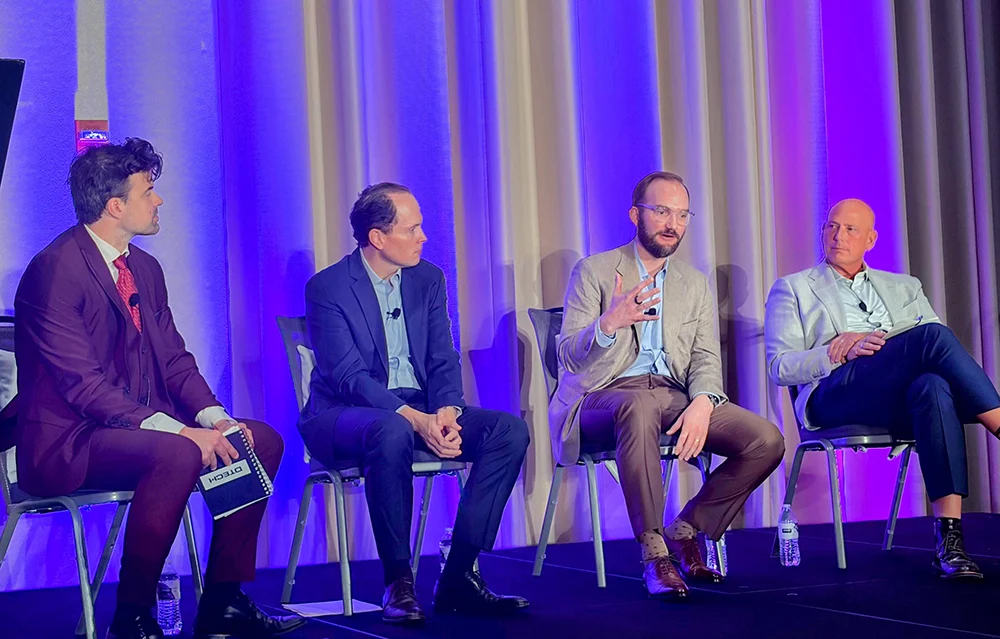
The integration of artificial intelligence into the energy sector has moved beyond theoretical speculation into the realm of practical, utility-grade application, signaling a transformative shift in how the nation’s power grids are managed, maintained, and modernized. At the DTECH Reliability & Resiliency conference held on August 27, 2026, in Chicago, industry leaders from Exelon, Argonne National Laboratory, and S&C Electric Company gathered to outline a definitive roadmap for the operationalization of AI. The keynote panel addressed a critical inflection point for the industry: the transition from "tech for tech’s sake" to the deployment of targeted, high-value AI solutions that address the escalating challenges of climate volatility, aging infrastructure, and complex interconnection demands.
As the energy transition accelerates, the demand for a more sophisticated grid has never been higher. According to recent Department of Energy (DOE) reports, weather-related power outages have increased by roughly 78% over the last decade, costing the U.S. economy billions annually. In response, utilities are increasingly turning to machine learning (ML) and AI to move from reactive maintenance to proactive resilience. The Chicago panel emphasized that while the technology is powerful, its success depends less on the complexity of algorithms and more on the ability of human teams to integrate these tools into existing workflows.
The Foundation of Next-Generation Grid Planning
The session opened with a focused address by Joe Matamoros, Chief Product Development Officer at S&C Electric Company, who established a clear distinction between two terms often used interchangeably in the industry: reliability and resilience. According to Matamoros, reliability is the traditional metric of success—the outcome customers expect when they flip a switch. Resilience, however, is the structural and operational capability that allows the grid to deliver that reliability even under duress.
Matamoros argued that building a resilient grid requires a fundamental redesign of infrastructure to incorporate flexibility. This flexibility is what allows AI to function effectively. Without a hardware foundation that can respond to intelligent commands, the data insights provided by AI remain unactionable. "A resilient grid prepares for changing environments, adapts when things go awry, responds intelligently to disruptions, and recovers faster and safer," Matamoros stated. This perspective reflects a broader industry trend where capital expenditure is increasingly directed toward "smart" hardware—automated switchgear, sensors, and reclosers—that can serve as the hands for the AI "brain."
From 14 Days to 90 Days: The Evolution of Predictive Modeling
One of the most significant technical advancements discussed during the panel was the shift in predictive modeling capabilities. Historically, utilities have relied on 14-day weather forecasts to prepare for storms and manage load. However, the introduction of AI-driven machine learning algorithms has extended this horizon to 90-day seasonal forecasts with a high degree of accuracy.
Tom Wall, the Infrastructure Security and Resilience Director at Argonne National Laboratory, highlighted how supercomputing and AI are being used to process tens of thousands of probabilistic scenarios. By analyzing climate and grid permutations across an entire season, utilities can now identify vulnerabilities months in advance. This capability is particularly vital for flood modeling and long-term capital expenditure strategies, allowing providers to reinforce specific substations or assets before a seasonal threat materializes.
Tim Krall, Director of Advanced Analytics & AI at Exelon, admitted to initial professional skepticism regarding AI-based modeling. As a meteorologist by training, Krall noted that traditional models often struggled with the nuances of local weather patterns. However, the performance of modern utility-grade AI has changed that perspective. "I’ve seen how powerful these models can be," Krall noted, emphasizing that Exelon is now adopting a seasonal lens for condition-based maintenance. This shift allows the utility to move away from rigid, calendar-based maintenance schedules toward a dynamic model based on the actual health of the asset and the predicted environmental stressors.
Operational Success Stories: Vegetation and Outages
To illustrate the practical value of AI, the panelists pointed to two specific use cases that have already demonstrated measurable returns on investment: vegetation management and outage prediction.
Vegetation management is often the largest O&M (Operations and Maintenance) expense for many utilities. Traditional methods involve trimming trees on a fixed cycle—for example, every four years. By utilizing AI, Exelon has begun optimizing these schedules based on 90-day rainfall predictions and canopy growth models. If a specific region is predicted to have a wetter-than-average spring, AI can alert teams to prioritize trimming in that area to prevent branch-related outages during summer storms.

In terms of outage prediction, AI models now integrate historical outage data, real-time weather feeds, and asset health indicators to predict not just if an outage will occur, but where it is most likely to happen down to the circuit level. This allows utilities to pre-stage crews and equipment, significantly reducing the System Average Interruption Duration Index (SAIDI) and improving overall customer satisfaction. These targeted applications serve as the "proof of concept" necessary to gain internal buy-in for larger, more expensive AI initiatives.
The "Crawl, Walk, Run" Framework for Adoption
A recurring theme of the discussion was the necessity of a phased approach to AI adoption, which Krall described as the "crawl, walk, run" progression. This framework is designed to prevent organizations from becoming overwhelmed by the technical complexity of AI while ensuring that each step provides clear value.
- Crawl: The organization starts with advisory models. These are "human-in-the-loop" systems where AI provides recommendations, but a human operator makes the final decision. This stage is critical for building trust between the technology and the workforce.
- Walk: In the "walk" phase, AI outputs begin to be integrated directly into management systems. For example, an AI model might automatically generate a work order for an asset showing signs of imminent failure, which a supervisor then reviews and approves.
- Run: The "run" phase involves fully automated processes where AI can make real-time adjustments to grid configurations or customer interfaces without direct human intervention for every action. This is the ultimate goal for high-speed applications like microgrid management and DER (Distributed Energy Resource) orchestration.
Tom Wall added a layer of nuance to this framework, noting that the "crawl" phase for a massive investor-owned utility like Exelon might look like a "sprint" for a small rural co-operative or municipal utility. "It’s vital to assess a utility’s technical sophistication, resources, and overall maturity when evaluating these AI solutions," Wall cautioned. This highlights the need for scalable AI solutions that can be tailored to the specific data availability and budgetary constraints of different types of power providers.
Addressing the Human Element and the Trust Gap
The panel concluded that the primary barrier to AI adoption is not the technology itself, but the human factor. For AI to be successful, it must augment human expertise rather than attempt to replace it. This requires a cultural shift within utilities, where veteran engineers and field crews may be skeptical of "black box" algorithms.
To maximize long-term value, the panelists suggested that utility leaders ask three fundamental questions during their planning processes:
- How does this AI solution specifically improve the safety and efficiency of our field teams?
- What data silos currently exist that prevent the AI from having a holistic view of the grid?
- How are we training our existing workforce to interpret and act on AI-driven insights?
By focusing on these questions, utilities can ensure that AI becomes a tool for empowerment rather than a source of friction. The consensus among the experts was that the future of the grid will be defined by "collaborative intelligence"—the seamless partnership between sophisticated machine learning and the deep institutional knowledge of utility professionals.
Broader Implications for the Global Energy Industry
The insights shared at DTECH 2026 have implications that extend far beyond the Chicago area. As the global energy industry grapples with the triple challenge of decarbonization, decentralization, and digitalization, the "Exelon-Argonne-S&C" model of partnership offers a template for success. By combining the research power of national laboratories with the operational scale of major utilities and the technical innovation of solution providers, the industry can accelerate the deployment of a smarter, more resilient grid.
Furthermore, the role of AI in resolving interconnection queues—another topic touched upon during the keynote—could prove to be one of its most vital contributions. With thousands of renewable energy projects currently stalled in the study phase, AI-driven automation of the impact study process could shave years off the timeline for bringing clean energy online.
As the Thursday keynote concluded, the message to the industry was clear: AI is no longer a luxury or a futuristic experiment. It is a fundamental requirement for any utility aiming to maintain reliability in an era of unprecedented environmental and operational complexity. The roadmap outlined in Chicago provides a practical, human-centered path forward, ensuring that as the grid becomes more intelligent, it also becomes more resilient, efficient, and responsive to the needs of the modern consumer.
