

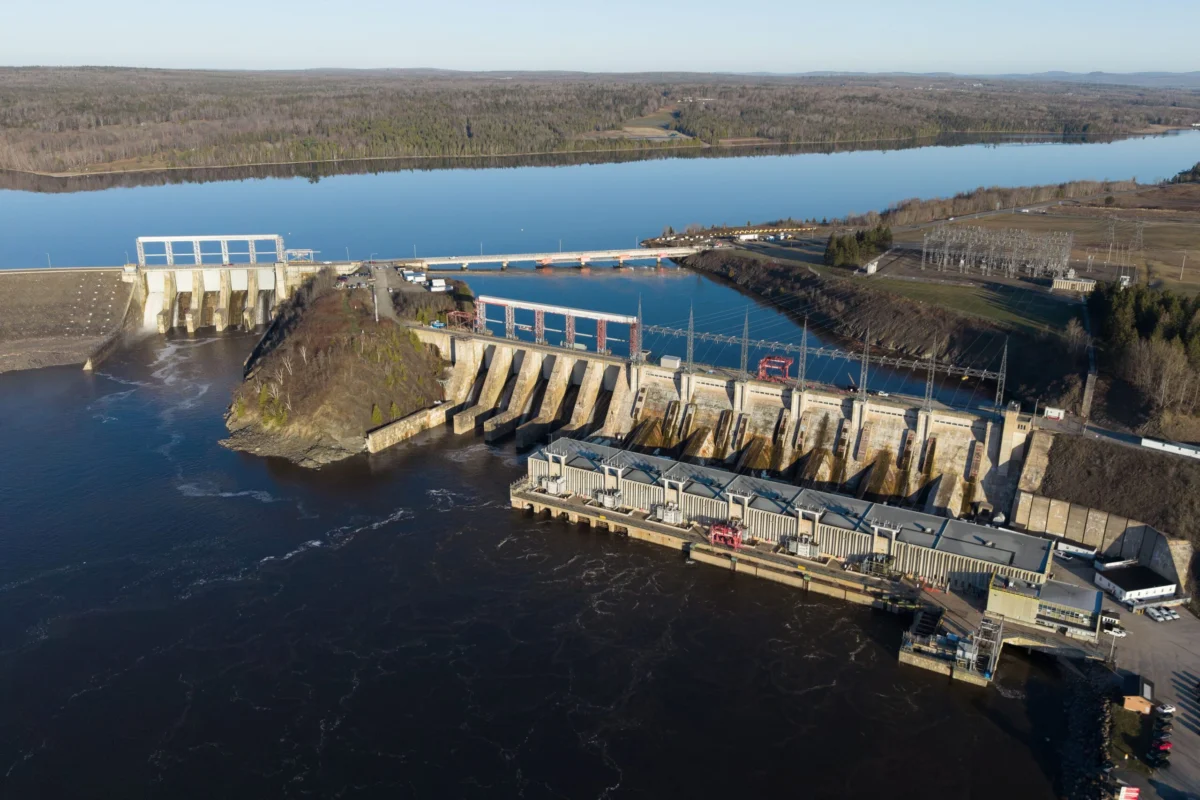
The Government of Canada has committed a substantial financial injection of nearly $270 million into the energy infrastructure of New Brunswick, signaling a major step forward in the nation’s transition toward a net-zero electricity grid. Announced by Tim Hodgson, the Minister of Energy and Natural Resources, the funding package is bifurcated into two primary streams: a massive $219-million site development loan aimed at the rehabilitation of the Mactaquac Generating Station and a $50-million grant to enhance the reliability of the province’s transmission network through the Salisbury Terminal. This investment is positioned as a cornerstone of the federal "Powering Canada Strong" strategy, which seeks to modernize the nation’s aging energy assets while ensuring long-term affordability for consumers.
The Mactaquac Life Achievement Project: Preserving a Provincial Anchor
At the heart of this announcement is the Mactaquac Generating Station, a facility that has served as the backbone of New Brunswick’s power sector for over half a century. Located on the St. John River (Wolastoq) near the provincial capital of Fredericton, the 672-megawatt (MW) run-of-river station is the largest hydroelectric facility in the province. Its importance to the regional grid cannot be overstated; it currently provides approximately 30% of New Brunswick’s renewable energy and is capable of meeting 20% of the province’s peak electricity demand during periods of extreme weather or high industrial usage.
The $219-million loan, provided by the Canada Infrastructure Bank (CIB), is dedicated to the Mactaquac Life Achievement Project. This initiative is not merely a maintenance routine but a complex, multi-year engineering endeavor designed to extend the operational life of the station to at least the year 2068, fulfilling its original 100-year design intent. The funding will facilitate critical pre-construction activities, including advanced technical studies, comprehensive regulatory reviews, and deep-level engagement with First Nations communities.
The Challenge of "Concrete Growth"
The urgency of the Mactaquac Life Achievement Project stems from a specific and rare geological-engineering challenge known as Alkali-Aggregate Reaction (AAR), often referred to colloquially in the industry as "concrete growth." Since the station’s completion in 1968, the concrete structures—including the powerhouse and the spillway—have been expanding due to a chemical reaction between the alkaline cement paste and the reactive silica found in the local stone aggregate used during construction.
For over two decades, NB Power has managed this expansion through continuous monitoring and precise mechanical adjustments. However, the internal pressure generated by the swelling concrete has begun to affect critical equipment, such as the alignment of the massive turbines and the operation of the spillway gates. Without the comprehensive rehabilitation enabled by this federal investment, the station would likely face a forced decommissioning well before its time, leaving a massive deficit in the province’s clean energy portfolio.
Strengthening the Grid: The Salisbury Terminal and STATCOM Integration
While the Mactaquac station focuses on generation, the second portion of the federal investment targets the critical infrastructure of transmission. Natural Resources Canada is providing $50 million to NB Power for the installation of a Static Synchronous Compensator (STATCOM) at the Salisbury Terminal.
The Salisbury Terminal acts as a high-voltage hub, managing the complex flow of electricity across southern New Brunswick and facilitating inter-provincial connections. As the province integrates more variable renewable energy sources, such as wind and solar, the grid faces increased volatility. Unlike traditional hydro or nuclear power, which provide steady "inertia" to the grid, wind and solar can fluctuate rapidly.
A STATCOM system is a sophisticated power electronics device that provides "reactive power" to the grid. By doing so, it stabilizes voltage levels and allows the network to handle sudden surges or drops in supply without risking blackouts. This technology is essential for the "greening" of the grid, as it provides the technical stability required to retire fossil-fuel-burning plants, such as the coal-fired Belledune station, which New Brunswick is working to transition by 2030.
A Chronology of the Mactaquac Decision-Making Process
The path to this investment has been nearly a decade in the making, involving one of the most extensive public and scientific reviews in the history of Canadian utilities.

- 1968: The Mactaquac Generating Station is commissioned.
- 1980s: Engineers first identify signs of Alkali-Aggregate Reaction in the concrete structures.
- 2012–2015: NB Power begins a formal evaluation of the station’s future, identifying three main paths: rebuilding the station, removing the dam to restore the river to its natural state, or maintaining the current structure as a non-power-generating dam.
- 2016: After exhaustive public consultations, social impact studies, and environmental research conducted by the Canadian Rivers Institute, NB Power recommends the "Life Achievement" option. This choice was determined to be the most cost-effective and environmentally sound method of maintaining provincial energy security.
- 2019–2023: Detailed engineering and environmental impact assessments are conducted, alongside ongoing negotiations with the Wolastoqiyik First Nations regarding land use and fish passage.
- 2024: The Government of Canada confirms the $270 million funding package, allowing the project to move into its next phase of technical readiness and regulatory approval.
National Context: The "Powering Canada Strong" Strategy
The investment in New Brunswick is a localized execution of a much larger federal vision. In May 2024, the Government of Canada launched Powering Canada Strong: A National Strategy for an Electrified Canadian Economy. This policy framework recognizes that to meet net-zero targets by 2050, Canada must not only clean its existing grid but also double its total generating capacity to account for the electrification of transport, home heating, and heavy industry.
The federal strategy projects that a modernized, interconnected grid could deliver up to $15 billion in total energy savings for Canadians by 2050. By shifting the burden of energy costs from volatile fossil fuels to stable, domestic renewable sources, the government estimates that 7 out of 10 Canadian households will see a net decrease in their total monthly energy expenditures.
Minister Tim Hodgson emphasized that the New Brunswick projects are essential "proof of concept" for this national strategy. "By investing in the longevity of Mactaquac and the stability of the Salisbury Terminal, we are ensuring that New Brunswickers have access to reliable, affordable, and clean power for generations," Hodgson stated during the announcement. "This is about building a grid that can handle the demands of the 21st century while protecting the environment."
Indigenous Engagement and Environmental Stewardship
A critical component of the Mactaquac Life Achievement Project is the relationship with the Wolastoqiyik (Maliseet) people, for whom the St. John River is a sacred cultural and economic artery. The original construction of the dam in the 1960s occurred with little consultation and resulted in the flooding of traditional lands and the disruption of fish migration routes, specifically for the Atlantic salmon and shortnose sturgeon.
The new funding includes specific provisions for First Nations engagement. NB Power has committed to working with Indigenous communities to improve fish passage technologies at the site. The Canadian Rivers Institute’s Mactaquac Aquatic Ecosystem Study (MAES) has provided a baseline of scientific data that will guide these efforts, ensuring that the rehabilitation project does not merely maintain the status quo but actively works to mitigate the historical environmental impacts of the dam.
Economic and Strategic Implications
From an economic perspective, the $270 million investment is expected to be a significant driver of high-skilled employment in the Maritimes. The Mactaquac rehabilitation alone will require hundreds of engineers, specialized divers, concrete experts, and environmental monitors over the next decade.
Furthermore, the project has strategic implications for the "Atlantic Loop"—a proposed series of transmission upgrades intended to move hydroelectric power from Quebec and Labrador into the Maritimes. By strengthening the Salisbury Terminal and ensuring the longevity of Mactaquac, New Brunswick positions itself as a vital "energy bridge" in the Atlantic region. This reduces the dependency on imported energy and provides a buffer against the price shocks often associated with global oil and gas markets.
Fact-Based Analysis of Future Outlook
The decision to rehabilitate Mactaquac rather than decommission it reflects a growing global trend in energy policy: the preservation of existing "firm" renewable assets. While wind and solar are cheaper to build per megawatt, they lack the "firmness" or reliability of hydropower. Losing 672 MW of reliable base-load power would have forced New Brunswick to either build a new nuclear reactor or rely more heavily on natural gas, both of which carry higher costs and longer regulatory timelines.
However, the success of the Mactaquac project remains contingent on the engineering team’s ability to manage the AAR concrete issues effectively. While the $219-million loan covers the planning and site development phase, the total cost of the rehabilitation is expected to run into the billions over the next twenty years. The federal government’s involvement at this stage provides the "patient capital" necessary to ensure the project remains viable without placing an immediate, undue burden on New Brunswick ratepayers.
As Canada moves toward its 2035 goal of a net-zero electricity system, the New Brunswick investment serves as a clear indicator of the scale and complexity of the task. It highlights that the transition to clean energy is as much about fixing and upgrading the old as it is about building the new. With the Mactaquac Life Achievement Project and the Salisbury STATCOM project, New Brunswick is setting a precedent for how aging industrial infrastructure can be reimagined for a sustainable future.
