

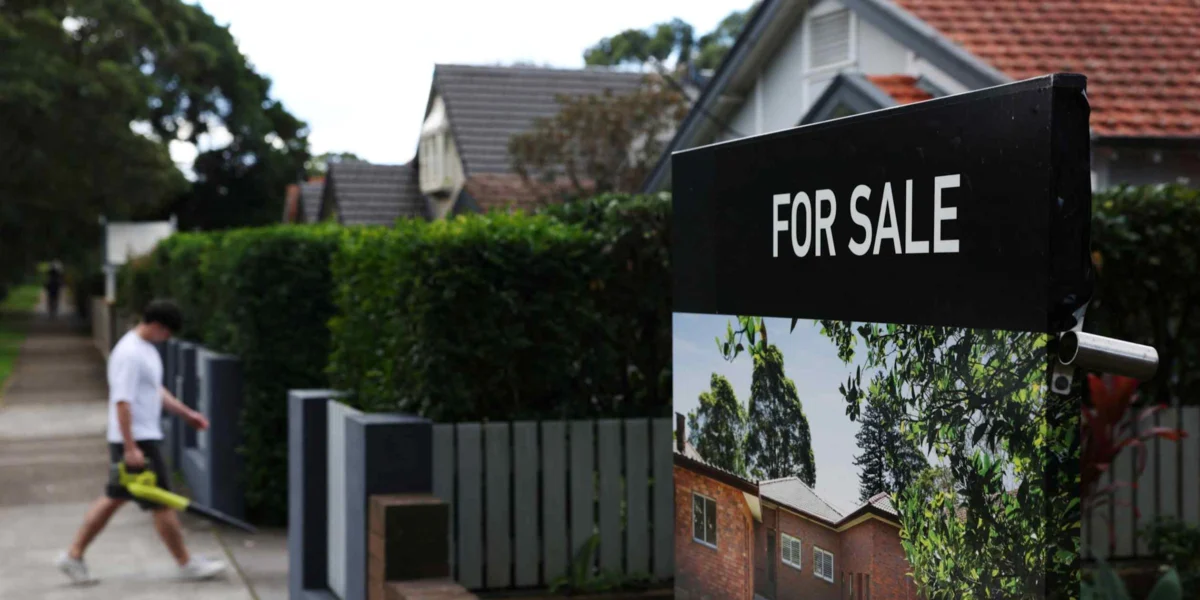
SYDNEY – Australian home prices are experiencing a significant downturn, a stark consequence of aggressive interest rate hikes and a suite of tax reforms targeting residential investment. This confluence of economic pressures has not only cooled the once-booming property market but is also casting a long shadow over construction demand and jeopardizing the government’s ambitious targets for increasing housing supply. The current market conditions, characterized by a steep decline in property values and subdued buyer activity, represent a dramatic reversal from the rapid appreciation seen in recent years, prompting concerns about broader economic stability and the viability of the nation’s housing affordability agenda.
The Perfect Storm: Interest Rates and Tax Reforms Converge
The Reserve Bank of Australia (RBA), in its sustained campaign to combat inflation, has implemented a series of interest rate increases since mid-2022. This monetary tightening has directly translated into higher mortgage rates for Australian households. As of October 2026, the average variable mortgage rate has climbed to approximately 7.5%, a significant leap from the historic lows of below 3% seen just a few years prior. This escalation in borrowing costs has dramatically reduced the purchasing power of prospective buyers and increased the financial burden on existing homeowners with variable-rate mortgages.
Compounding the impact of rising interest rates are recent tax reforms enacted by the federal government. Introduced in early 2026, these measures were designed to curb speculative residential investment and encourage a shift towards owner-occupancy and long-term rental supply. Key among these reforms were the reduction of negative gearing benefits for new investors and a tightening of capital gains tax exemptions on investment properties. While intended to create a more equitable housing market, these policies have inadvertently amplified the slowdown, discouraging investment in new construction and exacerbating the existing supply challenges.
Historical Context: A Rapid Ascent and a Sharp Descent
The Australian property market has historically been a significant engine of wealth creation for many households. For over a decade leading up to 2022, property values, particularly in major capital cities like Sydney and Melbourne, experienced consistent and often rapid growth. This boom was fueled by a combination of low interest rates, strong population growth, and a perceived "safe haven" status for property investment.
However, this period of sustained growth masked underlying issues of affordability and supply. As prices escalated, homeownership became increasingly out of reach for many, particularly younger generations and those in lower-income brackets. The government’s stated objective has been to address this affordability crisis and to increase the overall housing stock to meet demand. The current downturn, while potentially offering some relief in terms of price stabilization in the long term, presents immediate challenges to achieving these supply-side goals.
Data Paints a Grim Picture: National Price Declines and Construction Slowdown
National home prices have seen a significant contraction. Data released by the Australian Bureau of Statistics in September 2026 indicated a 5.2% decline in the median dwelling price over the past six months. This trend is even more pronounced in some of the previously overheated markets, with Sydney and Melbourne recording average price drops of over 7% in the same period. This widespread decline represents a substantial erosion of household wealth for many Australians who have their primary assets tied up in real estate.
The impact on the construction sector is equally concerning. Industry figures from the Housing Industry Association (HIA) show a 15% drop in new home sales in the third quarter of 2026 compared to the same period in the previous year. Housing commencements, a key indicator of future supply, have also fallen, with preliminary data suggesting a decline of 10% year-on-year. This slowdown in construction activity has direct implications for employment within the building and trades sectors, as well as for the availability of new housing units in the coming years.
Mortgage Stress and Consumer Confidence
Rising mortgage repayments are placing considerable strain on household budgets. For a household with a median-priced mortgage taken out in early 2022, monthly repayments have increased by an estimated $1,000-$1,500, depending on the loan amount and the lender. This increased financial pressure is forcing some homeowners to cut back on discretionary spending, impacting other sectors of the economy. Consumer confidence surveys, such as the Westpac-Melbourne Institute Index, have also shown a marked decline, reflecting a general unease about economic prospects and personal financial situations, largely driven by housing market instability and the cost of living pressures.
Official Responses and Policy Repercussions
The Australian government, while acknowledging the market correction, remains committed to its long-term housing supply strategy. The Minister for Housing, Ms. Evelyn Reed, stated in a press conference on October 16, 2026, that "the government is monitoring the market closely. Our priority remains to increase the supply of affordable and well-located housing. The recent tax reforms were designed to foster a more sustainable market, and we are confident that in the long run, they will contribute to greater stability and affordability."
However, industry bodies have expressed concerns about the pace of the downturn and its potential to derail government objectives. The Property Council of Australia issued a statement on October 17, 2026, urging the government to consider targeted measures to support the construction sector and stimulate development. "The current trajectory of declining prices and reduced construction activity poses a significant risk to our ability to deliver the housing needed for a growing population," the statement read. "We need policies that encourage investment and certainty for developers, not ones that exacerbate market volatility."
The Challenge of Balancing Affordability and Supply
The government faces a delicate balancing act. On one hand, it aims to make housing more affordable by curbing speculative demand and encouraging a more stable market. On the other hand, it needs to ensure sufficient supply to meet population growth and prevent future price surges. The current market conditions suggest that the measures taken, particularly the tax reforms, may have had a more immediate dampening effect on new supply than anticipated, creating a potential bottleneck for future housing delivery.
Economists are divided on the long-term implications. Some argue that the current correction is a necessary recalibration of an overheated market and that, once stabilized, it will pave the way for more sustainable growth. Others express concern that the sharp decline in construction could lead to a significant undersupply of housing in the medium term, potentially reigniting affordability issues once interest rates eventually stabilize or decline.
Broader Economic Implications and Future Outlook
The downturn in the Australian property market has ripple effects across the broader economy. A significant portion of household wealth is tied up in property, and a sustained decline can lead to reduced consumer spending and confidence. Furthermore, the construction industry is a major employer, and a prolonged slowdown can result in job losses and reduced economic activity.
The government’s stated goal of delivering 1.2 million new homes over five years, commencing in 2024, is now under scrutiny. The current rate of new housing commencements suggests that this target may be challenging to achieve if the construction slowdown persists. This could exacerbate housing shortages in the future, particularly in areas experiencing strong population growth.
Looking ahead, the trajectory of Australian home prices will largely depend on the future path of interest rates, the effectiveness of government housing policies, and broader economic conditions. While the current market presents significant challenges, it also offers an opportunity to address some of the structural issues that have plagued the Australian property market for years. The coming months will be critical in determining whether the nation can navigate this downturn effectively and achieve its long-term housing objectives. The immediate focus for policymakers will be on finding ways to support the construction sector, encourage investment in new housing, and ensure that the market moves towards a more sustainable and affordable future for all Australians.
