

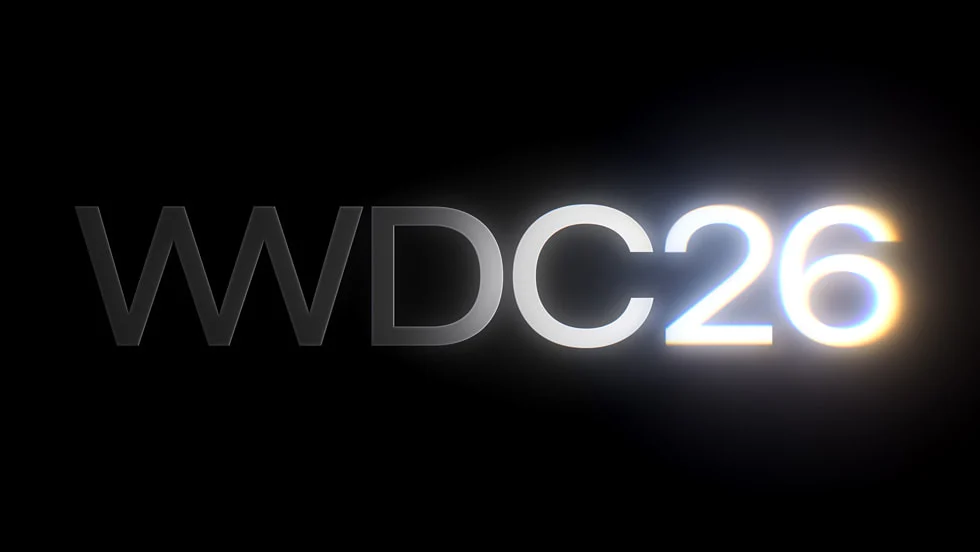
Cupertino, California – Apple Inc. has officially announced that its highly anticipated Worldwide Developers Conference (WWDC) for 2026 will take place from June 8 to June 12. The annual event, a cornerstone for Apple’s global developer community and a crucial platform for showcasing its latest software innovations, will adopt a hybrid format, combining online access with select in-person experiences at the company’s headquarters in Cupertino, California. This year’s conference is poised to be particularly significant, with the iPhone maker explicitly stating a central focus on "AI advancements" alongside the customary updates for its vast ecosystem of platforms, including iOS, macOS, tvOS, and watchOS, as well as new software and developer tools.
The Annual Convergence: A Hybrid Global Event
WWDC has long served as Apple’s primary stage for unveiling the next generation of its operating systems and developer technologies. Historically, the conference attracted thousands of developers from around the globe to Cupertino for a week of in-depth sessions, hands-on labs, and networking opportunities. While the pandemic necessitated a fully online format for several years, Apple has strategically transitioned to a hybrid model, allowing for broader digital participation while maintaining a physical presence that fosters direct engagement for a select group of attendees. This approach ensures maximum accessibility for its expansive developer base, which numbers in the tens of millions worldwide, spanning over 175 countries and regions.
The main keynote presentation, typically led by Apple CEO Tim Cook and other senior executives, will stream live and be available globally. Developers and enthusiasts can tune in through the official Apple Developer app, Apple’s dedicated developer website, and the Apple Developer YouTube channel. For its significant audience in China, the keynote and other relevant sessions will also be accessible via the Apple Developer Bilibili channel, underscoring Apple’s commitment to its global reach and diverse user base. The hybrid structure also offers a unique opportunity for developers to experience the event both virtually and, for a limited number, physically at Apple Park, fostering a blend of global reach and intimate engagement.
The Centrality of Artificial Intelligence
Perhaps the most striking aspect of this year’s announcement is Apple’s explicit emphasis on "AI advancements." This marks a notable shift in the company’s public communication regarding WWDC, which, in previous years, often highlighted broader themes or specific interface designs. For instance, WWDC 2025 notably showcased Apple’s "Liquid Glass" interface design, with artificial intelligence remaining largely in the background of official presentations. The overt declaration for WWDC 2026 signals a strategic pivot, positioning AI at the forefront of Apple’s innovation agenda and acknowledging the pervasive industry-wide momentum surrounding generative AI and machine learning.
This strategic emphasis comes at a crucial juncture for Apple. While the company has long integrated AI and machine learning capabilities into its products – from Face ID and computational photography to on-device intelligence for privacy-centric features – it has often taken a more conservative and less overt approach compared to rivals. However, the rapid acceleration of generative AI technologies by competitors such as Google (with Gemini), Microsoft (with Copilot), and OpenAI has intensified pressure on Apple to demonstrate its prowess and future vision in this transformative field. The 2026 conference is widely anticipated to be Apple’s definitive statement on its comprehensive AI strategy, moving beyond subtle integrations to more explicit and user-facing intelligent features.
A New Era for Siri: Contextual Intelligence
A major focal point for the anticipated AI announcements is expected to be a significant revamp of Siri, Apple’s long-standing virtual assistant. Launched in 2011 alongside the iPhone 4S, Siri was a pioneer in conversational AI but has, in recent years, been perceived by many users and critics as having fallen behind competitors in terms of capability, contextual understanding, and natural language processing. Reports of a delayed Siri revamp have circulated for some time, suggesting Apple has been diligently working behind the scenes to overhaul its foundational AI.
The 2026 WWDC is widely speculated to finally unveil a "smarter" Siri, equipped with advanced AI capabilities. This next-generation Siri is expected to offer better personal context, allowing it to understand user preferences and historical interactions more effectively, leading to more relevant and personalized responses. Crucially, it is also projected to gain "on-screen awareness," meaning it could interpret and interact with content actively displayed on a user’s device. For example, if a user asks Siri about an event displayed in a calendar app, Siri could seamlessly access that information without requiring explicit instructions or navigation. This level of integration could dramatically enhance user experience, making Siri a more proactive and intuitive assistant across Apple’s ecosystem.
Further bolstering these capabilities, Apple made headlines earlier this year with reports of a significant agreement with Google to integrate Google’s Gemini AI models to power specific AI features on its platforms. While the precise scope of this partnership remains under wraps, it suggests a pragmatic approach by Apple to leverage leading external AI models to accelerate its own offerings, particularly in areas like generative text or complex query processing, while likely maintaining its distinct on-device AI for privacy-sensitive tasks. The unveiling of a revamped Siri, potentially powered by a combination of Apple’s proprietary AI and external models like Gemini, would be a monumental announcement, repositioning Apple as a formidable player in the AI assistant landscape.
Foundation Models and Developer Tools: Empowering the Ecosystem
Beyond user-facing features, Apple’s AI advancements at WWDC 2026 are also expected to significantly empower its vast developer community. At WWDC 2025, Apple introduced its "Foundation Model framework," which included AI models capable of operating offline directly on devices. This was a crucial step towards delivering privacy-preserving AI, as processing data locally minimizes the need for cloud-based data transfers. This year, developers can anticipate significant advancements to this framework, potentially including more powerful on-device models, expanded capabilities, and easier integration through new APIs. Such improvements would allow developers to build more intelligent, responsive, and privacy-conscious applications across all Apple platforms.
Apple has also been proactive in integrating advanced AI tools into its developer environment, Xcode. In previous iterations, the company brought models like ChatGPT for coding assistance directly into Xcode, streamlining development workflows. More recently, earlier this year, Apple introduced agentic coding tools to Xcode, including Anthropic’s Claude Agent and OpenAI’s Codex, allowing developers to leverage sophisticated AI for code generation, debugging, and task automation. These integrations underscore Apple’s commitment to equipping its developers with cutting-edge tools, enabling them to incorporate AI capabilities into their own applications more efficiently and innovate faster. The WWDC 2026 keynote and subsequent sessions will likely unveil further enhancements to these tools, potentially introducing new AI frameworks, libraries, and best practices for developing AI-powered applications within the Apple ecosystem.
Beyond AI: Core Platform Enhancements
While AI will undoubtedly dominate headlines, WWDC 2026 will also deliver the traditional comprehensive updates to Apple’s core operating systems. Each year, developers eagerly await the unveiling of new versions of iOS, macOS, tvOS, and watchOS, which bring new features, interface refinements, and performance improvements across the entire hardware lineup.
- iOS (for iPhone and iPad): Expect a new iteration of iOS to introduce fresh user interface elements, privacy enhancements, new features for core applications, and potentially deeper integration with the anticipated AI advancements. The focus will likely remain on refining the user experience, enhancing productivity, and further blurring the lines between iPhone and iPad capabilities, especially with the latter’s increasingly powerful hardware.
- macOS (for Mac): The next version of macOS will likely continue to optimize performance for Apple Silicon Macs, introduce new continuity features that seamlessly bridge the experience between Apple devices, and integrate more of the AI capabilities into desktop workflows. Enhancements to pro applications and gaming on the Mac could also be on the agenda.
- tvOS (for Apple TV): Updates to tvOS typically focus on improving the home entertainment experience, potentially with new user profiles, enhanced gaming features, and deeper integration with Apple’s services like Apple Arcade and Apple Fitness+. AI could play a role in personalized content recommendations or smarter home control.
- watchOS (for Apple Watch): For the Apple Watch, expect further advancements in health and fitness tracking, new watch faces, improved battery life, and enhanced communication features. The integration of more sophisticated on-device AI could lead to more proactive health insights and personalized wellness coaching.
- Developer Tools: Beyond the operating systems, Apple will introduce new developer tools, APIs, and frameworks designed to help developers harness the power of the new software, particularly the AI capabilities. These tools are crucial for fostering innovation within the App Store ecosystem, which has paid out hundreds of billions of dollars to developers since its inception.
Historical Context: Apple’s AI Journey and the Competitive Arena
Apple’s journey with artificial intelligence has been a complex one. While the company pioneered personal AI assistants with Siri in 2011, its initial lead gradually eroded as competitors invested heavily in cloud-based AI and large language models. For years, Apple emphasized "on-device AI" for privacy and performance, a distinction that sometimes led to its AI capabilities being perceived as less robust than cloud-powered alternatives from Google Assistant or Amazon Alexa.
However, Apple has been steadily ramping up its AI investments. Reports indicate a significant increase in R&D spending, much of which is directed towards machine learning and AI. The acquisition of numerous AI startups over the past decade, though often quiet, has provided Apple with critical talent and intellectual property. The introduction of its Neural Engine in its A-series and M-series chips has also provided dedicated hardware for on-device AI processing, laying a powerful foundation.
The current competitive landscape is dominated by a rapid arms race in generative AI. Google’s Gemini, OpenAI’s ChatGPT, and Microsoft’s Copilot have captured public imagination with their ability to generate text, code, images, and more. Companies like Samsung have also begun integrating on-device generative AI into their latest smartphones. This intense competition has likely spurred Apple to make a more explicit and ambitious statement about its AI future. WWDC 2026 is Apple’s opportunity to demonstrate not only that it can compete, but that it can innovate in AI in a way that aligns with its core values of privacy, user experience, and hardware-software integration.
The Developer’s Perspective: Opportunities and Tools
For the millions of developers building applications for Apple’s ecosystem, WWDC 2026 represents a treasure trove of new opportunities. The emphasis on AI advancements means new APIs and frameworks will likely be introduced, enabling developers to integrate sophisticated machine learning capabilities into their apps with greater ease. This could include:
- Enhanced on-device ML frameworks: More powerful and versatile Core ML capabilities, allowing developers to run complex AI models directly on user devices, improving performance and privacy.
- New generative AI APIs: While potentially curated and privacy-focused, Apple might offer APIs that allow developers to leverage generative AI for tasks like content creation, intelligent summaries, or advanced search within their applications.
- SiriKit expansions: Deeper integration points for Siri, allowing third-party apps to tap into the assistant’s enhanced contextual awareness and on-screen understanding, creating more seamless and intuitive user interactions.
- Advanced Xcode AI tools: Further refinements to AI-powered coding assistants within Xcode, accelerating development cycles and potentially lowering the barrier to entry for developers wanting to incorporate AI.
These tools are not just technical upgrades; they are catalysts for innovation. Developers will be able to create entirely new categories of applications or significantly enhance existing ones, leveraging AI to offer more personalized experiences, automate complex tasks, and provide deeper insights to users. The potential for new monetization opportunities through AI-powered features and services is also significant, further enriching Apple’s robust App Store economy.
Broader Market Implications and Analyst Outlook
Industry analysts are closely watching WWDC 2026, viewing it as a pivotal moment for Apple’s long-term strategy and market position. A successful and compelling demonstration of its AI capabilities could:
- Reinvigorate User Interest: A truly "smarter" Siri and deeply integrated AI could significantly enhance the appeal of Apple devices, encouraging upgrades and attracting new users to the ecosystem.
- Boost Services Revenue: New AI features could drive increased engagement with Apple’s services, from iCloud storage (for AI-generated content) to Apple Music (for personalized playlists) and the App Store (for AI-powered apps).
- Strengthen Ecosystem Lock-in: More powerful and unique AI experiences that are seamlessly integrated across Apple hardware and software could further differentiate its ecosystem and enhance customer loyalty.
- Impact Stock Performance: Positive reception to Apple’s AI strategy could provide a significant boost to its stock price, reassuring investors about the company’s competitive standing in the evolving tech landscape.
- Shift Competitive Dynamics: A strong AI showing from Apple could force competitors to further accelerate their own AI roadmaps, intensifying the innovation race in the tech industry.
Conversely, a perceived underwhelming AI presentation could lead to concerns about Apple’s ability to keep pace with rapid advancements in the field, potentially affecting investor confidence and market share in the long run. The stakes for WWDC 2026 are exceptionally high, making it one of the most anticipated events in Apple’s recent history.
Looking Ahead: The Future of Apple’s Ecosystem
WWDC 2026 represents more than just a software update; it is a declaration of intent. By explicitly foregrounding "AI advancements," Apple is signaling a significant strategic shift, positioning itself not merely as a consumer electronics giant, but as a leader in the next wave of technological innovation. The hybrid format underscores a commitment to both global reach and meaningful engagement, while the anticipated revelations about Siri, foundation models, and developer tools promise to redefine what users can expect from their Apple devices and what developers can achieve within the ecosystem. As June 8 approaches, the tech world will be watching keenly to witness Apple’s vision for an artificially intelligent future unfold.
