

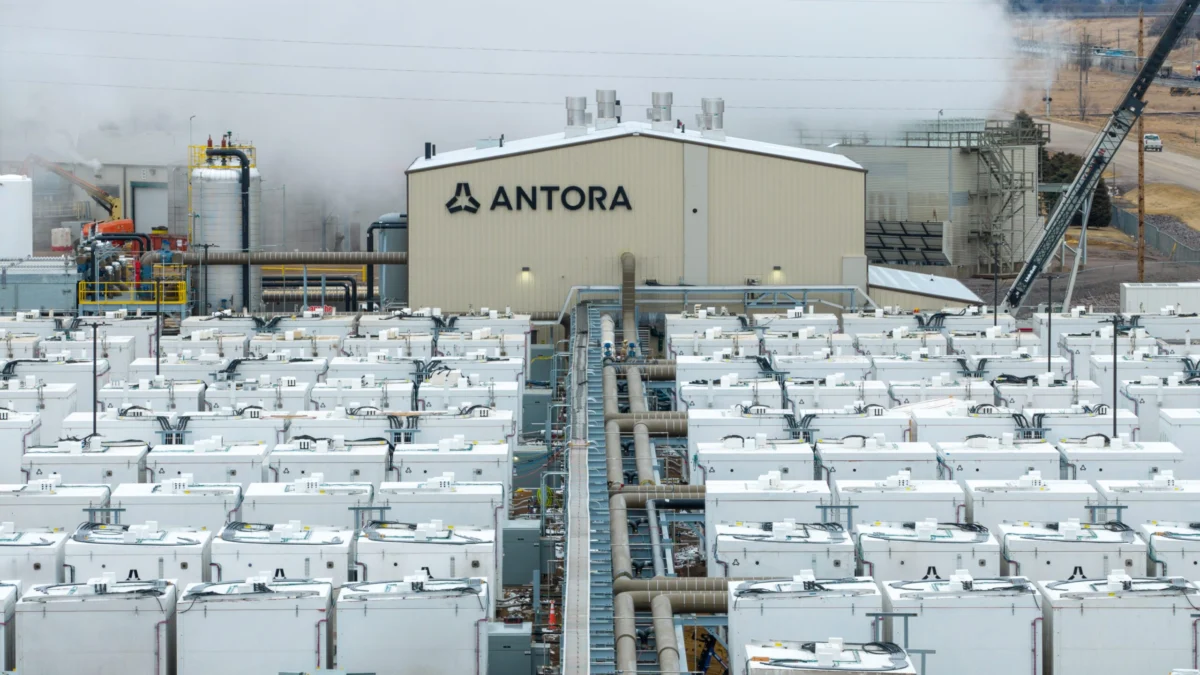
The landscape of American industrial energy has reached a significant milestone with the official commissioning of a 5 gigawatt-hour (GWh) thermal energy storage system at POET’s bioprocessing facility in Big Stone City, South Dakota. This collaborative project, spearheaded by the renewable energy storage firm Antora Energy and the world’s largest producer of biofuels, POET, represents one of the most substantial deployments of long-duration energy storage technology globally. By leveraging solid carbon blocks to store surplus renewable energy as high-temperature heat, the system provides a zero-carbon alternative to the natural gas traditionally used to power the energy-intensive processes of ethanol production.
The project, which transitioned from initial construction to energy delivery in less than 12 months, underscores a rapid shift in the feasibility of industrial decarbonization. Upon reaching full operational status later this year, the Big Stone City installation will be recognized among the largest energy storage projects in the world by capacity. The deployment serves as a proof-of-concept for "thermal batteries," a technology designed to solve the intermittency of wind and solar power while addressing the "hard-to-abate" sector of industrial heat, which accounts for a significant portion of global greenhouse gas emissions.
Technical Architecture of the Antora Thermal Battery
The core of Antora Energy’s technology lies in its use of solid carbon blocks, a material chosen for its extreme thermal stability, high energy density, and abundance. Unlike lithium-ion batteries, which store energy through chemical reactions, or concentrated solar power systems that often use molten salts, Antora’s system utilizes resistive heating to convert electricity into heat. This heat is stored in insulated blocks of carbon at temperatures exceeding 1,500 degrees Celsius—hot enough to glow white.
When the industrial facility requires energy, the stored heat is discharged. In the case of the POET facility, this heat is used to generate the high-pressure steam necessary for the fermentation and distillation processes inherent in bioethanol production. The system is designed for multi-day storage, meaning it can bridge the gap during periods when wind production is low or grid demand is exceptionally high, ensuring a 24/7 supply of thermal energy.
The modular nature of the Antora system allowed for the rapid construction timeline noted by the companies. By pre-manufacturing components and utilizing a domestic supply chain that spans a dozen states, the project avoided many of the logistical bottlenecks common in large-scale infrastructure developments. This "plug-and-play" approach to industrial-scale storage is a central component of Antora’s strategy to scale the technology across various manufacturing sectors, including cement, steel, and chemical production.
Strategic Partnership and the Biofuel Context
For POET, the integration of thermal energy storage is a strategic move toward its goal of achieving net-zero carbon emissions across its operations. As the leading producer of biofuels, POET operates 33 bioprocessing facilities across the United States. The Big Stone City plant serves as a flagship for how these facilities can decouple their production cycles from fossil fuel volatility.
The biofuel industry is inherently energy-intensive. Converting corn and other biomass into ethanol requires significant thermal energy for cooking, fermentation, and drying distillers’ grains. Traditionally, this heat is provided by burning natural gas. By substituting natural gas with stored wind energy, POET not only reduces the carbon intensity of its finished biofuel products but also enhances its competitive edge in a market increasingly governed by low-carbon fuel standards.
The long-term heat offtake agreement between Antora and POET provides a stable economic framework for the project. POET receives a predictable, "always-on" energy supply, while Antora secures a guaranteed customer for the heat discharged from its batteries. This model mirrors the Power Purchase Agreements (PPAs) that have fueled the growth of the wind and solar industries over the last two decades.
Utility Collaboration and Innovative Rate Structures
A critical component of the project’s economic viability was the involvement of Otter Tail Power, the utility provider serving customers across North Dakota, South Dakota, and Minnesota. Integrating a 5 GWh storage system into the local grid required more than just physical infrastructure; it required a novel regulatory approach to energy pricing.
In 2023, the South Dakota Public Utilities Commission approved a specialized electric rate developed by Otter Tail Power specifically for this system. This "flexible load" rate allows the Antora thermal battery to charge selectively during periods of surplus local energy production—specifically when wind turbines in the region are generating more electricity than the grid requires.

By acting as a "sponge" for excess renewable energy, the system prevents the curtailment of wind farms and stabilizes the grid. Most importantly, the rate structure was designed to ensure that the addition of this massive energy load does not increase costs for other residential or commercial consumers. Instead, it optimizes existing grid assets and provides the utility with a tool to manage peak demand.
Chronology of Development
The path to the Big Stone City commissioning involved several key milestones:
- Mid-2022: Antora Energy secures significant Series A funding, backed by investors including Bill Gates’ Breakthrough Energy Ventures and Lowercarbon Capital, to accelerate the commercialization of carbon-based thermal storage.
- Late 2022: POET and Antora begin feasibility studies for the Big Stone City site, identifying it as an ideal location due to the high concentration of regional wind assets and the facility’s consistent thermal demand.
- Early 2023: Otter Tail Power submits the proposed electric rate to the South Dakota Public Utilities Commission, highlighting the benefits of large-scale flexible loads.
- Mid-2023: The South Dakota Public Utilities Commission officially approves the rate structure, greenlighting the project’s economic model.
- Late 2023: Construction commences on-site. The project utilizes a modular assembly process, with carbon blocks and insulation systems arriving from various American manufacturing partners.
- Early 2024: System testing and integration with the POET facility’s steam loop begin.
- Mid-2024: The commissioning of the 5 GWh system is announced, with energy delivery officially commencing. Full commercial operation is slated for the fourth quarter of 2024.
Economic and Political Implications
The commissioning has drawn attention from federal and state officials who view the project as a template for American reindustrialization. Senator Mike Rounds (R-SD) emphasized the domestic benefits, noting that the project strengthens South Dakota’s role in the national energy landscape.
"America’s need for energy is continuing to rise year after year. The more of that energy we can make right here at home, the better," Senator Rounds stated. He highlighted that the project creates jobs not only in Big Stone City but throughout the domestic supply chain, which includes steel fabrication, carbon processing, and specialized electrical engineering across multiple states.
From a broader economic perspective, the project addresses the "green premium"—the additional cost typically associated with choosing a clean technology over a fossil-fuel-based one. By using low-cost, surplus wind energy and inexpensive carbon storage media, Antora aims to deliver industrial heat at a price point that is at or below the cost of natural gas. This economic parity is essential for the widespread adoption of decarbonization technologies in price-sensitive industrial sectors.
Analysis: The Future of Long-Duration Energy Storage
The significance of the POET-Antora project extends beyond South Dakota. The global transition to renewable energy is currently facing a "bottleneck" regarding storage duration. While lithium-ion batteries are effective for short-term grid balancing (2 to 4 hours), they remain prohibitively expensive for multi-day storage and are not suited for providing high-grade industrial heat.
The 5 GWh capacity of the Big Stone City project is a massive leap forward. For comparison, many of the world’s largest lithium-ion battery installations, such as the Moss Landing facility in California, operate in the 1 to 3 GWh range. By reaching 5 GWh with a thermal medium, Antora is demonstrating that the "thermal battery" category can compete at—and exceed—the scale of electrochemical storage for specific industrial applications.
Furthermore, this project illustrates the shift toward "sector coupling," where the power sector and the industrial heat sector are integrated. By turning electricity into heat, the system allows renewable energy developers to find new markets for their power, especially in regions like the Upper Midwest where wind energy often exceeds local demand.
As the project moves toward full operational status later this year, industry analysts will be monitoring several key performance indicators:
- Thermal Efficiency: The percentage of electrical energy successfully converted and retained as usable heat.
- System Durability: The performance of the carbon blocks over repeated heating and cooling cycles.
- Grid Impact: How effectively the system responds to signals from Otter Tail Power to charge during periods of surplus.
Conclusion
The commissioning of the 5 GWh thermal energy storage system at POET’s Big Stone City facility marks a turning point in the effort to decarbonize the American industrial base. By combining innovative storage technology with a pragmatic business model and supportive utility regulations, Antora Energy and POET have created a blueprint for how heavy industry can thrive in a low-carbon economy.
As Andrew Ponec, CEO of Antora Energy, noted, this project is a tangible example of reindustrialization driven by American innovation. It proves that the transition to clean energy can be synonymous with industrial competitiveness, domestic job creation, and energy security. With the successful deployment in South Dakota, the focus now shifts to scaling this technology across the global industrial landscape, potentially providing a solution for one of the most difficult challenges in the fight against climate change.
