

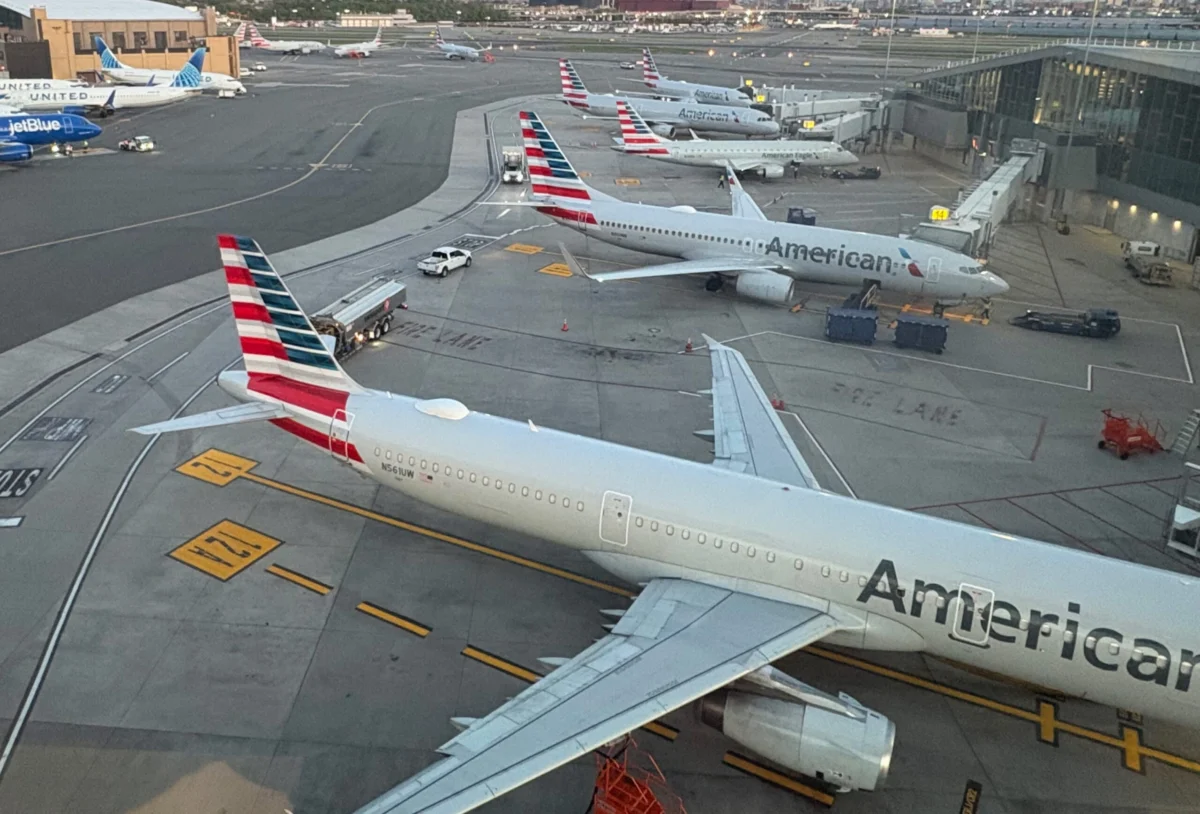
American Airlines, one of the United States’ largest carriers by passenger volume, has significantly lowered its earnings forecast for the current fiscal year for the second time, citing persistently high and volatile fuel costs as the primary driver. The revised outlook, announced on Thursday following its second-quarter earnings report, sent the airline’s shares tumbling by 8% in early trading, underscoring investor skepticism regarding the carrier’s ability to navigate an increasingly complex operational environment. This latest reduction signals that even robust passenger demand and rising airfares are proving insufficient to fully offset the substantial increase in fuel expenses, which represent the airline industry’s largest operating cost after labor.
A Series of Downgrades: A Chronology of Financial Revisions
The airline’s journey through its current fiscal year’s financial projections has been marked by a series of downward adjustments, painting a challenging picture for its profitability. At the outset of the year, American Airlines had projected a relatively optimistic adjusted earnings per share (EPS) in the range of $1.70 to $2.70. This initial forecast reflected expectations of a strong post-pandemic travel recovery and sustained demand.
However, as the year progressed and macroeconomic conditions, particularly energy markets, became more volatile, the airline was compelled to revise its outlook. By April, the initial optimism had waned, leading to a significant reduction in the forecast. At that point, American Airlines anticipated an adjusted EPS ranging from a loss of 40 cents to a profit of $1.10 per share. This initial cut was a clear indicator of emerging headwinds, primarily related to rising operational costs.
The latest revision, announced in conjunction with the second-quarter results, further deepens these concerns. American now projects an adjusted loss per share of as much as 65 cents, extending to a possible profit of 65 cents per share for the full current fiscal year. This new range represents a substantial contraction from the already lowered April forecast, highlighting the escalating pressure on the airline’s bottom line. The repeated nature of these downward revisions signals a growing disconnect between initial business expectations and the evolving economic realities, particularly in the energy sector.
For the current quarter specifically, the airline anticipates an adjusted loss ranging from 70 cents to 10 cents per share. This projection falls notably below Wall Street analysts’ consensus estimate of 28 cents per share in earnings, exacerbating investor concerns. Despite the gloomy profit outlook, American Airlines did forecast a revenue increase of 16% to 19% for the current quarter, surpassing analysts’ projections of 16.6%. This dichotomy underscores the core challenge: while the airline successfully generates revenue from strong demand, a significant portion is being eroded by surging operational costs.
The Unrelenting Pressure of Fuel Costs
Fuel is an airline’s second-largest expense, typically accounting for 20-30% of total operating costs, second only to labor. The dramatic volatility in global crude oil prices, exacerbated by geopolitical tensions, supply chain disruptions, and a resurgent global demand post-pandemic, has created an exceptionally challenging environment for carriers worldwide. While crude oil prices have seen some fluctuations, the cost of refined jet fuel has remained stubbornly high, often experiencing a premium over crude due to refining capacity constraints and high demand.
Throughout the current fiscal year, average jet fuel prices have consistently traded at levels significantly higher than historical averages, often exceeding $3 per gallon in various global hubs. This represents a substantial increase compared to pre-pandemic levels, where prices frequently hovered around $1.50 to $2.00 per gallon. For an airline like American, which operates thousands of flights daily and consumes billions of gallons of fuel annually, even marginal increases per gallon translate into hundreds of millions, if not billions, in additional expenses. For instance, a mere 10-cent increase per gallon can add tens of millions to quarterly operating costs.
Many airlines, including American, have historically employed hedging strategies to mitigate fuel price volatility. However, the effectiveness of these hedges can vary, and some carriers have opted for less aggressive hedging in recent years, leaving them more exposed to spot market price swings. The current environment demonstrates the critical importance of effective fuel management strategies and the profound impact that external market forces can have on an airline’s financial health, regardless of internal efficiencies or robust demand. The inability of increased fares to fully offset these costs suggests the magnitude of the fuel price surge is simply too great, or that competitive pressures limit the extent to which fare increases can be passed on to consumers.
Robust Demand Meets Stubborn Expenses: A Paradoxical Market
The current market presents a peculiar paradox for the airline industry. On one hand, passenger demand remains exceptionally strong, buoyed by pent-up travel desires following the pandemic, a robust leisure travel segment, and a gradual recovery in business travel. This strong demand has enabled airlines to command higher fares, contributing to significant revenue growth. American Airlines’ reported 16% rise in revenue to $16.74 billion in the second quarter, along with a 10% increase in passenger revenue per available seat mile (a key metric for pricing power), clearly illustrates this robust demand environment.
However, this impressive revenue performance is being overshadowed by the escalating cost environment. The surge in fuel prices is the most prominent factor, but it is not the only one. Labor costs have also been rising significantly across the industry as airlines compete for talent, negotiate new contracts, and address staffing shortages that emerged during the pandemic. Maintenance expenses, airport fees, and other operational costs have also seen inflationary pressures.
The challenge for American Airlines, and indeed for many of its peers, is that the elasticity of demand for air travel, while currently favorable, has its limits. There is a ceiling to how much higher fares can be pushed before consumers begin to scale back their travel plans. This delicate balance means that while revenues are increasing, the margin – the profit generated from each dollar of revenue – is being squeezed from both sides: rising costs and potentially constrained pricing power.
Navigating the Competitive Skies: The Margin Gap Challenge
American Airlines’ executive team has openly acknowledged the persistent "multibillion-dollar profit gap" that separates it from industry leaders such as Delta Air Lines and United Airlines. This gap is not a new phenomenon; it has been a recurring theme in American’s financial performance discussions. The discrepancy often stems from several factors, including network optimization, fleet composition, premium product offerings, and operational efficiency.
Delta and United, for instance, have often been lauded for their strong international networks, more diversified revenue streams (including robust loyalty programs and cargo operations), and a higher proportion of premium cabin seats which yield significantly higher margins. They have also invested heavily in operational reliability and customer experience, which can command a pricing premium. American Airlines, while possessing an extensive network, particularly in the domestic market, has historically faced challenges in consistently achieving the same level of profitability per passenger or per available seat mile as its rivals.
CEO Robert Isom has articulated a "long-range" plan to close this margin gap, though he has refrained from providing a specific timeline for achieving this ambitious goal. His strategy includes several key components: the planned order of new wide-body aircraft to modernize and expand its long-haul fleet, and the addition of more high-yielding premium seats to older jets. The latter involves reconfiguring existing aircraft to increase the proportion of first-class, business-class, and premium economy seats, thereby boosting revenue per flight without necessarily increasing the number of passengers. This strategy aims to capture a greater share of the lucrative business and premium leisure travel segments, which are less price-sensitive and contribute disproportionately to profitability.

Strategic Expansion Amidst Headwinds
Despite the immediate financial pressures and downward revisions to its profit outlook, American Airlines executives have defended their decision to continue expanding flying capacity. The airline plans to increase its flying capacity by as much as 5% in the current quarter. This strategy might seem counterintuitive when fuel costs are soaring and profitability is challenged.
However, the rationale behind continued expansion often involves several strategic considerations. Airlines often aim to maintain or grow market share, especially in key hubs and lucrative routes. Pulling back significantly on capacity can cede ground to competitors, making it harder to regain later. Furthermore, capacity expansion can be tied to long-term network optimization strategies, ensuring that the airline’s hubs are well-connected and that its route network remains attractive to corporate clients and frequent flyers.
There is also the element of fleet utilization. Modern aircraft, once acquired, represent a significant capital investment. Keeping them flying, even with higher fuel costs, can sometimes be more economically sound than parking them, provided the marginal revenue from those flights covers variable costs. The decision to expand capacity in the face of headwinds is a calculated risk, betting on sustained demand and the ability to eventually pass on costs or for fuel prices to stabilize in the longer term. It signals a commitment to growth and market presence, even if it impacts short-term profitability.
Q2 Performance Snapshot: Below Expectations
For the second quarter, which concluded on June 30, American Airlines reported financial results that largely fell short of Wall Street’s expectations compiled by LSEG:
- Net Profit: The airline’s net profit plummeted by 88% from the previous year, settling at $71 million, or 11 cents per share. This is a stark contrast to the $599 million, or 91 cents per share, reported in the same period a year earlier. This dramatic decline underscores the significant erosion of profitability.
- Revenue: Total revenue increased by a robust 16% to $16.74 billion, demonstrating strong top-line growth driven by high passenger demand.
- Passenger Revenue Per Available Seat Mile (PRASM): This crucial measure of pricing power rose by 10% from last year, indicating that American was successful in charging more for its seats.
- Adjusted Earnings: Adjusting for one-time items, American posted earnings of 15 cents per share. While better than the GAAP net profit, this figure still represents a substantial decrease from prior periods and falls short of expectations.
These figures illustrate a challenging operational environment where strong revenue generation is consistently being outpaced by rising costs, leading to a significant compression of profit margins.
CEO Robert Isom’s Long-Term Vision and Immediate Challenges
In a staff note released on Thursday, CEO Robert Isom acknowledged the ongoing efforts, stating, "While there’s still work ahead, the progress we’re making is real." This statement reflects a recognition of the current challenges but also an attempt to instill confidence in the company’s strategic direction. Isom’s vision for closing the margin gap with rivals involves significant capital investment in new wide-body aircraft and the reconfiguration of existing jets to incorporate more premium seating.
The acquisition of new wide-body aircraft is a long-term play, addressing fleet modernization, fuel efficiency improvements (as newer aircraft tend to be more fuel-efficient), and expansion of international capabilities. However, such investments require substantial capital expenditure and do not yield immediate returns. Similarly, the addition of premium seats, while promising higher revenue yields, involves costly retrofits and takes time to implement across a large fleet.
Isom’s optimism regarding "2027" in a previous interview, suggesting the airline is "set up really well" for that year, points to a strategic timeline where current investments and operational adjustments are expected to bear fruit. However, the immediate challenge remains the unpredictable nature of fuel prices and the broader economic landscape, which could delay the realization of these long-term benefits or make the journey to profitability more arduous. The market’s immediate reaction, with the stock drop, suggests investors are focused on the current fiscal year’s profitability challenges rather than distant future prospects.
Market Reaction and Investor Confidence
The immediate 8% drop in American Airlines’ shares following the announcement reflects a clear signal of investor disappointment and eroding confidence. Such a significant decline indicates that the revised outlook was worse than what the market had already priced in or that investors are increasingly concerned about the airline’s ability to manage its cost base effectively. Repeated downward revisions to earnings forecasts often trigger skepticism among analysts and portfolio managers, leading to re-evaluation of investment positions.
Investors typically seek stability and predictability in earnings. When a company repeatedly misses its own guidance, it raises questions about management’s forecasting accuracy and its grip on operational variables. The strong revenue performance, while positive, is clearly insufficient to assuage these concerns when profitability remains so elusive. The market’s reaction suggests that the narrative of "strong demand" is no longer enough to offset the narrative of "soaring costs," particularly for a company that is already striving to catch up to its peers in terms of profitability.
Broader Industry Implications and Future Outlook
American Airlines’ predicament is not entirely unique within the airline industry, though its profit gap and repeated outlook cuts place it under particular scrutiny. The entire sector is grappling with the dual challenges of high fuel costs and rising labor expenses, even as demand remains robust. Other carriers have also reported the impact of fuel price volatility on their outlooks, highlighting a systemic issue.
Looking ahead, the airline industry’s profitability will depend heavily on the trajectory of global energy markets and the broader economic health that influences consumer spending on travel. While the desire to travel remains strong, a sustained period of high inflation or an economic slowdown could eventually dampen demand, creating an even more challenging scenario where both revenues and margins are under pressure.
For American Airlines specifically, the path to closing the margin gap and achieving sustained profitability will involve a delicate balancing act. It must continue to leverage strong demand through strategic pricing and network management while simultaneously executing its long-term fleet and premium product strategies. Crucially, its ability to manage and mitigate the impact of external cost pressures, particularly fuel, will be paramount. The coming quarters will be critical in demonstrating whether the airline can stabilize its financial outlook and begin to deliver on its strategic promises, or if it will continue to face turbulence in its pursuit of sustainable profitability.
