

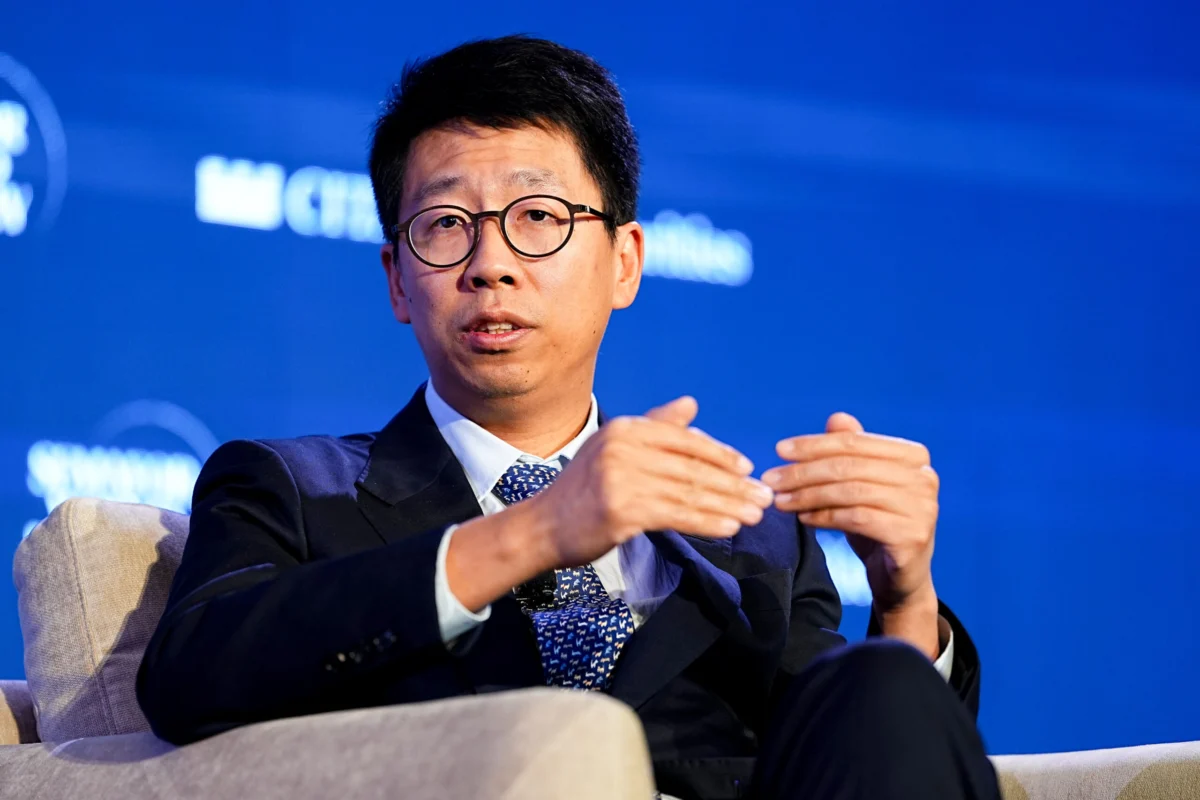
At the cusp of his mid-thirties, then 34-year-old Jack Zhang, co-founder of the burgeoning fintech startup Airwallex, faced a pivotal moment that would define the trajectory of his company and his entrepreneurial legacy. He sat in the opulent home of Michael Moritz, a titan of Silicon Valley venture capital from Sequoia, a residence boasting multiple floors and an unobstructed panorama of the Golden Gate Bridge. The purpose of this exclusive meeting was clear: Moritz was making a compelling case for Airwallex to sell. Stripe, the payments giant, had extended an offer of $1.2 billion for the Melbourne-based company. At the time, Airwallex, just three and a half years into its journey, commanded an annualized revenue of approximately $2 million. The proposed valuation represented an almost unfathomable revenue multiple approaching 600 times, a figure that, on paper, appeared undeniably attractive. Moritz underscored the caliber of Stripe’s co-founder, Patrick Collison, describing him as a generational entrepreneur, and posited that the acquisition would allow Airwallex’s nascent success to "compound" into something truly extraordinary under Stripe’s wing.
Zhang listened intently, absorbing the weight of the proposition. For two weeks following the meeting, he found himself restless, pacing the streets of San Francisco, his mind a whirlwind of possibilities and anxieties. The sheer scale of the offer and the prospect of joining forces with a dominant industry player were intoxicating. At one point, amidst the internal debate, he tentatively agreed to the deal. However, the decision was far from settled. He then embarked on an almost 8,000-mile journey back home, a transatlantic flight that became a period of profound introspection.
“I really went deep on what motivates me to build Airwallex,” Zhang recounted recently, speaking from overseas. “I was three and a half years into the business. The business was growing 100 times in 2018. And I only just sort of tasted what it was like to be an entrepreneur. And that’s what I’d been dreaming about.” This reflection illuminated a deeper truth: the dream of building something from the ground up, fueled by an insatiable entrepreneurial spirit, transcended even the most lucrative exit offer. The counsel of his co-founders also played a significant role; two of his three partners had voiced strong opposition to the sale, reinforcing his nascent doubts. Ultimately, the clearest validation for his instinct came not from external advice, but from a familiar sight in his own office: the whiteboard. Etched upon it was the unfinished, audacious vision that had ignited Airwallex: to construct the foundational financial infrastructure enabling any business, anywhere in the world, to operate with the seamless efficiency of a local entity. That vision, he realized, was far from realized.
A Prescient Decision: Airwallex’s Meteoric Rise
The decision to reject Stripe’s billion-dollar overture now stands as a testament to Zhang’s conviction, appearing increasingly prescient with each passing year. Airwallex has since soared to claim over $1.3 billion in annualized revenue, demonstrating an impressive year-over-year growth rate of 85%. The platform now processes an astounding transaction volume approaching $300 billion annually. This remarkable ascent, Zhang stresses, has been anything but easy, and therein lies its strength. It is a journey built on what he frequently refers to as the "path of maximum resistance"—a strategic philosophy that prioritizes tackling the most complex, infrastructure-heavy challenges in global finance.
This conviction is deeply rooted in Zhang’s personal narrative, extending far beyond mere business strategy. His early life was characterized by relentless challenges and a fierce determination. He grew up in Qingdao, a bustling port city in northeastern China, before moving to Melbourne, Australia, at the tender age of 15. Alone, without his parents, and with a rudimentary grasp of English, he navigated life with a host family. The collapse of his family’s finances during his university years forced him to take on a staggering four jobs simultaneously to fund his computer science degree at the University of Melbourne, as reported by the Australian Financial Review. His roles included bartending, washing dishes, enduring graveyard shifts at a petrol station, and, notably, picking lemons on a farm during school holidays—a physically demanding task he vividly recalls as the hardest job he ever had. These formative experiences instilled in him an unparalleled work ethic and an unwavering resilience. After graduation, he spent years writing trading code in the front office of an Australian investment bank, a lucrative position that nonetheless left him feeling a profound lack of "deep fulfillment." This yearning for impact and autonomy would eventually propel him back into entrepreneurship.
The Entrepreneurial Crucible and the Birth of an Idea
Before Airwallex, Zhang was a serial entrepreneur, having launched approximately ten ventures across diverse sectors. At just 14, he started a magazine. Later, his portfolio expanded to include a real estate development company, intricate import-export operations—shipping wine and olive oil from Australia to Asia, and textiles in the reverse direction—and even a burger chain. These experiences, though varied, collectively honed his business acumen and deepened his understanding of global trade complexities.
The foundational idea for Airwallex crystallized while Zhang was running a Melbourne coffee shop. His co-founder, Max Li, frequently encountered immense frustrations trying to pay coffee bean suppliers in Brazil, Indonesia, and Guatemala. Payments would routinely disappear into the labyrinthine correspondent banking system, often flagged and frozen by American intermediary banks enforcing OFAC sanctions rules. Weeks would pass, only for the payments to eventually bounce back, causing significant delays and operational headaches. This firsthand experience with the inefficiencies and opacity of traditional cross-border payments was a revelation. “That pushed me to really look at how correspondent banking works, how SWIFT works, and how we could build our own global money movement network,” Zhang explained. He recognized a massive, unmet need for a more transparent, efficient, and direct global financial infrastructure.
The "Path of Maximum Resistance": A Strategic Blueprint
The core vision for Airwallex remains the same, albeit scaled exponentially. The company has meticulously amassed close to 90 financial licenses across 50 distinct markets—a staggering regulatory feat. Zhang estimates that Stripe, despite its global reach, possesses roughly half that number at best. The acquisition of these licenses has been an immensely time-consuming and resource-intensive endeavor. In Japan alone, the process stretched over seven arduous years. In some emerging markets, Airwallex resorted to acquiring dormant shell companies whose specific licenses were no longer being issued by central banks, then painstakingly rebuilt the entire underlying technology infrastructure to integrate them into its network.
This painstaking approach underscores the company’s philosophy. Zhang illustrates the complexity with a vivid example: “You can’t really vibe-code an integration with Mexico’s central bank. We have to have a secure room – you have to do a biometric scan just to walk in to access the central bank integration.” This level of security and regulatory compliance highlights the deep, foundational work Airwallex undertakes, contrasting sharply with the often-lighter-touch integrations common in the fintech world.
The purpose of holding these extensive licenses transcends mere regulatory compliance; it confers a fundamental competitive advantage. In Japan, for instance, payment processors like Stripe and Square can process transactions, but they are legally mandated to immediately transfer funds out to the merchant’s external bank account. Airwallex, by virtue of its fund transfer operator license, can legally hold those funds within its proprietary ecosystem. This capability empowers customers to issue local bank accounts, issue cards, and manage spending directly within the Airwallex platform, without funds ever having to leave.
The foreign exchange (FX) economics alone offer substantial benefits. A U.S. merchant settling transactions in Australian dollars, for example, can bypass the typical 2% to 3% conversion fee that processors like Stripe often levy to repatriate money back into U.S. dollars. More critically, these local balances can then be directly utilized to pay local vendors, run payroll, and cover digital marketing expenses, all at highly favorable interbank rates. This operational fluidity allows businesses to truly operate globally without the friction and cost traditionally associated with international transactions. “You don’t really operate like a U.S. company anymore,” Zhang asserted. “You operate like a company with entities around the world, but without needing to physically set up those entities.”
This deliberate, slow build, characterized by Zhang’s "path of maximum resistance," has been a strategic masterpiece. Each license secured, every bank integration forged, and every local payment rail painstakingly assembled creates an increasingly formidable moat, making it exponentially harder for competitors to replicate Airwallex’s capabilities. “It took us six and a half years to get to $100 million in annual recurring revenue,” Zhang noted. “But after that, it took just over three years to get to a billion.” This exponential acceleration demonstrates the power of foundational infrastructure: once the hard work of building the core network is complete, scaling becomes significantly faster.
The competitive logic, as Zhang articulates it, boils down to the fundamental difference between owning critical infrastructure and merely building atop someone else’s. When an organization controls the entire end-to-end payment workflow, it gains unparalleled access to underlying data, enabling swift problem diagnosis and resolution for customers. Furthermore, it allows for the seamless extension of new products and services directly on top of its proprietary stack. “Building on top of other infrastructure,” he concluded, “is simply not scalable.” This proprietary control ensures greater reliability, customization, and long-term innovation potential.
The Shifting Sands of Competition: Airwallex vs. Stripe
For much of their respective histories, Airwallex and Stripe have largely operated in distinct geographic markets, targeting different customer segments. Airwallex focused heavily on the Asia-Pacific region and Europe, catering primarily to the CFO’s office—finance directors, treasury teams—seeking robust cross-border payment and spend management solutions for international operations. This approach necessitated a sales motion focused on enterprise-level financial decision-makers. Stripe, conversely, established its dominance in the United States, its customer acquisition largely driven by developers who instinctively chose it as the default payment gateway for new companies and digital ventures.
However, this comfortable distance is rapidly diminishing. As Stripe intensifies its push into international markets, and Airwallex embarks on its first serious expansion into the United States, the competitive overlap is growing. The global cross-border payments market, estimated to reach over $250 trillion by 2027, presents an enormous opportunity, ensuring that multiple players can thrive, yet direct competition is inevitable. Airwallex’s customer acquisition model remains distinct; over 90% of its customers initially engage with its business account product, with payments and spend management solutions following organically. Zhang reports that over half of Airwallex’s customers now utilize multiple products within its integrated ecosystem, a testament to its comprehensive offering.
Despite its impressive growth and robust infrastructure, Airwallex faces undeniable challenges. The most significant, Zhang acknowledges, is Stripe’s formidable status as Silicon Valley’s "golden child." Its privately held shares have minted countless millionaires across the tech industry, imbuing it with an almost mythical aura. This prestige translates into a considerable brand gap. Airwallex needs to penetrate the mindset of engineers and developers, not just finance teams, ensuring that it becomes an instinctive choice for founders building new global businesses. “Our brand is just not there yet,” he admitted. “That’s a harder competition to win.” Bridging this perception gap will require substantial marketing investment and strategic developer outreach.
Investor Alignment and Valuation Dynamics
The intensifying competition between Airwallex and Stripe is being closely observed from various vantage points, particularly by their shared investors. Sequoia Capital, through its former Sequoia Capital China arm (now rebranded as Hongshan), was an early backer of Airwallex and remains one of its largest shareholders. Concurrently, investment firm Greenoaks Capital holds stakes in both companies. Zhang, however, dismisses any suggestion of awkwardness stemming from these overlapping cap tables. He views it pragmatically: investors are betting on the sheer scale of the global payments market, a market so vast that it can accommodate multiple successful players.
Nevertheless, the valuation question remains a critical point of comparison. Stripe was valued at an astonishing $159 billion in a February tender offer, representing a 74% increase from the previous year, after processing a monumental $1.9 trillion in total payment volume in 2025. Airwallex, by contrast, was assigned an $8 billion valuation in December, placing it at roughly a twentieth of Stripe’s valuation. Zhang challenges this stark discrepancy, pointing out that Stripe’s payment volume is approximately six times Airwallex’s ($1.9 trillion vs. $300 billion), not 20 times. With its robust 85% annual growth rate and projections of reaching $2 billion in revenue within the next year, Airwallex appears to be closing the revenue gap at a faster pace than the valuation gap currently suggests. This indicates a potential undervaluation by the market, or significant upside for Airwallex as it continues its aggressive growth trajectory.
Whether the broader market eventually recognizes and corrects this valuation disparity is a different question—one that a public listing, which Zhang anticipates is still three to five years away, would inevitably force into the open.
Looking Ahead: Autonomous Finance and a $20 Billion Vision
In the interim, Zhang remains laser-focused on ambitious, longer-horizon targets. He envisions Airwallex serving one million customers by 2030, generating $20 billion in annual revenue, and significantly increasing its average revenue per customer (ARPC) from the current $12,000-$13,000 to approximately $20,000. A key pillar of this future growth is the rollout of a suite of AI-powered autonomous finance products. These intelligent agents are designed to move beyond merely surfacing data, actively executing transactions and automating complex financial workflows. Zhang posits that Airwallex’s decade-long accumulation of proprietary financial data—spanning the entire corporate finance stack, from revenue collection and treasury management to vendor payments and expense management—has created an unparalleled training dataset. This data moat, he suggests, provides a competitive advantage that no rival can replicate overnight, allowing Airwallex to build sophisticated AI solutions that profoundly transform how businesses manage their global finances.
The ultimate test will be whether this combination of deep infrastructure, relentless innovation, and a "path of maximum resistance" strategy is enough to significantly eat into Stripe’s market share, particularly in critical markets like the United States. For now, the competition largely plays out at a distance, a cold war waged across balance sheets and growth figures. While Zhang and Collison were never close friends, they maintained a cordial relationship during the merger talks years ago. However, a telling moment occurred last year at Greenoaks Capital’s annual gathering, where both founders were present. They did not speak, a quiet acknowledgment of the intense, unspoken rivalry that now defines their respective journeys in the global fintech arena.
