

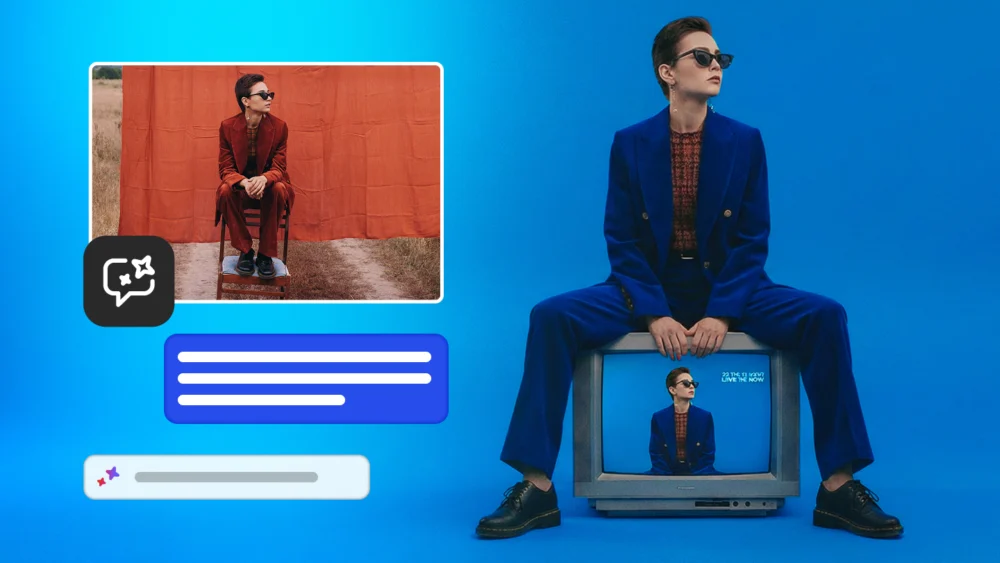
Adobe announced on Tuesday the public beta availability of its advanced AI assistant for Photoshop, extending its powerful capabilities to users across web and mobile applications. This strategic expansion marks a significant milestone in Adobe’s commitment to integrating artificial intelligence deeply into its flagship creative tools, aiming to streamline workflows and democratize complex image manipulation. Concurrently, the company is rolling out a suite of new AI-powered image editing functionalities within Firefly, its dedicated platform for generative media creation and editing, further solidifying its position at the forefront of the AI-driven creative revolution.
Photoshop’s New AI Brain: Redefining Image Editing Workflows
The AI assistant, first previewed during Adobe’s MAX event in October, is now accessible to a broader user base, offering an intuitive, natural language interface for a wide array of editing tasks. This integration empowers users to execute sophisticated edits with simple text prompts, significantly reducing the learning curve and time traditionally associated with such operations. Core functionalities include the precise removal of unwanted objects or individuals from images, intelligent alteration of colors, and dynamic adjustment of lighting conditions to achieve desired moods or effects.
Beyond these fundamental manipulations, the AI assistant facilitates more nuanced creative enhancements. Users can now instruct the AI to apply a "soft glow" to an image, crop it into a specific aspect ratio or dimension, enhance shadows for added depth and realism, or even transform an entire background to imbue an image with a completely different aesthetic. This move represents a paradigm shift from traditional, menu-driven editing to a more conversational and context-aware interaction model, allowing creatives to articulate their vision directly to the software. The aim is to serve as an intelligent co-pilot, translating conceptual ideas into tangible visual outcomes with unprecedented ease.
Further augmenting Photoshop’s capabilities is the introduction of "AI Markup" in public beta. This innovative feature allows users to interact with their images by drawing simple markers directly on the screen. The AI assistant then interprets these markings to perform targeted transformations on the indicated objects or areas. For instance, a user could sketch the outline of a flower, and the AI would generate and integrate a realistic bloom into the image. Conversely, marking an object for removal provides a highly intuitive method for intelligent content-aware deletion, going beyond simple selection tools to understand and seamlessly reconstruct the underlying image. This visual prompting mechanism adds another layer of accessibility and precision to AI-powered editing, catering to a diverse range of user preferences and skill levels.
Firefly’s Expanded Generative Arsenal: Beyond Imagination
Parallel to the Photoshop enhancements, Adobe is significantly bolstering Firefly, its standalone generative AI platform designed for media creation. Firefly is receiving several powerful new image editing tools, many of which leverage the same underlying generative AI models that have proven successful in other Adobe applications.
A key addition is Generative Fill, a feature that has been a cornerstone of Photoshop’s AI capabilities for several years. Now integrated into Firefly, Generative Fill allows users to seamlessly replace existing objects, add new elements to an image, or intelligently modify backgrounds. This technology analyzes the surrounding pixels to generate new content that matches the perspective, lighting, and style of the original image, making edits appear native and indistinguishable from the original capture. Its introduction to Firefly broadens its utility as a comprehensive creative tool, moving beyond mere image generation to sophisticated image manipulation.
Firefly is also gaining a dedicated Generative Remove feature, offering an advanced solution for object deletion that intelligently fills in the void left behind. This is complemented by Generative Expand, which empowers users to increase the canvas size of an image, with the AI intelligently generating new content to fill the expanded areas, maintaining compositional integrity. Generative Upscale further enhances image quality by increasing resolution and detail, making smaller or lower-quality images suitable for larger formats or professional use. To round out these enhancements, a new one-click tool for background removal provides an instant, high-quality solution for isolating subjects, a task frequently required in various creative workflows.
Adobe’s Strategic Pivot: A Timeline of AI Integration
Adobe’s latest announcements are not isolated events but rather the culmination of a deliberate, multi-year strategy to embed generative AI across its entire Creative Cloud ecosystem. This journey began long before the recent surge in public interest in generative AI, with Adobe consistently investing in machine learning and artificial intelligence to power features like Content-Aware Fill, which laid foundational groundwork for more advanced generative capabilities.
The more recent, accelerated phase of this strategy became highly visible at Adobe MAX in October, where the company first unveiled the AI assistant for Photoshop. This initial announcement provided a glimpse into the future of creative workflows, demonstrating how natural language prompts could fundamentally change user interaction with powerful editing software. The vision presented was one of collaboration between human creativity and artificial intelligence, with AI acting as an accelerator rather than a replacement.
Building on this momentum, February saw another significant move when Adobe announced it would allow unlimited generations for Firefly subscribers. This decision underscored the company’s commitment to encouraging widespread adoption and experimentation with its generative AI tools, acknowledging the iterative nature of creative exploration and the high demand for generative capacity. By removing usage caps for its paying subscribers, Adobe aimed to position Firefly as an indispensable tool for content creation, from initial ideation to final polish.
The current announcement, rolling out the Photoshop AI assistant in beta and expanding Firefly’s feature set, represents the logical next step in this ambitious timeline. It brings previously announced capabilities to a wider audience and introduces new ones, demonstrating Adobe’s continuous innovation and responsiveness to the rapidly evolving landscape of generative AI. This chronological progression highlights a concerted effort to integrate AI not just as a novelty, but as a core, transformative element of the creative process.
Democratizing Creativity: Accessibility and Business Models

Adobe’s approach to the availability of these new AI features reflects a tiered strategy designed to maximize accessibility while also driving subscription growth. For paid subscribers of Photoshop, the AI assistant will offer unlimited generations until April 9, providing a generous window for extensive experimentation and integration into their professional workflows. This move likely aims to incentivize current subscribers to explore and adopt the new AI tools without immediate concerns about usage limits, fostering a deeper engagement with the enhanced software. Following this introductory period, a clear pricing model for AI generations is expected to be announced, aligning with Adobe’s existing credit-based system for Firefly.
For users without a paid Photoshop subscription, Adobe is providing 20 complimentary generations to kickstart their experience with the AI assistant. This limited trial serves as a powerful demonstration of the technology’s potential, acting as a gateway to attract new users to the Creative Cloud ecosystem or convert existing free users into paid subscribers. It lowers the barrier to entry, allowing a broader audience to experience the benefits of AI-powered editing firsthand, potentially catalyzing wider adoption.
Similarly, the decision to offer unlimited generations for Firefly subscribers, announced in February, aligns with this strategy. By removing usage constraints, Adobe encourages professional and enthusiast users to fully embrace Firefly as a primary tool for content generation, enabling extensive iteration and creative exploration without punitive costs. This not only enhances the value proposition for Firefly subscribers but also positions the platform as a robust, no-compromise solution in a competitive market. This dual approach underscores Adobe’s commitment to both democratizing access to powerful AI tools and ensuring a sustainable business model for their ongoing development and deployment.
The Competitive Landscape and Adobe’s Position
The market for generative AI tools has become intensely competitive, with numerous players vying for dominance. Companies like Midjourney, OpenAI (with DALL-E), Stability AI (with Stable Diffusion), and even consumer-focused platforms like Canva (with Magic Studio) have rapidly advanced their generative capabilities, capturing significant user bases and market attention. These platforms often offer highly intuitive interfaces and impressive results, posing a challenge to established creative software giants.
Adobe’s comprehensive integration of AI into Photoshop and the continuous enhancement of Firefly represent a strategic imperative to maintain its leadership position. Unlike many standalone generative AI tools, Adobe’s strength lies in its deep integration within the Creative Cloud ecosystem. Professionals often rely on a suite of Adobe products – Photoshop, Illustrator, Premiere Pro, After Effects – for their end-to-end creative workflows. By embedding AI directly into these familiar environments, Adobe offers a seamless and powerful solution that avoids the friction of switching between multiple applications or platforms. This ecosystem advantage allows for consistency in quality, interoperability, and a unified user experience that is difficult for competitors to replicate.
Furthermore, Adobe’s commitment to ethical AI and content authenticity through initiatives like the Content Authenticity Initiative (CAI) and Firefly’s training on licensed data provides a crucial differentiator. In an era increasingly concerned with synthetic media and intellectual property rights, Adobe positions its AI tools as responsible and trustworthy, appealing to professional users and enterprises who prioritize ethical considerations and legal compliance. This holistic approach, combining cutting-edge technology with responsible deployment and ecosystem integration, aims to solidify Adobe’s enduring relevance in the rapidly evolving creative technology landscape.
Broader Implications for the Creative Industry
The widespread adoption of AI tools like those now offered by Adobe carries profound implications for the entire creative industry, impacting professionals, hobbyists, and the very nature of creative work.
Efficiency and Productivity: For professional designers, photographers, and marketers, these AI assistants promise unprecedented gains in efficiency. Repetitive and time-consuming tasks, such as precise object removal, background manipulation, or color correction, can now be accomplished in seconds with simple prompts. This frees up valuable time, allowing creatives to focus more on higher-level conceptualization, client communication, and iterative refinement, ultimately boosting productivity and turnaround times for projects. The ability to rapidly prototype ideas, generate multiple variations, and make quick global adjustments fundamentally changes the pace of design.
New Creative Horizons: AI acts as a powerful co-pilot, enabling creatives to explore possibilities that might have been too complex or time-consuming to attempt manually. The capacity to transform backgrounds, generate new elements, or expand images with intelligent content opens up entirely new avenues for visual storytelling and artistic expression. For aspiring artists or those with limited technical skills, these tools democratize complex creative processes, lowering the barrier to entry and empowering a wider demographic to bring their visions to life.
Skill Evolution: The rise of AI necessitates an evolution in creative skill sets. While traditional design principles remain crucial, proficiency in "prompt engineering"—the art of crafting effective text instructions for AI—is becoming increasingly vital. Creatives will need to learn how to effectively communicate their intentions to AI models, guide their output, and meticulously refine the generated results. The role of the designer may shift from direct pixel manipulation to one of an AI orchestrator, curator, and editor, focusing on strategic oversight and aesthetic judgment.
Ethical Considerations and Responsible AI: The increasing sophistication of generative AI also brings forth important ethical considerations. Concerns around the authenticity of images, the potential for deepfakes, and intellectual property rights are paramount. Adobe has proactively addressed some of these issues through its Content Authenticity Initiative (CAI), which aims to provide provenance and transparency for digital content. Firefly’s training on licensed content, rather than indiscriminately scraping the internet, is another step towards mitigating copyright infringement concerns. However, the broader industry will continue to grapple with the societal impact of easily generated, highly realistic synthetic media, necessitating ongoing dialogue and the development of robust ethical guidelines and verification tools.
The Future of Creative Software
Adobe’s latest announcements offer a clear glimpse into the future trajectory of creative software. The trend towards intuitive, natural language interfaces is set to continue, making powerful tools accessible to an even broader user base. We can anticipate deeper AI integration across the entire Creative Cloud suite, extending beyond Photoshop and Firefly to applications like Illustrator for vector graphics, Premiere Pro for video editing, and After Effects for motion graphics. Imagine editing video footage by simply describing the desired cuts, transitions, or special effects.
Furthermore, the convergence of various media types through AI will likely accelerate. Tools that seamlessly generate and integrate images, video, audio, and even 3D models from text prompts will become more commonplace. Adobe’s long-term vision appears to be centered on an AI-powered creative ecosystem that empowers users to move fluidly between different media, transforming ideas into fully realized, multi-modal content with unprecedented speed and creative freedom. This shift promises to redefine not just how content is created, but also who can create it, fostering a new era of digital creativity.
