

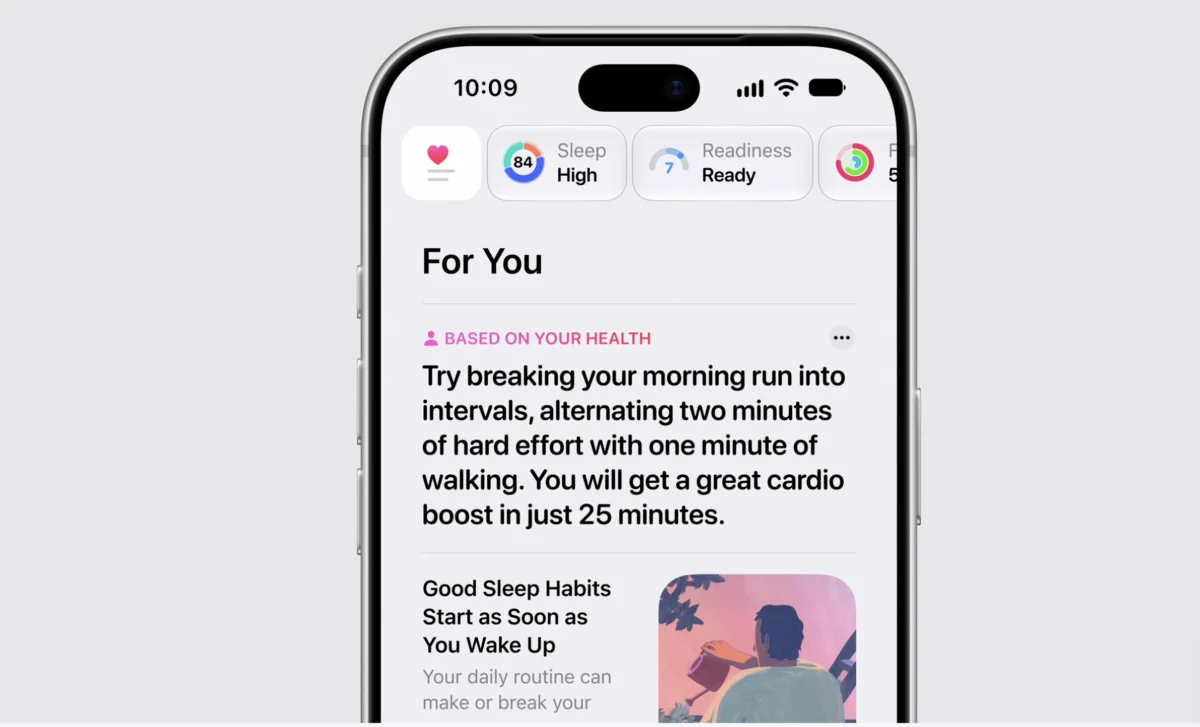
Cupertino, California – Apple on Wednesday introduced a significantly redesigned Apple Health app, leveraging the newly unveiled Apple Intelligence to provide users with a more profound and actionable understanding of their personal health data. The announcement, made alongside the launch of the new Apple Watch Series 12 and Ultra 4, marks a pivotal moment in Apple’s long-standing commitment to health and wellness, transitioning from mere data collection to intelligent, personalized health interpretation and guidance. This comprehensive update aims to transform raw health metrics into meaningful insights, empowering users to take a more proactive role in managing their well-being.
Core Enhancements: A New Era of Personalized Health
The centerpiece of the revamped Health app is a suite of advanced features designed to distill complex health information into user-friendly summaries and actionable advice. Among the most prominent additions are a new Insights tab, a personalized "readiness" score, and the innovative computation of a user’s "Health Age." These features are meticulously engineered to harness the power of Apple Intelligence, drawing connections and patterns from vast amounts of biometric data collected by Apple devices and, critically, external sources.
The Insights tab serves as a personalized dashboard, offering a concise summary of the most timely and relevant health information. Instead of users sifting through myriad data points, this tab intelligently highlights key trends, potential areas of concern, and progress updates. It is designed to provide personalized guidance, offering context and recommendations based on individual data patterns, thereby moving beyond generic advice to truly tailored insights.
A novel "readiness" score has also been introduced, providing users with an objective measure of their body’s capacity for physical and mental activity on any given day. This score is computed by analyzing a confluence of factors, including sleep quality, heart rate variability, recent activity levels, and potentially other biometric markers. The aim is to help users optimize their daily routines, informing decisions about exercise intensity, rest, and overall lifestyle choices to prevent overtraining or burnout and promote optimal recovery.
Perhaps the most compelling new metric is "Health Age." This innovative computation offers users a comparative understanding of how their various physiological health metrics stack up against their actual chronological age. It synthesizes data from critical indicators such as VO2 max (a measure of cardiovascular fitness), sleep patterns, heart rate data, and significantly, biomarkers derived from blood tests. By providing a "Health Age," Apple aims to motivate users by offering a tangible, easy-to-understand benchmark that reflects their biological health status, encouraging lifestyle changes that can positively impact this metric. For instance, a 40-year-old individual might discover their "Health Age" is 35, indicating a robust physiological state, or conversely, 45, prompting a closer look at their habits.

Longevity Tab and Strategic Partnership with Quest Diagnostics
Further enhancing the app’s capabilities, a dedicated Longevity tab has been integrated. This section utilizes a broad spectrum of metrics continuously gathered from a user’s Apple Watch and iPhone to assess overall health across crucial domains, including sleep quality, daily movement and activity levels, and detailed heart health parameters. The longevity tab goes a step further by allowing the incorporation of personal lab results, enriching the data pool and enabling more precise, individualized guidance.
To facilitate this deeper integration of lab data, Apple announced a strategic collaboration with Quest Diagnostics. This partnership will offer users direct access to a comprehensive 50-biomarker panel for a competitive price of $119. This initiative significantly lowers the barrier to entry for individuals seeking in-depth insights into their internal health markers, such as cholesterol levels, blood glucose, liver function, kidney function, inflammatory markers, and essential vitamin and mineral levels. By making such detailed lab tests readily accessible and integratable into the Health app, Apple is empowering users with critical information that traditionally required a doctor’s visit and subsequent interpretation, moving towards a more preventative and self-managed healthcare model. The ability to track these biomarkers over time within the app’s context allows Apple Intelligence to identify trends and offer more nuanced advice, connecting lifestyle choices to tangible physiological changes.
The Power of Apple Intelligence: Contextual and Actionable Insights
The fundamental improvement across all these new features lies in the integration of Apple Intelligence. This advanced AI framework allows the Health app to transcend simple data aggregation, enabling it to "make sense" of disparate health data points and translate them into practical recommendations. For example, based on a user’s "readiness" score, recent activity, and historical performance, the app could intelligently suggest incorporating more high-intensity interval training (HIIT) into their morning run routine to improve their cardiovascular health and VO2 max. This proactive, contextual guidance represents a significant leap forward from previous iterations, where users were largely left to interpret their data manually.
Apple further indicated that the Health app will delve deeper into specific areas like fitness and heart health. This means more sophisticated analyses of workout performance, recovery metrics, and nuanced patterns in heart rate data, potentially identifying early indicators of cardiovascular stress or improvements. The AI’s capability to learn individual baselines and detect deviations will be crucial in offering truly personalized and timely advice, transforming the app into a dynamic health coach.
Movement Assessments and the Virtual Coach
Addressing the critical aspect of physical mobility and recovery, the updated Health app also introduces in-depth movement assessments. These assessments allow users to evaluate their body’s movement capabilities, a feature particularly beneficial for aging individuals or those recovering from injuries. The app can guide users through a series of exercises or movements, analyzing their form and performance using the device’s sensors. A revolutionary aspect of this feature is the ability for a virtual trainer to demonstrate specific moves directly within the app, providing real-time feedback and guidance. Apple claims this experience is akin to having a personal coach present, ensuring users perform exercises correctly and safely, thereby maximizing benefits and minimizing injury risk. This not only democratizes access to expert-level guidance but also provides a continuous feedback loop crucial for physical therapy and long-term mobility maintenance.
Broader Context: Apple’s Health Ecosystem and the Digital Health Revolution
This latest update is a natural evolution of Apple’s long-term strategy in the health sector, which began with the introduction of HealthKit in 2014, providing a centralized repository for health data. This was followed by ResearchKit and CareKit, tools designed to facilitate medical research and care management. The Apple Watch, since its inception, has steadily integrated more sophisticated health sensors, from heart rate monitoring and ECG capabilities to blood oxygen tracking and temperature sensing. Each iteration has solidified Apple’s position as a significant player in the digital health landscape.

The integration of Apple Intelligence marks a critical inflection point, shifting the focus from passive data collection to active, intelligent interpretation and personalized intervention. This move aligns with broader trends in the healthcare industry, which is increasingly embracing personalized medicine, preventative care, and the use of artificial intelligence to manage and predict health outcomes. Other tech giants, including Google and Samsung, have also invested heavily in health platforms and wearables, creating a competitive yet innovative environment. This surge in digital health solutions reflects a growing consumer demand for tools that empower them to better understand and manage their health outside traditional clinical settings.
However, the expansion into personalized health data analysis, especially with the integration of blood biomarkers, also raises important considerations regarding data privacy, security, and the accuracy of AI-driven interpretations. Apple has consistently emphasized its commitment to user privacy, employing on-device processing for much of its AI functionality and robust encryption for health data. Nonetheless, as the scope of data widens, ongoing scrutiny from privacy advocates and regulatory bodies is expected. The company will need to continue to transparently communicate its data handling practices and ensure the highest standards of security.
Implications and Future Outlook
The redesigned Health app has significant implications across several fronts. For consumers, it promises an unprecedented level of personalized health insight and actionable guidance, potentially fostering greater engagement in preventative health and lifestyle modifications. By translating complex medical data into understandable metrics like "Health Age" and "readiness scores," Apple aims to demystify health management and make it accessible to a wider audience.
For the digital health market, this update sets a new benchmark for integrated health platforms. The combination of comprehensive biometric tracking, AI-driven analysis, and direct access to clinical lab data creates a powerful ecosystem that could challenge traditional healthcare models. It could also spur further innovation among competitors and encourage greater collaboration between tech companies and healthcare providers.
From a medical perspective, while these tools are not intended for diagnosis, they offer valuable data points that users can share with their healthcare professionals, potentially leading to more informed consultations and proactive medical interventions. The ability to track a broad range of health markers over time, including blood biomarkers, could provide physicians with a more holistic view of a patient’s health trends. However, medical experts will likely stress the importance of these tools as complements to, not replacements for, professional medical advice and diagnosis.
The updated Health app is scheduled to roll out later this year, initially becoming available in U.S. English. This phased launch allows Apple to fine-tune the experience and gather feedback before potentially expanding to other regions and languages. As Apple continues to integrate cutting-edge technology like Apple Intelligence into its health offerings, the future of personal health management appears increasingly intertwined with the capabilities of smart devices, paving the way for a more informed, proactive, and personalized approach to well-being.
