

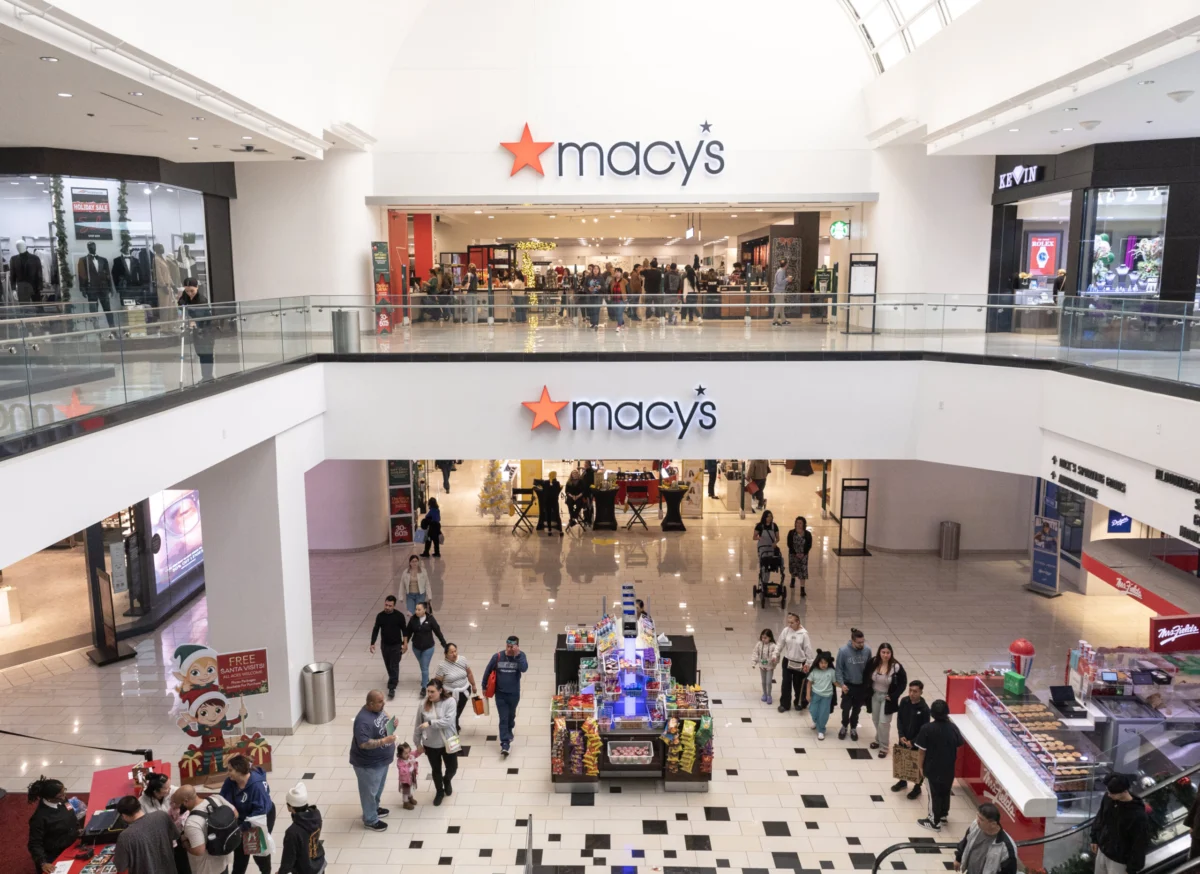
Macy’s Inc. on Thursday reported a robust performance for its fiscal second quarter, demonstrating growth across its portfolio of brands and prompting the retailer to raise its full-year financial guidance. The results signify a significant step forward in the company’s ongoing turnaround strategy, aimed at revitalizing its market position within a challenging retail landscape. Shoppers were seen carrying Macy’s bags in San Francisco on July 25, 2024, a visual testament to the brand’s continued presence and activity.
The iconic department store chain announced an overall comparable sales increase of 2.7% for the quarter. Breaking down the performance by brand, comparable sales for its namesake Macy’s brand rose by 1.1%. This growth was notably attributed by the company to its "reimagined stores"—locations that have undergone extensive revitalization as a cornerstone of its strategic overhaul. The higher-end Bloomingdale’s division saw a substantial 11.3% increase in comparable sales, while the beauty retail brand Bluemercury posted a healthy 6.2% gain.
"I think it’s a different Macy’s Inc. today," CEO Tony Spring remarked in an interview with CNBC, underscoring the shift in the company’s trajectory. "We’re in a healthier position. We’re catering to our customers while we’re also becoming a more interesting investment option for our shareholders." Spring elaborated on the specific drivers of this success, highlighting Bloomingdale’s innovative approaches to remain "accessible and very differentiated" for its affluent customer base. For the core Macy’s brand, the revamped stores have benefited from improved merchandise assortments, enhanced customer assistance, and more compelling product displays, all contributing to a better shopping experience.
Detailed Financial Performance and Market Reaction
Despite the positive operational and financial indicators, Macy’s shares experienced a nearly 5% decline on Thursday, a reaction that often reflects broader market sentiment, profit-taking, or investor expectations that may have outpaced even strong reported figures.
For the fiscal second quarter, Macy’s reported net income of $169 million, or 62 cents per share, a significant improvement compared to $87 million, or 31 cents per share, in the same period a year earlier. Adjusted for one-time items, the company’s earnings per share (EPS) stood at 40 cents. Total sales for the quarter reached approximately $4.87 billion, a modest increase from $4.81 billion reported in the prior year. These figures compare favorably to what Wall Street analysts, as surveyed by LSEG, were anticipating.
The company also noted a 2% ($3 million) rise in credit card revenue for the quarter, attributing this to a "healthy credit portfolio and stable net credit card losses." This aspect of the business provides a reliable revenue stream and indicates a degree of financial stability among its cardholders, which is crucial for a retailer with a significant proprietary credit program.
Raised Guidance Reflects Growing Confidence
Buoyed by its second-quarter performance, Macy’s raised its full-year guidance across key metrics. The company now projects net sales to be in the range of $21.68 billion to $21.83 billion, an upward revision from its previous expectation of $21.5 billion to $21.75 billion. The comparable sales outlook was also increased, moving from an anticipated growth range of 0.5% to 1.2% to a more optimistic 1% to 1.5% increase.
Furthermore, Macy’s hiked its full-year earnings per share outlook to a range of $2.15 to $2.35, up from its prior forecast of $2 to $2.20. This revised EPS guidance includes an approximate 5-cent per-share bump stemming from tariff repayments that will be applied to the company’s bottom line, highlighting an unexpected financial benefit contributing to the improved outlook.
Strategic Reinvestment of Tariff Refunds
A notable strategic decision unveiled by Macy’s was its plan for the $116 million in tariff refunds it has received. The retailer announced its intention to invest the majority of this sum—approximately $96 million—directly into enhancing the customer experience and accelerating its turnaround plan. This deliberate allocation underscores a long-term strategic vision rather than a short-term financial boost.
CEO Tony Spring emphasized that Macy’s preferred to channel these funds into lasting improvements rather than temporary price reductions, a tactic some other retailers have adopted to attract price-sensitive shoppers. "There is great value being offered across all of our nameplates, and we just really wanted to make sure that the reinvestment of the tariff refunds were things that were beyond one-time benefits that really had lasting power to support the overarching intent of our strategy," Spring told CNBC. This approach signals a commitment to foundational changes that can drive sustainable growth and differentiate Macy’s in a competitive market. Spring also mentioned that a small portion of the refunds is being held back as a contingency against potential future uncertainties, such as fluctuations in fuel costs, ensuring the company remains agile and prepared.
Navigating Consumer Bifurcation and Macroeconomic Headwinds
Spring addressed the current state of consumer behavior, noting a "bifurcation" among income cohorts. He articulated Macy’s strategy to effectively cater to both higher- and lower-income shoppers, a critical challenge for a multi-brand retailer operating in a diverse economic environment.
"For the people that have the discretionary income, they’re wanting to participate and enjoy the benefits of fashion and its accessibility to everyone to really create your own style," Spring explained. This segment is clearly benefiting Bloomingdale’s and the elevated experiences in the reimagined Macy’s stores. Simultaneously, he acknowledged the pressures faced by other consumers: "At the same time, people that are navigating month-to-month or quarter-to-quarter based on interest rates or the price of food or the price of gas, they’re going to be leveraging more value and off-price in order to participate in the economy." This dual approach underscores Macy’s recognition of varied economic realities and its efforts to offer compelling propositions across its brand spectrum, from premium to value.
The company’s performance comes against a backdrop of a "challenging macroenvironment," characterized by persistent inflation, elevated interest rates, and evolving consumer spending habits. Despite these headwinds, Spring noted in the previous quarter that the company was observing strong consumer behavior, indicating resilience and adaptability in its customer base and operational strategies.
The Ongoing Turnaround and Broader Industry Context
Macy’s is nearing the conclusion of a three-year turnaround plan initiated under CEO Tony Spring. This comprehensive strategy is designed to reignite growth, optimize its store footprint, and strategically invest in high-performing locations, all while contending with the structural challenges facing traditional department stores. The department store sector has long grappled with intense competition from e-commerce giants, fast-fashion retailers, specialty boutiques, and off-price chains, necessitating significant innovation and adaptation.
The "reimagined stores" concept is central to this turnaround, focusing on creating more engaging and efficient in-store experiences. This includes not just aesthetic upgrades but also improvements in product curation, technological integration, and personalized customer service. The success of Bloomingdale’s and Bluemercury within the portfolio further demonstrates the value of a diversified brand strategy, allowing Macy’s Inc. to capture different market segments and insulate itself somewhat from the volatility impacting any single brand.
The decision to reinvest tariff refunds into long-term customer experience enhancements rather than temporary price cuts is a strategic gamble that prioritizes sustainable brand loyalty and operational efficiency. It signals confidence in the efficacy of the turnaround plan and a commitment to building intrinsic value for customers and shareholders. While the immediate market reaction saw a dip in share price, likely influenced by various factors including broader market movements or specific investor expectations, the underlying financial and operational improvements reported by Macy’s present a more optimistic picture of its future trajectory. The company’s ability to raise guidance in a fluctuating economic climate suggests a growing stability and effectiveness in its strategic initiatives, positioning it more favorably as it navigates the complexities of modern retail.
