

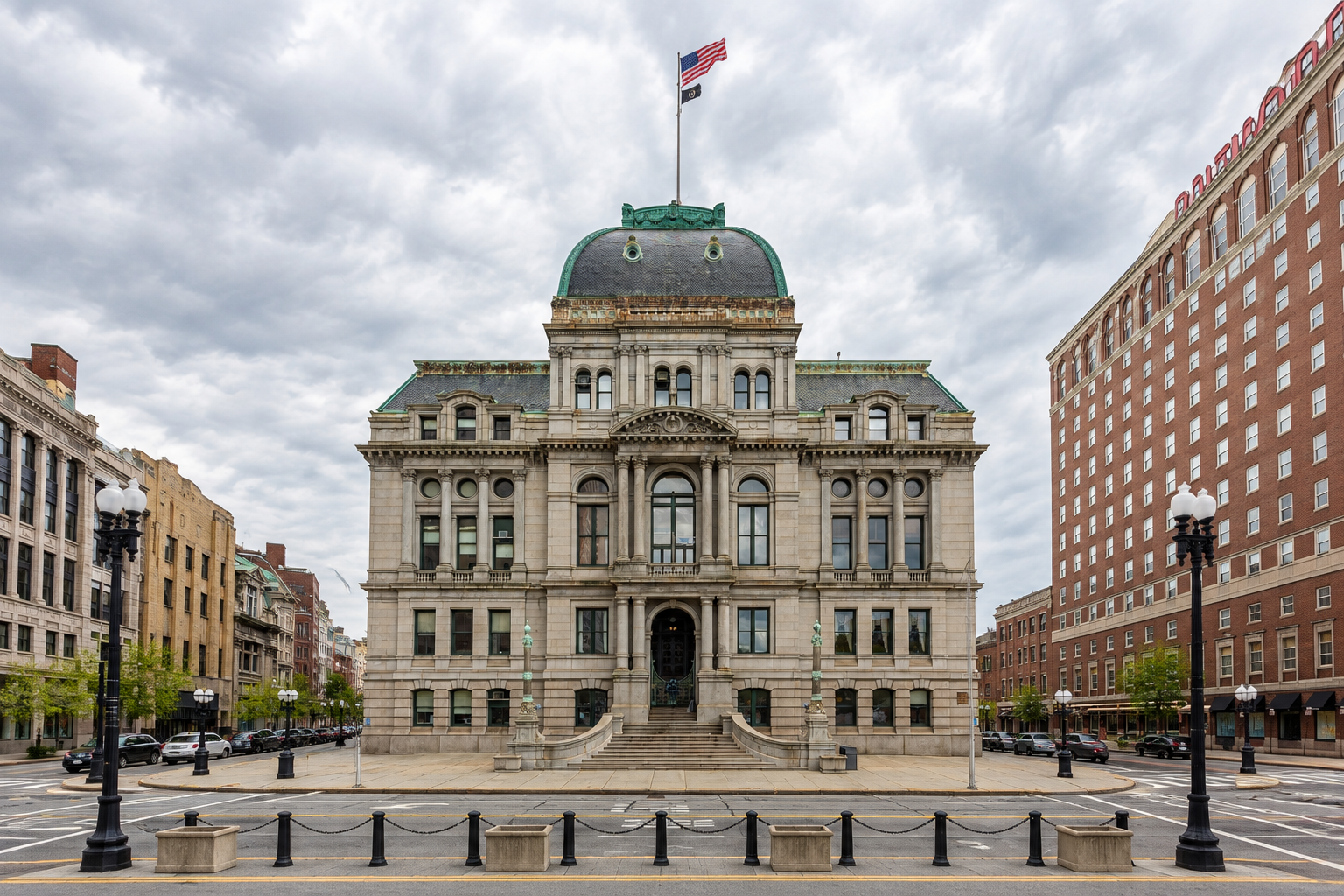
The political landscape of Providence, Rhode Island, underwent a seismic shift on Tuesday night as incumbent Mayor Brett Smiley lost the Democratic primary to state Representative David Morales. This electoral outcome represents a significant turning point for the city’s housing policy, effectively reviving a rent stabilization movement that had been suppressed by the mayoral office earlier this year. Morales, a progressive legislator who aligned his campaign with national figures like U.S. Senator Bernie Sanders, secured his victory by positioning housing affordability and tenant protections at the center of his platform. With Providence serving as a deep-blue stronghold that has not elected a Republican mayor since 1982, Morales is widely expected to cruise to victory in the November general election, setting the stage for a radical departure from the city’s current market-oriented housing strategies.
The primary results serve as a direct referendum on Mayor Smiley’s recent governance, particularly his controversial veto of a rent stabilization ordinance passed by the City Council this spring. While Smiley argued that rent controls would stifle the development of new housing supply, Morales successfully countered with a message focused on immediate relief for residents facing double-digit rent increases. The victory signals that voters in Rhode Island’s capital are increasingly skeptical of "supply-side" solutions as the sole remedy for the escalating cost of living. As Morales prepares to take the helm, the city faces a potential legislative blitz that could make Providence the only municipality in the state to impose a hard cap on annual rent hikes.
The Legislative Conflict: A History of the Veto
The path to Tuesday’s primary result began in the early months of the year when the Providence City Council sought to address the city’s vacancy crisis and rising eviction rates. The council drafted and passed an ordinance that would have implemented rent stabilization, capping annual increases at 4%. Proponents of the measure argued that the cap was necessary to prevent the displacement of long-term residents and to provide predictability for low-income families.
However, Mayor Smiley, who took office with a reputation as a pragmatist focused on economic growth, viewed the measure as a threat to the city’s long-term housing inventory. In May, Smiley exercised his veto power to block the ordinance. He maintained that rent control historically leads to property disinvestment and discourages developers from starting new projects. The City Council attempted an override of the veto, but the effort fell short by a single vote. This narrow defeat became a rallying cry for progressive organizers and tenant advocates, who immediately turned their attention to the primary election as a means of unseating the mayor and shifting the balance of the council.
The Morales Platform and the Sanders Influence
David Morales’ campaign was characterized by a specific, time-bound promise: to sign rent stabilization into law within his first 30 days in office. Initially, Morales had proposed a 100-day timeline, but as the primary campaign intensified, he accelerated his commitment, reflecting the urgency felt by his constituency. His platform mirrored the strategies used by other urban progressives, such as New York City Council Member Zohran Mamdani, focusing on the intersection of housing rights and economic justice.
The endorsement of Senator Bernie Sanders provided Morales with significant momentum, helping to nationalize the local race. Morales argued that while increasing housing supply is important, it is a long-term solution that does little to help families currently facing the threat of homelessness. By framing rent stabilization as a fundamental protection rather than an economic deterrent, Morales was able to build a coalition of young voters, labor advocates, and minority communities who felt the Smiley administration was too closely aligned with real estate interests.
Shifting Dynamics in the Providence City Council
The mayoral race was not the only victory for rent stabilization advocates on Tuesday. The composition of the Providence City Council also underwent a transformation that likely removes the obstacles to passing future rent control legislation. Two council members who had previously voted against the rent stabilization ordinance and supported Mayor Smiley’s veto lost their bids for re-election. Meanwhile, several open seats were won by candidates who ran on explicitly pro-tenant platforms.
In one notable instance, a former council member who had originally opposed the 4% cap was replaced by a more progressive candidate. Furthermore, a term-limited council member who was a staunch opponent of rent stabilization attempted to run for Morales’ vacated State House seat. That candidate was defeated by a 3-to-1 margin by a candidate backed by Morales. These results suggest that the "anti-stabilization" faction of the city government has been significantly diminished, providing Morales with a friendly legislative body capable of delivering on his 30-day promise.
Data and Economic Context: The Supply vs. Stabilization Debate
The debate in Providence mirrors a broader national conversation regarding the efficacy of rent control. Mayor Smiley and his allies frequently pointed to Austin, Texas, as a model for housing success. In Austin, a massive surge in the construction of multi-family units led to a stabilization and, in some cases, a decrease in market-rate rents. Smiley argued that by streamlining the permitting process and encouraging commercial-to-residential conversions, Providence could achieve similar results without the "market distortions" caused by rent caps.
However, housing data in Rhode Island presents a complex picture. The state has some of the oldest housing stock in the United States, and construction costs remain high. According to local housing advocacy groups, nearly half of Providence renters are "cost-burdened," meaning they spend more than 30% of their income on housing. Critics of the supply-only approach argue that while new luxury apartments may eventually lower prices through "filtering," the process takes decades and does not address the immediate need for affordable units for the city’s working class.
If Morales implements the 4% cap, Providence will serve as a test case for whether a mid-sized New England city can balance tenant protections with the need for private investment. Real estate trade groups have already expressed concern, suggesting that the policy could lead to a decline in property tax revenue if building values stagnate.
State-Level Implications and the Foulkes Victory
The political earthquake in Providence coincided with a major shift at the state level. In the Democratic primary for Governor, Helena Foulkes defeated the incumbent, Dan McKee. Foulkes ran on an ambitious housing platform that includes a $1 billion plan to create 20,000 new homes over the next eight years. To fund this initiative, Foulkes has proposed a "millionaire tax," targeting the state’s highest earners to provide a dedicated revenue stream for affordable housing development.
The alignment of a progressive mayor in Providence and a housing-focused Governor in the State House could lead to unprecedented coordination on urban policy. However, there are also potential points of friction. While Foulkes has emphasized supply and funding, she has not explicitly endorsed statewide rent stabilization. The interaction between Providence’s local ordinances and state-level housing reform will be a key area of focus in 2025.
The Stalled Legislative Package in the General Assembly
As Morales prepares to take office, he will also have to navigate the shifting sands of the Rhode Island General Assembly. For several years, House Speaker Joe Shekarchi was the primary driver of housing reform in the state, successfully passing five major legislative packages aimed at reducing zoning barriers and encouraging development. However, Shekarchi’s recent move to seek a seat on the Rhode Island Supreme Court left a leadership vacuum.
His successor, Representative Christopher Blazejewski, has been more cautious, and much of the planned housing reform stalled during the last session. The pending legislation included several innovative proposals:
- Single-Room Occupancy (SRO) Legalization: Aimed at providing low-cost options for individuals.
- Commercial-to-Residential Conversions: Incentivizing the repurposing of underutilized office space.
- "Yes In God’s Backyard" (YIGBY): Allowing faith-based organizations to bypass certain zoning restrictions to build affordable housing on their land.
The success of Morales’ agenda may depend on whether the General Assembly resumes its aggressive stance on housing reform or if the state moves toward a more restrictive regulatory environment favored by the new progressive wing.
Chronology of the Providence Housing Shift
- January 2024: Mayor Brett Smiley begins the year emphasizing a "supply-first" housing strategy.
- March 2024: The Providence City Council introduces an ordinance to cap rent increases at 4% annually.
- April 2024: The City Council passes the rent stabilization ordinance with a clear majority.
- May 2024: Mayor Smiley vetoes the ordinance; the City Council fails to override the veto by one vote.
- June 2024: David Morales launches a mayoral campaign centered on overturning the veto and implementing rent control.
- August 2024: U.S. Sen. Bernie Sanders endorses Morales, elevating the profile of the race.
- September 2024 (Primary Night): David Morales defeats Brett Smiley; Helena Foulkes defeats incumbent Governor Dan McKee.
- November 2024 (Upcoming): General election expected to confirm Morales as Mayor-elect.
- January 2025 (Upcoming): Morales scheduled to take office; 30-day countdown for rent stabilization begins.
Analysis: A New Era for Rhode Island’s Capital
The defeat of Brett Smiley represents more than just a change in personnel; it is a rejection of the centrist, incrementalist approach to urban management that has defined Providence for much of the last decade. By electing Morales, voters have signaled a desire for "emergency-style" interventions in the housing market.
The implications of this shift extend beyond the city limits. If Providence successfully implements rent stabilization without collapsing its development pipeline, it could provide a blueprint for other cities in the Northeast. Conversely, if the policy leads to a flight of capital or a further tightening of the housing market, it may serve as a cautionary tale for the "supply-side" advocates who were defeated on Tuesday.
For now, the momentum lies entirely with the progressives. With a mandate from the primary and a supportive City Council, David Morales is poised to fundamentally reshape the economic contract between landlords and tenants in Providence. As the city looks toward 2025, the focus will remain on whether these bold promises can be translated into a functional and sustainable housing policy that satisfies both the need for immediate affordability and the necessity of long-term growth.
